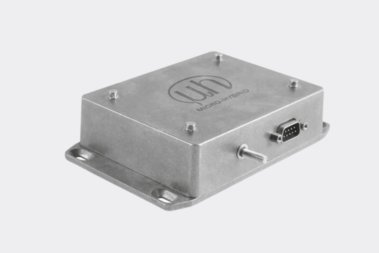
By Micro-Hybrid Electronic GmbH
The MicroFLOW CH4.10 Vol.-% sensor is suitable for a wide range of demanding applications that require precision and reliability. FIELDS OF APPLICATION Agricultural technology: Monitoring methane gas flows in agricultural processes helps to efficiently control the use of fertilizers and conserve resources in agriculture. Industry: The sensor provides precise results for for monitoring gas leaks carefully while processing raw materials in petrochemical plants. Potential CH4 leaks can be detected early. It reduces the potential for safety issues and optimizes production processes. Environmental and energy technology: Precise measurement of methane levels enables efficient control and monitoring of processes in composting and biogas plants. This optimizes gas production and improves the efficiency of such plants. Monitoring of ambient conditions reduces harmful environmental effects and maximizes energy efficiency, including gas emissions in industrial environments and processes in renewable energy systems. MEASUREMENT ACCURACY Our NDIR gas sensor provides precise measurements of methane and other hydrocarbons. With 10-point linearization, the maximum deviation of gas concentration readings is less than one percent across the entire measuring range up to 10 vol.-%. The sensor reliably detects minimal gas concentrations in order to recognize even the slightest changes in the gas mixture. You can freely select your application measuring range (e.g. 1 vol.-%) within the entire measuring range (0 to 10 vol.-%). Any variations in measurements due to changes in pressure values or barometric pressure are compensated by the µP.sens pressure sensor in the cuvette block (< 0.1 % / 10 hPa). Leaks and any falsification of measured values are prevented. The inclusion of the pressure sensor within the cuvette block lessens the space demands of the entire module compared to similar sensors. Temperature compensation is guaranteed for each sensor module. Each module undergoes testing and calibration in the climate chamber by recording and correcting the error characteristic curve during measurement using a test gas at a specific concentration. Testing and correction is done at the zero and span points as well as other typical temperatures within the sensor's operating range of 5 - 45 °C. As a result, the maximum deviation is less than 1% per 10K. RANGE OF FUNCTIONS The digital interfaces RS232 and CAN-Bus are available as standard industrial interfaces. You can choose one of these for your individual setting using the MARS light software and the accessories. Simply follow the instructions in the software manual. The cuvette is optimized to measure methane and hydrocarbons with a specific concentration range up to 10% by volume. Our sensor is capable of measuring in a broad pressure range of 300 - 1200 hPa, unlike conventional sensors. This significantly expands its range of potential applications, such as in locations with high altitudes or in systems that operate under negative pressure. LIFETIME The gas connection blocks are constructed of anodized aluminum, which provides exceptional chemical resistance and ensures a long and reliable operating life under the most demanding conditions. Furthermore, the stainless steel gas connections offer extra durability. Testing in the climate chamber within the operating temperature range successfully prevents any premature failure of the components. INSTALLATION AND OPERATION The MARS light software, specially designed for our gas sensors, can be downloaded for free. This means your gas sensor is immediately ready for use. You can save time in your project. There is no need to develop your own initial test software. The sensor requires less than 1 watt of input power. This allows it to be used in battery powered devices. Furthermore, its wide voltage range of 9 to 30 volts allows easy integration into most existing systems. Depending on the application, gases may require pre-cooling or heating prior to the analysis. You can prevent possible condensation effects of the gas in the cell by monitoring the gas temperature in the measurement system. Our product's modular design enables it to be easily cleaned and maintained, unlike many comparable products. The manual provides all necessary information on start-up and operation. You will find a summary of the most important technical details in our data sheet. We will be happy to consult with you on your individual questions and requirements.
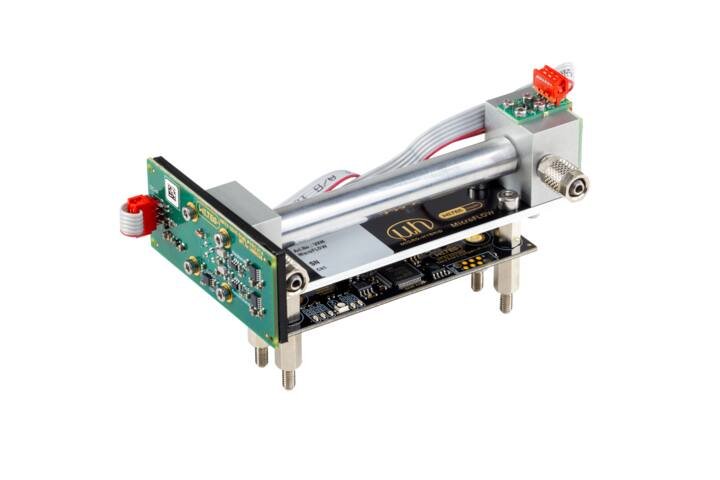
Our sensor modules, consisting of highly developed inertial and gas sensors, offer precise and reliable solutions for a wide range of measurement and analysis requirements in demanding applications.
CATEGORY
The gas sensors from Micro-Hybrid offer precise and reliable measurement solutions for NDIR gas analysis and impress with their durability and adaptability.
CATEGORY
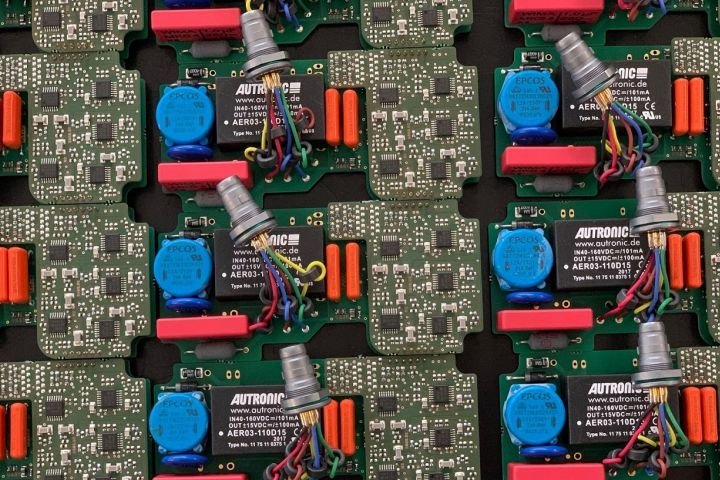
Convenient solution for the demand of small volumes offered by Micro-Sensor. Within an average 30 years’ service life of a piece of rolling stock safety requirements for rail traffic are changing. Operators must upgrade their fleets with latest sensor technology to ensure safety standards. For this so-called retrofit, often only a small number of sensors is required. Micro-Hybrid offers a convenient solution for this case and also for prototype construction or field tests. They deliver acceleration and rotation rate sensors in small series starting, e.g. 50 pieces. Micro-Sensor also develops reliable and durable sensor solutions for OEM projects with small quantities and act as your international expert in railway applications. With more than 20 years of experience and established technologies, Micro-Sensor is a specialist for inertial sensors in the regular service and develops sensors to be used in applications in harsh environments like heat, sand and a lot more. The production processes allow manufacturing of even small series. The sensors are produced modularly and adapt all necessary steps to the individual customer requirements. This decisive advantage is enabled by the deep value chain (PCB assembly, packaging, calibration) and the broad technological expertise in the corporate group of Micro-Hybrid and Micro-Epsilon.
CATEGORY