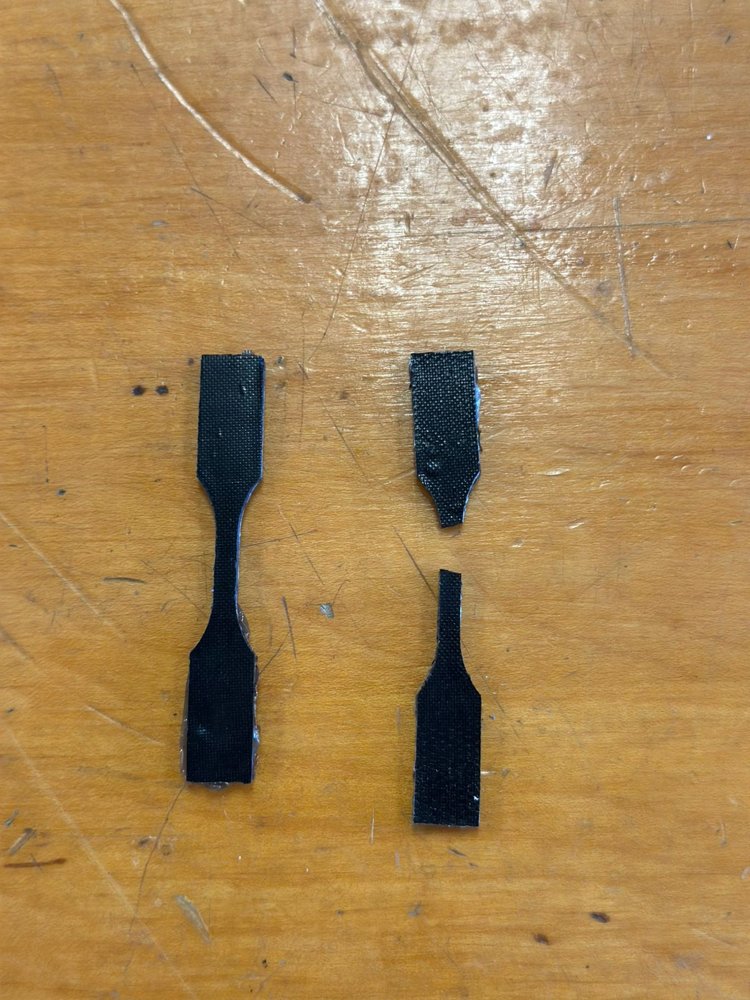
Flexiphene-reinforced PA 66 nanocomposite pellets, 1 wt% graphene loading. Independently validated at UMass Lowell: +19% tensile strength, +16.8% tensile modulus, +18.9% flexural modulus, +10.5% flexural strength vs neat PA 66. No nanoparticle agglomeration observed in SEM. 4 kg available. Patented Flexiphene process. Cheap Tubes Flexiphene-Reinforced PA 66 Nanocomposite Pellets deliver production-validated graphene reinforcement in an engineering thermoplastic, ready for compression molding, injection molding, and extrusion processing. The material is compounded using Cheap Tubes' patented Flexiphene amphiphilic graphene surfactant technology, which disperses graphene nanoplatelets in the PA 66 matrix at 1 wt% loading without conventional surfactant residues. Independent testing at the University of Massachusetts Lowell engineering lab confirmed uniform dispersion (no agglomeration observed in SEM at multiple magnifications) and substantial mechanical property gains versus neat PA 66: - +19% tensile strength (68.5 → 83.1 MPa) - +16.8% tensile modulus (2,473 → 2,888 MPa) - +18.9% flexural modulus (1,157 → 1,376 MPa) - +10.5% flexural strength (68 → 76 MPa) This is a low-volume engineered material produced in our patented Flexiphene process. Only 4 kg are currently available. The product is supplied as compounded pellets, dried and packaged for direct use in compression molding (ASTM Type V specimens were compression-molded for the UMass Lowell validation) or twin-screw extrusion / injection molding. Independent Test Data — UMass Lowell, May 2024 Tensile and flexural property gains in PA66 with 1 wt% Flexiphene graphene Stress-strain curves from independent mechanical testing at the University of Massachusetts Lowell engineering test lab on pristine PA66 and PA66 compounded with 1 wt% Flexiphene graphene nanoplatelets. Multiple specimens tested per condition (4-5 per group) to characterize replication. Tensile properties — 19% strength gain Tensile stress-strain curves: pristine PA66 (left, 4 specimens) vs. PA66 + 1 wt% Flexiphene GNP (right, 5 specimens). The GNP composite reaches peak stress of ~83 MPa vs. ~68 MPa for the pristine matrix — a 19% tensile strength improvement. Test method: ASTM Type V tensile specimen, 10 mm/min displacement rate. UMass Lowell engineering test lab, May 2024. Material: Neat PA66 (n=4) — Tensile Modulus 2,475 ± 70 MPa; Tensile Strength 68.5 ± 2.0 MPa; Elongation at break 4.05 ± 0.83% Material: PA66 + 1 wt% Flexiphene GNP (n=5) — Tensile Modulus 2,880 ± 49 MPa; Tensile Strength 83.1 ± 1.6 MPa; Elongation at break 4.22 ± 0.03% Improvement: +16% tensile modulus, +19% tensile strength, +4% elongation at break Flexural properties — 10.5% strength gain, 18.9% modulus gain Flexural stress-strain curves from 3-point bending (ASTM D790, span-to-thickness 14:1, 1 mm/min): pristine PA66 (left, 4 specimens) vs. PA66 + 1 wt% Flexiphene GNP (right, 4 specimens). The GNP composite reaches peak flexural stress of ~76 MPa vs. ~68 MPa for pristine. UMass Lowell engineering test lab, May 2024. Material: Neat PA66 (n=4) — Flexural Modulus 1,157 ± 31 MPa; Flexural Strength 68 ± 2.4 MPa; Strain at yield 11 ± 0.2% Material: PA66 + 1 wt% Flexiphene GNP (n=4) — Flexural Modulus 1,376 ± 55 MPa; Flexural Strength 76 ± 1.2 MPa; Strain at yield 9 ± 0.8% Improvement: +18.9% flexural modulus, +10.5% flexural strength, -18% strain at yield Test methods: - Sample prep: Pristine and 1 wt% Flexiphene-filled PA66 pellets vacuum-dried at 95 °C; ASTM Type V tensile dogbones and flex bars compression-molded. - Tensile test: ASTM Type V specimens at 10 mm/min displacement rate; 4-5 specimens per group. - Flexural test: ASTM D790 3-point bending, span-to-thickness ratio 14:1, displacement rate 1 mm/min; 4 specimens per group. - SEM: Scanning electron microscopy on freeze-fractured tensile dogbone surfaces — no nanoparticle agglomeration observed at multiple magnifications (1,000× through 5,000×). - Test facility: University of Massachusetts Lowell engineering test lab, May 2024.
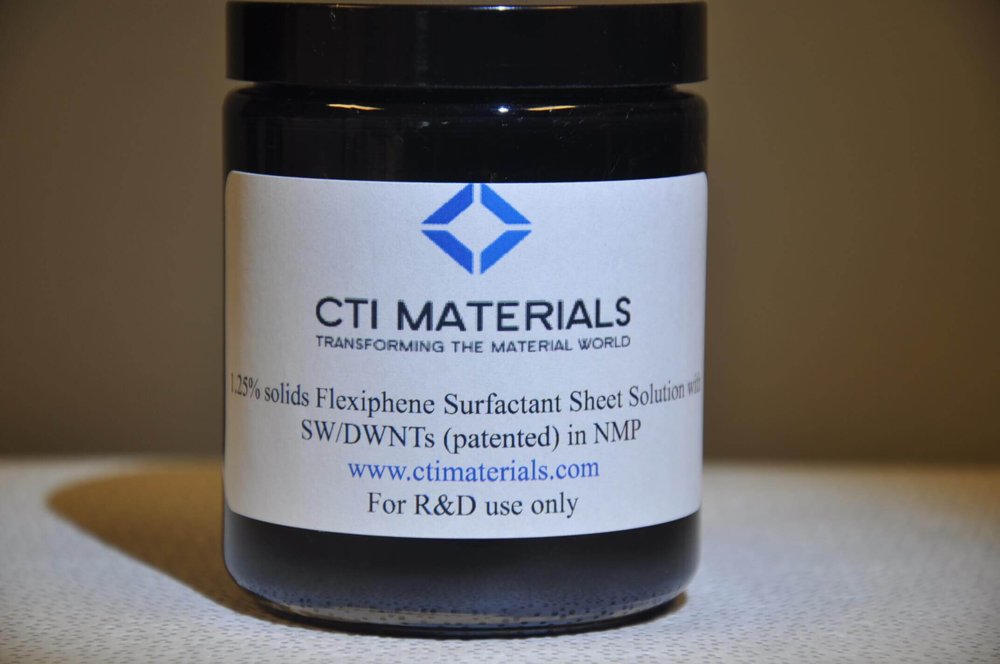
Try patented Flexiphene solvent based nanomaterial emulsions today and put the power of graphene to work in your formulations. Flexiphene is amphiphilic, tune-able by pH, sheet size, and degree of reduction. Flexiphene is transforming the material world! Contact us Today to arrange for your Flexiphene Emulsions!To Buy Flexiphene emulsions, please contact us with the solvent, materials, amount, and loading ratio you need. CTI Material’s patented Flexiphene solvent based nanomaterial emulsions are just what you need to disperse nanomaterials into solvents. Flexiphene works with SWNTs, MWNTs, and many other nanomaterials. Flexiphene are amphiphilic, tunable surfactant sheets, highly soluble in many solvents and can make colloidal dispersions of nanomaterials, stable for weeks to months. We typically work with NMP, DMF, THF, Acetone, & Ethanol solvents however many more are possible. Please contact us today and let us know what materials you require, the loading ratios, and solvents and we can quote it for you. Note- Hazmat shipping fees may apply. Prices depend on materials used and loading ratios. Flexiphene solvent based nanomaterial emulsions are transforming the material world!
CATEGORY
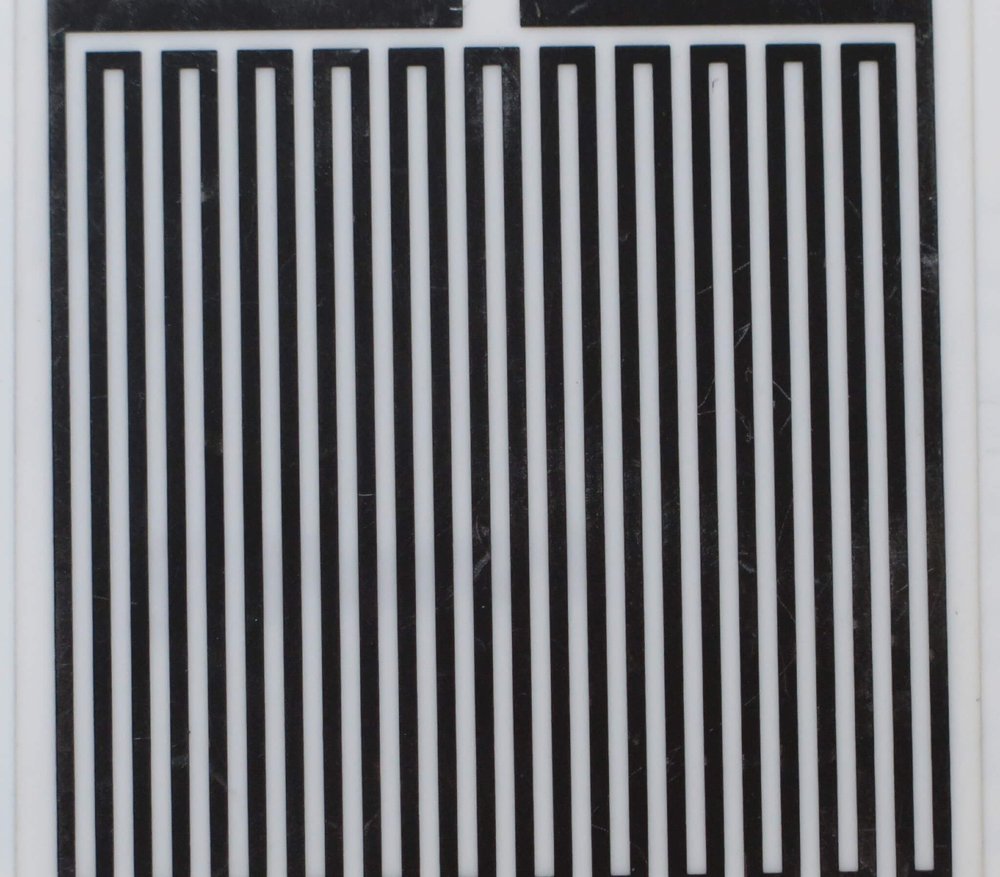
Silver nanowire (AgNW) ink is the leading solution for transparent conductive electrodes (TCEs) that require both high conductivity and optical transparency. At loadings that achieve sheet resistance below 10 Ohm/sq, AgNW films maintain optical transmittance above 85% — performance that rivals ITO at a fraction of the cost and with far superior flexibility. Unlike ITO, silver nanowire electrodes do not crack under bending, making them essential for rollable displays and conformable biosensors. Cheap Tubes synthesizes 30 nm outer diameter silver nanowires in-house at our Vermont facility, giving us direct quality control over aspect ratio, concentration, and lot-to-lot consistency — shipped at 25 mg/mL in isopropanol (IPA). Cheap Tubes supplies silver nanowire ink for transparent electrode applications in touch screens, OPV, and flexible electronics. Both ink types are formulated for compatibility with screen printing, gravure, flexographic, and inkjet deposition methods. Silver nanowire ink is the choice when optical transparency is required alongside low sheet resistance.
CATEGORY
Try patented Flexiphene Surfactant Solutions today and put the power of graphene to work in your formulations. Flexiphene is amphiphilic and compatible with water, solvents, and many other host matrices. To Buy Flexiphene, please contact us with the amount and loading ratio you need. Standard concentration is 2mgs/ml. Flexiphene is transforming the material world! CTI Material’s patented Flexiphene aqueous nanomaterial emulsions are just what you need to disperse nanomaterials into aqueous solutions. Flexiphene works with SWNTs, MWNTs, GNPs, and many other nanomaterials. Flexiphene are amphiphilic, tunable surfactant sheets, highly soluble in many solvents and can make colloidal dispersions of nanomaterials, stable for weeks to months. We typically work with Di Water and can modify the solution if required. Please contact us today and let us know what materials you require, the loading ratios, and solvents and we can quote it for you. Prices depend on materials used and loading ratios. Flexiphene aqueous nanomaterial emulsions are transforming the material world!
CATEGORY
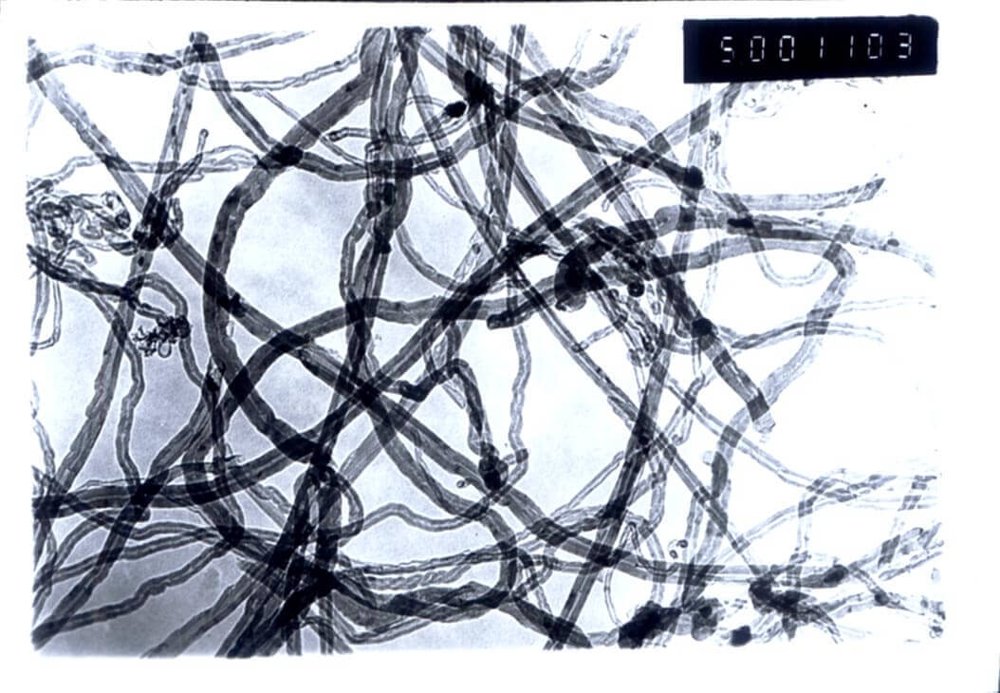
Amine | -NH₂ | Basic, highly water-dispersible; reacts with COOH, epoxides, aldehydes | Drug delivery, biosensors, crosslinked epoxy composites Amine (-NH2) groups are introduced via diamine coupling to -COOH and provide direct bonding to epoxy resins and conjugation chemistry to biomolecules via standard NHS/EDC coupling. -COOH and -NH2 functionalized MWCNTs are the standard substrates for biomolecule conjugation... use glutaraldehyde or NHS-PEG-NHS linkers between -NH2 surfaces and amine-bearing biomolecules. For dispersion in aqueous biological or analytical applications, -COOH and -NH₂ groups provide colloidal stability through electrostatic repulsion (high negative or positive zeta potential) without requiring surfactants that would need to be removed in downstream processing. This makes functionalized CNTs the preferred choice for drug delivery systems, biosensors, and diagnostic conjugation chemistry.
CATEGORY
