By BNNT (Boron Nitride Nanotubes)
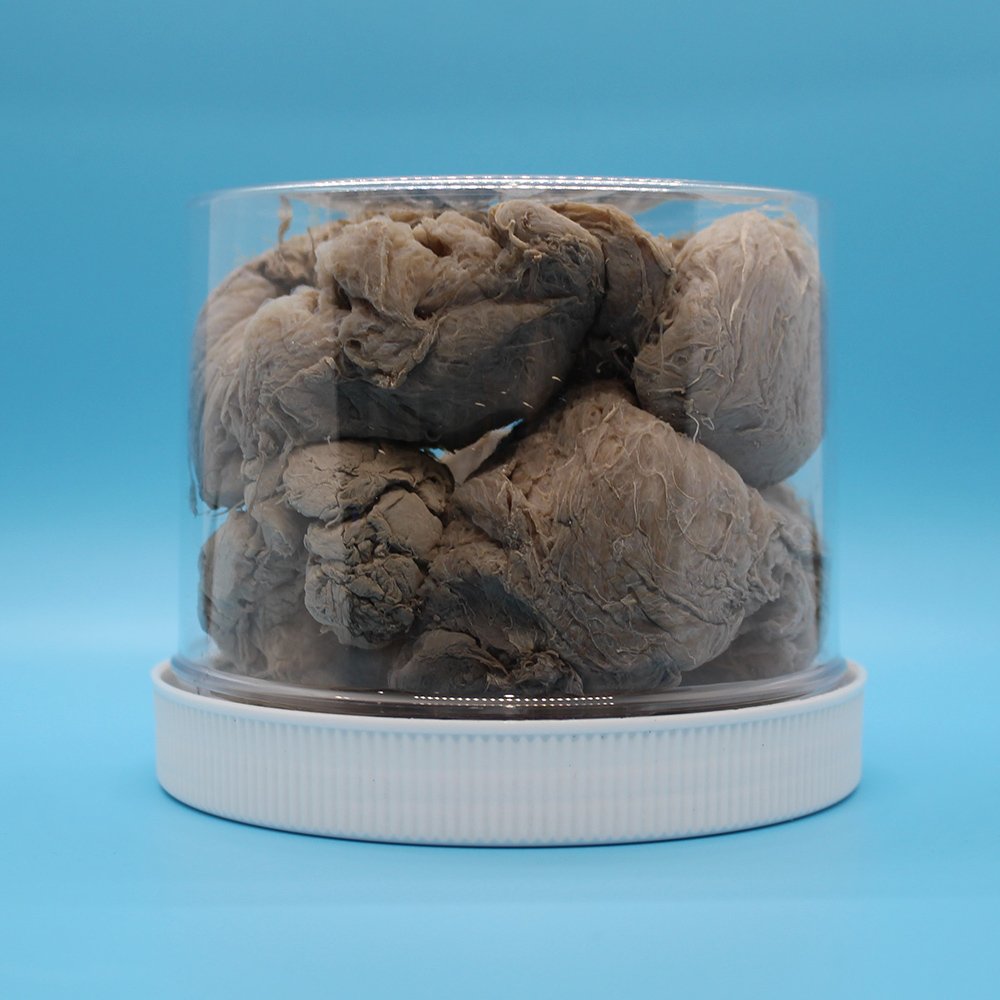
BNNT SP10 Puffball is the as-grown boron nitride nanotube material produced from our state-of-the-art laser synthesis rigs. The nanomaterial is a cotton-like, low tap density network of mainly two and three walled nanotubes ranging from a few to 100's of microns in length. BNNT SP10's grey color is due to nanoparticles of residual boron which are a byproduct of the HTP (high temperature/pressure) synthesis method. BNNT SP10 is available in three isotope compositions and recommended for applications requiring the least post-synthesis processing. Pricing & Fulfillment: - natural boron (~80% 11 B, ~20% 10 B), 50% BN content, Immediate availability, 700 USD/gram - 10 B-enriched (>96% 10 B), 50% BN content, Immediate availability, 800 USD/gram - 11 B-enriched (>98% 11 B), 50% BN content, Immediate availability, 800 USD/gram Tech Data: BN content>99% (refined materials) Residual Impurities Refined materials contain <1 wt.% elemental boron Tap Density Low, ~0.25 mg/cm 3 Defect density Extremely low (BNNTs flex and recover when bent) Band gap 5.7 eV (direct measurement by low energy EELS) Surface area up to 400 m 2/g (by multipoint BET) Network many isolated tubes, bundles up to 5 tubes (by TEM) Number of walls 1 to 5 walls are typical, 2 or 3 walls are most common (by TEM) BNNT length up to 200 μm (by SEM), longer suspected
Our Standard Product 10 (SP10) products contain highly-crystalline boron nitride nanotubes which are produced by the catalyst-free high temperature/high pressure (HTP) method, also known as the pressurized vapor/condenser (PVC) method. The refined products (designated by -R) contain <1 wt.% elemental boron. Our BNNT products are available as puffballs, mats, powders, pellets, dispersions, and more which are all customizable to suit your needs. BN content99% (refined materials). Residual Impurities Refined materials contain <1 wt.% elemental boron. Tap Density Low, ~0.25 mg/cm3. Defect density Extremely low (BNNTs flex and recover when bent). Band gap 5.7 eV (direct measurement by low energy EELS). Surface area up to 400 m2/g (by multipoint BET). Network many isolated tubes, bundles up to 5 tubes (by TEM). Number of walls 1 to 5 walls are typical, 2 or 3 walls are most common (by TEM). BNNT length up to 200 μm (by SEM), longer suspected.
CATEGORY