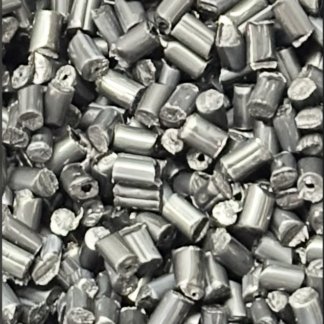
Graphene nanoplatelets (GNPs) are stacks of parallel graphene sheets — thin platelets of multilayer graphene with lateral dimensions from 1 to 25 μm and thickness from 1 to 15 nm (typically 5–15 graphene layers). They occupy the structural space between single-layer graphene and graphite: too thin to be considered graphite, but not the single-atom thickness of true graphene. This intermediate structure gives GNPs a practical advantage: they are far easier to produce in large quantities and disperse in matrices than single-layer graphene, while delivering most of graphene’s conductivity, thermal, and barrier properties. Cheap Tubes supplies GNPs in three grades — H (high surface area, thin, 1–5 layers), M (medium, 5–10 layers), and L (large platelet, 10–15 layers) — to match different application requirements. Functionalized grades (COOH, OH, NH₂, F) are available for improved compatibility with polar matrices. The three standard grades differ primarily in platelet thickness and resulting surface area. the few-layer grade (1–5 layers, ~750 m²/g BET surface area) is preferred for applications where maximum surface area matters: battery electrodes, supercapacitor electrodes, and catalyst supports. the multi-layer grade (5–10 layers, ~300–500 m²/g) offers a balance of conductivity and dispersibility for conductive composites, inks, and coatings. the thicker-platelet grade (10–15 layers, ~100–300 m²/g) has the largest lateral platelet dimensions, providing maximum barrier properties and mechanical reinforcement in polymer composites, particularly for gas barrier films and structural applications. Applications of Graphene Nanoplatelets: Conductive Polymer Composites — At 2–5 wt% in engineering thermoplastics (ABS, PA6, polycarbonate, HDPE), GNPs improve electrical conductivity by 10–12 orders of magnitude — from insulating to ESD-safe or conductivity suitable for EMI shielding. GNP-filled composites achieve surface resistivities of 10⁴–10⁸ Ω/sq depending on loading and grade. The high aspect ratio of GNPs produces better electrical percolation at lower loading than carbon black, preserving mechanical properties and surface finish. Thermal Management — GNP-reinforced thermal interface materials (TIMs) and polymer compounds show significant improvement in through-plane thermal conductivity at 5–20 wt% loading. In-plane conductivity gains are even higher due to GNP preferential orientation in processing. GNPs are used in thermally conductive compounds for LED heat sinks, power electronics encapsulants, and thermally conductive structural plastics where heat dissipation is critical. Gas and Moisture Barrier Coatings — GNPs are impermeable to gases and moisture at the single-platelet level. In polymer coatings and films, oriented GNP platelets create a tortuous diffusion path that dramatically reduces gas transmission rates. At 2–5 wt% in epoxy or polyurethane coatings, GNPs improve oxygen and water vapor barrier by 3–10×. Applications include food packaging films, corrosion-resistant coatings, and fuel tank liners. Battery and Supercapacitor Electrodes — the few-layer grade GNPs serve as high-surface-area active materials or conductive additives in Li-ion battery anodes and supercapacitor electrodes. Their theoretical capacity combined with higher surface area and better electrolyte access improves rate capability. GNPs are also mixed with carbon black or CNTs to form hybrid conductive networks that outperform either component alone at equivalent loading. Lubricant Additive — GNPs suspended in base oils reduce friction coefficients and wear rates in tribological applications. The layered graphitic structure allows inter-platelet sliding, providing lubrication even under high contact pressure. At 0.1–1 wt% in industrial lubricants, GNPs improve anti-wear performance by 30–50% compared to unfilled base oils. Conductive Inks and Coatings — GNPs dispersed in appropriate solvents (NMP, ethanol, water with surfactant) can be formulated into screen-printable or gravure-printable conductive inks. Printed GNP films achieve sheet resistances of 1–100 Ω/sq depending on film thickness and annealing. Applications include printed resistive heaters, strain sensors, and flexible conductive traces for wearable electronics. Dispersion of GNPs: GNPs tend to restack due to van der Waals interactions between graphene layers. Effective dispersion requires mechanical energy (sonication or high-shear mixing) and chemical compatibility between the platelet surface and the matrix. For aqueous systems, surfactants or functionalized grades (COOH, NH₂) improve colloidal stability. For polymer melt compounding, surface modification improves interfacial adhesion and prevents re-agglomeration during processing. High-aspect-ratio the few-layer grade GNPs are most sensitive to dispersion quality — inadequate dispersion wastes their surface area advantage.
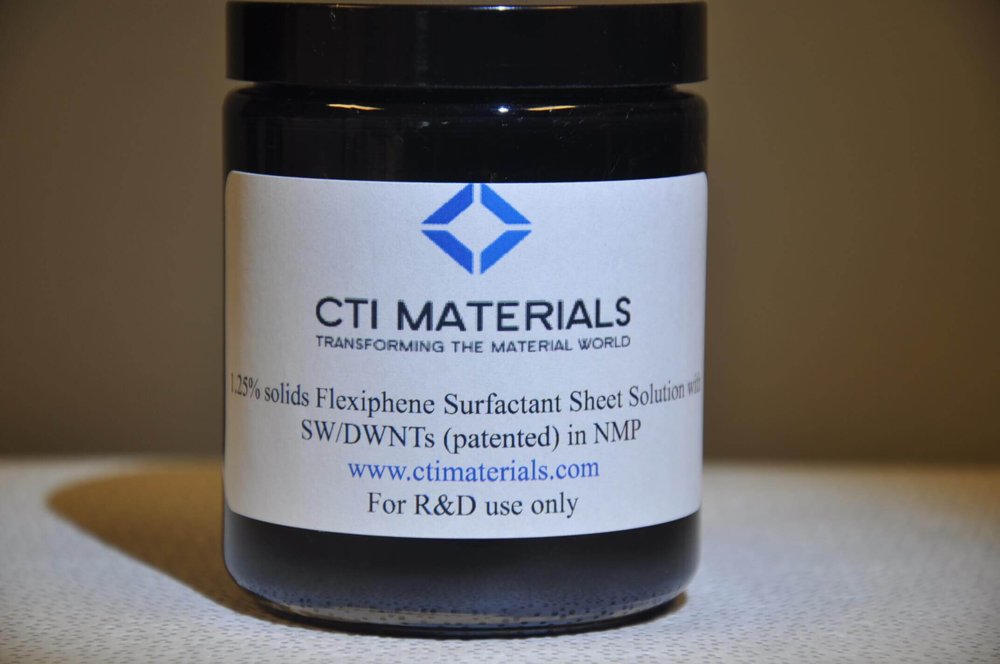
Try patented Flexiphene solvent based nanomaterial emulsions today and put the power of graphene to work in your formulations. Flexiphene is amphiphilic, tune-able by pH, sheet size, and degree of reduction. Flexiphene is transforming the material world! Contact us Today to arrange for your Flexiphene Emulsions!To Buy Flexiphene emulsions, please contact us with the solvent, materials, amount, and loading ratio you need. CTI Material’s patented Flexiphene solvent based nanomaterial emulsions are just what you need to disperse nanomaterials into solvents. Flexiphene works with SWNTs, MWNTs, and many other nanomaterials. Flexiphene are amphiphilic, tunable surfactant sheets, highly soluble in many solvents and can make colloidal dispersions of nanomaterials, stable for weeks to months. We typically work with NMP, DMF, THF, Acetone, & Ethanol solvents however many more are possible. Please contact us today and let us know what materials you require, the loading ratios, and solvents and we can quote it for you. Note- Hazmat shipping fees may apply. Prices depend on materials used and loading ratios. Flexiphene solvent based nanomaterial emulsions are transforming the material world!
CATEGORY
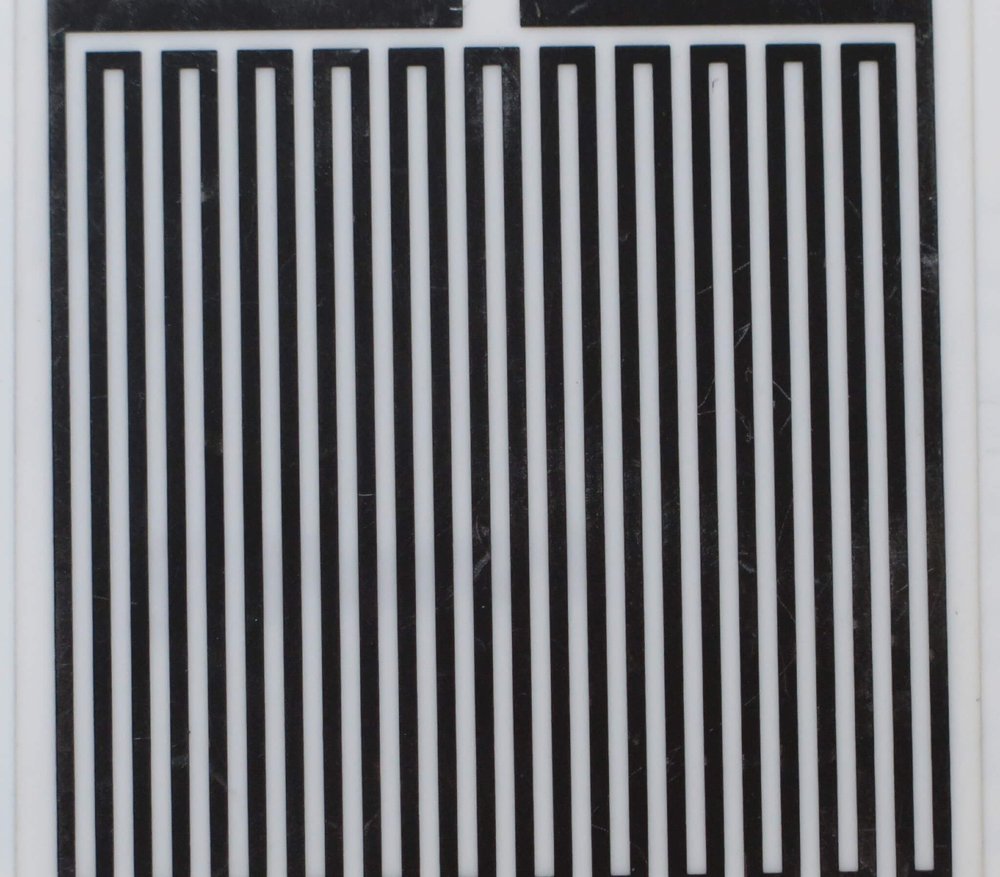
Silver nanowire (AgNW) ink is the leading solution for transparent conductive electrodes (TCEs) that require both high conductivity and optical transparency. At loadings that achieve sheet resistance below 10 Ohm/sq, AgNW films maintain optical transmittance above 85% — performance that rivals ITO at a fraction of the cost and with far superior flexibility. Unlike ITO, silver nanowire electrodes do not crack under bending, making them essential for rollable displays and conformable biosensors. Cheap Tubes synthesizes 30 nm outer diameter silver nanowires in-house at our Vermont facility, giving us direct quality control over aspect ratio, concentration, and lot-to-lot consistency — shipped at 25 mg/mL in isopropanol (IPA). Cheap Tubes supplies silver nanowire ink for transparent electrode applications in touch screens, OPV, and flexible electronics. Both ink types are formulated for compatibility with screen printing, gravure, flexographic, and inkjet deposition methods. Silver nanowire ink is the choice when optical transparency is required alongside low sheet resistance.
CATEGORY
Try patented Flexiphene Surfactant Solutions today and put the power of graphene to work in your formulations. Flexiphene is amphiphilic and compatible with water, solvents, and many other host matrices. To Buy Flexiphene, please contact us with the amount and loading ratio you need. Standard concentration is 2mgs/ml. Flexiphene is transforming the material world! CTI Material’s patented Flexiphene aqueous nanomaterial emulsions are just what you need to disperse nanomaterials into aqueous solutions. Flexiphene works with SWNTs, MWNTs, GNPs, and many other nanomaterials. Flexiphene are amphiphilic, tunable surfactant sheets, highly soluble in many solvents and can make colloidal dispersions of nanomaterials, stable for weeks to months. We typically work with Di Water and can modify the solution if required. Please contact us today and let us know what materials you require, the loading ratios, and solvents and we can quote it for you. Prices depend on materials used and loading ratios. Flexiphene aqueous nanomaterial emulsions are transforming the material world!
CATEGORY
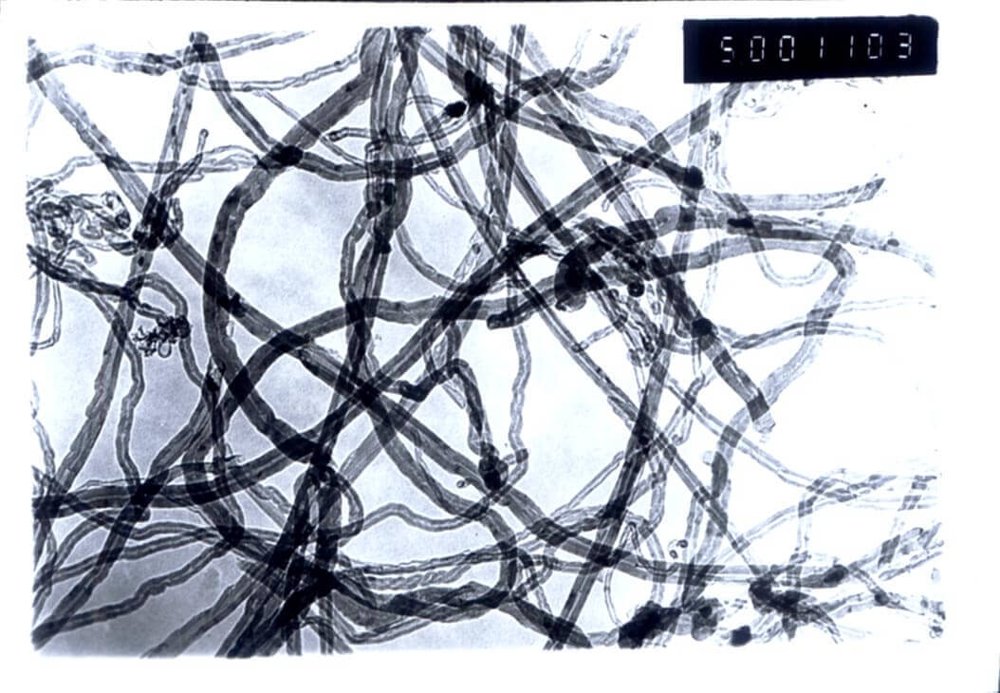
Amine | -NH₂ | Basic, highly water-dispersible; reacts with COOH, epoxides, aldehydes | Drug delivery, biosensors, crosslinked epoxy composites Amine (-NH2) groups are introduced via diamine coupling to -COOH and provide direct bonding to epoxy resins and conjugation chemistry to biomolecules via standard NHS/EDC coupling. -COOH and -NH2 functionalized MWCNTs are the standard substrates for biomolecule conjugation... use glutaraldehyde or NHS-PEG-NHS linkers between -NH2 surfaces and amine-bearing biomolecules. For dispersion in aqueous biological or analytical applications, -COOH and -NH₂ groups provide colloidal stability through electrostatic repulsion (high negative or positive zeta potential) without requiring surfactants that would need to be removed in downstream processing. This makes functionalized CNTs the preferred choice for drug delivery systems, biosensors, and diagnostic conjugation chemistry.
CATEGORY
