By OCSiAl
Ultrafiine TUBALL™ dispersion in NMP for high-energy cathodes. Unmatched TUBALL™ conductivity for improved battery safety and energy density now comes in an optimized, more cost-efficient dispersion. • Dispersion optimized specially for cathodes • More than 80% solids achievable • Low Fe content • Choice of PVDF possible • Ready and easy to use BOOSTED ENERGY DENSITY Thanks to 10–60 times lower loading of conductive additive. Up to 98.8% active material content possible in dry electrode. HIGHER DISCHARGE POWER Increases >50% at high discharge rates. IMPROVED ADHESION Two-times higher thanks to the bond strength between cathode particles. HIGHER SAFETY Increased safety due to two-times lower battery resistance increase (DCR). CATHODES Robust long-distance electrical network from TUBALL™ nanotubes. A robust TUBALL™ network works like a high-speed highway for electrons and makes it possible to achieve uniform low electrode internal resistance and improved durability of the electrode. In comparison with MWCNT and carbon black cathode formulas: TUBALL™ NETWORK IMPROVES KEY PARAMETERS higher due to SAFETY higher due to ENERGY DENSITY higher DISCHARGE POWER higher due to СOHESION 2× lower battery resistance increase (DCR) 10–60× lower loading >50% at high discharge rates >3C 2× increase in bond strength between cathode material particles LOW DOSAGE EXAMPLE IN NCM Less than 0.1% TUBALL™ graphene nanotubes provides higher energy density. This concentration is 10–60 times lower than that required when using multi-wall carbon nanotubes or carbon black as a conductive material. DCR IN NCM 811 EXAMPLE The fact that TUBALL™ bundles create highly conductive longdistance routes for electrons between active material particles leads to the fact that even a small amount of TUBALL™ graphene nanotubes is enough to create well-developed conducive networks in the electrode at an ultralow working dosage and thus reduce internal battery cell resistance (DCR). The lower battery DCR results in lower temperature buildup and thus a reduced risk of a battery fire. This is a crucial safety benefit made possible by TUBALL™ graphene nanotubes. Formulation with TUBALL™ demonstrates significantly lower DCR increase. Cells with TUBALL™ reach initial DCR level of cells without it only after 600 cycles. 3–4 kg of conductive carbon black in an EV battery pack can be replaced with 100 g of TUBALL™ DRY ELECTRODE COATING PROCESS Ensuring uniform long-distance electrical connections between active material particles is of even greater importance in emerging dry electrode coating tech, as the average thickness of the electrodes is higher and the distribution of conductive additives is nonuniform. TUBALL™ + PTFE composites make it possible to create robust, uniform networks. THICK CATHODES AND ANODES Robust TUBALL™ network makes it possible to create electrodes with record high electrode thickness by strengthening the bond between active material particles. No cracks in the electrode with TUBALL™ even at very high electrode loadings.

TUBALL™ has potential applications across up to 50% of global materials markets TUBALL™ is the brand under which the first graphene nanotubes available for mass application in the industry were launched on the world market. 0.01% effective even at ultra-low concentrations < 1% low impurity content G/D 90 high quality of nanotubes TUBALL™ even at 0.01% can transform other materials in unprecedented ways compared to existing carbon-based materials. When distributed in the matrix of a material, graphene nanotubes form a three-dimensional reinforcing and conductive network. This is the mechanism that enables new properties to be achieved. These are the unique morphology and origin that allow graphene nanotubes to build a 3D network at very low concentrations. This is why TUBALL™ has a minimal effect on the original color and other key properties of materials, unlike any other conductive and reinforcing additives. As little as 0.01% TUBALL™ in a material is enough to drastically change its properties TUBALL™ – One Additive for Thousands of Materials LITHIUM-ION BATTERY 0.05% of TUBALL™ in the silicon anode increases battery cycle life by up to 4 times Silicone 0.05% of TUBALL™ allows the combination of conductivity and color Textiles 0.06% of TUBALL™ guarantees permanent anti-static properties PSA film 0.04% of TUBALL™ provides stable anti-static properties while retaining transparency and allowing an increased service life Rubber for tires 0.1% of TUBALL™ improves grip and durability ABS PLASTIC 0.03% of TUBALL™ increases impact resistance and makes materials anti-static Glass 0.05% of TUBALL™ increases strength and allows a significant reduction in the use of toxic substances Aluminum TUBALL™ gives a 100% increase in both tensile strength and Young’s modulus
CATEGORY

Thanks to their unique physical properties, graphene nanotubes increase energy efficiency of materials, which will help reach a carbon neutral society. Ultra strong 100 times stronger than steel Ultra long length-to-diameter ratio of over 3,000 Ultra conductive one of the best conductors on Earth Decades of research have confirmed that graphene nanotubes are a universal additive for most materials existing on Earth. When distributed in material, graphene nanotubes form a 3D reinforcing conductive network, and make it possible to create products with previously unachievable properties. It is expected that less raw material will be needed to create more efficient products that raise standards of living. This is crucial in order to reduce carbon emissions and preserve our biosphere. With just 0.02–0.2% of graphene nanotubes, together with our partners, we are: Increasing impact strength by 20% in conductive thermoplastic composites to develop more durable and lightweight composites that result in cars with higher energy efficiency Improving the energy density of batteries with silicon anodes by +20% to bring closer the mass adoption of EV cars and decrease the number of cells to recycle per car Raising full silica tire tread tear strength by +60% and M300 by +30% to save 600 g of carbon black per tire, leading to a significant reduction in CO 2 emissions
CATEGORY
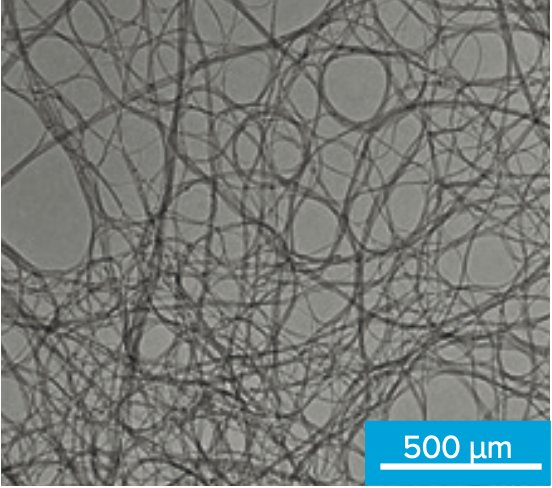
OCSiAl produces high-purity graphene nanotubes on an industrial scale under the TUBALL™ brand name. OCSiAl has developed and is marketing globally a wide range of nanotube products for electrochemical power sources and various polymers and creates fundamentally new products based on them. Graphene nanotubes give PET fibers stable, permanent electrical conductivity meeting safety standards for electronics, clean rooms, and workwear. Compared to previous-generation additives, nanotubes offer superior functionality and maintain flexibility, durability, hypoallergenic properties, and customizable color options. The ultralong structure of graphene nanotubes allows them to form a 3D network inside the material throughout its entire volume, ensuring uniform conductivity across the fiber without carbon release. This enhances anti-static and electromagnetic interference (EMI) protection without compromising color or comfort.
CATEGORY
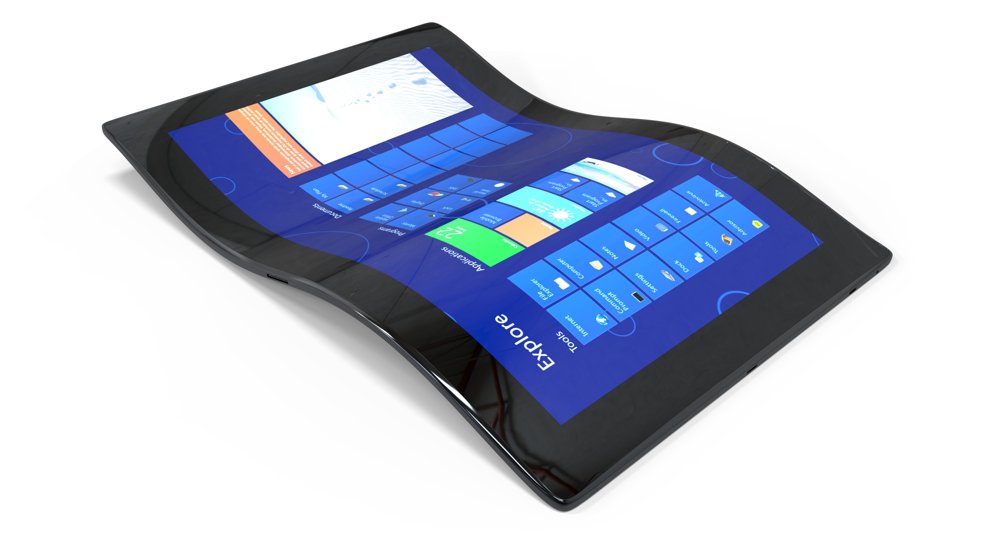
The user-friendly nanotube dispersion TUBALL TM MATRIX 617 results in excellent electrical conductivity combined with more than 90% transparency in a wide range of peeling-strength PSA films. The nanotube concentrate can be seamlessly integrated into silicone PSA resins without altering standard mixing processes or equipment. "The recently developed product is a concentrate based on a user-friendly reactive silicone polymer and pre-dispersed TUBALL™ graphene nanotubes specifically designed for silicone PSA systems. It offers an extremely fine quality of nanotube dispersion and is easier to handle in specific applications, notably in a low solid-content systems," said Ekaterina Gorbunova, Development and Support Leader for Elastomers and Vice President at OCSiAl Group. Just 0.2% TUBALL™ MATRIX 617 ensures uniform dispersion of conductive particles inside PSA film. This results in a stable surface resistivity of less than 10 7 Ohm/sq, even after multiple peelings and exposure to high temperatures, which makes it possible to meet strict requirements for stable touch screen operations.
CATEGORY
