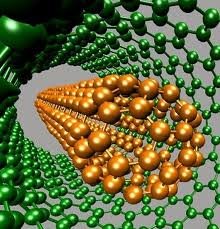
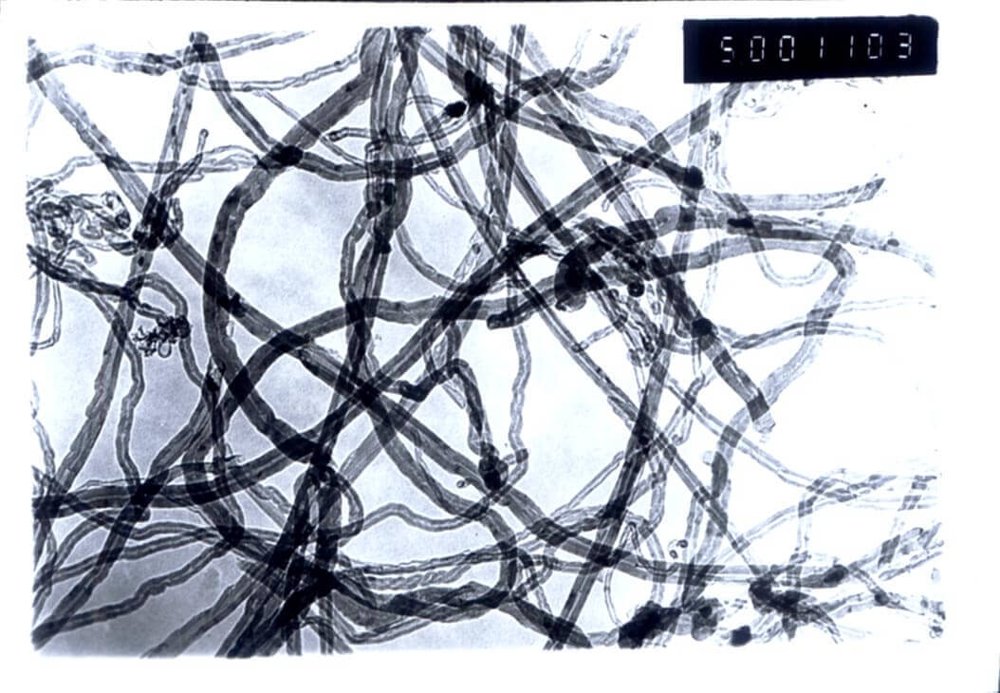
Multi-Walled Carbon Nanotubes (MWCNTs) consist of multiple concentric graphene cylinders nested within one another. The spacing between each layer is approximately 0.34 nm, consistent with graphite interlayer spacing. MWCNTs range from 2 nm to 100 nm in outer diameter and can extend to several hundred microns in length. Unlike SWCNTs, MWCNTs are statistically always metallic due to averaging across multiple shells of varying chirality — making them highly reliable for electrical conductivity applications without chirality separation. Physical Properties: - Outer Diameter: 2–100 nm (typical: 10–30 nm) - Inner Diameter: 2–15 nm - Length: 1–100 μm - Specific Surface Area: 200–400 m²/g - True Density: ~2.1 g/cm³ - Bulk Density: 0.03–0.15 g/cm³ - Carbon Purity: 90–99%+ Mechanical Properties: MWCNTs are among the strongest materials ever measured. Tensile strength: 11–63 GPa. Young’s modulus: 270–950 GPa. Compare to high-strength steel at 1–2 GPa tensile / 200 GPa modulus — MWCNTs offer order-of-magnitude improvements at a fraction of the weight. They are also highly flexible and can be bent and twisted without fracturing. Electrical Properties: Electrical conductivity: 10³–10⁷ S/m. In composites, MWCNTs lower the percolation threshold dramatically — loadings as low as 0.1 wt% produce antistatic behavior; 1–5 wt% achieves EMI shielding >20 dB. Current density exceeds 10⁹ A/cm² — approximately 1000× copper. Thermal Properties: Thermal conductivity along the nanotube axis: up to 3,000 W/m·K — exceeding diamond (~2,000 W/m·K) and far surpassing copper (~400 W/m·K). Thermally stable in inert atmospheres to ~2,800°C; oxidation begins at 400–600°C in air. Most commercial MWCNTs — including Cheap Tubes standard grades — are produced by Chemical Vapor Deposition (CVD): a carbon-containing gas (ethylene, methane, or acetylene) is decomposed over a metal catalyst (Fe, Co, Ni) at 600–1200°C. CVD produces controllable diameter, length, and wall number at commercial scale. Selecting Your Grade: Outer diameter — smaller (2–10 nm) = higher surface area, harder to disperse; larger (20–100 nm) = easier to handle. Purity — 90–95% for most applications; >99% for electrochemical and biomedical use. Length — longer (>10 μm) for mechanical reinforcement; shorter (1–5 μm) for thin films. Functionalization — COOH, OH, and NH₂ grades available for specific matrix compatibility. MWCNT pricing from $10–$50/g depending on diameter, purity, length, and functionalization. Contact us for bulk pricing and custom specifications. SDS ships with every order. We offer -COOH (carboxyl), -OH (hydroxyl), -NH2 (amine), -F (fluorine), nitrogen-doped, and oxygen-functionalized MWCNTs. Functional groups improve dispersion in polar solvents and polymers, enable covalent bonding to matrix or biomolecules, and reduce loading required for percolation. Functionalization slightly reduces electrical conductivity along the tube but typically improves overall composite performance because dispersion gains outweigh per-tube losses.
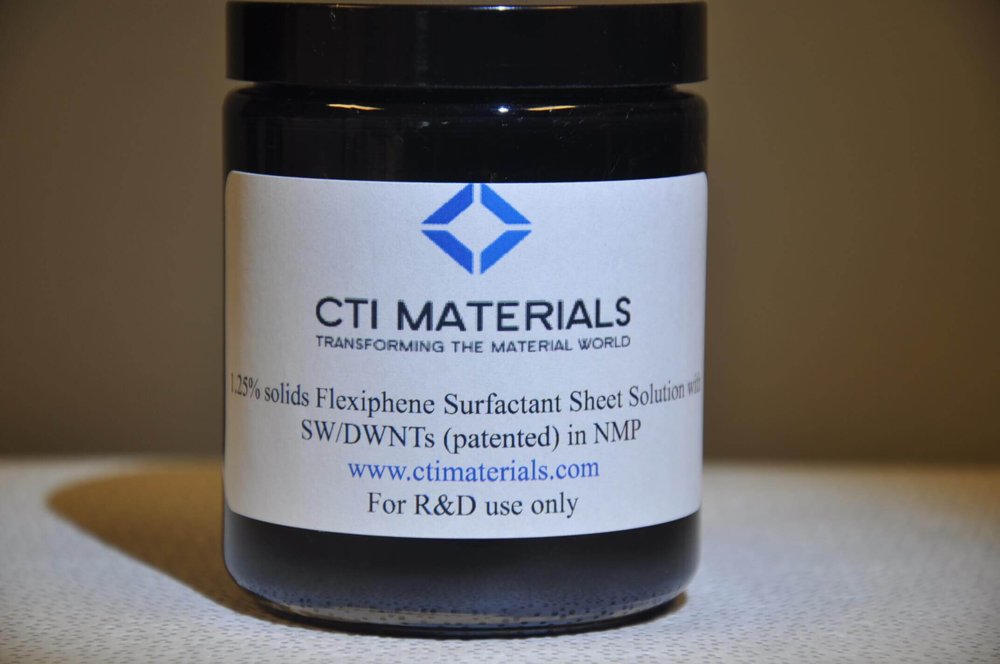
Try patented Flexiphene solvent based nanomaterial emulsions today and put the power of graphene to work in your formulations. Flexiphene is amphiphilic, tune-able by pH, sheet size, and degree of reduction. Flexiphene is transforming the material world! Contact us Today to arrange for your Flexiphene Emulsions!To Buy Flexiphene emulsions, please contact us with the solvent, materials, amount, and loading ratio you need. CTI Material’s patented Flexiphene solvent based nanomaterial emulsions are just what you need to disperse nanomaterials into solvents. Flexiphene works with SWNTs, MWNTs, and many other nanomaterials. Flexiphene are amphiphilic, tunable surfactant sheets, highly soluble in many solvents and can make colloidal dispersions of nanomaterials, stable for weeks to months. We typically work with NMP, DMF, THF, Acetone, & Ethanol solvents however many more are possible. Please contact us today and let us know what materials you require, the loading ratios, and solvents and we can quote it for you. Note- Hazmat shipping fees may apply. Prices depend on materials used and loading ratios. Flexiphene solvent based nanomaterial emulsions are transforming the material world!
CATEGORY
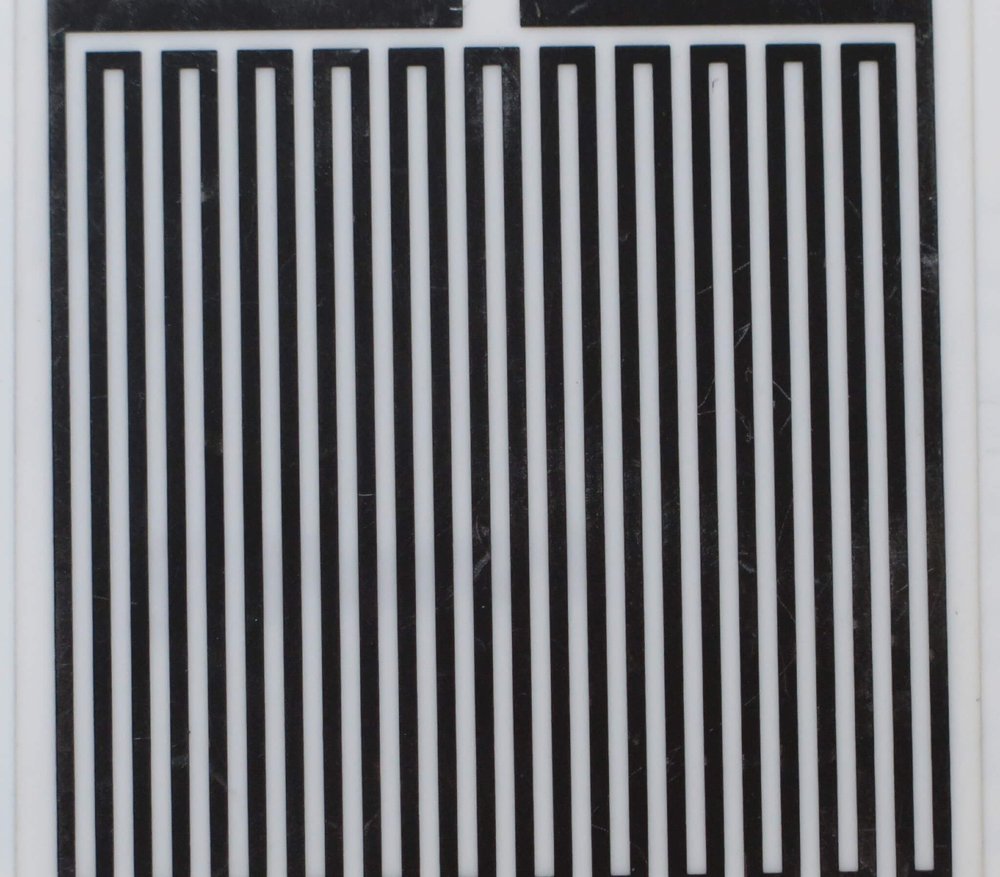
Silver nanowire (AgNW) ink is the leading solution for transparent conductive electrodes (TCEs) that require both high conductivity and optical transparency. At loadings that achieve sheet resistance below 10 Ohm/sq, AgNW films maintain optical transmittance above 85% — performance that rivals ITO at a fraction of the cost and with far superior flexibility. Unlike ITO, silver nanowire electrodes do not crack under bending, making them essential for rollable displays and conformable biosensors. Cheap Tubes synthesizes 30 nm outer diameter silver nanowires in-house at our Vermont facility, giving us direct quality control over aspect ratio, concentration, and lot-to-lot consistency — shipped at 25 mg/mL in isopropanol (IPA). Cheap Tubes supplies silver nanowire ink for transparent electrode applications in touch screens, OPV, and flexible electronics. Both ink types are formulated for compatibility with screen printing, gravure, flexographic, and inkjet deposition methods. Silver nanowire ink is the choice when optical transparency is required alongside low sheet resistance.
CATEGORY
Try patented Flexiphene Surfactant Solutions today and put the power of graphene to work in your formulations. Flexiphene is amphiphilic and compatible with water, solvents, and many other host matrices. To Buy Flexiphene, please contact us with the amount and loading ratio you need. Standard concentration is 2mgs/ml. Flexiphene is transforming the material world! CTI Material’s patented Flexiphene aqueous nanomaterial emulsions are just what you need to disperse nanomaterials into aqueous solutions. Flexiphene works with SWNTs, MWNTs, GNPs, and many other nanomaterials. Flexiphene are amphiphilic, tunable surfactant sheets, highly soluble in many solvents and can make colloidal dispersions of nanomaterials, stable for weeks to months. We typically work with Di Water and can modify the solution if required. Please contact us today and let us know what materials you require, the loading ratios, and solvents and we can quote it for you. Prices depend on materials used and loading ratios. Flexiphene aqueous nanomaterial emulsions are transforming the material world!
CATEGORY
Amine | -NH₂ | Basic, highly water-dispersible; reacts with COOH, epoxides, aldehydes | Drug delivery, biosensors, crosslinked epoxy composites Amine (-NH2) groups are introduced via diamine coupling to -COOH and provide direct bonding to epoxy resins and conjugation chemistry to biomolecules via standard NHS/EDC coupling. -COOH and -NH2 functionalized MWCNTs are the standard substrates for biomolecule conjugation... use glutaraldehyde or NHS-PEG-NHS linkers between -NH2 surfaces and amine-bearing biomolecules. For dispersion in aqueous biological or analytical applications, -COOH and -NH₂ groups provide colloidal stability through electrostatic repulsion (high negative or positive zeta potential) without requiring surfactants that would need to be removed in downstream processing. This makes functionalized CNTs the preferred choice for drug delivery systems, biosensors, and diagnostic conjugation chemistry.
CATEGORY
