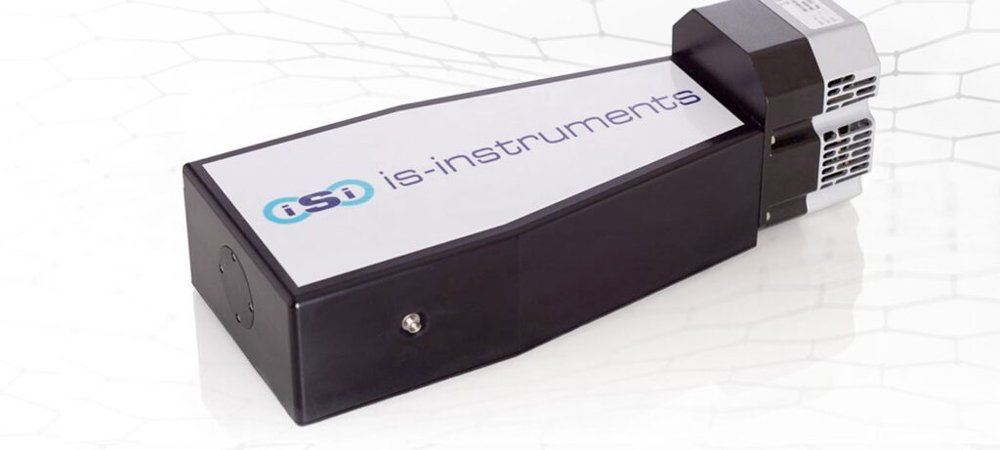
Our instruments use an optical fibre instead of a traditional slit, enhancing light transmission. Where light is typically lost, it is instead retained and concentrated on the target—delivering more light and producing a stronger signal. This is especially beneficial for detecting substances with inherently weak Raman signals. ISI’s standard HES spectrometer achieves up to 100 times greater throughput than conventional systems. This improvement significantly boosts the signal-to-noise ratio (SNR) compared to traditional Czerny-Turner instruments.
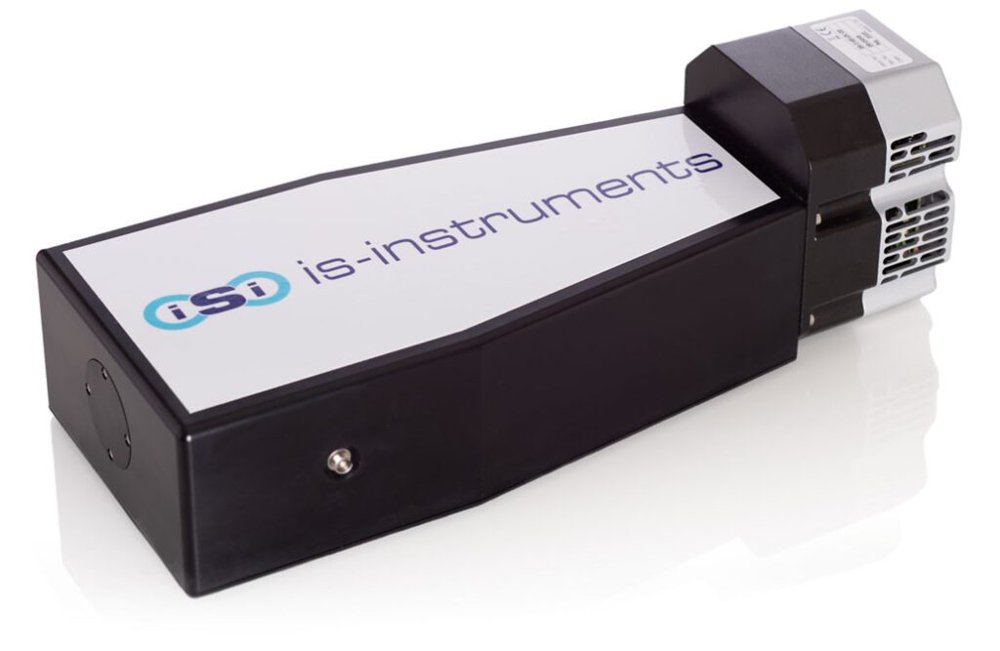
Traditional spectrometers use a slit to allow light to pass into the instrument and focus on the target substance. Our spectrometers are different: we use optical fibres of 1 mm – 3 mm, although a 5 mm is possible. Using a fibre rather than a slit aids transmission; where light is usually lost, it is retained and, therefore, can be focused on the target. More light on the target delivers a stronger signal, particularly helpful when measuring substances with weak Raman signals. ISI’s standard HES spectrometer offers a 100-fold increase in throughput over current conventional systems. This increased throughput can lead to a superior signal-to-noise ratio (SNR) for a given observation over a Czerny Turner instrument. The HES spectrometer contains no moving parts and yet offers the advantages of a Michelson Interferometer with the spectral properties of a traditional diffraction grating-based device, such as a Czerny Turner spectrometer. The high throughput/etendue of our HES spectrometers results in the instruments being ideal for low light applications and makes it possible to couple the devices via a large multimode optical fibre. They are, therefore, easy to use with a large optical telescope, unlike Czerny Turner systems with comparable resolution. Our HES spectrometers are capable of stand-off measurements at a range of 2-3 meters. The spectrometer is available as a stand-alone instrument or a fibre-coupled Raman spectrometer, typically with a 500 mW 785 nm laser. Detectors are available according to the end-user requirements, from ultra-low-light, cooled CCD to simple CMOS devices. See performance data when paired with our RP40 F1 telescopic probe. - HES 1001 – 1 mm fibre and standard detector. Ideal for brighter or less challenging measurements. - HES 2002 – 2 mm fibre and superior detector allow long integration times. Ideal for difficult or standoff measurements or samples that give off weaker signals. - HES3003 – 3 mm fibre and photon-counting charged-couple device (CCD) ideal for biological applications. Specification - Operating range 50-4000 cm-1 dependent on detector choice - Resolution< 2 cm-1 - Fibre coupled SMA (FC/PC available) - Fibre aperture 1 mm (standard) up to 5 mm - Fibre NA 0.22 - Detector Choice available - Power Detector dependent - Mass< 2 kg Applications for our HES instruments: - Raman spectroscopy - Transmission Raman spectroscopy - Emission spectroscopy - Fluorescence spectroscopy - Reflectance spectroscopy Applications Areas: - Process monitoring - Industrial process analysis - Research and laboratory spectroscopy - Astronomical spectroscopy
CATEGORY
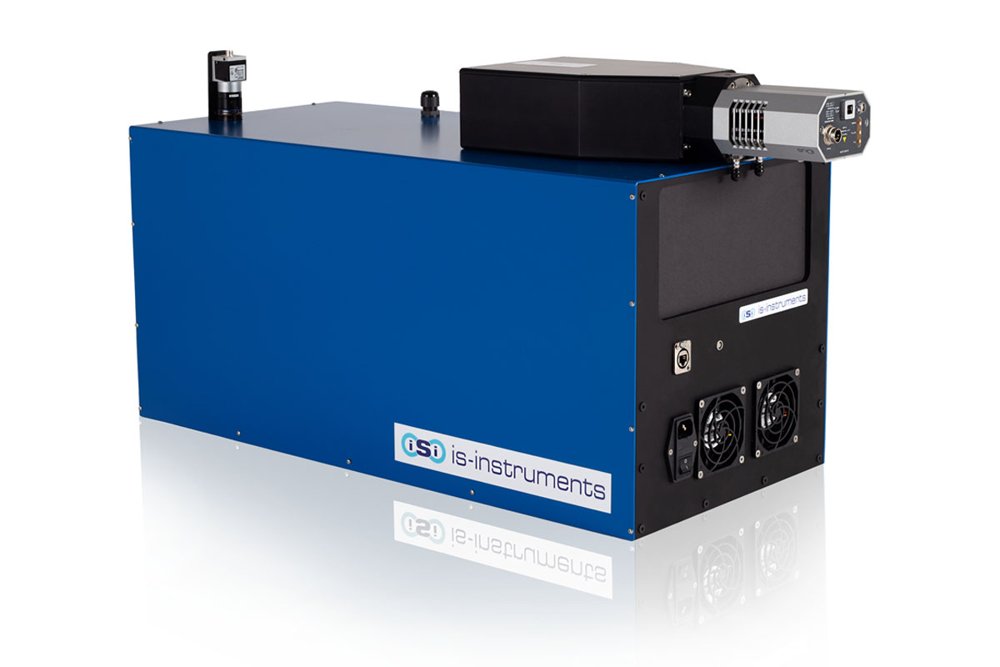
Odin™ – a compact deep UV Raman spectrometer What is Deep UV Raman Spectroscopy? Deep UV Raman spectroscopy operates in the ultraviolet range of the spectrum, between 200 and 280 nm. Deep UV Raman spectroscopy offers the ability to detect, identify and quantify substances at much lower concentrations than is possible with near-UV, visible, or infrared (IR) methods. This is due to (a) higher photon energy (λ-4 relationship), (b) sample resonance and (c) fluorescence mitigation. At UV wavelengths, fluorescence and Raman signatures become spectrally separated. In complex biomolecules, chromophores and aromatics resonate, resulting in a substantially amplified Raman signature compared to analogous measurements in the visible region of the spectrum. Deep UV Raman analysis then enables the study of the structure and dynamics of complex materials such as proteins and nucleic acids. Odin™ – our deep UV resonant Raman spectrometer – allows us to see into previously unseen worlds. Odin™ Deep UV Raman spectroscopy There are two main reasons for operating at ultraviolet wavelengths: - Fluorescence mitigation – at UV wavelengths, fluorescence and Raman signatures become spectrally separated - Many biological samples exhibit resonant behaviour, and their Raman signatures are substantially amplified compared to their Raman excitation wavelengths in the visible region of the spectrum. Existing systems use high-powered gas-pumped or pseudo-pulsed lasers with low net powers. These are expensive to purchase and maintain, requiring water-cooling or gas purging. This has limited their application to dedicated research facilities. Odin™ changes all that: a compact, ancillary-free instrument capable of unprecedented Raman characterisation of complex biological materials. Odin™ Specification - Excitation laser wavelength 228.5 nm - High etendue Raman spectrometer Maximises light collection - Operating Range 600-2000 cm-1 - Resolution<2 cm-1 - Detector Andor iDus 420 - Fibre coupled FC-PC connectorised - Fibre aperture 600 µm - Fibre NA 0.22 - Dimensions Tabletop Key Features/Benefits: - Size – Odin™ is an order of magnitude smaller: it fits on a desk - Price – it’s significantly more affordable than other instruments - Diode laser – no water cooling or gas purge required - Maximises throughput while limiting power density at the target Applications include: - Biopharmaceutical - Biomedical - Security / Defense - Explosives detection - Identification of hazardous materials - Process manufacturing
CATEGORY
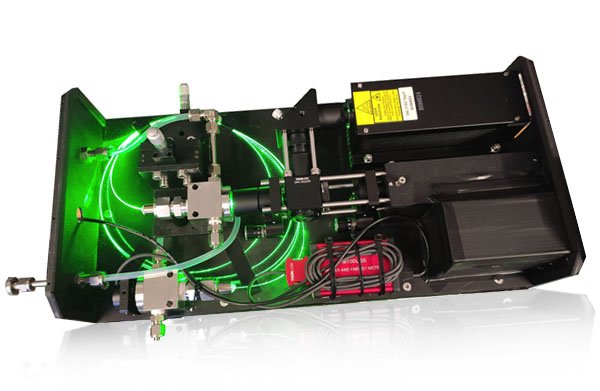
A Revolution In Gas Analysis Raman spectroscopy is a well-established technique that demonstrates excellent chemical sensitivity for identifying a diverse range of solid and liquid samples. However, due to the diffuse nature of gases, their inherently weak optical scattering makes analysis challenging. A practical method to overcome this limitation is to extend the optical path length to optimise the interaction of excitation photons with Raman scattering centres. This increases the generation of unique energy-shifted Raman photons, which deliver the unique chemical fingerprint of the target gas or gases. Notus, ISI's gas Raman instrument, uses hollow-core microstructured fibre optics, in which the target gas species is drawn into the internal volume of the hollow-core fibre. The gas's Raman spectra are captured via a hardware configuration comprising a laser, dispersive spectrometer, and coupling optics. The instrument delivers in situ gas measurements quickly and offers other significant benefits over traditional gas chromatography or Fourier Transform Infrared (FTIR) solutions. The most popular method for gas-phase metrology is gas chromatography (GC). However, gas chromatographs have several drawbacks, including high cost and the need for a skilled technician to operate the system and interpret results. Samples cannot be measured in situ, necessitating off-site analysis, increasing overall measurement cycle times. GC also requires selecting an appropriate analytical column based on the gases the operator expects to detect. Notus addresses these challenges through a flexible Raman-based approach that delivers rapid, real-time gas analysis with reduced sample-handling requirements and in situ measurements. Specifications: - Raman operating λ: 532 nm - Configuration: Hollow core fibre (HCF) - Operating Range: 400-4500 cm-1 - Resolution: <4 cm-1 - Detector: Andor iVac 316 - Fibre coupled: SMA or FC/PC - Dimensions: Tabletop Key Features/Benefits: - In-situ measurements reducing metrology cycle time - No need to shut down pipelines to collect samples - Can be operated by a non-technical worker - Multiple-channel gas detection - No requirement for an anticipatory column based on expected findings - Option to generate a gas distribution map of a target environment Applications include: - Nuclear fusion - Nuclear decommissioning - Security & Defence - Environmental monitoring - Natural gas/hydrogen blending - Manufacturing process monitoring
CATEGORY
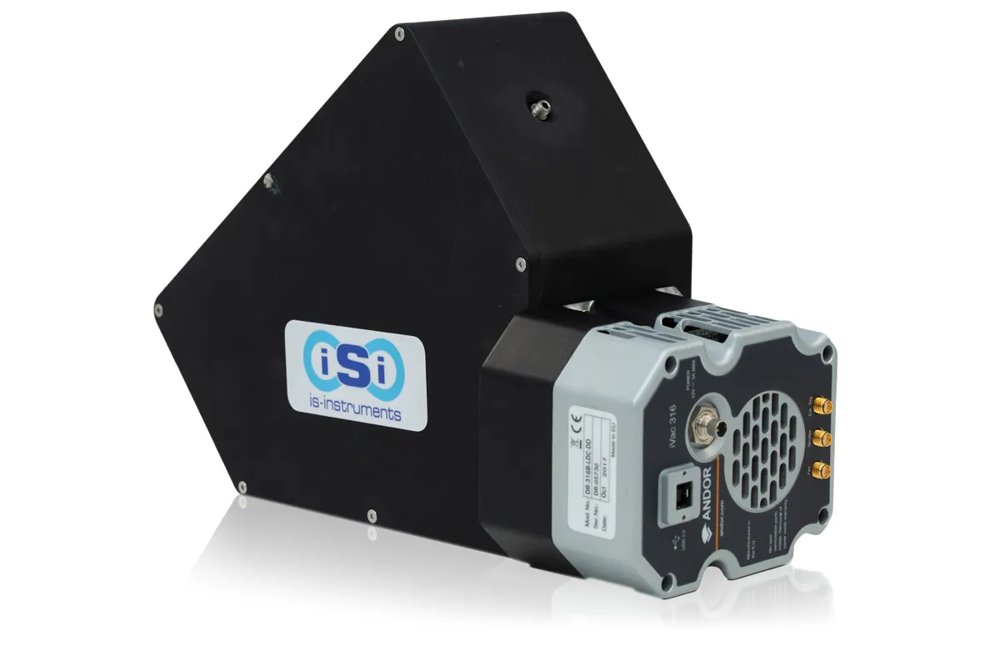
Compact Dispersive Spectroscopy for Flexible Analytical Applications The IS-Instruments dispersive spectrometer is a compact, high-performance platform designed for integration across a wide range of spectroscopic and analytical measurement applications. Compatible with fibre-coupled Raman probes, hollow-core microstructured fibres, and custom optical configurations, the system supports the analysis of solids, liquids, and gases across research, laboratory, and industrial environments. Its flexible architecture enables deployment in applications ranging from material characterisation and process monitoring to hydrogen isotope analysis, tritium sensing, and multi-species gas quantification. Our dispersive spectrometer has been developed to deliver reliable, high-resolution spectral analysis across a wide range of applications. Designed for integration into laboratory, industrial, and research environments, the system combines robust optical performance with compact, fibre-coupled flexibility. When combined with standard Raman probes, the system supports spectroscopic interrogation of solids and liquids for laboratory and process applications. Integrated with IS-Instruments’ holloc core microstructured fibre technology, the platform forms the basis of the Notus gas Raman system for advanced gas analysis applications. This includes hydrogen isotope monitoring and tritium sensing. - Flexible compatibility with fibre-coupled probes and sampling systems - Suitable for solids, liquids, and gas analysis applications - Real-time, non-destructive spectroscopic measurements - High sensitivity and spectral resolution - Minimal sample preparation requirements - Remote and distributed sensing capability - Adaptable for laboratory, industrial, and research environments Technical Specifications - Operating Range: 400 – 4600 cm-1 - Spectral Resolution: ~8 cm-1 - Fibre Coupling: 50 μm fibre coupled - Input Aperture/ Interface: 50 μm fibre input, NA 0.12 - Detector: Andor iVac 316 CCD - Detector Resolution: 256 x 2000 pixels - Pixel Size: 15μm - Mass: Approximately 4 kg Supported Techniques: - Raman spectroscopy - Transmission Raman spectroscopy - Emission Spectroscopy - Fluorescence spectroscopy - Reflectance spectroscopy Example Application Areas: - Industrial process analysis - Research and laboratory spectroscopy - Gas analysis and monitoring - Research and development environments
CATEGORY
