OBA-L™ (Onco Breath Analyser - Lung) is being clinically validated as a rapid, non-invasive screening / triage / adjunctive support aid to help identify lung disorders in people who may need confirmatory diagnostic follow-up, with screening completed in under 100 seconds. Currently in Clinical Validation at MCC, Thalassery Non-invasive screening support through breath OBA-L™ analyses volatile organic compounds (VOCs) in exhaled breath to evaluate response patterns associated with lung-health risk and support referral for confirmatory diagnostics. Designed for defined screening and validation workflows involving higher-risk populations: - Current and former smokers (20+ pack-years) - Individuals with occupational exposure (asbestos, radon, chemicals) - People with family history of lung disorders - Patients with chronic respiratory conditions - Defined screening programs in hospitals and clinics - Community health camps and mobile screening units Compact, portable design supports use in controlled clinical validation and screening-support workflows across care settings. How OBA-L™ Works OBA-L™ captures and analyses end-tidal breath — the last portion of exhaled air that comes directly from the deep lung alveoli where gas exchange occurs. - End-Tidal Breath Sampling: Specialized mouthpiece captures deep lung air, minimizing contamination from upper airways. - VOC Response Sensing: VolTrac™ sensors capture chemi-resistive response patterns from VOC mixtures in exhaled breath. - AI Pattern Recognition: Machine learning algorithms analyse the VOC "fingerprint" against response patterns being evaluated in clinical validation studies. - Triage Support: Reports are designed to support referral decisions for confirmatory diagnostic workup. Powered by VolTrac™ Technology At the heart of OBA-L™ is Invent's VolTrac™ VOC sensor platform. - PPB-Level Sensing: Built for low-concentration VOC response-pattern capture in selected analytical workflows. - Pattern Selectivity: Chemi-resistive nano-polymer sensors support downstream pattern analysis across VOC mixtures. - Room-Temperature Operation: Safe, low-power operation suitable for clinical environments. - Multi-Sensor Array: 8-16 specialized sensors create a VOC response profile for downstream pattern recognition. Simple 4-Step Screening Process Non-invasive, rapid, and comfortable 1 Register Patient registration and basic health questionnaire (2 min) 2 Breathe Normal breathing into the OBA-L™ device for under 100 seconds 3 Analyse AI-powered analysis of breath VOC patterns 4 Report Screening-support report with recommended confirmatory follow-up Key Features & Benefits Powered by AI & Nanotechnology • Patent portfolio includes granted and pending matters Non-Invasive Screening Simple breath test — no needles, radiation, or discomfort. Just breathe normally into the device. Rapid Results Complete screening in under 100 seconds with screening-support information for follow-up planning. Pattern-Level VOC Sensing VolTrac™ sensors capture VOC response patterns for downstream clinical-validation analysis. AI-Powered Analysis Machine learning algorithms evaluate VOC response patterns being studied through clinical validation. Portable & Affordable Compact design supports screening workflows in resource-limited settings. Connected & Scalable Cloud connectivity for data management, remote monitoring, and integration with hospital systems. The Science Behind Breath Biomarkers Altered metabolism can influence volatile organic compounds (VOCs). OBA-L™ studies how breath VOC response patterns may support lung-disorder screening and triage workflows. - Altered Lipid Peroxidation: Affected cells produce elevated levels of aldehydes like hexanal and heptanal through oxidative stress. - Cytochrome P450 Changes: Metabolic enzyme alterations lead to specific alkane and methylalkane patterns. - Tumor Necrosis: Necrotic tissue releases characteristic VOCs detectable in breath. - Candidate VOC Patterns: Research has identified VOC patterns associated with lung-cancer biology; OBA-L™ is evaluating those patterns in clinical validation workflows. Clinical Validation OBA-L™ is currently undergoing rigorous clinical validation in partnership with leading cancer centers. - MCC Incubation: On-site incubation center established at Malabar Cancer Centre, Thalassery for clinical validation. - Multi-Site Trials: Prototypes are being used with partner hospitals for validation studies. - VOC Response Patterns: Response patterns are being evaluated in clinical validation studies, including the MCC study. - CDSCO Approval: CDSCO approval received for clinical evaluation in India — May 2026. - ISO 13485:2016 Certified: Quality management system for medical-device design and manufacturing certified to the international ISO 13485:2016 standard — May 2026. OBA-L™ is intended as a screening/triage tool. Positive results require confirmation through standard diagnostic procedures.

The VolTrac™ VOC Sensor 🚀 NVIDIA Inception Program Member - Accelerating AI-Powered VOC Analysis Every living organism emits VOCs, unique markers of their physiological state, serving as a chemical dialogue between species. This chemical language provides insights into biological processes at a granular level. To harness this data, it's essential to capture response patterns from multiple volatiles and interpret distinct molecular fingerprints corresponding to defined states. AI algorithms support downstream pattern analysis. Project VolTrac™ is at the forefront of this endeavor, pioneering the development of cost-effective, energy-efficient VOC sensors designed for PPB-level sensitivity targets, pattern-level selectivity, and robust stability. These seamlessly blend with current technologies. Central to our innovation is a chemo-resistive sensing method, complemented by our unique sensor head preparation— a combo that's scalable and prime for miniaturization. At the heart of the VolTrac™ platform is a chemi-resistive sensor array. Unlike optical or mass-spectrometry methods which are often bulky and expensive, chemi-resistive sensors operate by measuring changes in electrical resistance when exposed to target gases. Molecular Response Patterns: We functionalize polymers to be response-biased towards specific chemical families (e.g., aldehydes, ketones, alkanes). While no single sensor is perfectly selective, an array of diverse sensors creates a unique "fingerprint" for complex mixtures. Room Temperature Operation: Unlike metal-oxide (MOX) sensors that require high temperatures (200°C–400°C), our organic polymer sensors operate effectively at room temperature. This drastically reduces power consumption and enables compact, portable sensing systems. AI-Driven Analysis: Raw sensor data is just the beginning. The VolTrac™ platform employs sophisticated pattern recognition algorithms to interpret the complex signals from the sensor array. - Pattern Recognition: Our AI models analyse the collective response of the 8-sensor array to identify VOC response patterns. - Drift Compensation: Algorithms compensate for environmental factors like humidity and temperature to support consistent model performance. - Continuous Learning: As we collect more data from the field, our models are updated to improve response-pattern interpretation over time. Hardware Specifications The VolTrac™ sensor module is designed for compact, embedded applications, making it ideal for integration into medical devices, wearables, and environmental monitors. Parameter | Specification Sensor Module Dimensions | 30 mm x 30 mm Weight | 4 g Array Size | 8-16 Sensors Sensitivity | PPB-level targets for selected analytes Operating Temperature | 268K - 318K (Room Temperature) Measurement Window | ~15 seconds Stability | Evaluated through defined internal test cycles Readout Interface | Voltage Divider / ADC to Microcontroller Connectivity | Bluetooth, Wi-Fi Selectivity: The VolTrac™ sensor is designed to capture VOC response patterns with practical selectivity across selected compound families. Leveraging our advanced nanotechnology capabilities, the technology functions structurally and functionally to ensure selectivity. Such meticulous precision paves the way for its broad application spectrum, supporting consistent response-pattern analysis across various domains. Capability: Chemiresistive gas sensing technology is used to capture chemi-resistive response patterns from VOC exposure for downstream pattern recognition. A slew of benefits accompany this technology: its heightened sensitivity, swift response rate, minimal power drain, and affordability stand out. Additionally, the adaptable nature of these sensors makes them perfect candidates for assimilation into handheld devices, ensuring their aptness for both fixed and on-the-go monitoring endeavors. Applications: Health Research and Screening Support: Product-specific applications in breath screening and health research are being evaluated through defined validation workflows. Hospitals, schools and public buildings: Real-time monitoring of air-hygiene indicators to support health, safety and cognitive-performance awareness. Biosafety Cabinets: Ensuring the integrity of containment environments in high-risk labs. Food Manufacturing: Early detection of spoilage or contamination in processing lines. Agriculture: Monitoring crop health, plant stress, pest attacks, ripening, and decaying stages through plant-emitted VOCs. Warehousing & Logistics: Detection of off-gassing or chemical leaks in large-scale storage. Compound Identification: Rapid identification of unknown chemical signatures for industrial safety. Cold Storage: Ensuring the "freshness" of perishables by tracking ethylene and other gas markers. Industrial Hygiene: Protecting workers in chemical plants by detecting sub-threshold toxic fumes. Smart Homes: Integration into HVAC systems for automated air purification based on specific pollutant detection. Sensitivity: VolTrac™ is being evaluated for PPB-level sensitivity targets in selected analyte workflows. Stability is assessed through defined internal test cycles, and performance is maintained within an operating temperature range of 268K to 318K for diverse environments. This supports response-pattern analysis across selected application areas. - Sensitivity: PPB-level targets for selected analytes - Stability: Evaluated through defined internal test cycles - Operating temperature: 268K- 318K. - VOC response-pattern capture - Swift response rate - Minimal power drain - Low production cost - Monitoring of perishables - Human breath sensors - Wearable integration - Detection of plant stress - Identification of Mother Trees - Air quality monitoring Key Usecases Some of the straight forward use-cases of the VolTrac™ sensor are as follows; Monitoring of perishables Gauges the freshness and quality of food and other perishable goods. Human breath sensors Analyses human exhalation for signs of health conditions or anomalies. Wearable integration Incorporates into wearables to provide real-time environmental or health insights. Detection of plant stress Identifies early signs of plant distress or disease. Identification of Mother Trees Pinpoints primary, nurturing trees in a forest network. Air quality monitoring Assesses environmental air conditions for pollutants or hazards. Identification of plant-microbe interactions Analyses the symbiotic relationships between plants and microorganisms. Pheromone sensor Detects specific chemical signals emitted by organisms, signaling various behaviors or states.
CATEGORY
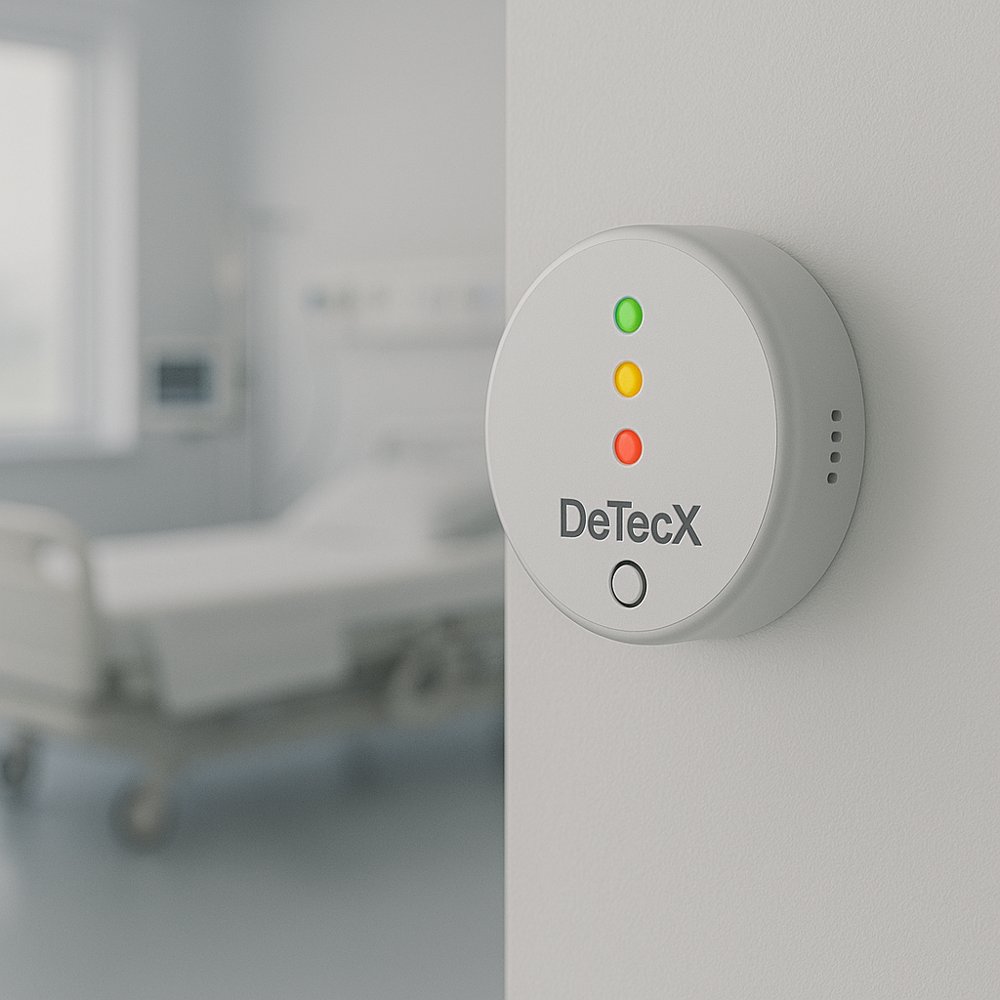
DeTecX™ is an innovative indoor air quality monitoring device for critical hospital environments. From OTs and ICUs to general wards, DeTecX™ monitors invisible airborne risks — providing VOC and environmental-pattern monitoring for air-hygiene awareness using Invent's VolTrac™ VOC sensor platform. Automatic air hygiene monitoring for critical care DeTecX™ runs 24/7 to monitor VOC response patterns, particulate levels, temperature and humidity — supporting infection-control awareness across OTs, ICUs, CCUs and wards. Designed specifically for high‑sensitivity areas: - Operating Theaters (OTs) - ICUs, Post‑Op ICUs - CCUs and general wards - Invasive procedure rooms - Isolation rooms and high‑risk bays Wall‑mounted, discreet form factor similar to a smoke detector for seamless adoption. DeTecX™ is a wall‑mounted smart sensor that periodically samples air-hygiene indicators using Invent’s VolTrac™ VOC sensors. - VOC Response Monitoring: Tracks VOC response patterns that can inform air-hygiene awareness. - Multi‑Parameter Sensing: Tracks PM 1, PM 2.5, PM 5, PM 10, temperature, and humidity for a holistic picture. - Periodic & Real‑Time: 24/7 monitoring with immediate insights whenever conditions change. Powered by VolTrac™: PPB-Level Sensing: Built for low-concentration VOC response monitoring in selected workflows. Pattern Selectivity: Advanced materials and chemi‑resistive sensing support downstream response-pattern analysis. Room‑Temperature Operation: Safe, efficient operation without high‑heat elements. Low‑Power & Scalable: Compact, affordable, and scalable across many rooms in pilot workflows. Powered by AI technology • NVIDIA Inception Program Member. Air-Hygiene Risk-Indicator Monitoring. Multi‑Parameter Monitoring. Pattern-Level Sensitivity. Safe, Low‑Power Operation. Instant Data & Alerts. Scalable & Integrable. Sleek Design for Hospital Environments - Wall‑Mounted, Discreet: Smoke‑detector‑like profile blends into rooms without distraction. - Easy & Secure Mounting: Two‑part case with hidden screws; locks/unlocks for quick servicing. - Branding Space: Smooth front area for hospital/agency logo stickers. - Built for Clinical Environments: Wipe‑friendly materials; RoHS/REACH documentation and CE/FCC certification are under review. In summary, DeTecX™ is more than an air quality monitor; it’s a comprehensive air safety system for hospitals, powered by VolTrac™ VOC sensing and modern IoT connectivity.
CATEGORY
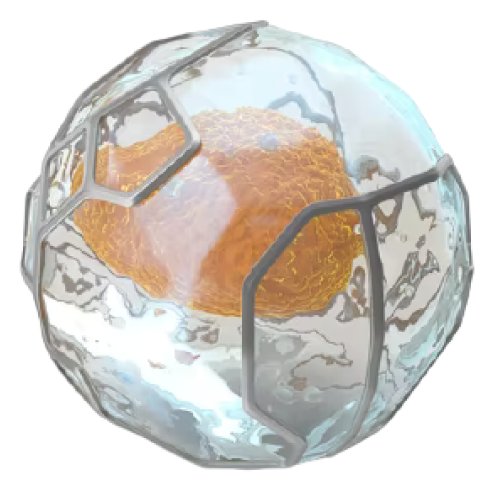
Project VolTrac™ is at the forefront of VOC sensing — pioneering cost-effective, energy-efficient sensors with high sensitivity, pattern-level selectivity, and robust stability. PPB-level sensing targets, room-temperature operation, and seamless integration into hospitals, wearables, and field pilots. - Chemi-resistive arrays with hybrid nano-polymers - PPB-level sensitivity targets for selected analytes - Stability evaluated through defined internal test cycles - Bluetooth & Wi-Fi ready for connected pilot workflows Hybrid nano-polymers and conductive composites form the sensing layer behind the VolTrac™ platform. We engineer materials for selectivity, room-temperature operation, and long-term stability — the foundation for every Accubits Invent device.
CATEGORY