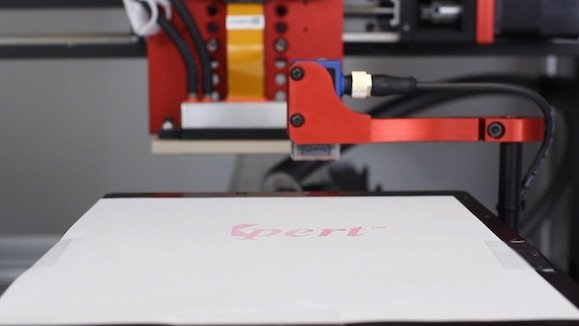
If you want to increase the printed image size or resolution, the JetXpert Print Station can be fitted with a motorized, perpendicular axis to enable multipass printing.
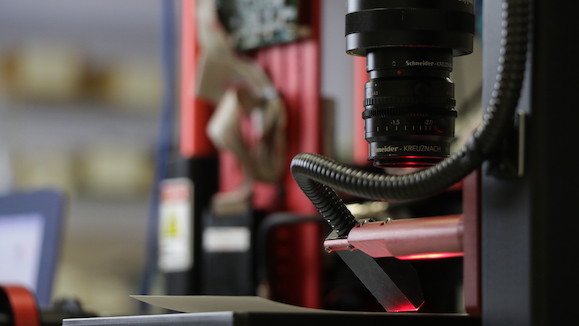
Insights to take your printing to the next level Understand the Big Picture When you want to optimize your entire printing process, you need a way to evaluate your entire printing process. Print Quality tools analyze the end result, the printed image, so you can measure the output of hundreds of parameters at work in one easy test Study Substrates, Pretreatments, Curing, and More A lot goes into determining how good the final printed image will be: your choice of substrate, pretreatments, curing/drying method, and more. Just as dropwatching reveals everything going on in the jetting, print quality analysis shows you everything happening once the drop hits the substrate. One Familiar Platform The same ImageXpert software is used across all of our systems, so one platform analyzes everything from drops in the air to dots on the page Standalone or Integrated Options Whether you want a standalone system for the lab or want to add print quality analysis capabilities to your JetXpert system, we've got a solution for you Common Analysis Options - Dot Positioning - Test Target/Graphics - Coupon/Nozzle Pattern See How Print Quality Analysis Can Improve Your Printing Process Schedule A Demo Request a Quote More on Print Quality Analysis Print Quality analysis, or the inspection of the printed image, plays many roles within inkjet R&D and production. Most print quality analysis tests break down images into dots, lines, and text and perform specialized measurements on them to learn more about how the system is performing. They look at things like are there any missing lines in the image, is the pattern uniform, or is the color bleeding between two adjacent inks. There is a broad spectrum of ways to perform print quality analysis: from looking at a printed sample with your eye to judge how good it looks to you, all the way to robust machines that can scan and measure the image automatically. These automated machines are used in quality assurance, system setup and calibration, as well as in R&D to optimize the printing process. Print technicians utilize print quality analysis as a means of determining the health of their printers. Special patterns, called coupons, are printed and analyzed to determine if all of the nozzles on the printhead are working properly. These coupons are scanned by a software program that is able to count the number of lines and determine if any are missing or deviated. If there are nozzles missing, this can be programmed into the printing software so it can compensate by overloading adjacent nozzles. If the printer contains many printheads, these patterns can also be used to check the alignment of the heads. Aligning printheads is a critical step towards ensuring that the images are properly printed, especially in very sensitive applications like printed electronics or additive manufacturing, so high resolution camera systems are used to analyze the printouts and help correct misalignments. In R&D labs, image quality analysis is used to help optimize the combination of substrates, pretreatments, and post-processing through measurements and data. There are dozens and dozens of variables beyond the jetting that have an impact on the final printed image; just using a UV curing lamp as an example, you are looking for the right combination of the intensity, height above the substrate, time since printing, duration of the curing, and wavelength of the light. Multiply this across different substrate materials, pretreatments or coatings, transport mechanisms, printing speeds, and more and it becomes clear that finding the right combination in an efficient way requires some sort of consistent measurement criteria. Print quality analysis is designed to break down the image into measurable components and automatically grade the print with numbers, allowing you to make improvements over time. The benefits of utilizing print quality analysis simultaneously with drop-in-flight analysis are often overlooked. While a dropwatcher is able to tell you the volume and velocity of your drops, it does not tell what the volume and velocity of your drops should be. This is determined by analyzing the printed image itself and studying the drop size and placement relative to your application requirements. With both tools on the same machine, developers are able to quickly perform tasks like optimizing waveforms based on feedback from the drops in the air as well as the drops on the substrate. By studying both, developers are able to draw conclusions and make progress much more quickly, and know the results they are getting will translate well into production.
CATEGORY
Inkjet and Dispensing Research Starts Here Robust Visualization The JetXpert uses top-of-the-line imaging technology to show you what’s happening inside your printer so you can improve it. Half micron resolution with a 8 million fps-equivalent exposure time means that drops, mist, and satellites are clearly visible, even ones smaller than 1pL in size. We built this system from the optics up, and it shows. Powerful Drop Analysis for R&D The JetXpert provides accurate measurements of drop volume, drop shape, and drop velocity, along with unique tools built upon the experience of hundreds of inkjet developers. Repetitive tasks like sustainability testing, nozzle-to-nozzle consistency checks, open time testing, waveform optimization, and more can be performed automatically with the click of a button. Dozens of Add-Ons The JetXpert can be customized from a full suite of accessories, each designed to address a common challenge in inkjet printing. From additional cameras for monitoring wetting, to vacuum ink mist collection, to automated waveform optimization, to enclosures to control humidity and temperature, if you need it, we’ve got it. Universal Compatibility The JetXpert works with any ink, any printhead, and any drive electronics, so it easily fits into your R&D portfolio. Whether you want to use your own equipment, match your customers’, or experiment with new ones, JetXpert can handle anything you throw at it. FAQ About Drop Analysis with the JetXpert Dropwatcher What other equipment do I need to get started with dropwatching? You’ll need a printhead or dispenser, the drive electronics / controls for that head, and a fluid delivery system. Don’t worry, we can provide everything you need in one complete system! Will the system work with any color fluid? Yes! Because the light source is behind the drop, a sharp silhouette is displayed, regardless of the color of the fluid Which printheads or dispensers can I use with the system? As long as you’ve got the drive electronics, any industrial inkjet printhead or dispenser will work with the JetXpert Does the system use a high speed camera? Rather than relying on a fast camera, the system utilizes a high speed LED strobe light to capture sharp images of the drops. The pulse width of the LED is as low as 125ns, which is an exposure time equivalent to 8 million frames per second!
CATEGORY
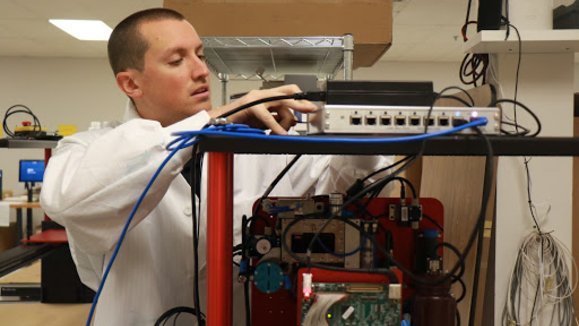
Robust, modular inkjet printing systems for all stages of development Streamlined Inkjet Development If you have a designated dropwatcher and a designated printer, switching back and forth between these two tests can be time-consuming. Changing inks, waveforms, substrates quickly on a production printer is no small feat. JetXpert printing systems incorporate everything you need for inkjet development on one platform, allowing you to move between tests with ease. Modular Design We know your R&D projects can change at a moments’ notice, so JetXpert printers are built for it. They are compatible with printheads and drive electronics from every major manufacturer, and you can easily swap between them in minutes. Powerful Analysis Tools We started with an open architecture, giving you full control over all aspects of the printing process. Then we added our industry-leading machine vision analysis systems to measure every stage of the printing process. Then we automated the testing and data capture – making a JetXpert printer the ultimate testing platform. The Role of JetXpert Printers in Industrial Inkjet Printing The JetXpert Print Station is designed to replicate the most essential parts of industrial inkjet printing, without all of the complication. We’ve kept the main components like substrate transport and ink curing, and stripped everything else out, leaving you with a flexible, easy-to-use machine. Because it is so simple, it is easy to make modifications to the system over time, like testing different printhead models, different substrates, or different printing conditions. One system is adaptable to grow with you over time as your needs change. The efficiency of development on a JetXpert Print Station is unrivaled. The printhead, drive electronics, and ink supply are used for both dropwatching or printing, moving between the two tests with ease. By using the same exact equipment for both tasks, you can move quickly yet know for certain that the testing conditions are identical. In minutes, you can measure the velocity of drops produced with a certain waveform, print samples on different substrates, and study the impact of each combination on the print quality. The faster you can move between dropwatching and printing, the faster you can understand how a change to one impacts the other.
CATEGORY
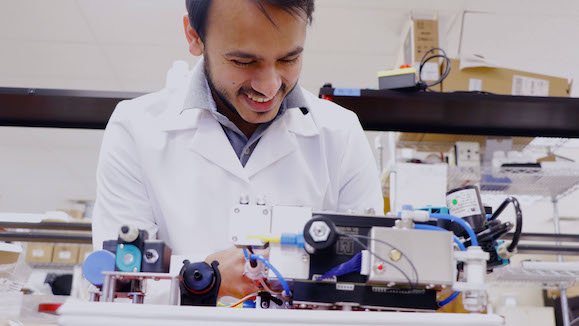
Ink Supplies Easy to use inkjet ink supply systems, whether you are looking for production-level results or simplicity for the lab Designed for JetXpert Systems Each model in our inkjet ink supply portfolio uses small volumes of fluid, is easy to clean, and is simple to use – perfect for the developer who is changing fluids constantly. We’ve packed production-level performance into an R&D footprint that fits seamlessly with the JetXpert system. Custom-Built for You Whether you are doing quick tests with syringes of fluid, or running multi-color long term sustainability testing, we’ve got an inkjet ink supply that will work for you. Select custom components for your unique fluid materials and add options like degassing or extra heaters. Wide Compatibility One single inkjet ink supply system will work with most UV, aqueous, solvent, or oil based inks. With software-controlled inlet, outlet, and meniscus pressures, the system will also work with any printhead whether it requires gravity-fed, low flow, or high flow recirculation. FAQ About Inkjet Ink Supply Systems Why do I need an ink supply system? Industrial inkjet printheads operate differently from the printheads you are familiar with from your home or office. Because they use so much ink, they are fed from a large container rather than storing the ink onboard the printhead cartridge. The ink supply system is responsible for getting the ink to the printhead, maintaining a constant pressure of ink in the head, and in some cases, constantly circulating fluid in and out of the printhead. Do I need to provide a vacuum or air pump for the ink supply? No, the ink supplies that we sell are completely standalone. The built-in pumps provide all of the positive and negative pressure needed to operate.
CATEGORY
