Polymer composites are capable of absorbing a significant amount of moisture and other gas molecules, preventing them from reaching the sensitive components. Tunable Kinetics and Selectivity: Polymer composites can be engineered to have specific sorption rates and selectivity for certain gas molecules, depending on the requirements. Adaptability: Polymer composites can be formulated to work with a wide variety of processing conditions and device designs. At the micro and nano scale, certain materials such as metal oxides and zeolites exhibit diverse and distinctive properties that are also dependent on their unique manufacturing processes. These materials can serve as the technological foundation for engineered polymer composites that incorporate metal oxides or nanostructured zeolites into suitable polymer matrices. Polymers are composed of repeating chemical units that form long chemical chains. Once cross-linked, these chains become interconnected in a three-dimensional network. This 3D matrix can also serve as a host for solid particles that possess specific properties, such as selective gas sorption or improved barrier properties for gases. The surface area of the particles is crucial for gas sorption, as it allows for a large number of interactions with molecules that come into contact with it. Zeolites are a family of aluminosilicates that vary in terms of their silicon/aluminum content ratio. Some zeolites may have pore diameters of less than 2 nanometers, resulting in an incredible surface area of up to 500 square meters per gram. This means that just 14 grams of zeolites can cover an entire soccer field surface. Polymer composites are the result of an accurate selection process involving a suitable polymer matrix, one or more active fillers (such as oxides, nanostructured materials, or others), and a variety of additional constituents that fine-tune the formulation and make it both processable and effective in its final application. Optimizing multiple functional properties in a single encapsulating medium is a complex materials science challenge. Furthermore, the fact that devices that require polymer composite-based getters or barrier adhesives can be sensitive to heat or radiation adds further constraints to materials design. By carefully considering the formulation and the chemical, physical, and surface properties of the active fillers, as well as those of the additional constituents, polymer getter composites can exhibit the desired performance characteristics. These include gas sorption capacity and kinetics, low vapor or gas transmission rate, processability under specific conditions, mechanical flexibility, optical transparency and others. Polymer getter composites have the ability to adapt to a wide range of new generation flexible and foldable electronic devices and photovoltaics in both dispensable form and as active coatings. These composites can protect the organic layers at the core of these products from moisture at a single molecule level. High sorption capacity, tunable kinetics, selectivity, and adaptability to a vast range of processing conditions and device designs make SAES getter polymer composites an enabling solution for device packaging. In the field of flexible electronics, encapsulation presents an increasing challenge because additional mechanical features such as flexibility, adhesion, durability, and robustness are required. Combining the good barrier properties of a glassy epoxy system with increased polymer chain mobility is not an easy task. It requires hard work to address the structure of the polymer backbone, the distribution of molecular weights, the glass transition temperature, and the optimized dispersion of tailor-made getter particles.
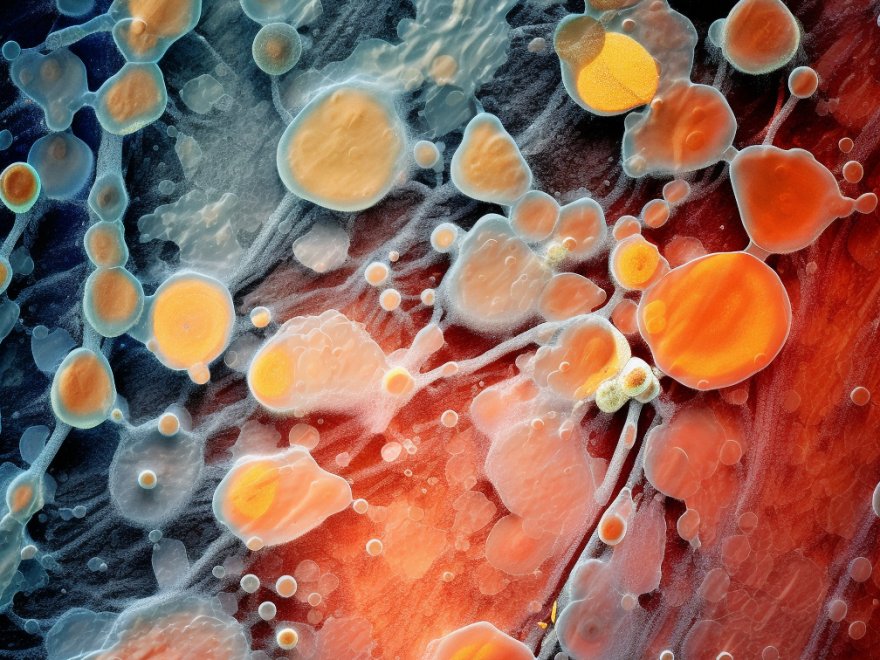
Our expertise in macromolecular chemistry and nanotechnology enables the development of a diverse range of polymer-matrix nano-composites. These innovative formulations encompass dispensable getters, active sealants for electronics encapsulation, barrier coatings, and adsorbing lacquers for flexible packaging.
CATEGORY
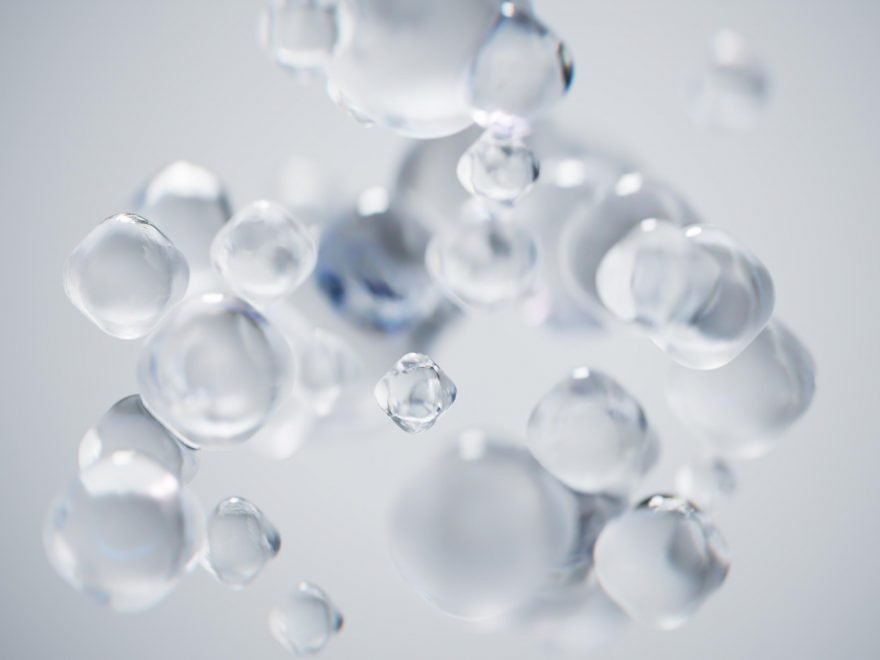
Our proprietary process creates structures with unique properties, utilizing the characteristics of wall membranes and core materials functionalities. Deep control over particle size and shape allows for the integration of diverse functionalities in innovative applications.
CATEGORY

Zeolites are a special class of crystalline alluminosilicates characterized by a microporous and 3D-structure. Selective Adsorption: The three-dimensional network create a vast array of tunnels and channels, allows them to be used in catalysis, adsorption processes, and gas separation. Hosting and Carrying: The well-defined porous structure, the mobility of extra-framework cations and surface reactivity confer to this class of material the ability to host and carry functional molecules. A well known material with new functionalities. Raw Materials: Zeolites were first described in 1756 by Baron Cronstedt. However, it was not until 1948 that synthetic zeolites were produced by Barrer, who synthesized small-port mordenite at high temperatures and pressures. Union Carbide later introduced synthetic zeolites as a new class of industrial adsorbents and catalysts for hydrocarbon conversion. Over time, new zeolite structures and compositions emerged, through an explosion of new molecular sieve structures and compositions. Today, many zeolites can be synthesized with different SiO2 content, which affects their properties. Higher SiO2 gives greater hydrothermal stability, stronger-acid catalytic activity, and greater hydrophobicity as adsorbents, while lower SiO2 gives greater cation exchange capacity and higher adsorption for polar molecules. Only few companies can control the synthesis process to optimize zeolites for different applications and use them as carriers for new functionalities. SOL-GEL hydrothermal synthesis: SOL-GEL hydrothermal synthesis is an innovative and sustainable approach to synthesize zeolites frameworks using alumina and silica sources without any organic template driving agents. Well-defined crystalline structures can be obtained through a deep control of the reaction gel. Although the approach is simple, the physicochemical process during crystallization is complex and depends on several factors such as amorphous gel preparation, synthesis parameters, reaction mixture composition and its rheological properties. By controlling the process parameters, a new set of functional additives with selected size and tunable chemical-physical properties can be prepared. Particles Surface modification: Silanization is a simple and cost-effective coating method used to modify surfaces of materials that have a high concentration of hydroxyl groups, such as zeolites, silica, and other metal oxide surfaces. The method involves binding silicon-based molecules to the particles by linking silicon atoms with hydroxyl groups on the surface. Commercially available silane-coupling agents can be used to introduce active groups, such as amino and carboxyl groups, to the surface, making it easily modifiable for further grafting and the introduction of new advanced properties. Cation exchanging reactions: Zeolites are highly effective in absorbing gases, and the distribution of extra-framework cations plays a crucial role in determining gas adsorption mechanisms and selectivities. Various experimental and simulation techniques have been employed to locate cations in different scenarios and evaluate modified zeolites prepared through cation exchange reactions. For instance, exchanging zeolites with zinc and silver ions can transform them into odor control materials, while exchanging them with palladium can enable them to ethylene adsorption. This approach can also be used to introduce guest molecules like sensors and markers, making zeolites excellent hosts for active molecules.
CATEGORY

Manipulating Alloys for Adaptable Getter Solutions. Selective Adsorption Getters can adsorb efficiently and selectively one or more gas species, enabling them to sustain high or ultra-high vacuum conditions in a variety of vacuum systems. Active Coatings Getters can act as active coatings to shield organic layers from moisture at a single molecule level. With high sorption capacity, tunable kinetics and selectivity, they provide a huge variety of functions. The origin of the getter alloys. Raw Materials Almost eighty years ago, SAES began to design complex alloys able to selectively and efficiently sorb one or more gas species from atmosphere, even in vacuum or ultra-high vacuum conditions. It was the origin of the “getter” alloys, which year after year have been continuously refined, developed and modified, generating a wide variety of advanced metal powders, parts and coatings with finely tuned sorption properties for the most demanding high-tech applications. Precision processing for tailored alloy properties: from Ingots to three-dimensional parts. Manipulation Very accurate processing conditions (from vacuum to high pressure, from room temperature up to more than 1000°C, from mild compression to forces of the order of several tons) transform the incoming metal and non-metal pellets into alloys, which form solid ingots of different shapes and dimensions, once cooled down. Mechanical processes in controlled atmosphere, like grinding, reshape the ingots into smaller pieces, down to the level of powders. While retaining the unique properties of the alloy, these powders can be formed into a variety of three-dimensional parts through compression, sintering, printing from a liquid dispersion. The physical and morphological properties, even at the micron and submicron level, are strongly dependent upon the transformation process adopted. Every single step is fundamental to fine tune the features of the alloy and make it perfectly suitable for the final application. Enabling advanced applications from micro to macro scale. Advanced Properties Getter alloys can take on various forms based on their intended application. These alloys can be shaped as two-dimensional getter wires, three-dimensional getter elements, sputtered films, loose powders, or getter coatings. They constitute an enabling part of a wide range of devices, ranging from tiny Micro Electro Mechanical Systems (MEMS) to massive synchrotron radiation rings that span kilometers in length. Furthermore, getter alloys have extensive applications beyond Earth, with their use in avionics and space systems In a diverse range of environmental conditions, the getters effectively utilize their function of selectively absorbing gas species. These advanced materials serve to maintain a high or ultra-high vacuum or safeguard microelectronics or photonics packages against detrimental effects of specific gas contaminants, even at extremely low partial pressures. The integration of getter materials is indispensable for the long-term operation of numerous microelectronics, optoelectronics, photovoltaics, cryogenic, and energy devices. Without these advanced materials, it would be impossible for such devices to remain operational for years or even decades.
CATEGORY
