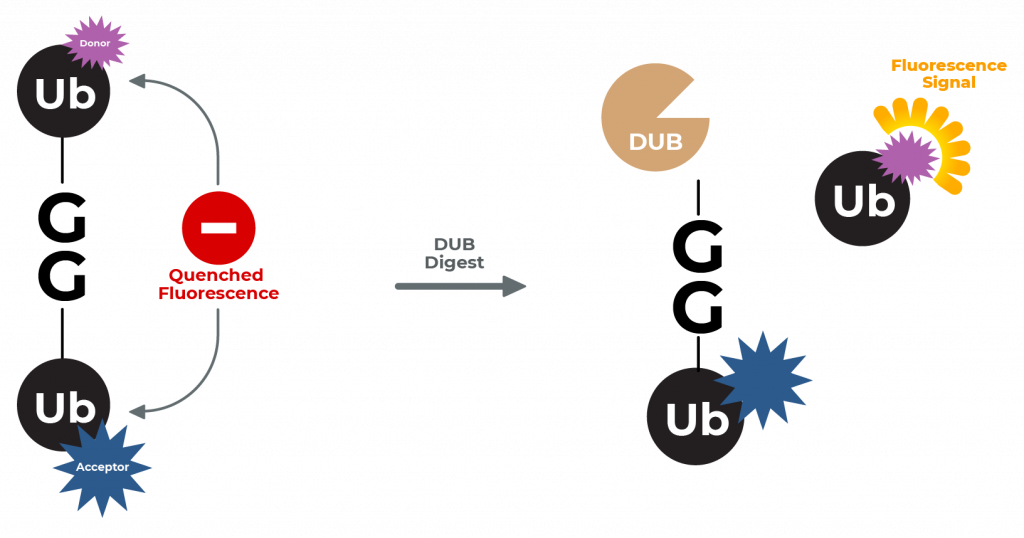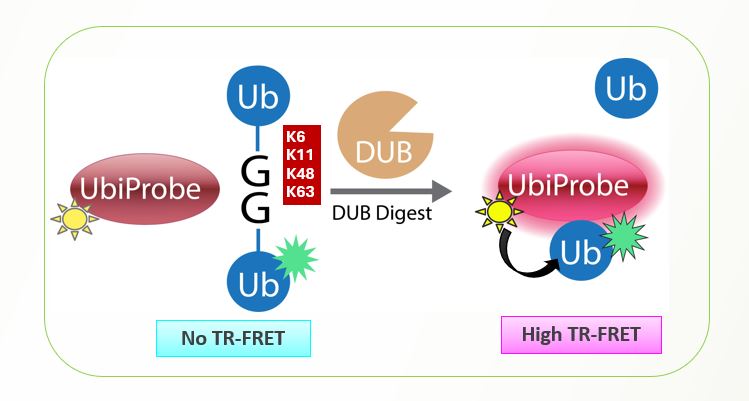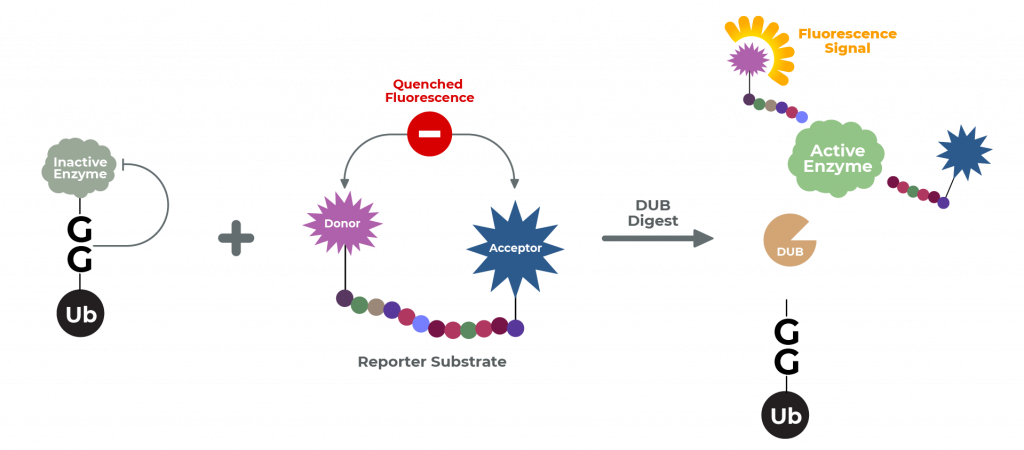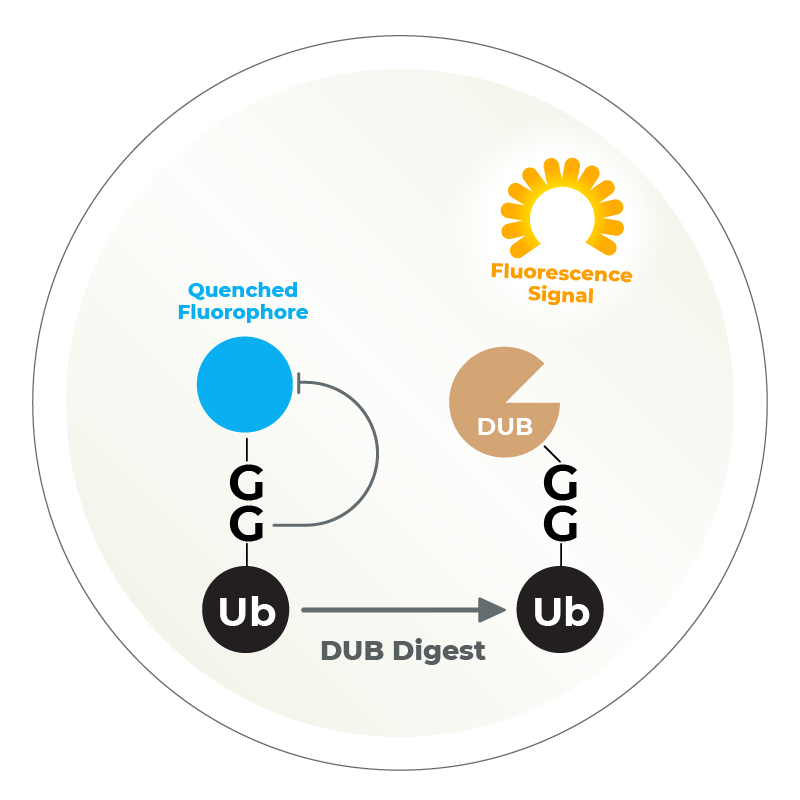
Rhodamine, AMC, VME Technologies The Ubiquitin Fluorophore Assay utilizes a ubiquitin molecule bound to a quenched fluorophore (such as Ub-Rhodamine, Ub-AMC, or Ub-VME). After the DUB digestion takes place, the fluorophore is released and fluoresces, which is detected via a plate reader. This is the simplest and most straightforward high-throughput assay to measure DUB activity. Ubiquitin Rhodamine (Ub-Rho) is a quenched, fluorescent substrate for DUBs, especially ubiquitin C-terminal hydrolases. Cleavage of the amide bond between the C-terminal glycine of ubiquitin and rhodamine results in an increase in rhodamine fluorescence at 535 nm (Exc. 485 nm). LifeSensors has a multitude of various fluorescent substrates and DUBs to be used in these assays. These DUB assays utilize physiological substrates, polyubiquitin isopeptide chain-selective substrates, and several proteins attached to the C-terminus of ubiquitin that report a fluorogenic signal upon cleavage by DUBs. Service Highlights * High-throughput screening for modulators of DUB activity * Determining activity and specificity of isopetidases for Ub/UBL-proteins * In vitro detection of ubiquitin conjugation, determination of the activity of ubiquitin conjugating enzymes