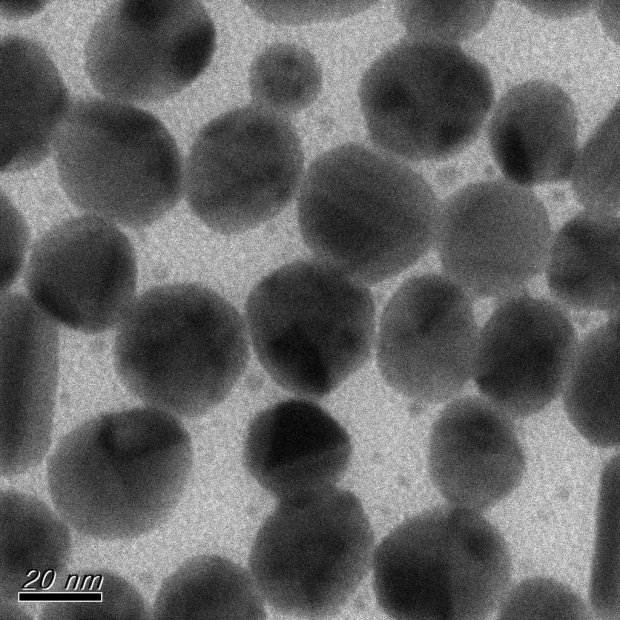
30nm Silver Nanoparticles Average size: 30 ± 5 nm Size distribution ( CV% ): < 5% Peak wavelength: 518-520 nm Silver Nanoparticle Applications Silver nanoparticles are one of the most commonly utilized nanomaterials due to their anti-microbial properties, high electrical conductivity, and optical properties. Medical Applications Silver nanopaticles are widely incorporated into wound dressings, and are used as an antiseptic and disinfectant in medical applications and in consumer goods. Silver nanoparticles have a high surface area per unit mass and release a continuous level of silver ions into their environment. The silver ions are bioactive and have broad spectrum antimicrobial properties against a wide range of bacteria. By controlling the size, shape, surface and agglomeration state of the nanoparticles, specific silver ion release profiles can be developed for a given application. Conductive Composites Incorporation of silver particles into plastics, composites, and adhesives increases the electrical conductivity of the material. Silver pastes and epoxies are widely utilized in the electronics industries. Silver nanoparticle based inks are used to print flexible electronics and have the advantage that the melting point of the small silver nanoparticles in the ink is reduced by hundreds of degrees compared to bulk silver. When scintered, these silver nanoparticle based inks have excellent conductivity. Plasmonics Silver nanoparticles have unique optical properties because they support surface plasmons. At specific wavelengths of light the surface plasmons are driven into resonance and strongly absorb or scatter incident light. This effect is so strong that it allows for individual nanoparticles as small as 20 nm in diameter to be imaged using a conventional dark field microscope. This strong coupling of metal nanostructures with light is the basis for the new field of plasmonics. Applications of plasmonic silver nanoparticles include biomedical labels, sensors, and detectors. It is also the basis for analysis techniques such as Surface Enhanced Raman Spectroscopy ( SERS ) and Surface Enhanced Fluorescent Spectroscopy. Polyvinylpyrrolidone (PVP) Surface PVP (polyvinylpyrrolidone) is a large polymer that associates with the particle surface through Van der Waals forces and metal ligand charge transfer. The 8kDa PVP molecule is not easily displaced by other molecules and offers excellent steric stability. It's a great choice for particles that may be exposed to a broad range of salt, pH, and solvent conditions. PVP is made from the monomer n-vinylpyrrolidone. At TPNT we typically use a 8 kDa version that helps prevent particles from directly contacting and aggregating when solution conditions change or when the particles are dried down onto a substrate or thin film. Advantages: Provides a stable particle surface in a variety of different solvents. While it is possible to displace PVP with molecules that contain thiols or amines, other surfaces such as citrate are more suitable for ligand exchange. Property Highlights Displaceable: PVP is less displaceable than other surfaces such as citrate, carbonate or tannic acid. Negatively charged Excellent salt stability: Stable in highly saline solutions Toxicity: Generally regarded as safe, low toxicity
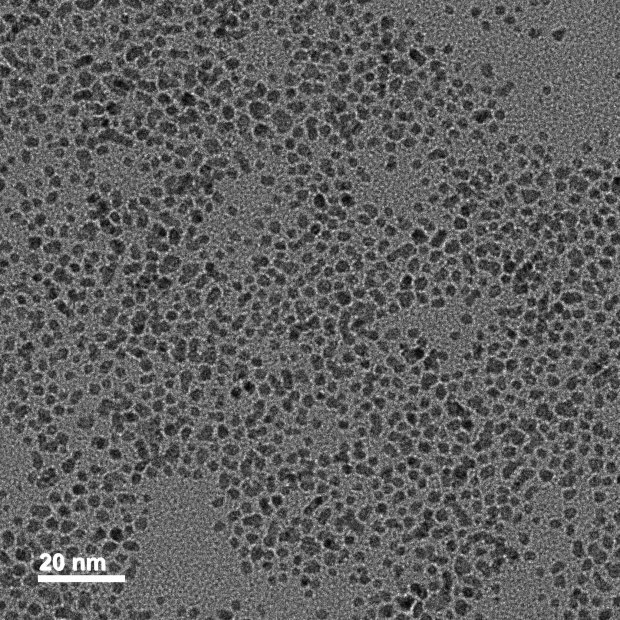
3 nm Platinum Nanoparticles Average size: 3 ± 2 nm Size distribution ( CV% ): < 10% Peak wavelength: 518-520 nm Platinum Nanoparticle Applications Platinum nanoparticles are used in several important catalytic applications including fuel cells and photocatalysts. Platinum nanocrystal arrays have also been studied as nonvolatile memory systems. A platinum colloid is a suspension with a dispersed phase consisting of platinum particles between 1 nm – 1 µm evenly dispersed in a continuous phase, in this case water. The sample can be considered to be on the nanoparticle scale if the size of the dispersed phase particles is between 1-100 nm. Platinum colloidal particles are stabilized by coating their surfaces with high polymers to form 3-D barriers or using the reduction potential of platinum to impose repulsive forces between the particles. Platinum nanoparticles have found applications in catalysts for treating automobile exhaust gas and fuel cell electrodes. Other applications of platinum nanoparticles include biosensors utilizing the optical properties Citrate Surface Citrate is one of the most common stabilizing molecules for metal nanoparticles. It provides a highly negatively charged surface that can be displaced by many other molecules or ligands such as those with terminal amines or mercapto groups. Citrate is a small molecule with multiple carboxylic acid groups that weakly associate with the particle surface. It has good stability in water and weakly-buffered solutions. However, citrate doesn’t provide steric stability and noble metal nanoparticles with citrate on their surface are susceptible to aggregation in high salt solutions and non-aqueous solvents. Advantages: Highly displaceable surface for performing ligand exchange with proteins or other ligands. Molecules with thiols or amines will readily displace citrate from the surface and strongly associate with gold or silver surfaces. Small change to hydrodynamic diameter – TEM measured diameter is very close to hydrodynamic diameter as measured with DLS. Property Highlights Displaceable: Citrate is more displaceable than tannic acid but less displaceable than carbonate. Negatively charged Salt stability: Destabilized in low salt concentrations. Toxicity: Very low
CATEGORY
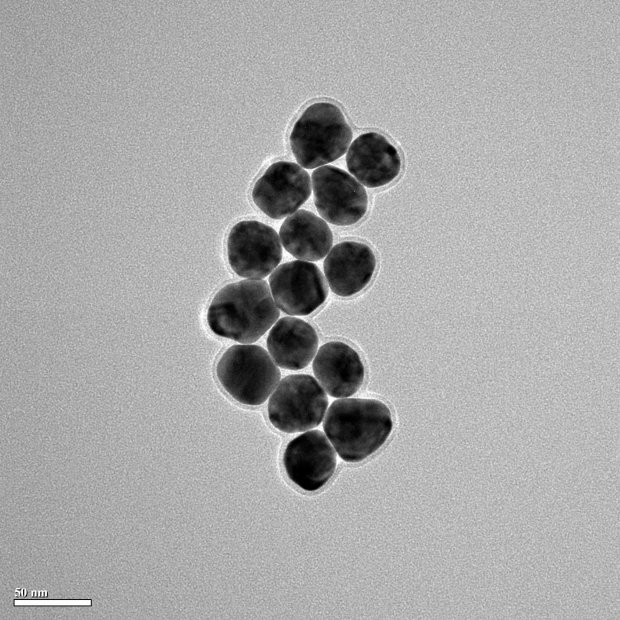
40nm Gold Nanoparticles Average size: 40 ± 3 nm Size distribution ( CV% ): < 10% Peak wavelength: 526 ± 2 nm 40 nm Gold Nanoparticles Average size: 40± 3 nm Size distribution ( CV% ): < 10% Peak wavelength: 526± 2 nm Colloidal Gold Nanoparticles Gold nanoparticles are well-known as drug delivery, imaging, catalysis, SERS and lateral flow analysis (LFA). Tripod Nano Technology (TPNT) provides three sizes for the diagnosis, 18nm, 30nm and 40nm. The spherical gold nanoparticles are synthesized by the reduction with citrate and it provides monodispersed and narrow size distribution. For diagnosis, our spherical gold nanoparticles are easily functionalized by absorption and conjugation. Features and Benefits: Widely used in detection, diagnosis and delivery systems In vitro detection tool - surface plasmon resonance, SPR - effective fluorescent energy transfer, FRET - Modification - Surface enhanced Raman spectroscopy,SERS In vivo delivery systems - Drug delivery system - Nucleic acid delivery system - Molecular targeted therapy
CATEGORY
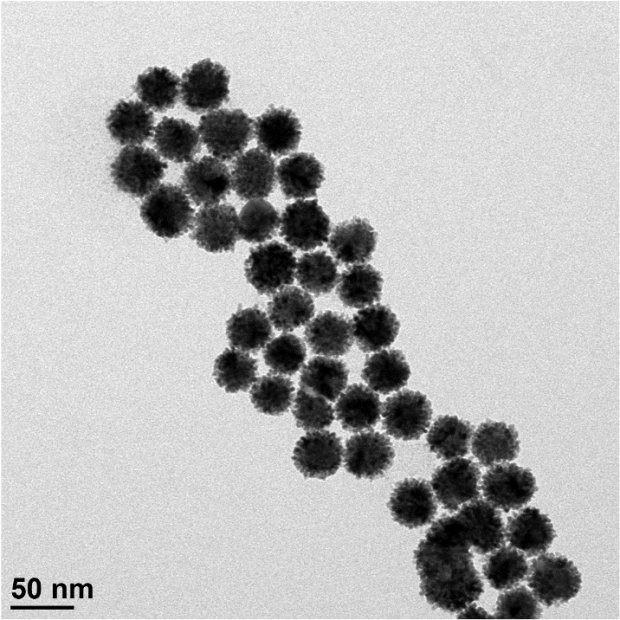
40 nm Au/Pt Nanocomposites Average size: 40 ± 3 nm Size distribution ( CV% ): < 10% Peak wavelength: 526 ± 2 nm Overview: Compared with the nano-gold colloidal solution ( Au 20-40 nm ), the nano-gold/platinum colloidal solution ( Au/Pt NPs ) is black, while the nano-gold colloidal solution ( Au 20-40 nm ) is wine red. Optically different from colorimetric methods in lateral flow analysis ( LFA ). Au/Pt NPs are also known as nano-oxidants because they have the catalytic activity of Pt skin in processing LFA, which is more favorable for signal amplification. Features and Benefits: • Use of nano-oxidants for signal amplification • The use and operation methods of Lateral Flow Analysis ( LFA ) and Enzyme Binding Immunosorbent Assay ( ELISA ) are the same as colloidal gold • For multicolor and multiple lateral flow analysis
CATEGORY
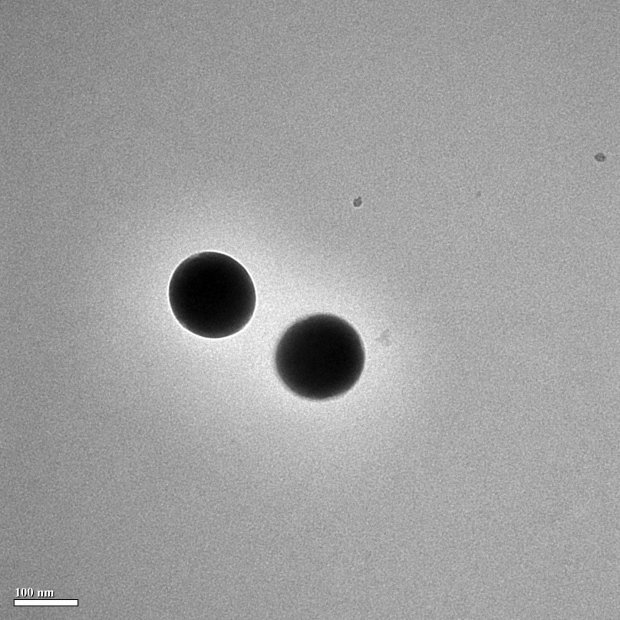
50~70 nm Average size: 100 ± 5 nm Size distribution ( CV% ): < 10% Peak wavelength: 266 nm Overview: Selenium nanoparticles (Se NPs) are orange to brown in color. Chitosan and Ascorbic Acid Synthesis. Liquid is stable, no change, high concentration ( 1500 ppm ). Features and Benefits: Agriculture Livestock
CATEGORY
