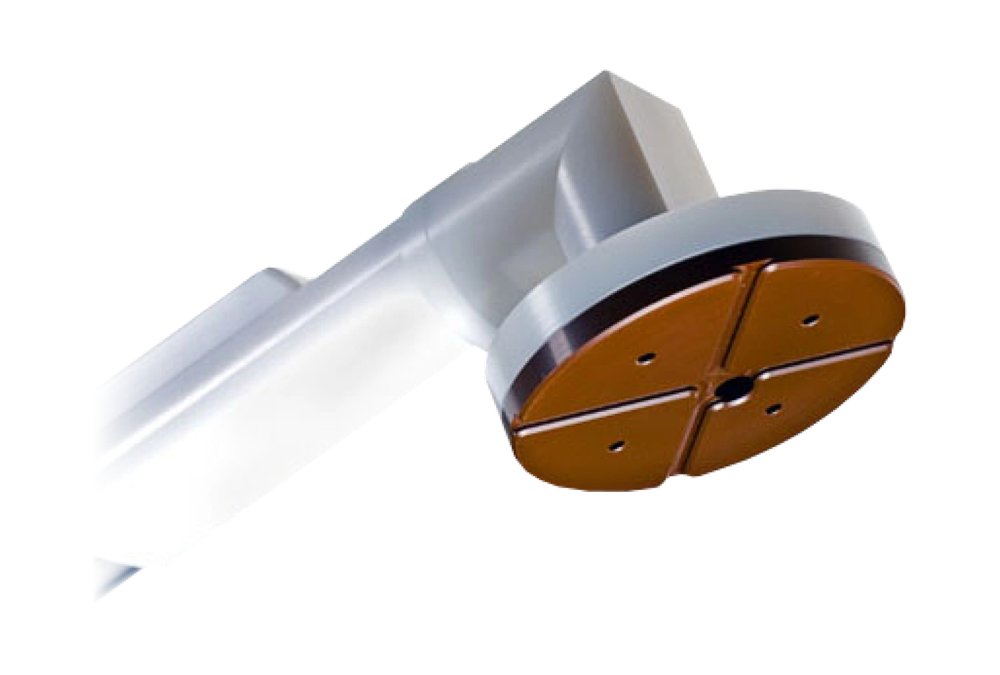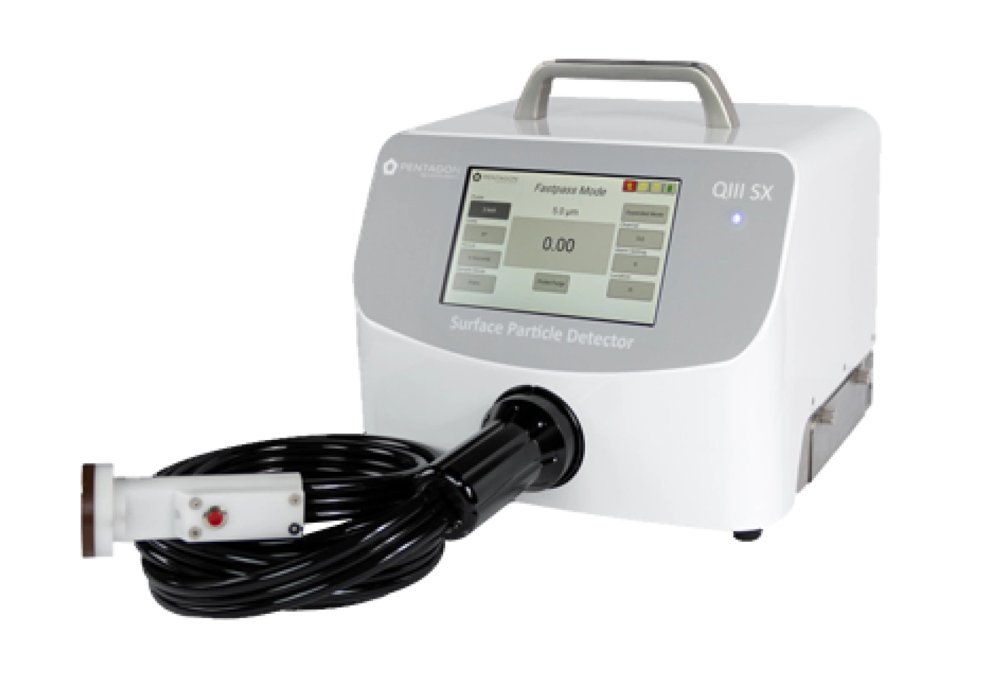
URFACE PARTICLE DETECTOR 5-125um Pentagon Technologies’ line of surface particle detectors are the standard in high technology industries for measuring and controlling surface contamination. Particles that accumulate on critical surfaces or products can reduce yield and reliability. Particles below 100um in diameter are very difficult to see with the naked eye. These particles settle fast and escape routine air monitoring. The QIII SX measures particles in the sub visible to visible range (5-125um). Use the QIII SX to find and eliminate particles that cost you time and money. Benefits - Instant measurements of surface particulate - Improve yield by reducing particles in products - Minimize troubleshooting time by quickly identifying particle sources - Monitor and set limits for particle density on incoming or outgoing materials - Drive continuous improvement through establishing a surface particle baseline - Test to standardized ISO 14644-9 classification of a surface cleanliness - Data integration into SPC systems. - BKM Mode Option - to drive consistency in measurements and specifications - Capture counted particles for analysis with optional Particle Analysis Module - 21 CFR Part 11 Compliance for life-science applications Technical Description - Particle sensitivity range: 5um - 125um - Channels: 5, 10, 25, 50, 100, 125um - Sensor: Laser Diode - Size & Weight: 12” W X 10.5” D X 9” H, 18.5 lbs - Batteries: (2) Lithium Ion, hot swappablevDisplay: 7” WVGA, sealed touch screen interface with pinch zoom. - Data Units: Particle Density and Raw counts - Advanced user interface with Data Analysis Mode for averaging surface particle measurements - Data Output: USB port, ethernet, optional WiFi - Probe Included: ½” right angle probe. - Purge Options Included: Purge Filter to zero count the detector and a Purge Probe Function to zero count the probe. - Self cleaning mode with 50% increased air flow - Input power: 100-240 VAC, 50/60 hz - Sampling Modes: Static and Dynamic - CE Certified - Languages: English, Chinese, Japanese, Korean - Made in the USA Options Standard Probes Large array of probes for measuring flat surfaces, inside pipes, gas lines, containers, or edges that are difficult to clean. Custom Probes We can design a probe to fit custom surfaces. Particle Analysis Module Probe Capture the particles for analysis. BKM Mode Best Known Method captures measuring points, specifications, and image of surface being tested. Robotic Cell Connect remotely to for in-situ measurements. Battery Charger Charge an additional set of batteries.
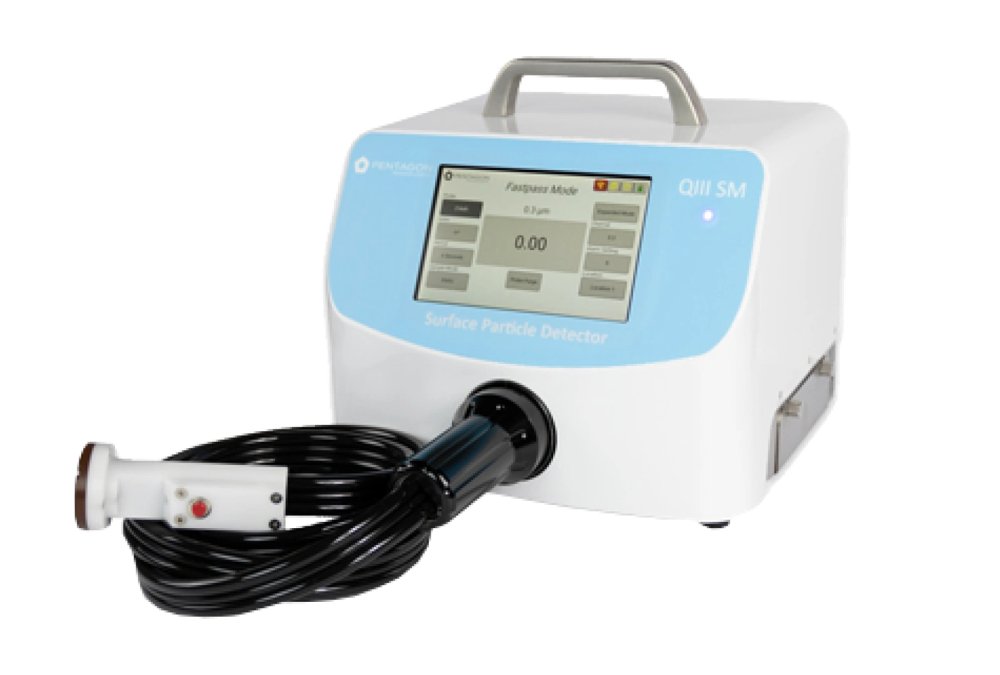
SURFACE PARTICLE DETECTOR 0.3-10um Redefine productivity. Pentagon Technologies' line of surface particle detectors are the standard in high technology industries for measuring and controlling surface contamination. Particles that accumulate on critical surfaces or products can reduce yield and reliability. To achieve optimal performance in particle sensitive manufacturing it is important to have a quantified metric for surface contamination. The QIII Surface Metric - QIII SM, uses an advanced, patented interface to re-suspend particulate from the surface and draw them through a particle detector. Use the QIII SM to find and eliminate the particles that cost you time and money. Benefits - Instant measurements of surface particulate - Improve yield by reducing surface particles - Minimize troubleshooting time by quickly identifying particle sources - Monitor and set limits for particle density on incoming or outgoing materials - Drive continuous improvement through establishing a surface particle baseline - Test to standardized ISO 14644-9 classification of surface cleanliness - Data integration into SPC systems. - BKM Mode Option - to drive consistency in measurements and specifications - Capture counted particles for analysis with optional Particle Analysis Module - 21 CFR Part 11 Compliance for life-science applications Technical Description - Particle sensitivity range: 0.3um -10um - Channels: 0.3, 0.5, 1.0, 3.0, 5.0, 10.0um - Sensor: Laser Diode - Size & Weight: 12” W X 10.5” D X 9” H, 18.5 lbs - Batteries: (2) Lithium Ion, hot swappable - Display: 7” WVGA, sealed touch screen interface with pinch zoom. - Data Units: Particle Density and Raw counts - Advanced user interface with Data Analysis Mode for averaging surface particle measurements - Data Output: USB port, ethernet, optional WiFi - Probe Included: ½” right angle probe. - Purge Options Included: Purge Filter to zero count the detector and a Purge Probe Function to zero count the probe. - Self cleaning mode with 50% increased air flow - Input power: 100-240 VAC, 50/60 hz - Sampling Modes: Static and Dynamic - CE Certified - Languages: English, Chinese, Japanese, Korean - Made in the USA Options Standard Probes: Large array of probes for measuring flat surfaces, inside pipes, gas lines, containers, or edges that are difficult to clean. Custom Probes: We can design a probe to fit custom surfaces. Particle Analysis Module Probe: Capture the particles for analysis. BKM Mode: Best Known Method captures measuring points, specifications, and image of surface being tested. Robotic Cell: Connect remotely to for in-situ measurements. Battery Charger: Charge an additional set of batteries.
CATEGORY
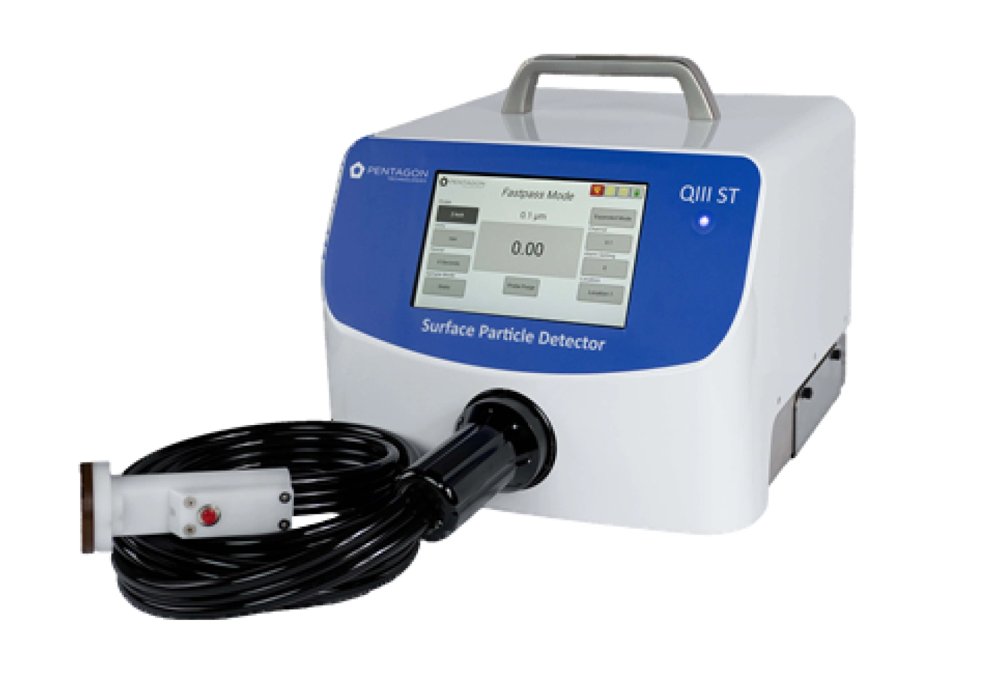
QIII ST™ SURFACE PARTICLE DETECTOR 0.1-5um Redefine productivity. Pentagon Technologies’ line of surface particle detectors are the standard in high technology industries for measuring and controlling surface contamination. Particles that accumulate on critical surfaces or products can reduce yield and reliability. To achieve optimal performance in particle sensitive manufacturing it is important to have a quantified metric for surface contamination. The QIII Surface Technology - QIII ST, uses an advanced, patented interface to re-suspend particulate from the surface and draw them through a particle detector. Use the QIII ST to find and eliminate the particles that cost you time and money. Benefits - Instant measurements of surface particulate - Improve yield by reducing particles - Minimize troubleshooting time by quickly identifying particle sources - Monitor and set limits for particle density on incoming or outgoing materials - Drive continuous improvement through establishing a surface particle baseline - Test to standardized ISO 14644-9 classification of surface cleanliness - Data integration into SPC systems. - BKM Mode Option - to drive consistency in measurements and specifications - Capture counted particles for analysis with optional Particle Analysis Module - 21 CFR Part 11 Compliance for Lifescience applications Technical Description - Particle sensitivity range: 0.1um - 5um - Channels: 0.1, 0.2, 0.3, 1.0, 3.0, 5.0um - Sensor: Laser Diode - Size & Weight: 12” W X 12” D X 9” H, 26.5 lbs - Batteries: (2) Lithium Ion, hot swappable - Display: 7” WVGA, sealed touch screen interface with pinch zoom. - Data Units: Particle Density and Raw counts - Advanced user interface with Data Analysis Mode for averaging surface particle measurements - Data Output: USB port, ethernet, optional WiFi - Probe Included: 1/2” right angle probe. - Purge Options Included: Purge Filter to zero count the detector and a Purge Probe Function to zero count the probe. - Self cleaning mode with 50% increased air flow - Input power: 100-240 VAC, 50/60 hz - Sampling Modes: Static and Dynamic - CE Certified - Languages: English, Chinese, Japanese, Korean - Made in the USA Options Standard Probes Large array of probes for measuring flat surfaces, inside pipes, gas lines, containers, or edges that are difficult to clean. Custom Probes We can design a probe to fit custom surfaces. Particle Analysis Module Probe Capture the particles for analysis. BKM Mode Best Known Method captures measuring points, specifications, and image of surface being tested. Robotic Cell Connect remotely to for in-situ measurements. Battery Charger Charge an additional set of batteries.
CATEGORY
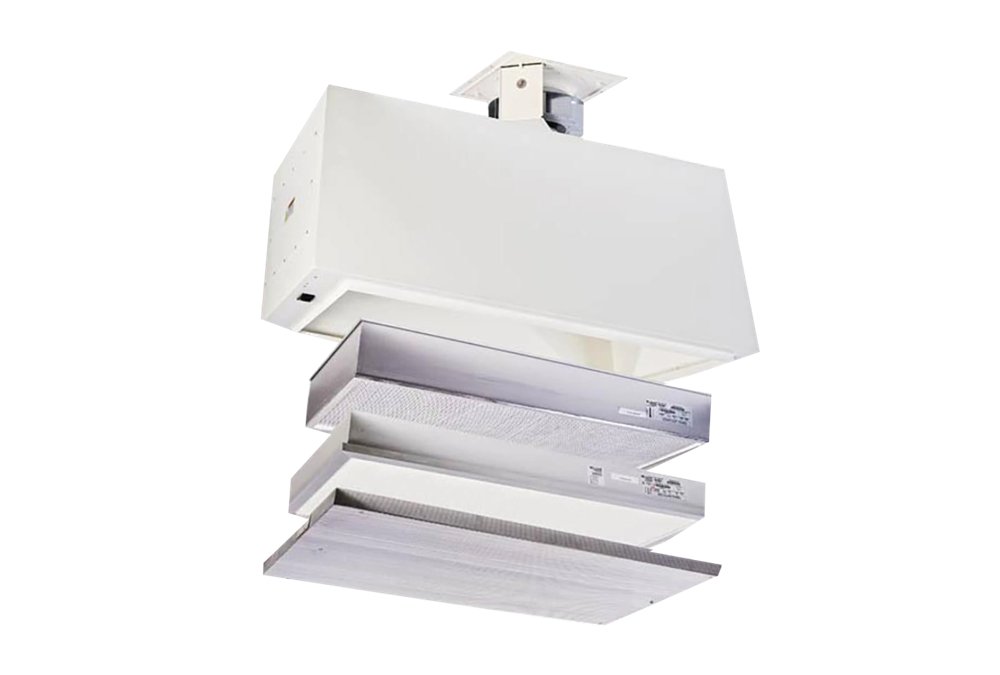
CLEAN TOOLS REQUIRE CLEAN AIR Pentagon Technologies designs and builds small, customized units for every type of environment. We begin by consulting with each client to determine their needs and understand their issues. Our team will create an initial design that meets your environment and airflow management specifications. Once we have specified the configuration, airflow, size and standards required by the process and environment, we begin the process of engineering and testing your fan filter. Only after your filter unit meets or exceeds these specifications will it be installed in your cleanroom. Our commitment to innovative, customized solutions includes making sure that the air in your EFEM meets the highest possible standard of particle reduction in the most efficient way possible. Our engineers test, balance and service the units in the field. Once installed, our team can rebalance and retest your unit as needed. We offer this level of support to any fab, anywhere. Benefits - Our units can reach 99.99995% efficiency at.12µ mpps. No existing filter surpasses this level. - Our fan filter units can meet the new ISO 14644-1 standard for a Class 1 cleanroom – no more than 10 particles at 0.1µ per cubic meter. - Airflow must be correct for particle control and pressurization. Our filter units maintain the optimum balance of both by using adjustable dampers to monitor airflow velocity. - You have options for a number of adjustment capabilities, including speed, ionization, and the number of blowers in your unit. Any specification can be addressed in the design of your filter – from fan capacity to failure alarms, remote operation, service requirements and noise level. - Several filter options are available – borosilicate fiber, low boron and no boron (PTFE) filters. - We work in every kind of material – steel, plastic, aluminum – and can produce units any size, based on your needs. - We can design and add chemical filtration that is customized for your fab environment. - Pentagon Technologies requires filter and blower accessibility in every design. - We can provide units that meet any specification, including tight space restrictions or unique power requirements.
CATEGORY