TRADE/MATERIAL NAME: Graphene Nanoplatelets CHEMICAL NAME: Graphene SYNONYMS: Few-layered graphene This SDS is valid for the following Graphene Grades: PureWave Graphene, PureSheets MONO, PureSheets QUATTRO Use of the substance/Preparation: For laboratory research purposes only. Supplier: Raymor Industries Inc. (2) HAZARDS IDENTIFICATION (EC) GHS Classification: Not available GHS Label elements, including precautionary statements Signal Word: Warning Hazard Statements: May form combustible dust concentrations in air. WHMIS Classification: Not available OSHA/HCS Status: This material is considered hazardous by the OSHA Hazard Communication Standard (29 CFR 1910.1200). Classification of the substance or mixture: COMBUSTIBLE DUSTS Precautionary statement(s): Keep container tightly closed. Keep away from heat, sparks, open flames and hot surfaces. - No smoking. Sanding and grinding dusts may be harmful if inhaled. Prevent dust accumulation. Emits toxic fumes when heated. HMIS Classification Health hazard: 2 Flammability: 0 Physical hazards: 0 Potential Health Effects: Inhalation May be harmful if inhaled. Causes respiratory tract irritation. Skin May be harmful if absorbed through skin. Causes skin irritation. Eyes Causes eye irritation. Ingestion May be harmful if swallowed. Hazard codes: Xi Risk Statements: R36/37/38 (3) COMPOSITION/INFORMATION ON INGREDIENTS INGREDIENT NAME: Synthetic Graphite CAS NUMBER: 7782-42-5 PERCENT: 90-100 EC NUMBER: 231-955-3 EC CLASSIFICATION: Xi R36/37/38 Trace impurities: Not available 0-1 Not available Not available (4) FIRST AID MEASURES Eye contact: Immediately flush eyes gently and thoroughly, including under the eyelids, with clean running water for 20 minutes. Skin contact: Wash thoroughly with soap and water. Seek medical attention. Inhalation: Remove victim to fresh air. Restore and/or support breathing as needed. Seek medical attention. Ingestion: Call poison control centre. Never give anything by mouth to someone is unconscious or convulsing. Seek medical attention. (5) FIRE-FIGHTING MEASURES Suitable extinguishing media: Water fog, carbon dioxide, dry chemical, foam. Decomposition products: Carbon monoxide, carbon dioxide and metal oxide. Special protective equipment for fire-fighters: Wear self-contained breathing apparatus if the fire is large. (6) ACCIDENTAL RELEASE MEASURES Personal precautions: Wear protective equipment. Keep unprotected persons away. Ensure adequate ventilation. Keep away from ignition sources. Prevent the formation of dust-air mixture. Environmental precautions: Keep spilt material away from drains and runoff, ground-water and soil. Methods for clean-up: Collect spilled material using a vacuum with HEPA filter. Avoid formation of dust. (7) HANDLING AND STORAGE Handling: Ensure good ventilation of the workplace. Avoid dust formation. Keep powder away from open flames and other sources of ignition. Keep work areas clean and free of waste. Avoid contact with skin and eyes. Storage: Keep container in a cool, well-ventilated area. Keep container tightly closed and sealed until ready for use. Avoid all possible sources of ignition (spark or flame). Store away from strong oxidizing and reducing agents. (8) EXPOSURE CONTROLS/PERSONAL PROTECTION Exposure limit values: Occupational Safety and Health Administration Permissible Exposure Limit (OSHA PEL; United States). Time Weighted Average (TWA): 5 mg/m³ Form: Respirable TWA: 10 mg/m³ American Conference of Governmental Industrial Hygienists Threshold Limit Value (ACGIH TLV; United States, 4/2014). TWA: 2 mg/m³ 8 hours. Form: Respirable fraction OSHA PEL Z3 (United States, 2/2013) according to OSHA 29CFR 1910.1200 Subpart Z - Toxic and Hazardous Substances TWA: 15 mppcf 8 hours. Occupational exposure controls: Install and operate general and/or local exhaust ventilation systems of sufficient power to maintain airborne concentration below the defined or recommended limit. If possible, manipulate under fume hood to avoid exposure. Respiratory protection: Use a properly fitted, air-purifying or air-fed respirator complying with an approved standard, such as NIOSH (US) or EN 143 (EU). Respirator selection must be based on known or anticipated exposure levels, the hazards of the material, and the safe working limits of the selected respirator. For little exposure, use type P95 (NIOSH) or type P1 (EN 143) respirators. For high exposure, use type P99 (NIOSH) or type P2 (EN 143) respirators. For further details, please consult the following ISO documents ISO/TS 12901-1:2012: Occupational risk management applied to engineered nanomaterials -- Part 1: Principles and approaches, as well as ISO/TS 12901-2:2014: Occupational risk management applied to engineered nanomaterials -- Part 2: Use of the control banding approach. Hand protection: Handle with protecting gloves. Wash and dry hands after manipulation. Eye protection: Wear safety glasses conforming to an approved standard, such as NIOSH (US) or EN 166 (EU). Skin protection: Wear protective clothing to prevent contact with skin. The type of clothing must depend on the level of exposure to the product. (9) PHYSICAL AND CHEMICAL PROPERTIES General Information: Appearance – black powder Odour – None Important health, safety and environmental information: pH: Not applicable. Boiling point: Not available. Flash point: Not available. Explosive properties: Not available. Oxidising properties: Not expected. Vapour pressure: Not applicable. Relative density: Not available. Solubility: Not available. Water solubility: Insoluble. Partition coefficient: Not applicable. Viscosity: Not applicable. Vapour density: Not applicable. Evaporation rate: Not applicable. Other Information: Melting point: 3652 – 3697 °C (10) STABILITY AND REACTIVITY This product is stable under normal storage conditions. Conditions to avoid: Ignition source. Materials to avoid: Oxidising and reducing agents. Hazardous decomposition products: Under fire conditions: carbon monoxide and carbon dioxide. (11) TOXICOLOGICAL INFORMATION This product contains engineered nanoparticles which have structural features with at least one dimension of 100 nanometers or less. Acute toxicity: Irritant effect on skin: Skin contact with graphene powder may cause irritation. Irritant effect on the eye: Eye contact has shown irritation. Respiratory or skin sensitization: Graphene powder may cause skin sensitization. Inhalation: Inhalation can cause irritation. Ingestion: May be harmful if swallowed. (12) ECOLOGICAL INFORMATION No known significant effects or critical hazards. (13) DISPOSAL CONSIDERATIONS The generation of waste should be avoided or minimised whenever possible. Avoid dispersal of spilt material and runoff and contact with soil, waterways, drains and sewers. Disposal of this product, and any by-product should at all times comply with the requirements of environmental protection and waste disposal legislation and any national, regional and local authority requirements. (14) TRANSPORT INFORMATION UN Number: Not applicable Shipping Name: Not applicable Class: Not applicable Packing Group: Not applicable Label: Not applicable (15) REGULATORY INFORMATION EU REGULATIONS Hazard Symbol: Xi Irritant Risk phrases: R36/37/38 Irritating to eyes, respiratory system and skin. Safety phrases: S7 Keep container tightly closed. S22 Do not breathe dust. S29 Do not empty into drains. S36/37/39 Wear suitable protective clothing such as a Tyvek suit with a hood, nitrile gloves and eye/face protection such as goggles. Wearing a positive atmosphere personal respirator (PAPR) equipped with P100 air filters is recommended. CANADIAN REGULATIONS WHMIS Classification: Class D2B Toxic material Moderate eye irritant causing other toxic effects Moderate respiratory irritant
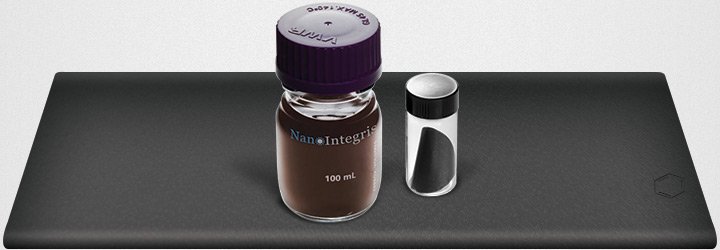
These single-wall carbon nanotubes are purified to values of 95-98% (nanotube content measured via the Itkis ratio). PureTubes offer metal content lower than 5% metal content (as per TGA). These are our highest purity un-sorted nanotubes. Sourced from the arc-discharge processes and offered in solution or dry powder. Characterisation Optical Absorbance Figure 1. Optical absorbance plots for our PureTubes. Following the method of Ouyang et al. (Acc. Chem. Res. 35, 1018 (2002)), we can calculate the transition energies for nanotubes in our diameter range (1.2 – 1.7 nm). We see peaks where we would expect them: S33 transitions should lie between ~450-630 nm, M11 transitions between ~600-850 nm, and S22 transitions between ~ 900-1,270 nm. We estimate our SWCNT purity by the ratio of the S22 peak area (after linear background subtraction) to the total area in the band (Itkis et al. JACS (2005) 127, pp 3439-3448). Before comparison, the individual peak areas are scaled by empirically determined values for the M11 and S22 extinction coefficients. Metal Catalyst Neutron Activation Analysis Nickel (wt %): Unprocessed SWNTs 3.59, PureTubes 0.23 Yttrium (wt %): Unprocessed SWNTs 0.70, PureTubes 0.05 Iron (wt %): Unprocessed SWNTs 0.70, PureTubes 0.06 Total (wt %): Unprocessed SWNTs 4.99, PureTubes 0.34 Iodine (wt %): Unprocessed SWNTs 0.00, PureTubes 0.00 Full elemental profiles of our products are available upon request. Figure 2. Neutron activation analysis (NAA) data taken from our unprocessed and PureTube powders. NAA reveals that our PureTubes contain significantly lower levels of metallic/catalyst impurities than the raw arc discharge SWNTs from which they are produced. Metal Catalyst Thermogravimetric Analysis Figure 3. Thermogravimetric (TGA) plots of our nanotube products. Because our PureTubes do not contain iodixanol, the burnoff of residual surfactant and amorphous carbon is solely accountable for the ~5% mass decrease which occurs between approximately 200 and 400°C. Amorphous Carbon Raman Figure 4. Resonance Raman plots for our PureTubes. All Raman measurements were taken using a 514 nm laser. The G/D ratios of our products range from approximately 12 to 41, indicating extremely low levels of amorphous carbon and/or damaged nanotubes. Length Atomic Force Microscopy Figure 5. Atomic-force microscopy (AFM) data indicates that our SWNTs range in length from approximately 100 nm to 4 microns. Length histograms of our PureTubes. Properties at a Glance Nanotube Type: Arc discharge (Manufacturer data) Diameter Range: 1.2 – 1.7 nm (Manufacturer data) Mean Diameter: 1.4 nm (Manufacturer data) Length Range: 100 nm – 4 μm (AFM) Mean Length: ~1 micron (AFM) Catalyst Impurity: ~0.5% by mass (NAA, TGA) Carbonaceous Impurity: < 5% by mass (TGA, Raman) Semiconducting CNT Content: n/a (Optical absorbance) Metallic CNT Content: n/a (Optical absorbance) Shelf Life: 6 months Nanotube Concentration: 0.25 mg/mL Surfactant Concentration: 1% w/v Surfactant Type: Ionic (proprietary mixture)
CATEGORY
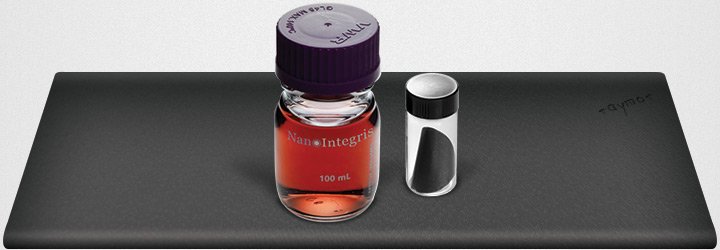
High Purity Semiconducting Nanotubes IsoSol-S100 / sc-SWCNT A semiconducting carbon nanotube ink with the highest purity ever measured coupled to a fully scalable manufacturing route: IsoSol-S100. The semiconducting single-wall carbon nanotubes are sourced from the highly-scalable RF-plasma grown carbon nanotubes, and separated using a conjugated polymer extraction process. Product Summary The use of specialized patent-pending dialkyl homopolymers developed by the National Research Council of Canada within the Printable Electronics Consortium, has enabled us to disperse and extract single-walled carbon nanotubes to the highest levels of semiconducting enrichment and purity to date: IsoSol-S100. The starting materials are the purified and highly-scalable RF-plasma grown carbon nanotubes supplied by Raymor Nanotech. UV-Vis-NIR spectrophotometric assessment of purity indicate that this material has semiconducting purities at or greater than 99.9% with the metrics of Itkis Ratio and Phi Values exceeding 0.5 and 0.4, respectively. The highly graphitized starting material and low sonication intensity utilized for the extraction technique minimizes damage to the nanotubes, allowing the material to exhibit high crystallinity and longer average lengths of 1μm, not previously seen when utilizing DGU or Chromatography-based separation methods. Additionally, the material is processed in organic solvent and the polymer/nanotube ratio can be adjusted to less than a factor of four with nanotube concentrations 10x higher than our aqueous dispersions. The solutions also display stabilities of greater than six months. These properties promote great nanotube deposition and adhesion for device creation. Experimentally, thin film transistors, prepared on SiO2/Si substrates have led to average mobilities exceeding 27cm2/(Vs) and On/Off ratios of 1.8×10⁶ and is perfectly-suited for commercial ink jet and aerosol jet printing. Product Specifications Optical Purity 99.9% Itkis Ratio (Ї) 0.5 Phi Value (Φ) 0.39 Nanotube Concentration 0.01mg/mL Surfactant: Nanotube Concentration <4 Standard Solvent Media Toluene Shelf Life 6-9 months SEM and AFM Diameter Range 1.2 – 1.4 nm Mean Length 1 μm Raman The Radical Breath Mode (RBM) of the spectra excited at 785nm shows that the IsoSol-S100 material has a nearly flat baseline in the metallic region from 145 to 175 cm-1, indicative of a high semiconducting purity. Metal Catalyst Impurity <0.5% Amorphous Carbon Impurity PLE Map A photoluminescence excitation (PLE) map for the IsoSol-S100 material shows well resolved (S 22,S 11) maxima, indicative of well separated nanotubes. UP to 19 (n,m) species contribute to the spectrum, with 8 or 9 having peak intensities higher than or close to 0.5. The (10,9) chirality peak with S 11=1570nm and S 22=910nm, proved to be the strongest. For further details, reach out to our Sales Manager at sales@raymor.com or call +1 450.434.6266. Large volume discounts available for large quantities. Please contact us for more information. IsoSol-S100 Technical Data Sheet NanoIntegris supplies premium nanomaterials to companies and academic institutions developing next-generation electronics, energy, and biomedical technologies.
CATEGORY
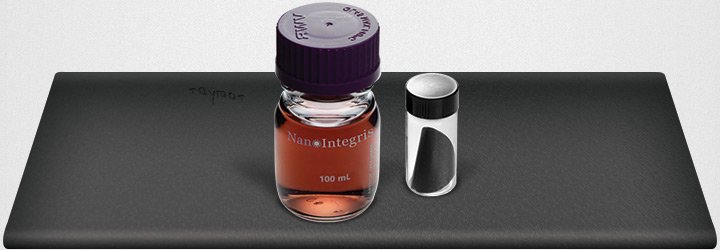
Semiconducting single-wall carbon nanotubes are a NanoIntegris exclusivity. Sorted using our patent density gradient ultracentrifugation (DGU) process. Offered in an acqueous solution or a powder. Electronic Type Enrichment - Optical Absorbance: Figure 1. Optical absorbance plots for our IsoNanotubes-S (99%), respectively. Following the method of Ouyang et al. (Acc. Chem. Res. 35, 1018 (2002)), we can calculate the transition energies for nanotubes in our diameter range (1.2 – 1.7 nm). We see peaks where we would expect them: S33 transitions should lie between ~450-630 nm, M11 transitions between ~600-850 nm, and S22 transitions between ~ 900-1,270 nm. We estimate our metallic and semiconducting enrichment levels based on ratios of the M11 and S22 peak areas after linear background subtraction. Before comparison, the individual peak areas are scaled by empirically determined values for the M11 and S22 extinction coefficients. Metal Catalyst - Neutron Activation Analysis: Unprocessed SWNTs: Nickel (wt %) 3.59; Yttrium (wt %) 0.70; Iron (wt %) 0.70; Total (wt %) 4.99; Iodine (wt %) 0.00. IsoNanotubes-M + S: Nickel (wt %) 0.07; Yttrium (wt %) 0.38; Iron (wt %) 0.72; Total (wt %) 1.17; Iodine (wt %) 5.29. Full elemental profiles of our products are available upon request. Figure 2. Neutron activation analysis (NAA) data taken from our IsoNanotube and PureTube powders. NAA reveals that our IsoNanotubes and PureTubes contain significantly lower levels of metallic/catalyst impurities than the raw arc discharge SWNTs from which they are produced. Our IsoNanotube samples, however, contain approximately 5% iodine by mass, resulting from residual iodixanol on the surface of the nanotubes that is not eliminated by our surfactant removal procedures. Metal Catalyst - Thermogravimetric Analysis: Figure 3. Thermogravimetric (TGA) plots of our nanotube products. Approximately 2/3 of the ~15% mass decrease which occurs between ~200 and ~400°C is attributable to the burno! of residual iodixanol adsorbed to the surface of the nanotubes. NAA data indicates that our IsoNanotubes contain roughly 5% iodine by mass (see Figure 3); iodine comprises roughly half the mass of an iodixanol molecule. The remaining 5% mass decrease is attributable to the burno! of residual surfactant and carbonaceous impurities. Amorphous Carbon - Raman: Figure 4. Resonance Raman plots for our IsoNanotubes-M (95%). IsoNanotubes-S (99%), and PureTubes, respectively. All Raman measurements were taken using a 514 nm laser. The G/D ratios of our products range from approximately 12 to 41, indicating extremely low levels of amorphous carbon and/or damaged nanotubes. Length - Atomic Force Microscopy: Figure 5. Atomic-force microscopy (AFM) data indicates that our SWNTs range in length from approximately 100 nm to 4 microns. Length histograms of our IsoNanotubes-M respectively. Properties at a Glance: Nanotube Type: Arc discharge (Manufacturer data); Diameter Range: 1.2 – 1.7 nm (Manufacturer data); Mean Diameter: 1.4 nm (Manufacturer data); Length Range: 100 nm – 4 μm (AFM); Mean Length: ~1 micron (AFM); Catalyst Impurity: ~1% by mass (NAA, TGA); Carbonaceous Impurity: < 5% by mass (TGA, Raman); Semiconducting CNT Content: 90%, 95%, 98%, or 99+% (Optical absorbance); Metallic CNT Content: n/a (Optical absorbance); Shelf Life: 6 months; Nanotube Concentration: 0.01 mg/mL; Surfactant Concentration: 1% w/v; Surfactant Type: Ionic (proprietary mixture). For further details, reach out to our Sales Manager at sales@raymor.com or call +1 450.434.6266. Large volume discounts available for large quantities. Please contact us for more information. IsoNanotubes-S Technical Data Sheet
CATEGORY

Metallic single-wall carbon nanotubes are a NanoIntegris exclusivity. Sorted using our patent density gradient ultracentrifugation (DGU) process. Offered in an acqueous solution or a powder. Property | IsoNanotubes-M - Nanotube Type: Arc discharge; Diameter Range: 1.2 – 1.7 nm; Mean Diameter: 1.4 nm; Length Range: 100 nm – 4 μm (AFM); Mean Length: ~0.5 micron (AFM); Catalyst Impurity: ~1% by mass (NAA, TGA); Carbonaceous Impurity: < 5% by mass (TGA, Raman); Semiconducting CNT Content: n/a (Optical absorbance); Metallic CNT Content: 70%, 95%, 98% or 99% (Optical absorbance); Shelf Life: 6 months; Nanotube Concentration: 0.01 mg/mL; Surfactant Concentration: 1% w/v; Surfactant Type: Ionic (proprietary mixture) For further details, reach out to our Sales Manager at sales@raymor.com or call +1 450.434.6266. Large volume discounts available for large quantities. Please contact us for more information.
CATEGORY
