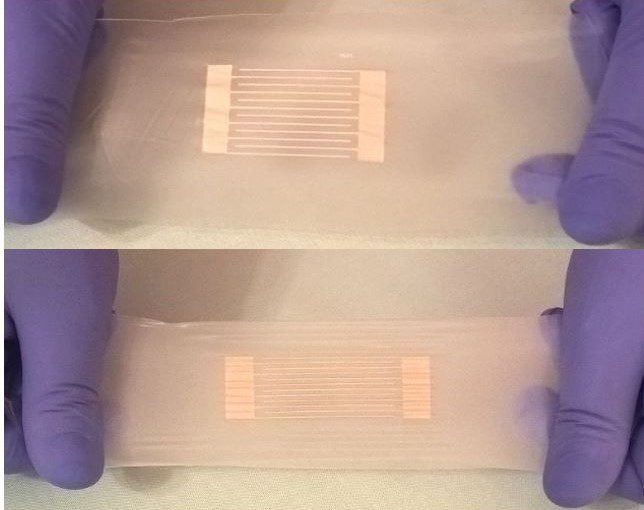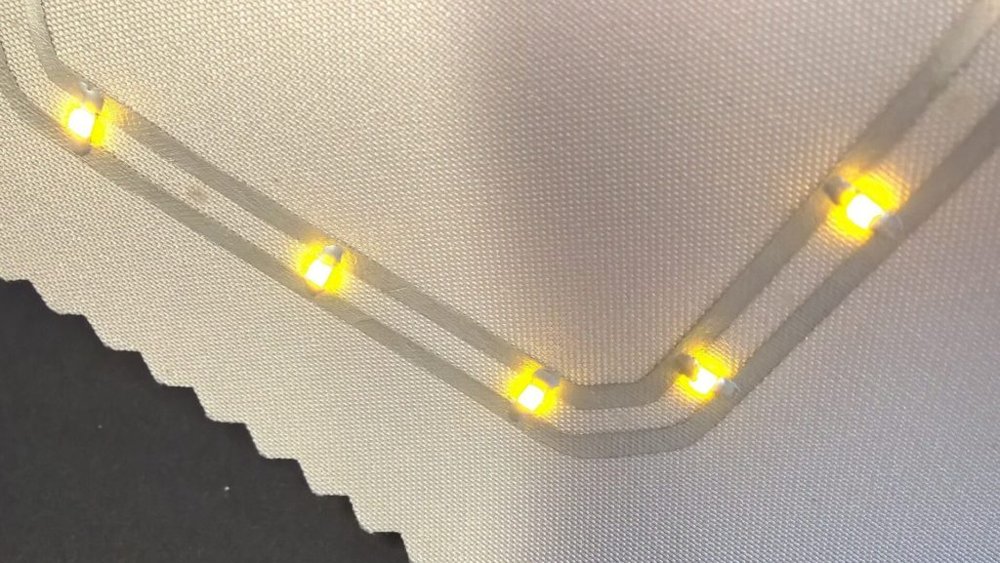
Conventional surface mount LEDs are attached to the tracks using conductive adhesive SA0850. This example illustrates how rigid components (such as surface mount LEDs) can be integrated with flexible components to create hybrid circuitry.
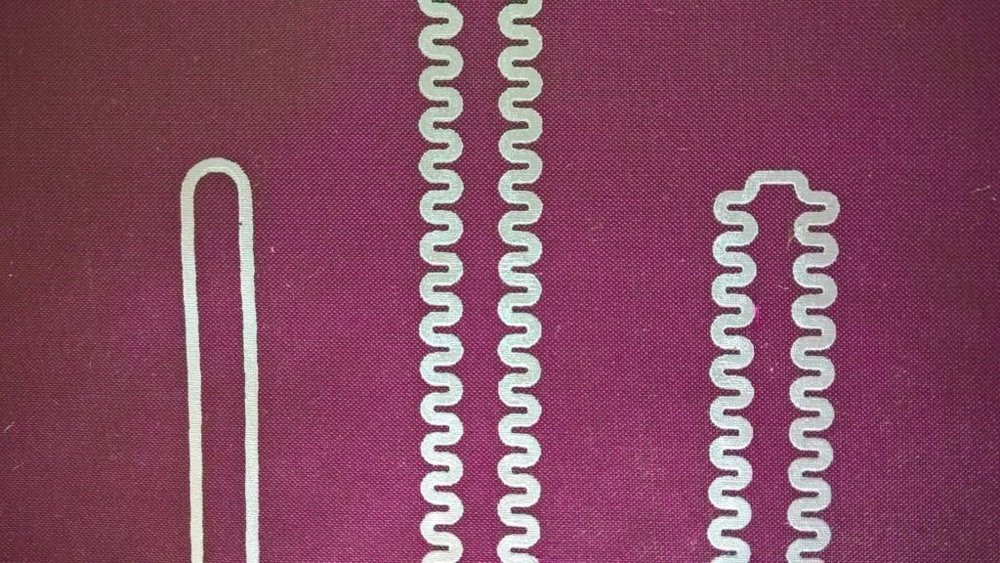
Materials available from DZP Technologies make it possible to create electronic circuitry directly on fabrics, without changing the fabric feel, performance and physical properties. For example, our silver conductive inks and adhesives produce conductive tracks with outstanding mechanical properties and environmental stability. There is no deterioration of the conductive properties, even after extended exposure to 85% relative humidity at 85 ̊C. Many of our inks produce circuitry which can withstand washing in domestic laundry machines.
CATEGORY
Lighting circuitry printed directly on acrylic fabric, using conductive ink F0280. Conventional surface mount LEDs are attached to the tracks using conductive adhesive SA0850. This example illustrates how rigid components (such as surface mount LEDs) can be integrated with flexible components to create hybrid circuitry. Silver conductive tracks printed on silk, using conductive ink F0280. The tracks can replace wires and metallic yarns, and serve as the conductive component of sensors, heaters, lighting, antennas, and other circuitry.
CATEGORY
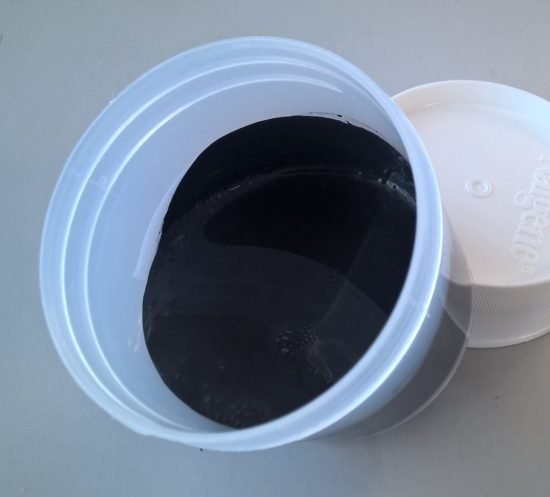
G0360 Stretchable graphene paste Graphene conductive paste which is designed specifically for stretchable and flexible electronics, providing excellent mechanical properties when printed on stretchable substrates. The paste can be applied by screen printing, stencil printing, bar coating, rod coating, Mayer rod, painting, and other deposition methods. Solids content: 48% Applications: Conductive tracks and films in printed circuitry, printed heaters, strain, load and pressure sensors. Key substrates: Polymers including thermoplastic urethanes (TPU), PET, PEN, paper, textiles, etc. Cure temperature: Heating at any temperature up to 180 °C.
CATEGORY