By California Fine Wire Company
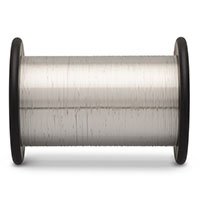
Palladium's exceptional electrical conductivity makes it a preferred material for various applications. Resistance to corrosion ensures its suitability in environments exposed to harsh elements. Palladium is used for wire bonding and has widespread application in diverse electronic components, including capacitors, resistors, and inductors.
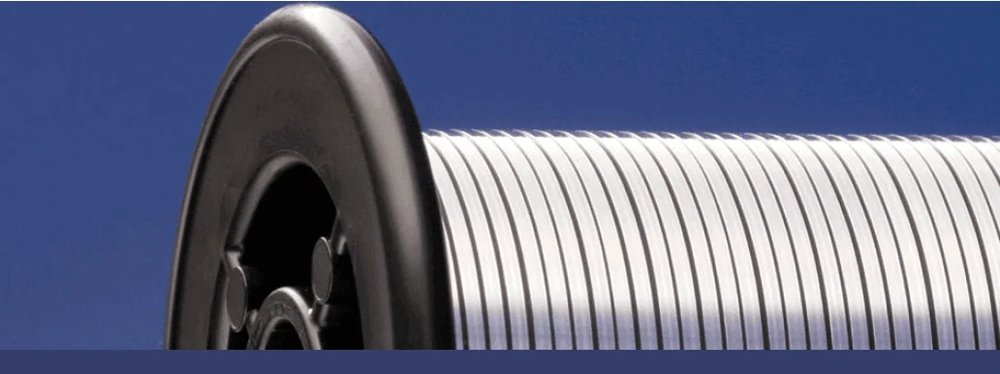
Nickel is a popular material for wires because its top layer can resist extreme chemical corrosion, including air and water oxidation. Nickel alloys are also resilient against acids and alkalis. Nickel wire is frequently used in products containing electrical components or those that experience high levels of heat (up to 2,600 °F). The material is also magnetic as long as it remains below 350 °F. Beyond this point, it will lose its magnetic properties. California Fine Wire manufactures high-quality custom wire products for a vast range of applications and industries. We can draw nickel wires to diameters as small as 0.0004 inch and offer various configurations, such as round, duplex, ribbon, or stranded. Our other wire materials include aluminum, copper, thermocouple alloys, gold, silver, platinum, and more. Types Of Nickel Wire Nickel wires come in a variety of alloys. The following are the most common types. Pure Nickel Wire Pure nickel is one of the most valued metals in the world. Because of its superior malleability and ductility, nickel wires can be stretched to achieve thinness that would break other metals. Pure nickel wires are also excellent conductors of heat and electricity. For these reasons, nickel wires are used most commonly in the aerospace and medical industries. Copper-Nickel (Monel) Wire Composed of roughly two-thirds nickel, one-third copper, and trace amounts of iron, carbon, silicon, and manganese, Monel is stronger than pure nickel. Monel is also highly corrosion-resistant, especially in seawater. Therefore, this material is popular for marine and chemical processing applications. Nichrome Also known as nickel chrome, nichrome is a nickel and chromium alloy with varying levels of each metal. The number following the nichrome type indicates the proportion of nickel to chromium. For example, Nichrome 60 consists of about 60% nickel and 40% chromium. Nichrome is especially effective at heat and oxidation resistance, often serving as the heating element in household appliances like toasters and hair dryers. Ceramic sculptors, glassmakers, laboratories, and construction sites also use nichrome to heat objects. Nickel Wire Benefits Nickel wire offers the following advantages to any application. - Corrosion resistance - High-temperature resistance - Electrical conductivity - Oxidation resistance, especially in saltwater - Acid, alkali, and dry gas resistance - Excellent ductility - Exceptional mechanical strength Applications And Industries For Nickel Wire These are just some of the industries that rely on nickel wire for everyday operation. - Oil and gas: Offshore rigs and onshore plants utilize nickel wire for corrosive, high-temperature fuel production. - Medical: Medical devices need wires that effectively conduct heat and electricity, so they often contain nickel wire. - Aerospace and defense: Aircraft turbines feature nickel wires because they must withstand high temperatures and pressures. - Manufacturing: Radiant tubes and other heat treating equipment rely on nickel wires to help manufacture metal components. - Marine: Nickel wires make shipbuilding and other marine operations possible. - Electronics: Nickel wires are essential for products like electrical contacts, fasteners, and electronic parts. Premium Nickel Wire From California Fine Wire Because of its versatility and toughness, nickel wire is an ideal choice for many applications. This material is highly valued for its strength, ductility, conductivity, and resistance to corrosion and extreme temperatures. At California Fine Wire, we manufacture wires based on your unique industry and application standards. We use only the highest quality raw materials and strive to exceed our customers’ expectations. We can insulate all our wire products with PTFE or enamel, and we can add a copper, gold, silver, tin, or extra nickel plating using our innovative electroplating capabilities.
CATEGORY
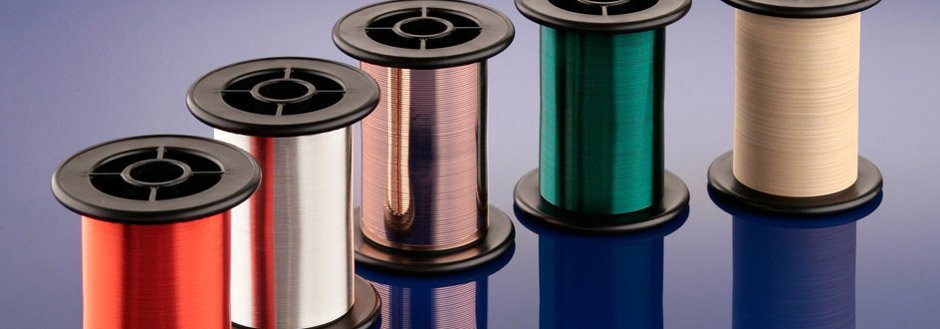
Have you ever felt that you were searching for the “best of both worlds” (and not finding it!)? Every day we make choices for what we would really like to have and what we will accept. Creative metallurgists went one step further and set out to create the “best of both worlds” by combining two or more materials into one component. If you are having a hard time imagining the result, take a look at your pots and pans, especially the bottoms. Nearly all, if not all, stainless steel pots and pans these days have either copper or aluminum bottoms – a cladding that melds the high thermal conductivity of one material with the durability, hygienic characteristics, and aesthetics of another. Clad materials are created to optimize characteristics such as strength, corrosion resistance, cost, radiopacity, electrical properties, thermal properties, weight and formability into a single component. When you think about it, insulated wire is a composite material. It combines the insulating properties of one material with the electrical properties of another. In practice, materials referred to as “clad” are combinations of two or more dissimilar metals that are metallurgically bonded together by such processes as hot rolling, pressing, extrusion, and even explosive methods. Cladding is normally applied in mills by manufacturers of sheet, plate, or tubing. Once formed, the clad materials may be further processed and fabricated to produce the desired components, (i.e, wire). Clad materials are widely used in the chemical process, offshore oil production, oil refining, and electric power generation industries. Clad wire may be comprised of various core materials such as aluminum, copper, gold, nickel alloys, niobium-titanium, platinum, steel, tantalum, and others. Many of the same materials may also be used as cladding – aluminum, copper, nickel, stainless steel, platinum, tantalum, and others. California Fine Wire offers popular clad wires such as dumet, 27% nickel clad copper, copper clad aluminum, copper clad steel, and copper clad niobium 48% titanium. Clad wire can be processed in the same way as standard wire, by drawing through dies for round products or rolling in mills to produce ribbon. Round wires can also be insulated with any insulation that is offered on standard wire and stranded to create multifilament cables. Call us to discover our capability to meet your specific wire needs. Clad wire can also be readily plated with a third metal, such as copper, gold, nickel, silver, or tin; depending on the type of clad material. One example would be gold-plated dumet (NiFe core, Cu cladding).
CATEGORY
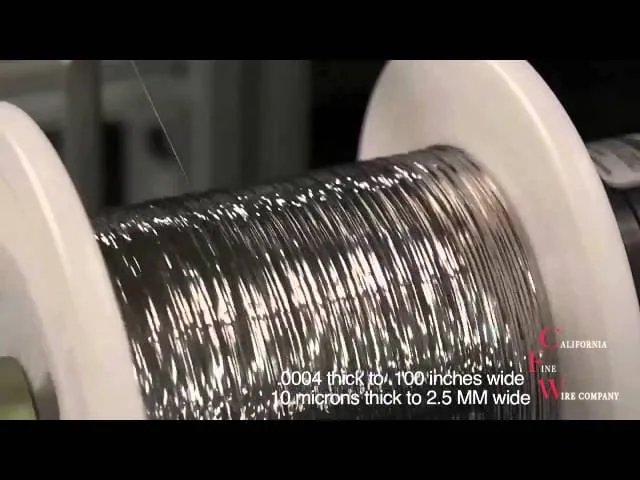
At California Fine Wire Co. we use precision rolling mills to provide flat wire with very tight dimensions. Our flat wire is used in a number of applications including lead ribbon, voice coil winding, and microelectronic interconnections. Ribbon wire can be produced in thicknesses between 0.0002″ and 0.050″, and in widths between 0.002″ and 0.100″. Other wire sizes may also be possible to produce, depending on the material and required dimensions. Typically, a flattening ratio of up to 40:1 can be achieved while still maintaining a minimum corner radius. Rolling mills are designed to operate dry in order to produce wire with a clean, oil-free surface, which eliminates the need for secondary cleaning processes. However, for high purity applications, both ultrasonic cleaning and chemical cleaning processes are available. Our consultants can assist customers regarding the availability of specific alloys and the ideal metal for their particular application. We carry numerous metal wire alloys including stainless steel, copper, and precious metals; that meet all applicable DFARS, REACH, and RoHs requirements. Quality testing, including tensile testing, dimensional inspection, and resistance testing, can be performed according to our certified procedures to verify conformance to customer specifications. Wire can be processed in a range of production volumes for an array of applications throughout the defense, medical, aerospace, and electronics industries. Wire may be spooled or cut to length, as desired by the customer. All lead times are evaluated on a job by job basis. For additional information about our wire flattening capability, see the table below or contact us directly. Technical Advantages That Make a Difference Flat ribbon wire gives you a few benefits that are hard to match with round wire. With a broader surface area, it can create stronger bonding contact or better electrical conductivity in limited space. It can also help reduce unwanted electromagnetic effects because its shape influences how current flows through a system. Thickness and width control play a huge role too. Very fine dimensions can support micro-scale components without adding unnecessary bulk. Even edge quality matters — clean edges improve handling and reduce the risk of surface damage or connection issues. These details go a long way in making assemblies more reliable over time. Choosing the Right Material for Your Project Not every project needs the same performance features. That’s why flat ribbon wire is made from a wide range of metals and alloys. Copper might be ideal if conductivity is your top priority. Precious metals such as gold or platinum are helpful for corrosion-sensitive or medical applications. Nickel alloys serve high-temperature environments well. The goal is to match the wire material with how the product will be used: electrical output, flexibility, thermal stability, or compatibility with other components. A quick discussion with engineering support can help narrow down the best fit without over-specifying. Ready to Move Forward? Let’s Make It Easy If you have drawings, dimensions, or even rough ideas, a direct conversation with a wire expert can speed everything up. You can request help choosing material, figuring out tolerances, or understanding how to scale from prototypes to volume production. Starting early also shortens the quoting process and helps avoid delays once you’re ready to build. Contact us, share what you’re working on, and we’ll guide you through the next steps so your project keeps moving. Flattening & Rolling Specifications Process: Flattening, Rolling Wire Shape: Ribbon/ Flat Materials: Aluminum, Copper, Nickel, Nickel Alloys, Resistance Wire Alloys, Thermocouple Alloys, Gold, Silver, Platinum, Platinum Alloys, Glass Sealing Alloys, Bonding Wire, Numerous Additional Options Available Finish: Bare, Plated Flat Wire Width: 0.0004″ to 0.10″, 10 microns to 2.5 mm, Other Sizes on Request Flattening Ratio: Up to 40:1 Wire Length: Cut Lengths: 0.125″ to 72″, No Limit on Spooled Lengths Applications: Lead Ribbon, Voice Coil Winding, Bonding, Microelectronic Interconnects, Catheters and Other Medical Products Production Volume: Prototype, Low Volume, High Volume Typical Lead Time: Quoted on a Job by Job Basis Additional Information Industry Focus: Aerospace, Defense, Electronics, Medical, Research & Development Industry Standards: ISO 9001 Certified, DFARS, REACH, RoHS
CATEGORY
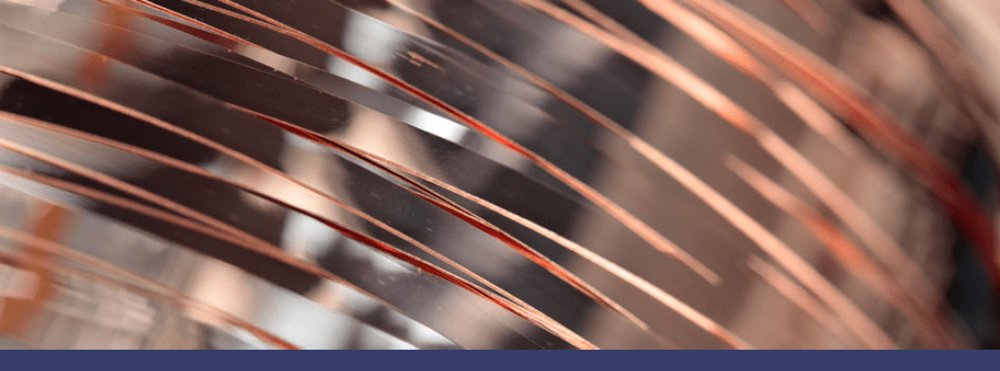
Humans have been using copper since the predynastic Egyptians and Sumerians. During the Roman Empire copper was principally mined on Cyprus, hence the origin of the name of the metal as Cyprium (metal of Cyprus), later shortened to Cuprum. As technology has progressed copper has remained a highly useful element. Although the Copper Development Association reports that 0.7 trillion pounds of copper have been mined throughout history, there are still over five trillion pounds remaining in the earth. According to the May 26, 2007 edition of New Scientist, the earth has an estimated 61 years supply of copper left. Fortunately however, copper has an infinite recyclable life and has one of the highest recycling rates of any other engineering metal. The fact that premium grade scrap has about 95 percent of the value of newly mined metal ensures that this rate remains high. The wire industry uses primarily newly refined copper for its products. Second only to silver in its electrical conductivity, this reddish, lustrous metal is highly ductile and malleable. Surpassing both gold and aluminum in its electrical conductivity, copper is now being used for bonding wire. When alloyed with nickel and/or manganese, it finds use in resistance wire applications. Copper and its alloys have excellent ductility and are supplied by California Fine Wire in ribbon and round forms. Round diameters can be drawn as small as 0.0005 and ribbons rolled as small as 0.00025" x 0.010". Call us to discover our capabilities on your specific wire needs. Copper wire can be readily plated with such materials as gold, nickel, silver, tin, or solder. We process a wide range of copper wire. From high silicon bronze to brass; from copper with cadmium to copper with zirconium, California Fine Wire has a wire to suit your needs. Whether your application requires the strength and corrosion resistance of berrilyium modified copper or the purity of 99.999% copper, let California Fine Wire supply your next fine wire order.
CATEGORY
