By Intlvac
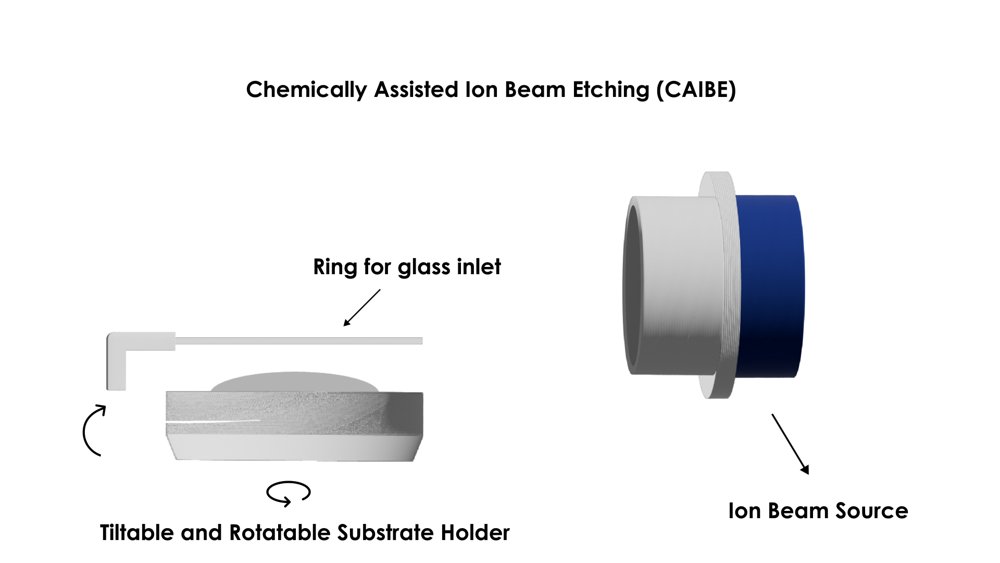
Chemically Assisted Ion Beam Etching introduces reactive gases directly at the substrate surface during ion bombardment. The localized chemical interaction increases material removal rates and enhances selectivity while maintaining directional control. CAIBE is particularly effective for compound materials and applications demanding tailored etch behavior. Other Systems - Nanoquest I - Nanoquest III - Nanoquest Pico

Key System Features Industry-Leading Ion Sources: Like all Intlvac systems, the Nanochrome™ IV PARMS system incorporates Intlvac’s world-renowned ion sources. These sources are meticulously designed, perfected in-house, and rigorously tested to ensure they deliver substrates that meet the highest standards. Whether on the first or 100th use, these ion sources maintain exceptional performance, ensuring reliability over time. Thoughtful Design: The Nanochrome™ IV PARMS system features a clamshell chassis that provides easy access for maintenance and adjustments. Despite being the largest model in the Nanochrome™ series, it maintains a compact footprint that minimizes floor space requirements, making it suitable for laboratories of any size. Versatile Vacuum Options: The system offers two high-vacuum pump configurations: a cryopump setup or dual turbomolecular pumps. While both are effective, cryopumps excel in faster pump-down times and cleaner operation, whereas turbomolecular pumps handle a wider range of gases and require no regeneration step. This flexibility allows users to tailor the system to their specific needs. Nanochrome™ IV PARMS The Nanochrome™ IV PARMS (Plasma Assisted Reactive Magnetron Sputtering) system stands as a true workhorse in the field of modern sputtering technology. Built on the reliable and versatile Nanochrome platform, the PARMS system sets a new standard by offering unparalleled material quality and boasting the most advanced capabilities of the Nanochrome lineup. Exceptional Sputtering Performance The Nanochrome™ IV PARMS system supports magnetron sputtering under multiple excitation modes, including Dual AC, pulsed DC, DC, and RF. This versatility enables the production of a wide range of oxides, such as Tantalum, Niobium, Titanium, Germanium, and Silicon. For materials incompatible with magnetron sputtering, the inclusion of e-beam instrumentation ensures the system can handle almost any material via evaporation, offering unmatched flexibility. Sputtering rates of up to 5Å/s emphasize the system’s efficiency, while its hallmark precision ensures consistent and uniform results across all applications. In peer-reviewed work published in Journal of Vacuum Science & Technology A (2024), Nanochrome IV PARMS enabled low-loss Al₂O₃ planar waveguides deposited at just 150 °C, combining a 23.3 nm/min deposition rate with optical losses as low as 0.1 dB/cm in the optical communications band. Key Benefits - Exceptional process repeatability - Stable deposition rates - High-quality oxide and nitride film production - Capability to create films with high layer counts - Optional load-lock operation for enhanced efficiency Reactive Sputtering: A Game-Changer What Is Reactive Sputtering? Reactive sputtering involves introducing a reactive gas—such as oxygen or nitrogen—into the chamber to interact with a pure metal target, creating a reacted film. This process enables the production of high-quality oxide and nitride films with precise control over film properties by adjusting the reactive gas flow. Why Choose Reactive Sputtering? Traditional sputtering methods often require high temperatures or post-deposition annealing to achieve low optical loss. In contrast, Nanochrome IV PARMS enables as-deposited low-loss films through enhanced plasma control. Peer-reviewed studies show that the ion-assisted, dual AC PARMS process: - Produces dense, low-defect films with minimal void formation - Enables low optical losses without annealing - Maintains high deposition rates while preserving film quality - Achieves excellent uniformity across wafers (~0.8–1%) - Delivers sub-nanometer surface roughness, reducing scattering losses This combination of performance characteristics is critical for applications such as optical waveguides, photonic circuits, and precision coatings, where both optical quality and process scalability are essential. Advanced Features The Nanochrome™ IV PARMS system includes advanced optical endpoint monitoring for precision control. Key features: - Onboard re-optimization - Broad 350-1650 nm optical control range - Compatibility with major optical design software - Ideal for broadband AR coatings, V-coats, step filters, notch filters, and multiband pass applications Load-Lock System An optional load-lock system, available in manual or automatic configurations, allows for sample swapping under vacuum. This reduces downtime and increases workflow efficiency, with pump-down times of under 10 minutes. Who Benefits from the Nanochrome™ IV PARMS? The Nanochrome™ IV PARMS system is ideal for large-scale production of precision optical coatings, filters, anti-reflective coatings, semiconductors, dielectric materials, and superconductors. Designed as a cornerstone for manufacturing, not just a supplemental tool, the system can handle advanced methods, including ion beam-assisted sputtering, co-sputtering, and optical endpoint monitoring. Demonstrated low-loss Al₂O₃ waveguide films suitable for visible and telecom wavelengths. Ahmadi et al. Low-loss and low-temperature Al₂O₃ thin films for integrated photonics and optical coatings, J. Vac. Sci. Technol. A 42, 063402 (2024): 2D and 3D images of the surface morphology and the height profile across 2.5 μm acquired by AFM for the (a) as-deposited Al 2 O 3 film, (b) the Al 2 O 3 film annealed at 400 °C for 4 h, and (c) the Al 2 O 3 film annealed at 600 °C for 4 h. A is the top image set and C is the bottom image set. Proven Performance in Peer-Reviewed Research The Nanochrome IV PARMS system is validated through multiple peer-reviewed studies demonstrating its ability to produce low-loss, high-quality optical thin films across different material systems. Aluminum Oxide (Al₂O₃)– Integrated Photonics (Ahmadi et al, 2024) Using Nanochrome IV PARMS, researchers deposited 1 µm amorphous Al₂O₃ films at 150 °C with a high deposition rate of 23.3 nm/min, achieving: - < 1 dB/cm optical loss at 638 nm - As low as 0.1 dB/cm in the telecom band - Excellent uniformity (<1%) and ultra-smooth surfaces (~0.24 nm roughness) Germanium Oxide (GeO₂)– Waveguide Applications (Miller et al,2020) In a complementary study, Nanochrome IV PARMS enabled low-loss GeO₂ thin films with: - Optical losses as low as 0.1 dB/cm at 638 nm (as-deposited) - Deposition rates ranging from 6–38 nm/min - Sub-nanometer surface roughness and ~0.8% wafer uniformity Consistent Performance Across Materials - Low optical loss without post-processing - Dense, stoichiometric films - Excellent uniformity and repeatability - High deposition rates at low temperatures Applications Precision Optical Coatings and Filters Anti-Reflective Coatings Semiconductors & Dielectrics Superconductors The Nanochrome™ IV PARMS system embodies the perfect balance of innovation, precision, and efficiency, making it the ultimate solution for cutting-edge sputtering and coating applications.
CATEGORY
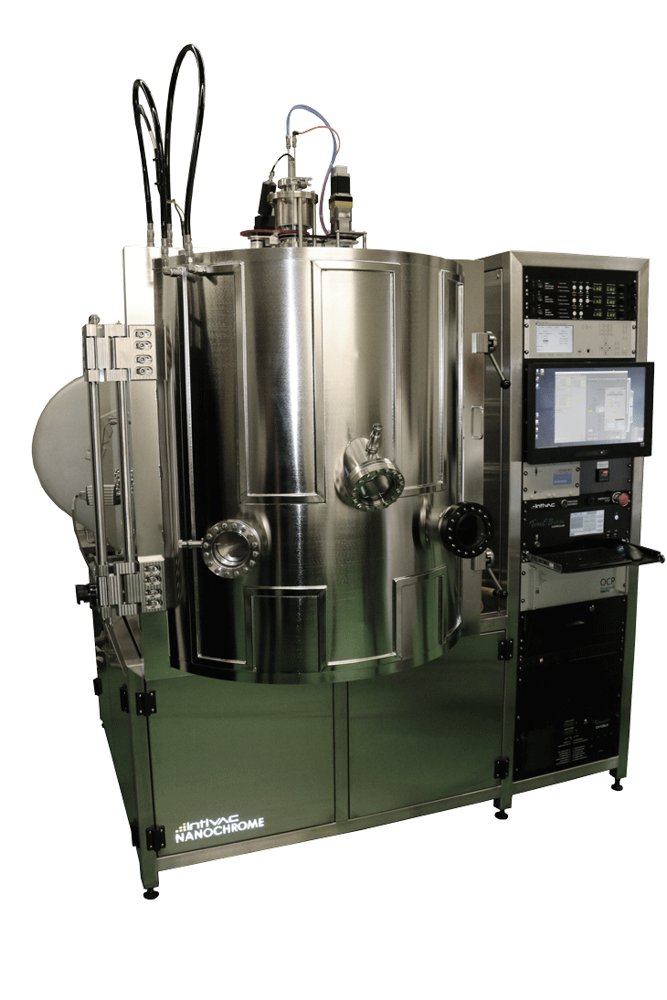
The Intlvac Nanochrome™ IV UV VIS ion-assisted deposition system is the latest innovation in precision optical coating technology. Designed to deliver exceptional performance, the Nanochrome™ IV UV VIS enables the creation of complex optical filters through electron beam evaporation with ion assist under optical control. This allows for real-time re-optimization or operation using standard deposition controls. The Nanochrome™ IV UV VIS system will make complex optical filters via ebeam evaporation with ion assist under optical control for real time reoptimization or via standard deposition controls. World's First with Intelligent Cryopump Technology The Nanochrome™ IV UV VIS is the first production platform to feature the latest generation CTI variable-speed cryopump, offering unmatched performance and efficiency. Dual-Axis Rotation for Maximum Efficiency Equipped with a planetary stage featuring dual-axis rotation and five 12-inch substrate carriers, the system achieves an impressive baseline uniformity of just 2%. Each planetary holder accommodates a 12-inch substrate or multiple smaller substrates, maximizing coating capacity during each cycle. Key Benefits - Outstanding process repeatability - Baseline uniformity of 2% - Fully automated process control - Real-time re-optimization of film layers - Dual-axis rotation with five 12-inch substrate carriers The Nanochrome™ IV UV VIS sets a new standard for precision optical coating systems, combining cutting-edge technology with user-friendly features for superior results in every application. Advanced Optical Monitoring The Nanochrome™ IV UV VIS utilizes a broadband optical monitoring system for real-time re-optimization of film layers. This system automates process control in both reflection and transmission modes. The Intlvac Nanocon interface provides seamless digital control, one-button automation, and real-time data logging of critical parameters. Its state-of-the-art deposition tools ensure precise process management and temperature control up to 275°C, enabling unparalleled consistency and performance. Operator-Friendly Design Designed with user convenience in mind, the Nanochrome™ IV UV VIS features three spring-loaded shutter viewports for direct observation of the evaporation source, high-current ion source, and sample stage. Additionally, a rotatable polarizer viewport with a periscope attachment allows safe viewing of the deposition source during operation. The system also supports real-time spectral monitoring with an adjustable range spanning 400 to 1500 nanometers. UV VIS Optical Filter Production System - Exceptional process repeatability - Baseline uniformity of 2% - 5-12" planets with dual-axis rotation - Operator-friendly The Nanochrome™ IV UV VIS ion assisted deposition system will make complex optical filters via ebeam evaporation with ion assist under optical control for real time optimization or via standard deposition controls. The broadband optical monitoring system provides automated process control in reflection or transmission mode. State-of-the-art deposition supplies allow unparalleled control over running processes and temperature control up to 275°C.
CATEGORY
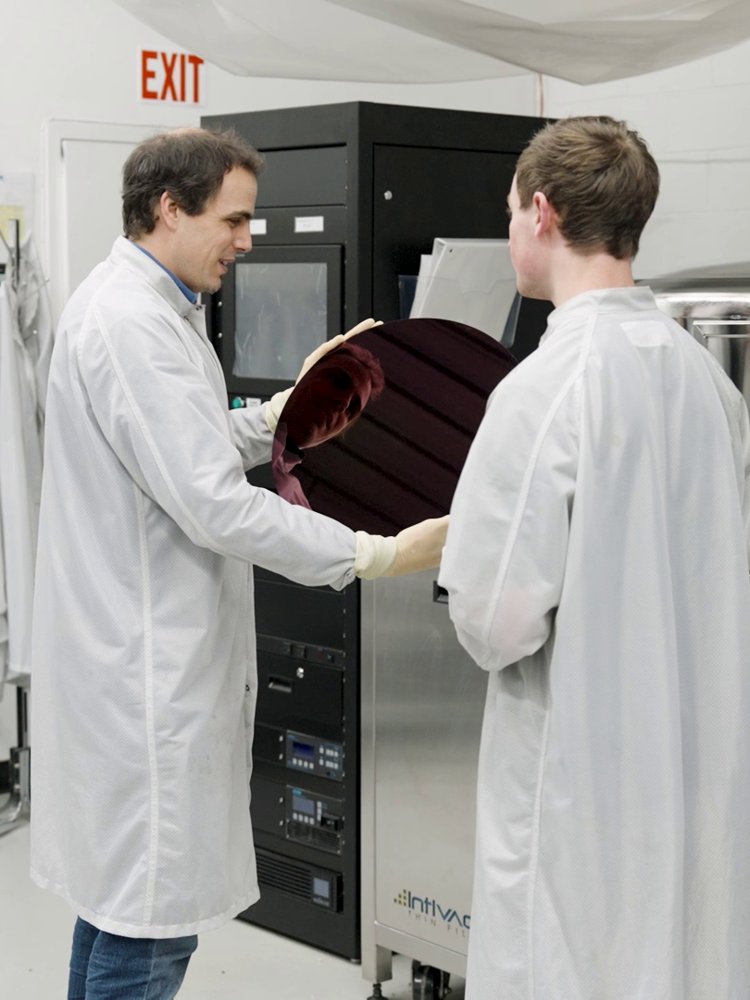
The Intlvac Aegis Diamond-Like Carbon (DLC) PECVD system is a state-of-the-art DLC coating machine built to revolutionize your coating processes. Utilizing plasma-activated, low-temperature chemical vapor deposition (PECVD) technology, our system is designed for efficiency, consistency, and durability. The innovative design allows for multiple coating processes to be completed consecutively with minimal maintenance, maximizing throughput. Additionally, the system is equipped with pre-set recipes for Infrared Anti-Reflection coatings on Silicon and Germanium optics, offering ready-to-use convenience for high-performance applications. Coating Capabilities - Produces low-roughness DLC hard mask (2.5Å) - Mechanical, optical, and chemical applications - Meets MIL-Spec requirements for infrared optics & tribological coatings - DLC thicknesses: up to several microns Substrate Compatibility - Supports wide range of materials: - Sapphire, metals, TFLN, LNOI wafers, plastics - Si, Ge, II-VI compounds, optical glasses, chalcogenides - Plasma isolation enables coating of temperature-sensitive substrates System Performance - Compact design with innovative energy & gas distribution - Ensures excellent uniformity & repeatability over 500mm diameter area - Pre-developed process recipes included (Aegis LNF) Etch Selectivity - Demonstrates 4:1 or better DLC:LN selectivity - Validated using Intlvac Nanoquest II (Lithium Niobate Foundry Module 3) etch system Hydrophobic With non-polar C-H bonds and a uniformly smooth texture, our DLC coatings repel moisture, safeguarding components from water damage and further reducing maintenance needs. Pinhole Free Robust protection even at ultra-thin thicknesses approaching 1 nm. This results in prolonged substrate longevity and enhances overall performance reliability. Abrasion Safe Our DLC coatings retain tribological properties closely mirroring those of crystaline diamond, offering 95% atom density, 75% hardness, and 66% Young's Modulus compared to diamond. Exceptional Uniformity without Rotation The Aegis system produces uniformly dense films up to several microns thick across a wide range of substrates, including Silicon (Si), Germanium (Ge), Sapphire, Optical Glasses, Metals, Plastics, and II-VI compounds. This advanced capability reduces material waste and minimizes vacuum process times, ultimately lowering costs. Environmental and Durability Testing Standards All coatings are qualified to rigorous ISO, MIL, and TS standards to ensure long-term performance, adhesion, and reliability under demanding environmental conditions. Testing covers mechanical durability, optical stability, and environmental resistance to meet or exceed industry and military specifications. - Abrasion: ISO 9211-4-01-04 (Severe Abrasion)/Moderate Abrasion - Sand Slurry (Wiper) Test: TS1888 - Adhesion: ISO 9211-4-02-03 (Snap Test), MIL-C-48497A, MIL-C-675C - Contamination: ISO 9022-87-01-1 - Damp Heat (Cyclic): ISO 9022-16-05-1 - Humidity: Per MIL and ISO specifications - Slow Temperature Change: ISO 9022-15-06-1 - Temperature Shock: ISO 9022-15-03-1 - Salt Mist/Salt Solubility: ISO 9022-40-06-1 - Water Solubility: ISO 9211-4-04-05 - Mould Growth: ISO 9022-85-01-1 - Ice Resistance: ISO 9022-77-01-1 - Solar Radiation: ISO 9022-20-03-1 Hard Carbon Etch Masking Aegis DLC enables precision etching for LNOI waveguide fabrication through Plasma-Enhanced Chemical Vapor Deposition (PECVD) of a diamond-like carbon hardmask. Its high hardness, adhesion, and selectivity ensure accurate pattern transfer during ion beam etching, producing smooth, high-fidelity lithium niobate structures essential for advanced photonic and quantum devices.
CATEGORY
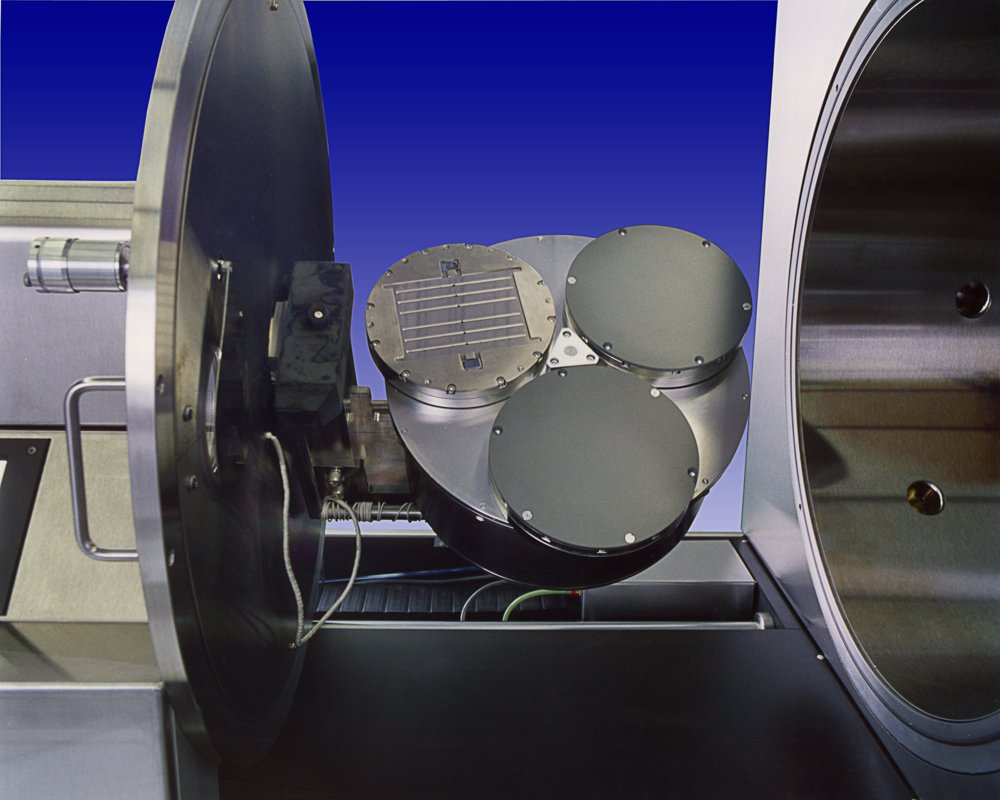
Key Features Versatile and Economical - Independent control of ion energy, ion current density, and incidence angle - Next-generation contamination-resistant, filamentless ion source - Capable of uniform etching on noble metals and exotic thin film materials Superior Etch Uniformity - Substrate rotation and enhanced ion beam optics improve etch consistency - Adjustable stage angle optimizes process and cleans secondary sidewall deposition - Water-cooled double-axis stage supports up to 3 platens for high throughput - Flat-plate planetary motion stage with variable incident angle - Direct water-cooled platens for thermal control Engineered for Clean Room Integration The Nanoquest III is tailored for clean room use, with the etch module positioned in the service area to ensure minimal contamination. Its double-door design allows for servicing from either side, and UHV design rules enable extremely low base pressures. High-speed vacuum pumps ensure rapid pump down and reduce ion beam gas collisions. System Configuration Chamber Construction: Stainless steel using UHV-compatible techniques, electro-polished exterior Cooling System: Welded stainless steel cooling channels in a web-like pattern for efficient heat dissipation Access & Observation: Hinged front and rear doors, multiple viewports including optional load lock view Vacuum Performance: - 5×10⁻⁷ Torr in 2 hours - 5×10⁻⁸ Torr in 24 hours Vacuum Pump Options: Dry pumps with optional Cryopump or Maglev Turbo pump 22 cm RF Ion Source The integrated 22 cm RF ion beam source is capable of delivering over 1 Amp of ion beam current across a 100 to 1500 eV range. Highlights: - Plasma Discharge: High-density plasma via RF ICP technology, filamentless for longer operation - Ion Optics: Self-aligning for consistent runs and extended grid life, constructed of durable Molybdenum - Modular Design: Fully accessible from chamber with adjustable throw distance - Power Supply: Frequency-matched RF supply offers rapid response and high contamination resistance - Control System: Operated via Intlvac's LabVIEW interface and PLC SIMS End-Point Detection Precision, repeatable etch control is achieved with the optional Secondary Ion Mass Spectrometry (SIMS) system. Standard Capabilities: - High sensitivity SIMS with pulse ion counting detector - Triple filter quadrupole (300 amu range) - Differentially pumped manifold with flange to chamber - Integrated ion optics with energy analyzer - Penning gauge with interlocks for overpressure protection - < ±0.5% signal height variation over 24 hours Control and Automation The LabVIEW-based control system provides complete, intuitive control through a graphical interface. Full automation sequences include: - Electro-pneumatic actuator management - Automated chamber pump down and venting via Intlvac AutoVac Controller - Full integration with all process parameters Ion Beam Etching System Explore our Latest Brochure about the Nanoquest III System - Versatile and Economical - Superior Etch Uniformity - Direct Water-cooled Stage The Nanoquest III Ion Beam Etching System combines a water-cooled, rotating stage, a 16cm RF ion source, an easily accessible stainless steel vacuum chamber, cryogenic high vacuum pumping system, automatic pump down and venting, atmosphere to high vacuum gauging, mass flow controllers, chamber cabinet, and electronic control console. Designed for clean room operation, the Nanoquest III keeps the etch module in the service area of the clean room. System components, such as shields and other serviceable items, are easily accessed in the service area. A double door etch module allows servicing from either side of the chamber. UHV design rules ensure that the etch module and load lock chamber achieve very low base pressures. High speed vacuum pumps not only provide a fast pump down, but also reduce ion beam gas collisions.
CATEGORY
