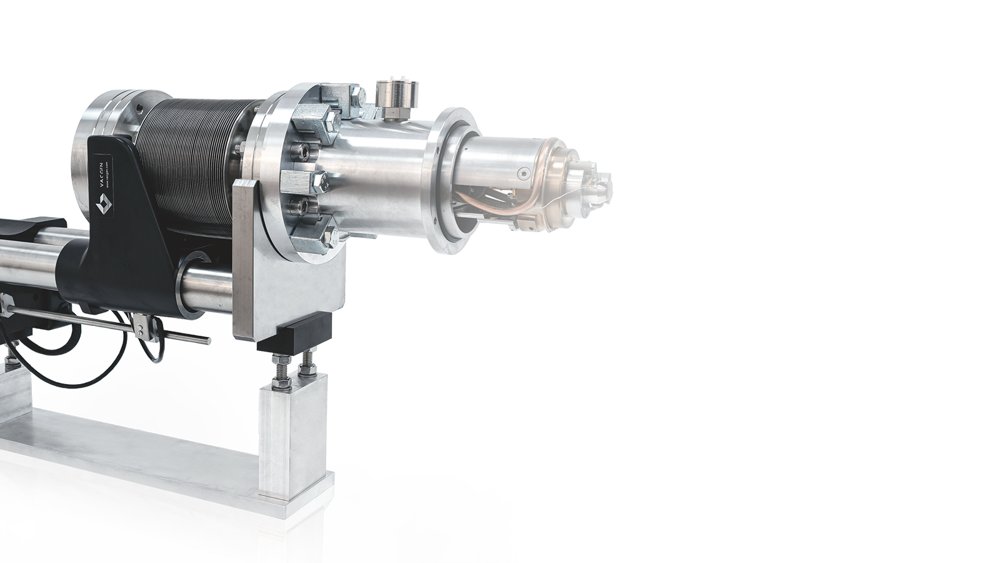
In the GIB system, the Ar ion gun is built into a linear transfer system with the bellows. The purpose of mobility is to allow the gun to be retracted when not in use. The movement range of the mechanism is 150 mm, the mounting flange size is 114 OD (DN63), and the diameter of the clear bore through the bellows is 68 mm.
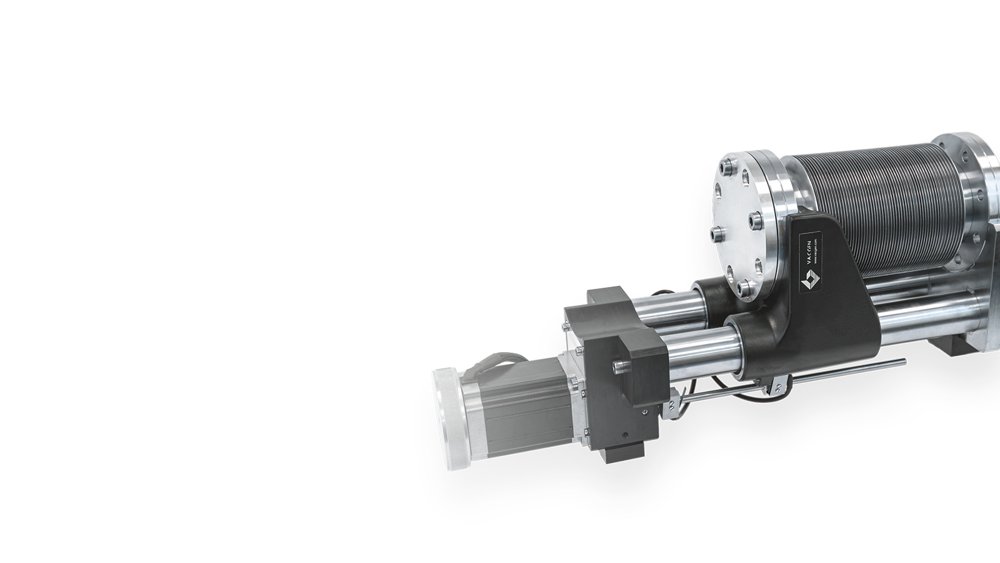
The electronics, closed-loop cooling system and Ar gas pressure sensor are located in the control unit. High purity (99.999 %) Ar gas is used to supply the Ion source and its flow rate is regulated by a high-precision needle valve. The control software runs under the Windows operating system and it can be installed on a separate or on the SEM’s computer.
CATEGORY
The transfer system with the bellows can be built into the SEM through a connecting tube. The size of the output flange of this tube matches the size of the corresponding SEM port. The ideal working distance (15-30 mm) can be achieved through the ion source mobility provided by the linear transfer system.
CATEGORY
The diameter and length of the low-energy ion source are both 50 mm. The energy range of the Ar ion beam: 100 eV-2 kV. The maximum beam current at 2 kV is 70 μA. The beam is a broad beam. The full width at half maximum (FWHM) is 2 mm.
CATEGORY
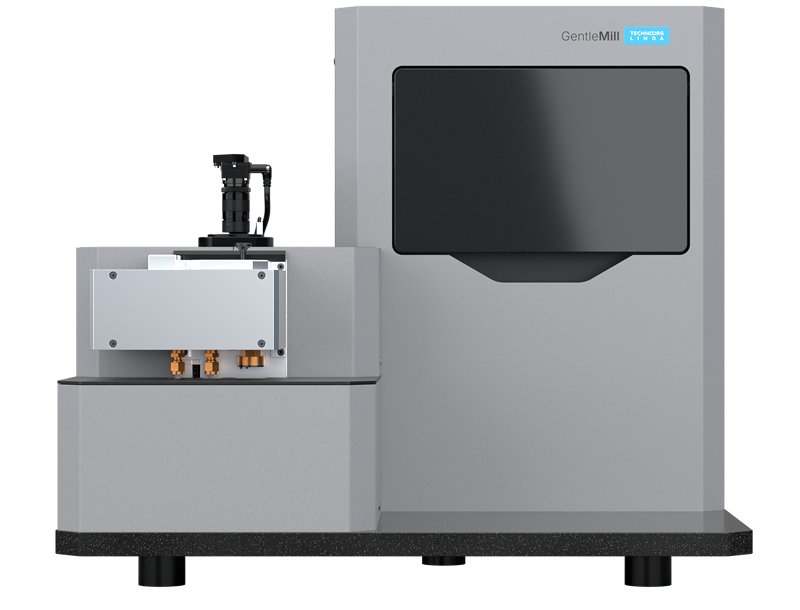
Ion Beam Workstation for Preparing High-Quality FIB/TEM Samples The GentleMill™ system provides precise cleaning and post-processing of FIB-prepared lamellae, delivering artifact-free surfaces with the advanced low-energy ion source technology for high-resolution TEM analysis. Artifact-Free TEM Lamellae Gentle low-energy sample cleaning. Protective Transfer Unit Air-free transfer for sensitive specimens. Automated Multi-Step Milling Processing with minimal user intervention. Sample Handling The dedicated cartridge holder enables safe and efficient handling of the lamellae inside both the FIB/SEM and the GentleMill™ systems. A loading tool secures the lift-out grid in place, protecting delicate specimens throughout preparation and transfer. The design simplifies handling while reducing the risk of accidental sample damage. Protective transfer unit ensures contamination-free transfer of air-sensitive specimens between the ion polisher and a glove box. Supporting both vacuum and inert gas atmospheres, it protects oxygen- and moisture-sensitive samples while providing maximum flexibility for advanced sample preparation workflows. High-Resolution TEM Analysis Al₂O₃ finished at 5 keV Ga⁺ FIB after low-energy cleaning at 0.3 keV Ar⁺ Si–SiGe multilayer after 16 keV Ga⁺ FIB preparation and 300 eV Ar⁺ cleaning Exposed lattice faults in a GaN sample after 200 eV low-energy cleaning Technical Specifications Ion Sources LOW-ENERGY ION SOURCE - Ion beam energy: 0.1-2 keV, continuously adjustable - Ion beam current: up to 70 μA - Ion beam diameter: ~1.2 mm Imaging System - Imaging system for complete visual control and milling supervision with a magnification range of 5 to 100× - High-resolution (5 MP) color CMOS camera and camera lens with fixed focal length (25 mm) Specimen Stage - Oscillation: -30° to +10° in 0.1° steps - Milling angle: ±30° in 0.1° steps Sample Holders - Cartridge for handling FIB lamellae - Optional surface polishing sample holder - Optional double-sided TEM holder for conventional TEM samples Sample Cooling (Optional) - LN₂ cooling - Peltier cooling Vacuum System - Oil-free diaphragm pump: Pfeiffer Model MVP 015-2 - Turbomolecular pump: Pfeiffer HiPace 80 Neo Gas Supply System - Argon gas with 99.999% purity - High-precision control of working gas flow via motorized needle valve Specimen Handling - Vacuum load-lock system for specimen exchange - Dedicated cartridge for easy handling of FIB lift-out grids - Fully mechanical, glueless specimen loading - Optional Protective Transfer Unit for air-free transfer Computer Control - Integrated Windows® PC with touchscreen display - User friendly graphical interface and image analysis - Automatic ion source control, including gas flow regulation by motorized needle valve - Multi-step process programming for automated operation (manual control also available) Power Requirements - Mains voltage: 100-115 V / 208-236 V AC, 1 phase - Maximum input power: 450 VA - Mains frequency: 50/60 Hz
CATEGORY
