The Nano-Observer II battery configuration adds glove-box operation, an electrochemical cell and a temperature stage. With glove-box operation, an EC-AFM cell and a temperature stage, the Nano-Observer II brings these measurements from electrode design to degradation analysis. The Nano-Observer II with HD-KFM III and Soft ResiScope can acquire surface potential (work function) and resistance/current maps on the same sample area in sequential passes. For solid-state battery research, the recommended AFM suite on the Nano-Observer II includes: ResiScope III for ionic and electronic resistance mapping of solid electrolyte layers and electrode/electrolyte interfaces; Soft ResiScope for fragile ceramic or polymer electrolyte membranes where contact-mode AFM would cause damage; HD-KFM III for local work function and surface potential mapping correlated with Li-ion distribution; PFM (Piezoresponse Force Microscopy) for ferroelectric and piezoelectric ceramic electrolytes; and electrochemical AFM (EC-AFM) with a three-electrode cell for in-situ measurements during cycling. Yes. The Nano-Observer II battery configuration operates in a glove box under N₂ or Ar for air-sensitive materials, and a three-electrode electrochemical cell allows in-situ ResiScope and KPFM measurements during charge and discharge cycling.
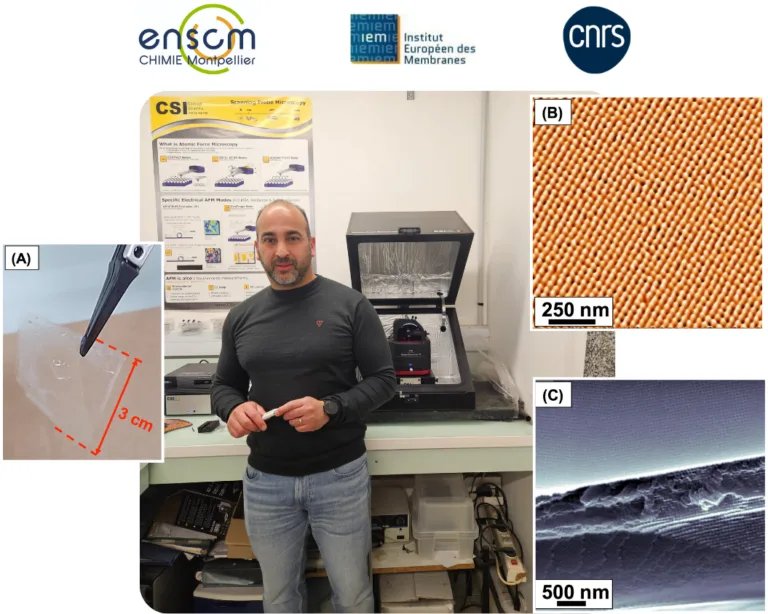
To validate the electronic quality of these engineered nanocircuits, comprehensive electrical characterization at nanometer resolution was essential. The research team employed the CSI Nano-Observer AFM equipped with advanced electrical modes. The Nano-Observer’s combination of HD-KFM and ResiScope provided essential nanoscale verification that these engineered nanocircuits retain the electronic properties needed for functional nanodevices.
CATEGORY
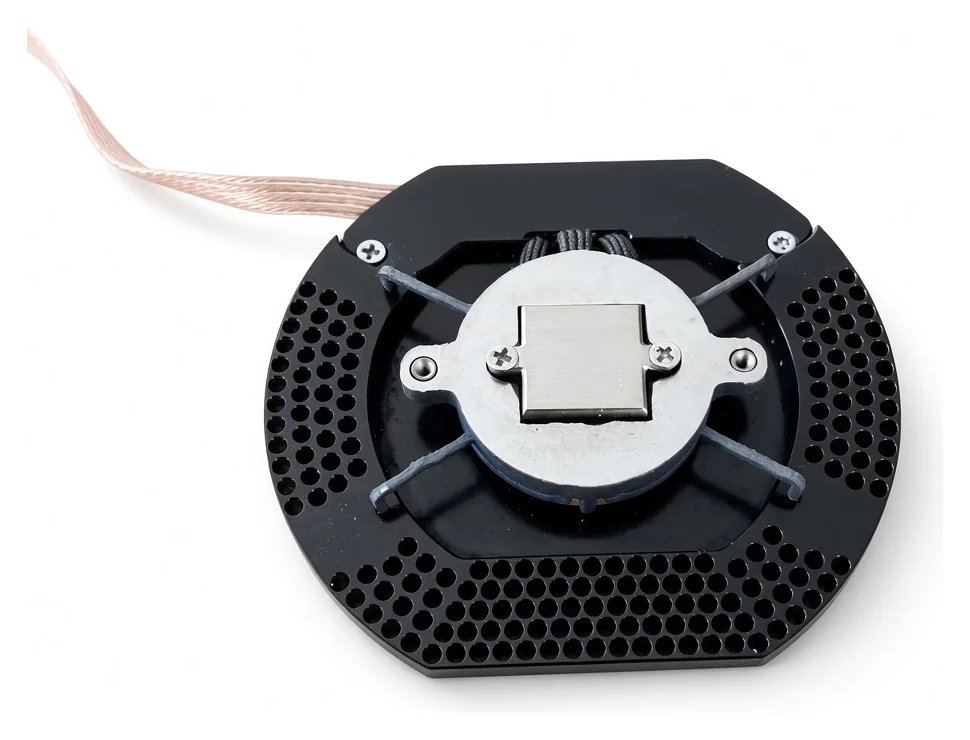
Cooling stage — on its own and mounted, with the coolant tubes
CATEGORY
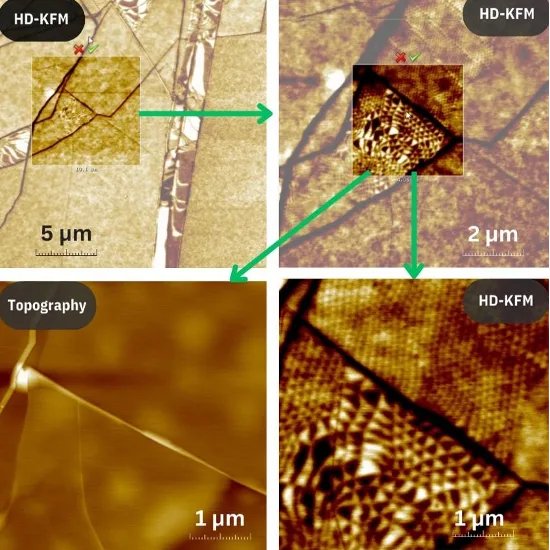
The CSInstruments Nano-Observer AFM series represents a quantum leap forward in nanoscale characterization, offering researchers unprecedented insights into the surface morphology and electrical properties of 2D materials at resolutions previously thought impossible. The CSInstruments Nano-Observer introduces HD-KFM technology through innovative signal processing and optimization. As demonstrated in comparison images, HD-KFM provides dramatically improved visualization of graphene layers. Standard KFM mode shows limited contrast between different layer thicknesses, while HD-KFM mode reveals precise layer boundaries and subtle electronic variations across the sample with exceptional clarity. Key advantages of HD-KFM include: - Operates at much higher frequencies (350-400 kHz vs ~17kHz) - 20 to 30 times more measurement cycles per scan - Enhanced sensitivity using eigenmode detection - One-click auto-tune algorithm for optimal settings - Sharp, accurate boundary mapping with exceptional clarity The practical implications are substantial. Researchers can now detect subtle electronic property variations at layer boundaries with unprecedented precision, identify defects and contamination at the nanometer scale, characterize heterojunctions with detail that was previously impossible, and accelerate materials development from fundamental research to functional devices. The Nano-Observer’s HD-KFM technology reveals these effects through surface potential mapping with unprecedented resolution. The system provides multi-scale characterization from large-scale domain structure analysis (5 μm scale) showing overall sample architecture, to mid-range detailed mapping (2 μm scale) of domain boundaries and transitions, down to high-resolution moiré pattern visualization with ~100 nm triangular domains at 1 μm scale. Beyond surface potential mapping, the Nano-Observer integrates Piezoresponse Force Microscopy (PFM) with HD-KFM, allowing researchers to correlate electronic properties via surface potential variations, structural properties through domain structure mapping, and electromechanical responses via PFM signal analysis. This multi-modal approach enables measurements on the exact same sample area with perfect spatial registration—a critical capability that was missing in conventional characterization workflows. The Nano-Observer AFM with HD-KFM provides unprecedented visualization of these layer-dependent variations, enabling researchers to precisely identify monolayer (1ML), bilayer (2ML), trilayer (3ML), and four-layer (4ML) regions, map work function differences across the sample with intuitive color contrast, detect sharp, well-defined interfaces between regions with different layer counts, and correlate electronic structure directly with layer thickness. The Nano-Observer system provides synergistic electrical characterization through the combination of ResiScope™ and HD-KFM technologies. ResiScope™ maps resistance across an exceptional range (10² to 10¹² Ω), clearly distinguishing between conductive and insulating regions and revealing how conductivity changes exponentially with layer thickness. Meanwhile, HD-KFM measures work function shifts with nanometer-scale resolution, maps charge distribution across different layer counts, and reveals systematic changes in surface potential with layer thickness. The CSInstruments Nano-Observer AFM Series represents a paradigm shift in nanoscale characterization technology. By integrating multiple advanced measurement techniques within a single platform, this system enables discoveries that would be impossible with conventional AFM approaches. Key advantages for researchers include unprecedented resolution with HD-KFM revealing electronic property variations at the nanometer scale, multi-modal analysis to correlate topography, electrical properties, and electromechanical responses, precision measurement with one-click optimization that eliminates manual tuning errors, quantitative data extraction of precise work functions, resistance values, and layer counts, and accelerated research that reduces characterization time while increasing data quality. Applications span across industries including quantum computing for characterizing moiré superlattices and correlated quantum states, nanoelectronics for optimizing 2D material transistors and interconnects, optoelectronics for developing next-generation photodetectors and light-emitting devices, energy storage for understanding electrode materials at the atomic scale, and sensors for designing ultra-sensitive chemical and biological detection systems. The Nano-Observer AFM series doesn’t just measure these materials—it reveals the fundamental relationships between structure and function that enable breakthrough innovations.
CATEGORY
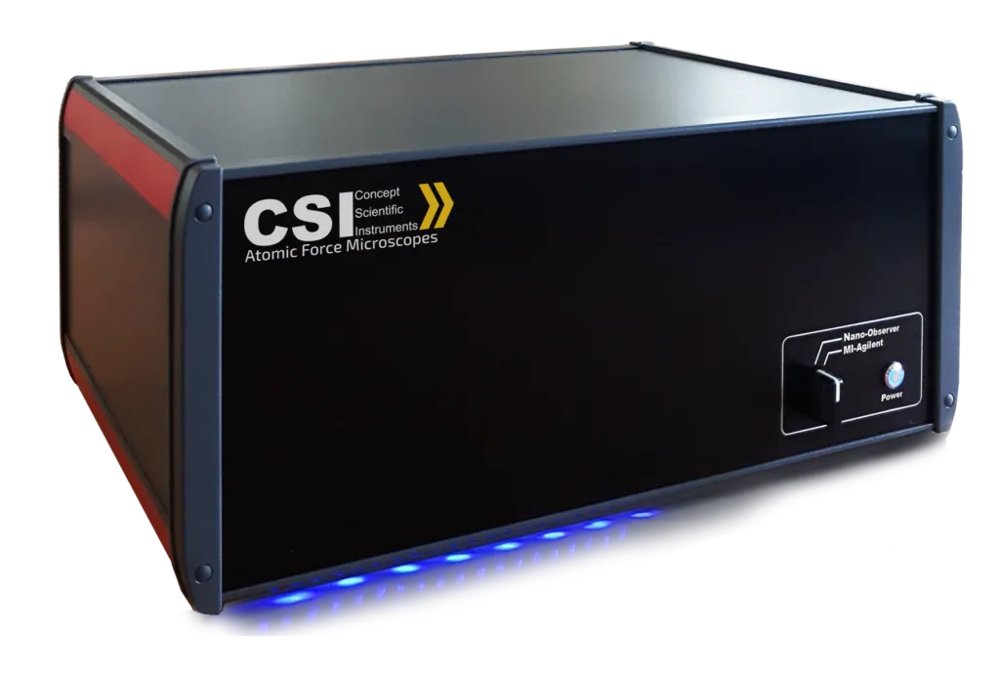
A Second Life For Your Existing AFM System Upgrade your AFM capabilities with the Galaxy Dual Controller: A breakthrough solution compatible with Multimode, Dimension D3000 & D3100, 5100, 5500, 5600LS, and 54xx AFM/STM platforms. This advanced controller system not only modernizes your existing microscope but also introduces enhanced functionality for expanded research applications. Seamless Compatibility - Technical expertise operating diverse AFM/SPM systems including Multimode AFM, Pico SPM (STM), Dimension 3000/3100 and Agilent/Keysight scanning probe microscopes (5100, 5500, 5600LS, and 54xx models) - Maintains existing modes: STM, Contact, AC, Phase, MFM, EFM, PFM, LFM, EC modes Advanced New Modes for your old AFM - HD-KFM: No lift, higher sensitivity & resolution - ResiScope & Soft ResiScope: Resistance & current measurements from 10² to 10¹² ohms and 50 fA to mA range, even on soft samples - Soft Interaction Control Mode: Measure adhesion, stiffness, Young's modulus with quantitative accuracy High-Performance Hardware - Real integrated lock-in for enhanced measurement capabilities - Low-noise electronics and power supply - USB 24-bit drive architecture for high resolution and smart integration AutoScan Features & NanoSolution Software - Auto tune - Auto approach - Auto gain - Predefined setpoint conditions - Point and Click to automatically navigate and start measurements - Automated positioning, mapping, and measurement routines - Full motorized XY stage control (when available) - Active gain optimization for improved stability User-Friendly Software - Intuitive NanoSolution interface - One-click mode selection and automatic electronics configuration - Guided workflow for efficient image acquisition - Auto-settings for quick results and expert controls for in-depth analysis AFM controller upgrade Upgrade the controller of an existing AFM The Galaxy Dual Controller is the AFM controller upgrade made by CSInstruments, a French manufacturer of atomic force microscopes. It replaces the controller and software of an existing microscope and drives its own head, scanner and stage: every mode the AFM already had is kept, and HD-KFM™, ResiScope™ and Soft Interaction Control are added. Compatible AFMs Original manufacturer | AFM model | Notes Bruker (Veeco / Digital Instruments) | MultiMode | all standard modes and STM Bruker (Veeco / Digital Instruments) | Dimension 3000 and 3100 | full control, including auto approach and the motorized XY stage Molecular Imaging / Agilent / Keysight | 5100 and 5500 | including electrochemistry Molecular Imaging / Agilent / Keysight | 5400 and 5420 | Molecular Imaging / Agilent / Keysight | 5600LS | Molecular Imaging | PicoSPM (STM) | Kept from the original AFM - STM - Contact mode - AC (resonant) mode - Phase imaging - MFM and EFM - PFM - Lateral force (LFM) - Electrochemistry (EC) Added by the upgrade - HD-KFM™ — single-pass Kelvin probe force microscopy, no lift, higher sensitivity and resolution - ResiScope™ and Soft ResiScope™ — resistance from 10² to 10¹² Ω and current from 50 fA to mA, also on soft samples - Soft Interaction Control — adhesion, stiffness and Young’s modulus - NanoSolution software with AutoScan — auto tune, auto approach, auto gain, point-and-click navigation - 24-bit USB drive electronics with an integrated lock-in and low-noise high voltage How the upgrade is done CSInstruments installs the controller on site and trains the users, as at the Universidade Federal do ABC in Brazil on an Agilent 5500. The microscope stays the one the lab knows; the electronics, software and modes are new. Upgrade your research capabilities HD-KFM Mode - Achieve higher sensitivity and resolution in Kelvin Probe Force Microscopy - Perfect for advanced materials research, including 2D materials like graphene ResiScope Mode - Wide-range resistance and current mapping - Ideal for semiconductor research, dopant profiling, and nanoelectronics Soft Intermittent Contact Mode - Non-destructive analysis of soft and delicate samples - Quantitative measurements of mechanical properties Why upgrade with the Galaxy Dual Controller? Cost-Effective Significantly enhance your AFM capabilities without the expense of a new system Expand Research Horizons Access new modes and measurements previously unavailable on your AFM Improve Efficiency User-friendly software streamlines your workflow and reduces learning curve Future-Proof Your Lab Stay competitive with cutting-edge AFM technology Galaxy Dual Controller specifications - XY Drive Resolution: 24-bit control - 0.06 Å - Z Drive Resolution: 24-bit control – 0.006 Å - Ultra-Low Noise HV: Typ: <0.01 mV RMS - 6 DAC Outputs: 6 D/A Converters – 24 bit (XYZ drive, bias, aux…) - 8 ADC Inputs: 8 A/D Converters – 16 bit - Data Points: Up to 8192 - Integrated Lock-in: Up to 6 MHz (software limited), 2nd lock-in (6 MHz-optional) - Interface: USB 2.0 - Power: AC 100 – 240 V - 47-63 Hz - OS Compatibility: Windows 10, 11 Frequently Asked Questions Which companies offer controller upgrades for existing AFMs? CSInstruments, a French manufacturer of atomic force microscopes, makes the Galaxy Dual Controller: a controller upgrade for Bruker MultiMode and Dimension 3000/3100 AFMs and for Molecular Imaging, Agilent and Keysight 5100, 5400/5420, 5500, 5600LS and PicoSPM systems. Can an old Bruker MultiMode AFM be upgraded with a new controller? Yes. The Galaxy Dual Controller drives the MultiMode head and scanner, keeps its existing modes (STM, contact, AC, phase, MFM, EFM, PFM, LFM) and adds HD-KFM, ResiScope and Soft Interaction Control. Can an Agilent or Keysight 5500 AFM be upgraded? Yes. The Galaxy Dual Controller operates the MI, Agilent and Keysight 5100, 5400/5420, 5500 and 5600LS AFMs. The Universidade Federal do ABC in Brazil upgraded its Agilent 5500 with on-site installation and hands-on training. Is the Dimension 3100 fully controlled after the upgrade? Yes. The Galaxy Dual Controller controls the Dimension 3000 and 3100 completely, including automated tip engagement (auto approach) and the motorized XY stage, from the new software. Does a controller upgrade keep the modes the AFM already has? Yes. STM, contact, AC, phase, MFM, EFM, PFM, LFM and electrochemistry are kept; HD-KFM, ResiScope, Soft ResiScope and Soft Interaction Control are added. Can the Galaxy Dual Controller run STM (scanning tunneling microscopy)? Yes. STM is among the modes kept when an existing system is upgraded, and the Molecular Imaging PicoSPM (STM) is on the compatibility list, together with the MultiMode, Dimension 3000/3100 and Agilent / Keysight 5100, 5500, 5400/5420 and 5600LS. Don't let your valuable AFM become obsolete. Upgrade with the Galaxy Dual Controller and unlock new research possibilities today.
CATEGORY
