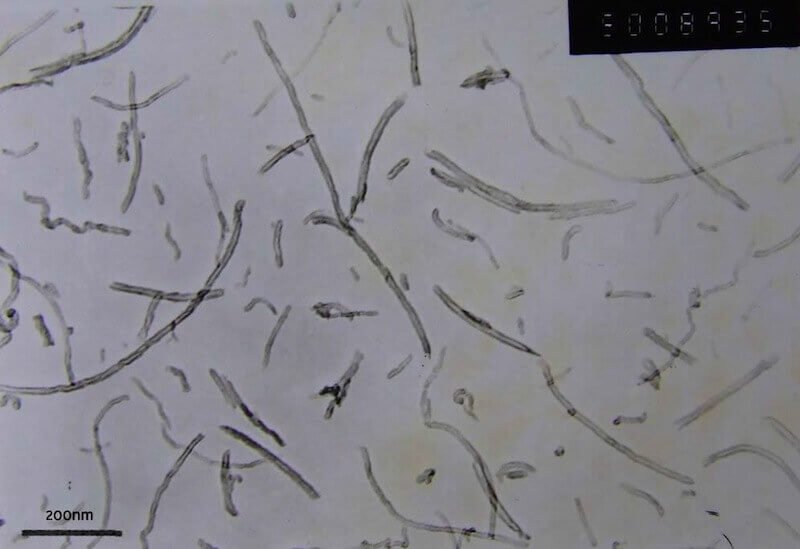
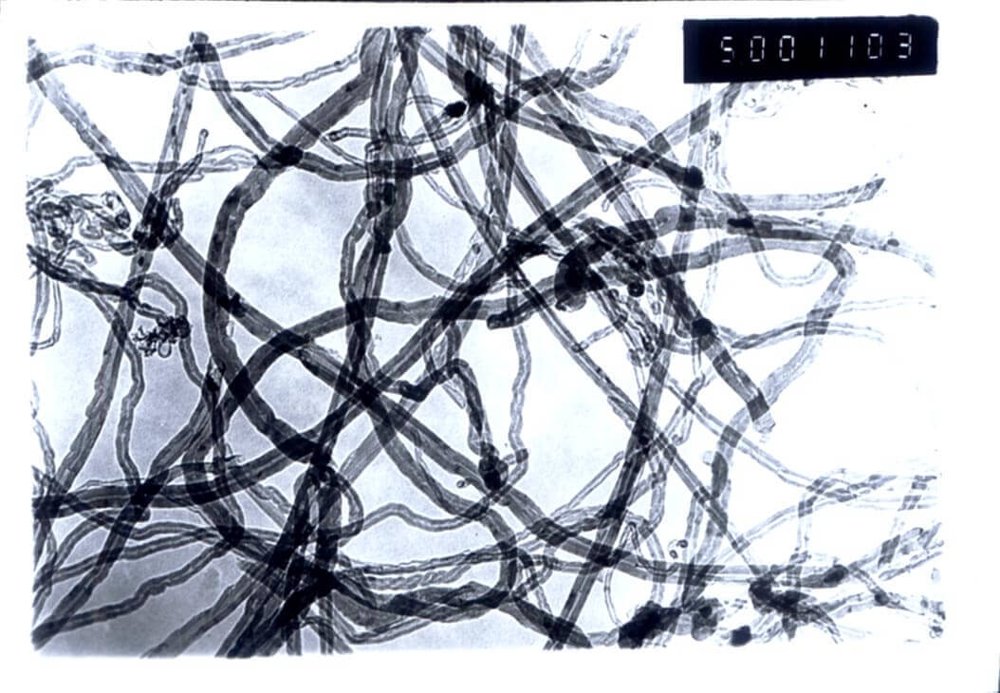
Short carbon nanotubes are multi-walled carbon nanotubes (MWCNTs) that have been cut to lengths of 0.5-2 um through controlled air milling — significantly shorter than the 5-30 um of standard MWCNT grades. This reduction in length dramatically decreases entanglement between tubes, lowering the viscosity of MWCNT dispersions and enabling uniform dispersion without the aggressive sonication that can damage tube structure or shorten tube length unpredictably. Short CNTs retain all the electrical, thermal, and mechanical properties of standard MWCNTs at the individual tube level. Their advantage is entirely in processability: easier to disperse, less prone to aggregate formation, and loadable at higher concentrations in polymer matrices without gel formation. Short CNTs vs. Standard MWCNTs - Length: Short CNTs 0.5-2 um; Standard MWCNTs 5-30 um - Outer Diameter: Short CNTs 8-50 nm; Standard MWCNTs 8-50 nm - Dispersion Ease: Short CNTs Excellent — 5-10 min sonication; Standard MWCNTs Moderate — 30-60 min sonication - Aspect Ratio: Short CNTs 10-250; Standard MWCNTs 100-3000 - Percolation Threshold: Short CNTs 1-5 wt%; Standard MWCNTs 0.1-1 wt% - High-Loading Processing: Short CNTs Excellent (>5 wt% possible); Standard MWCNTs Difficult (>3 wt% causes gelling) The key tradeoff: shorter tubes are easier to process but require higher loading to achieve equivalent electrical percolation as longer tubes. For applications where processability is the primary constraint — high-viscosity polymer matrices, thin coatings, precision inkjet deposition — short CNTs offer decisive advantages. Applications of Short Carbon Nanotubes High-Loading Polymer Composites In injection-molded thermoplastic composites, short CNTs can be loaded at 5-15 wt% without the fiber breakage and viscosity issues that plague longer tubes. At these loadings, they significantly improve tensile strength, stiffness, and electrical conductivity of polyamide, polypropylene, and ABS parts. This is the dominant application for short CNTs in commercial production. Conductive Coatings and Inks Short CNTs disperse to near-individual-tube level in common solvents (NMP, DMF, IPA) with 5-10 minutes of bath sonication — versus 30-60 minutes for standard MWCNTs. This makes them ideal for formulating conductive inks, antistatic coatings, and conductive paints where smooth, aggregate-free films are required at 2-5 wt% CNT loading. Battery Electrode Slurries Short CNTs disperse readily in NMP (the standard electrode solvent) and distribute uniformly in electrode films, preventing conductivity dead zones that reduce capacity and rate capability. At 1-3 wt% loading in cathode slurries, short CNTs improve C-rate performance by 15-25% compared to carbon black alone, with no processing penalty. Fast-Cure and Short-Window Systems Fast-cure epoxy systems, reactive injection molding (RIM), and UV-cure coatings have processing windows too short for extended mixing of standard MWCNTs. Short CNTs disperse in 5-10 minutes of low-shear mixing — compatible with rapid manufacturing processes without sacrificing conductivity or mechanical reinforcement. Dispersion Protocol For aqueous systems: disperse at 0.5-2 mg/mL using 10 minutes of bath sonication with 0.1-1% surfactant (SDS, Triton X-100, or SDBS). For organic solvents (NMP, DMF): 5-15 minutes probe sonication at 20-30% amplitude, no surfactant needed. For polymer melt blending: feed dry short CNT powder directly to a twin-screw extruder alongside polymer pellets — no pre-dispersion required. Available Grades Cheap Tubes offers short carbon nanotubes in outer diameters from 8 nm to 50 nm, in both unfunctionalized and COOH/OH/NH2 functionalized grades. Functionalized short CNTs offer even better dispersibility and are preferred for biomedical, polar matrix composites, and aqueous systems. All grades available from 1g (research) to kilogram (production) quantities. Pricing starts at $10/g.
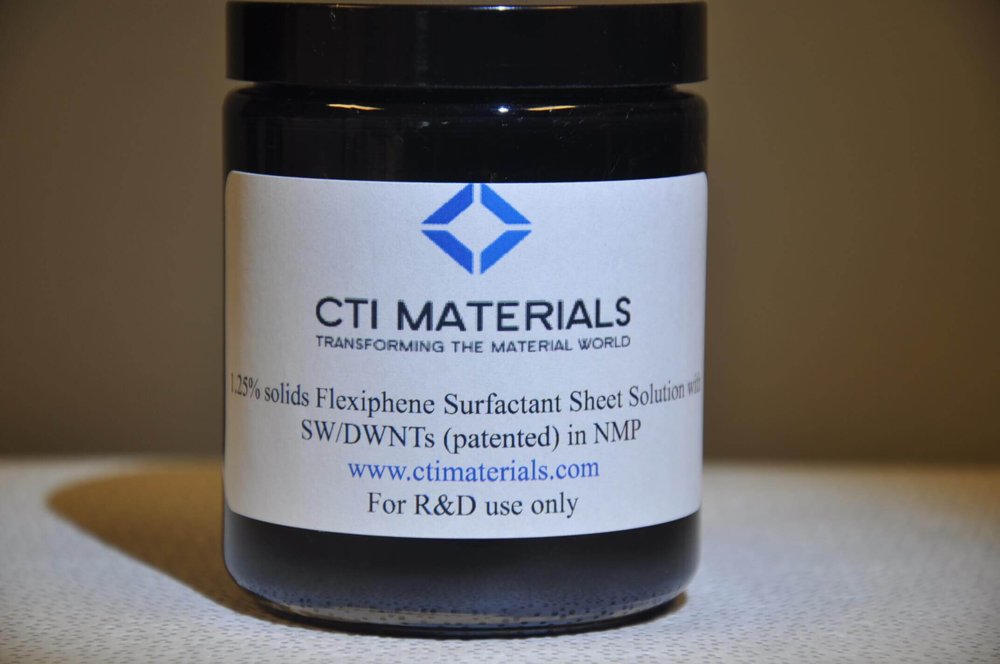
Try patented Flexiphene solvent based nanomaterial emulsions today and put the power of graphene to work in your formulations. Flexiphene is amphiphilic, tune-able by pH, sheet size, and degree of reduction. Flexiphene is transforming the material world! Contact us Today to arrange for your Flexiphene Emulsions!To Buy Flexiphene emulsions, please contact us with the solvent, materials, amount, and loading ratio you need. CTI Material’s patented Flexiphene solvent based nanomaterial emulsions are just what you need to disperse nanomaterials into solvents. Flexiphene works with SWNTs, MWNTs, and many other nanomaterials. Flexiphene are amphiphilic, tunable surfactant sheets, highly soluble in many solvents and can make colloidal dispersions of nanomaterials, stable for weeks to months. We typically work with NMP, DMF, THF, Acetone, & Ethanol solvents however many more are possible. Please contact us today and let us know what materials you require, the loading ratios, and solvents and we can quote it for you. Note- Hazmat shipping fees may apply. Prices depend on materials used and loading ratios. Flexiphene solvent based nanomaterial emulsions are transforming the material world!
CATEGORY
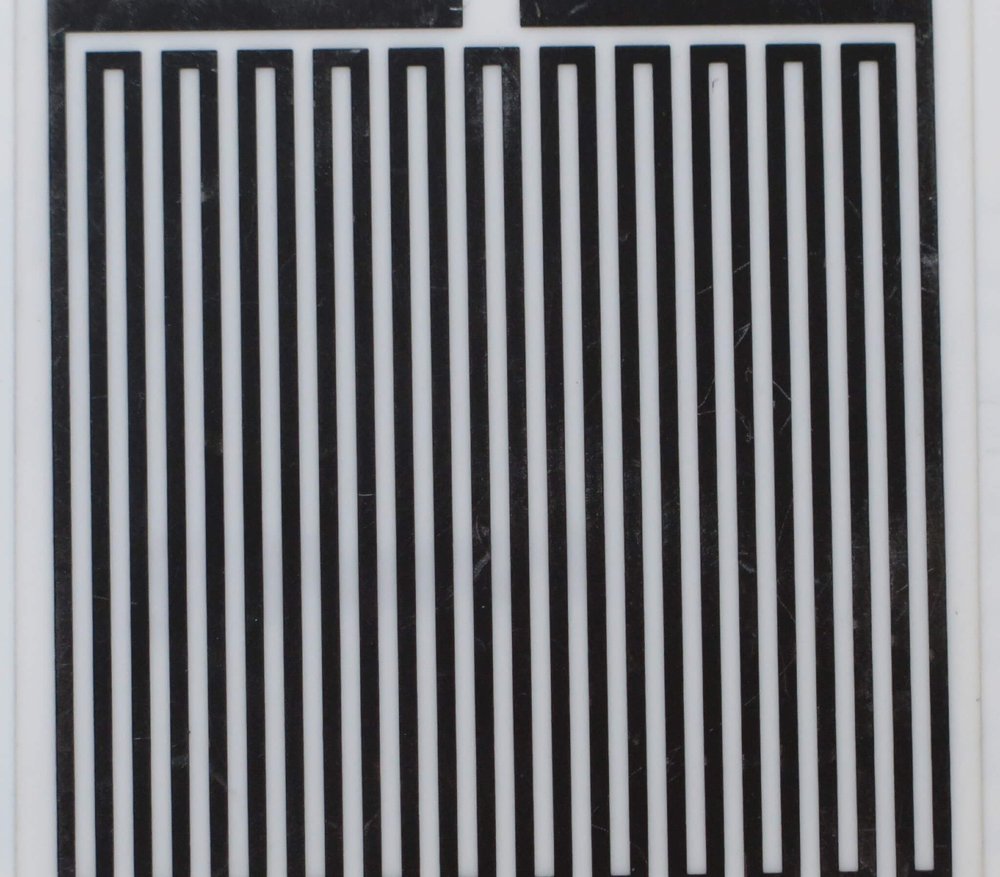
Silver nanowire (AgNW) ink is the leading solution for transparent conductive electrodes (TCEs) that require both high conductivity and optical transparency. At loadings that achieve sheet resistance below 10 Ohm/sq, AgNW films maintain optical transmittance above 85% — performance that rivals ITO at a fraction of the cost and with far superior flexibility. Unlike ITO, silver nanowire electrodes do not crack under bending, making them essential for rollable displays and conformable biosensors. Cheap Tubes synthesizes 30 nm outer diameter silver nanowires in-house at our Vermont facility, giving us direct quality control over aspect ratio, concentration, and lot-to-lot consistency — shipped at 25 mg/mL in isopropanol (IPA). Cheap Tubes supplies silver nanowire ink for transparent electrode applications in touch screens, OPV, and flexible electronics. Both ink types are formulated for compatibility with screen printing, gravure, flexographic, and inkjet deposition methods. Silver nanowire ink is the choice when optical transparency is required alongside low sheet resistance.
CATEGORY
Try patented Flexiphene Surfactant Solutions today and put the power of graphene to work in your formulations. Flexiphene is amphiphilic and compatible with water, solvents, and many other host matrices. To Buy Flexiphene, please contact us with the amount and loading ratio you need. Standard concentration is 2mgs/ml. Flexiphene is transforming the material world! CTI Material’s patented Flexiphene aqueous nanomaterial emulsions are just what you need to disperse nanomaterials into aqueous solutions. Flexiphene works with SWNTs, MWNTs, GNPs, and many other nanomaterials. Flexiphene are amphiphilic, tunable surfactant sheets, highly soluble in many solvents and can make colloidal dispersions of nanomaterials, stable for weeks to months. We typically work with Di Water and can modify the solution if required. Please contact us today and let us know what materials you require, the loading ratios, and solvents and we can quote it for you. Prices depend on materials used and loading ratios. Flexiphene aqueous nanomaterial emulsions are transforming the material world!
CATEGORY
Amine | -NH₂ | Basic, highly water-dispersible; reacts with COOH, epoxides, aldehydes | Drug delivery, biosensors, crosslinked epoxy composites Amine (-NH2) groups are introduced via diamine coupling to -COOH and provide direct bonding to epoxy resins and conjugation chemistry to biomolecules via standard NHS/EDC coupling. -COOH and -NH2 functionalized MWCNTs are the standard substrates for biomolecule conjugation... use glutaraldehyde or NHS-PEG-NHS linkers between -NH2 surfaces and amine-bearing biomolecules. For dispersion in aqueous biological or analytical applications, -COOH and -NH₂ groups provide colloidal stability through electrostatic repulsion (high negative or positive zeta potential) without requiring surfactants that would need to be removed in downstream processing. This makes functionalized CNTs the preferred choice for drug delivery systems, biosensors, and diagnostic conjugation chemistry.
CATEGORY
