By Nu Nano Ltd.
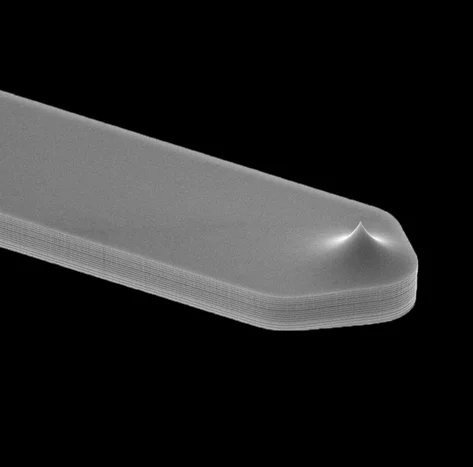
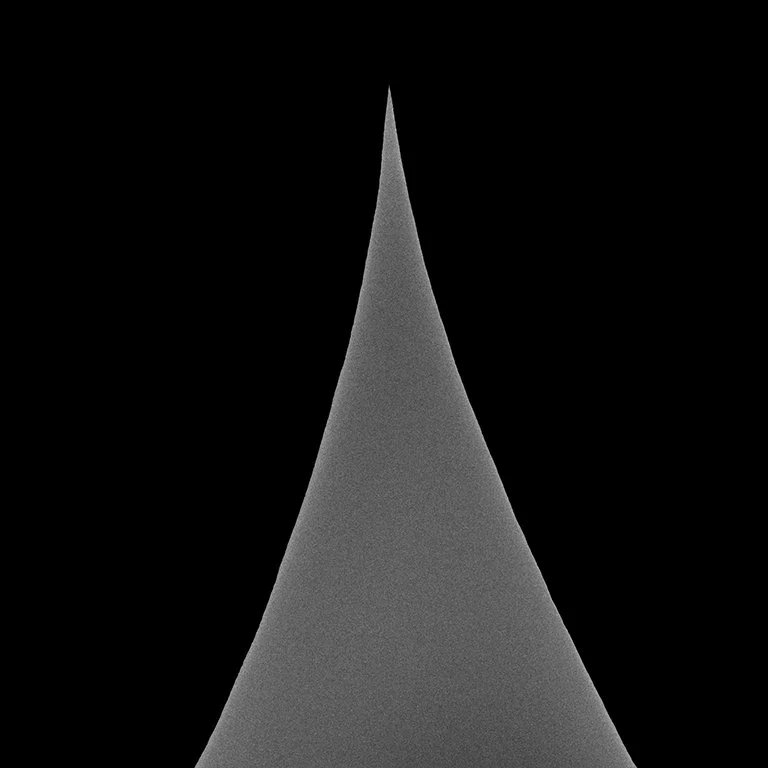
NuNano's silicon AFM probes. "My group has been using NuNano's Scout 70 RAl AFM probes in combination with our Asylum Research Cypher AFM for the last 7 years. This has been a highly reliable combination, allowing us to readily achieve lattice resolution on hexagonal boron nitride and other 2D materials that we work with" — Professor Peter Beton
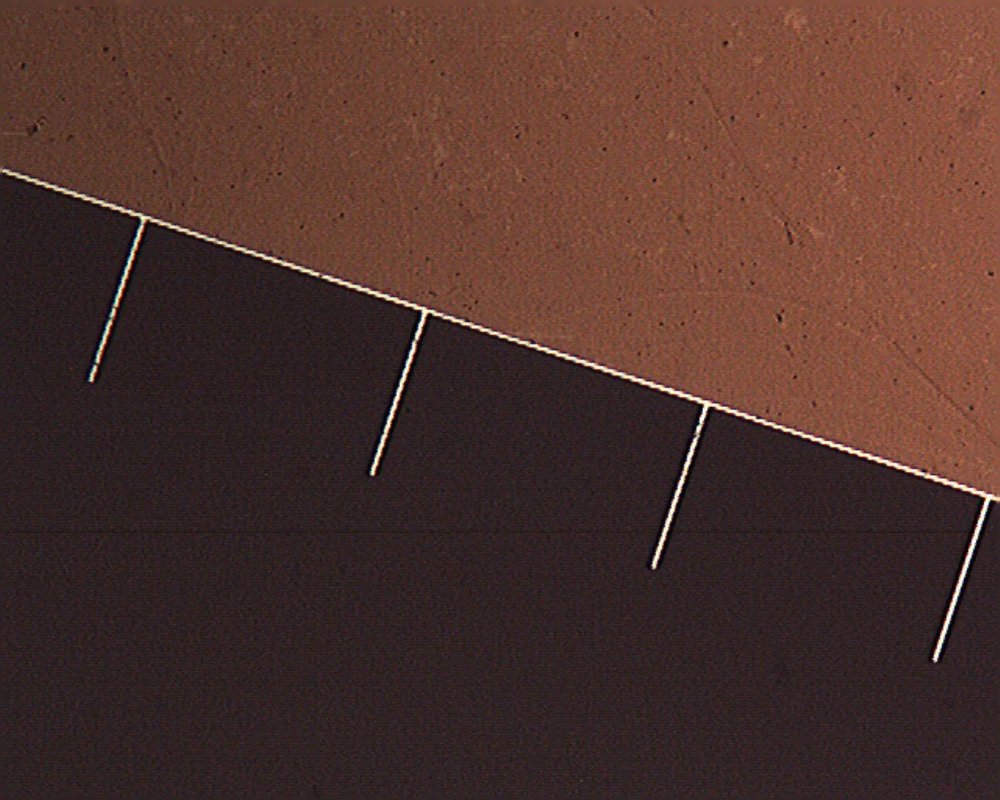
These ultra-soft probes were designed for non-conventional AFM systems, capable of detecting lateral or shear forces acting on the cantilever (e.g. Shear Force Microscopy, Transverse Dynamic Force Microscope). They operate in a vertical orientation which allows much more sensitive cantilevers to be used, since the cantilevers do not experience jump-to-contact events associated with using low-spring constant cantilevers for conventional AFM. NuNano designed extremely soft tip-less probes with spring constants in the range 0.003 – 6000 pN/nm. Different designs included a variety of cantilever lengths on the same chip, as well as probes with arrays of 10 identical cantilevers. These probes were fabricated from super-low-stress (non-stoichiometric) silicon nitride films on a standard silicon chip, with thicknesses of 50, 100 and 200 nm, but this could be further tailored to meet our customer's requirements.
CATEGORY
By attaching colloid beads to the levers, they can be used for friction and adhesion analysis on nanoscale polymer liquid films e.g., in hair products. He specifically needed cantilevers significantly stiffer than those commercially available. Dr Bowen noted that “Commercial cantilevers finish their spring constants around 50 N/m but that’s where my cantilevers start from, up to 3,000 N/m, and even up to 10,000 N/m.” NuNano fabricated 40 different cantilever designs with spring constants ranging from 15 N/m to 28,000 N/m. Dr Bowen now has a toolbox of different spring constant levers which can be chosen to suit different samples such as measuring micro/nano friction on architecturally difficult surfaces.
CATEGORY
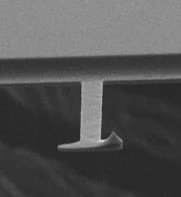
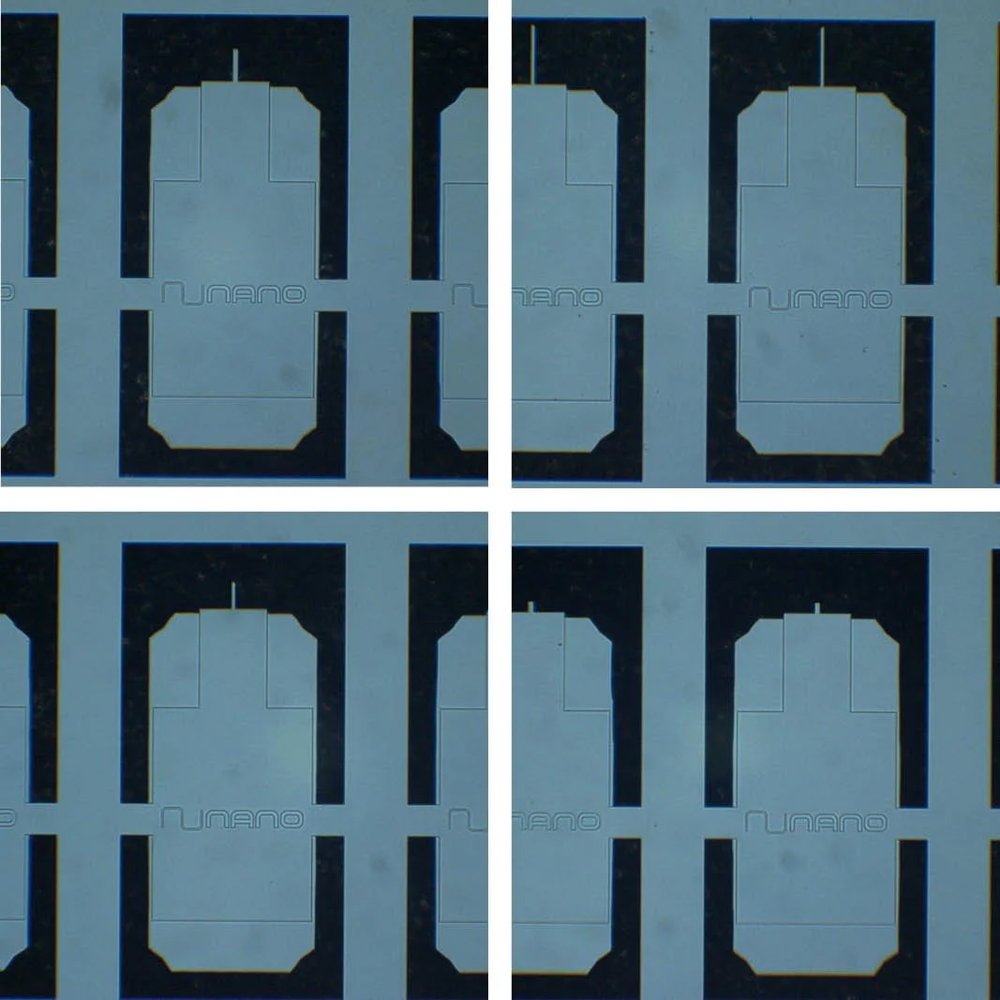
In Torsional Tapping mode, torsional oscillation of the cantilever is required, not ‘flexural’ oscillation as with standard tapping mode AFM. This can lead to increased lever sensitivity, quality factor and resonant frequency, as well as improved spatial resolution when scanning soft materials. Torsional AFM measurements require T-shaped cantilevers, with the tip displaced from the central cantilever axis, to allow torsional bending of the lever around the central axis during imaging. NuNano were able to design, manufacture and deliver T-shaped silicon cantilevers with silicon tips, ideal for use in torsional modes.
CATEGORY