By VSParticle
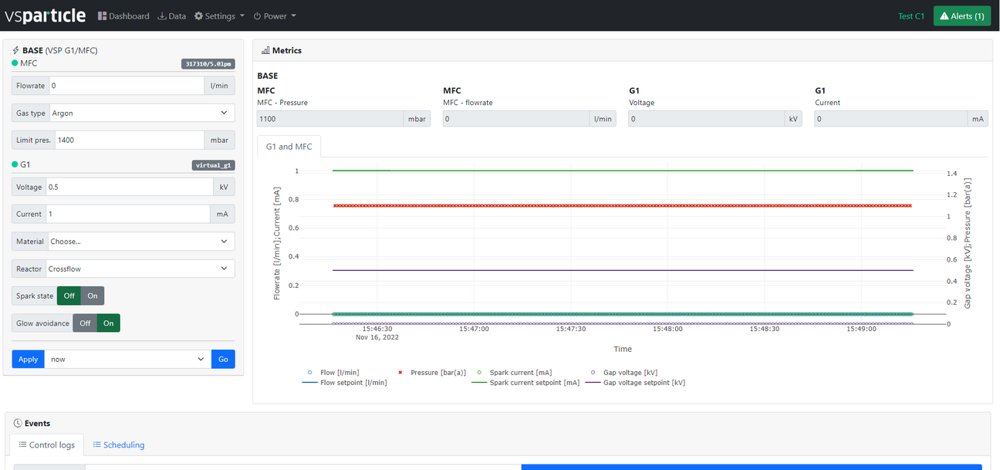
The embodiment of smart software developed at VSPARTICLE are easy to use and remotely control the VSP-G1 process parameters. The products developed at VSPARTICLE are set-up from day one to interface with other hardware. The table-top, user-friendly nanoparticle generator and MFC+ flowrate can be controlled by the VSP-C1. This ensures that your experiment is easy to use with key features in schedule events, data visualisation, data downloading, and remote control We offer a software package that is easy to use interface to control your experiment.It shows at a glance what your settings are and what happens during your experiment. Cloud options Wifi connection Offline use options Automated Experimentation Data visualisation Remote control 10-15 meters Schedule Events Data Download Easy to use When conducting your experiments, efficiency and easy access to your data is important.VSPARTICLE's C1 provides this flexibility by downloading the data over Wi-Fi. In addition to the screen, you can also connect it to your laptop and you have the option of viewing data remotely within the range of 10-15 meters. This males for a flexible working environment, all of which is implemented in the VSP-C1. The experiment can be easily scheduled when setting the setpoints.It will show when the experiment is scheduled and which events are logged. The VSP-C1 has the functions for online or offline network use. For the online network, you can connect the VSP-C1 to your network of choice. The internal hotspot of the VSP-C1 can be used in the offline network. The VSP-C1 controller is a setup that contains G1 and MFC+. To customize, your steup you could add VSP-S1 size selector, impaction A -series or the pump.
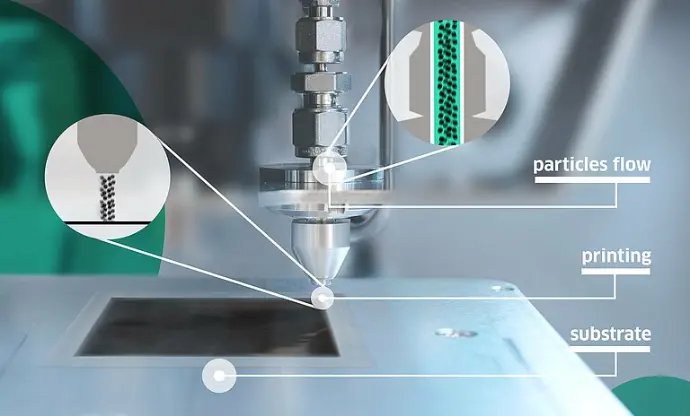
This new way of additive manufacturing can greatly simplify the production of nanoporous thin films and layers with a high surface-to-volume ratio. The applications of such films are numerous and include for example electrocatalysis, chemical, optical or biological sensing as well as the fabrication of batteries and microelectronics. No handeling of nanoparticels The VSP-P1 Nanoprinter combines generation, combination and deposition of nanoparticles in one automated process, enabling you to print new nanoscale materials without handling nanoparticles. The complete system is operated through a secure and intuitive web interface that allows for automated material production. Benefits of additive manufacturing The ability to locally deposit nanoporous thin films with a high surface-to-volume ratio in an additive manner greatly simplifies the manufacturing of materials for various applications (e.g. chemical, optical and biosensing, electro/photocatalysts and electrode materials (e.g. for micro-batteries or bio-electronics). Different layer thicknesses from sparse agglomerates to continuous layers up to a few microns thick are possible using the VSP-P1. The parameters that impact the layer thickness are: - Nozzle distance to substrate - Power of ablation - Printing speed You can determine the desired printing pattern by running a script through the user interface. Both complex patterns and in-series production of more than one samples are possible using different or modified scripts. The VSP-P1 NanoPrinter can be controlled directly through the on-device touchscreen, as well as remotely through the hybrid control interface accessible from any device with an internet connection. VSP-P1 Nanoprinter introduces the most advanced CCM Production Development of efficient catalyst coated membranes (CCMs) is crucial for the transition towards a hydrogen-based, low carbon economy. Conventional CCM production processes require multiple steps and high loadings of scarce metals. To tackle this challenge, VSParticle introduces membranes. By combining spark ablation, a vapor-based nanoparticle synthesis method, with additive manufacturing, production process of CCMs is simplified and catalyst loading is reduced without compromising performance or durability.
CATEGORY
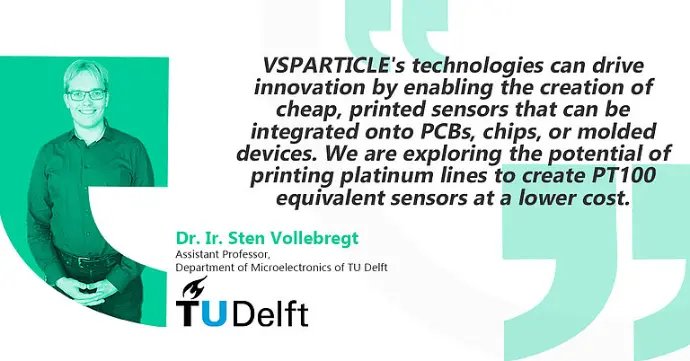
With VSP-G1 Nanoparticle Generator and P0 Nanoprinter, we are developing platinum nanoparticles to improve the electrodes' electrochemical properties by reducing impedance and enhancing charge storage and injection capacity. This ensures effective therapy delivery while maintaining the optical transparency of the electrodes, which is vital for delivering effective neurostimulation therapies. Traditional printing methods involving solvents are often not reproducible, which is a significant challenge. The VSP-G1 and nanoprinter do not require solvents, eliminating the issues of residue affecting the results. This has been a major advantage, allowing us to achieve cleaner and more consistent outcomes.
CATEGORY
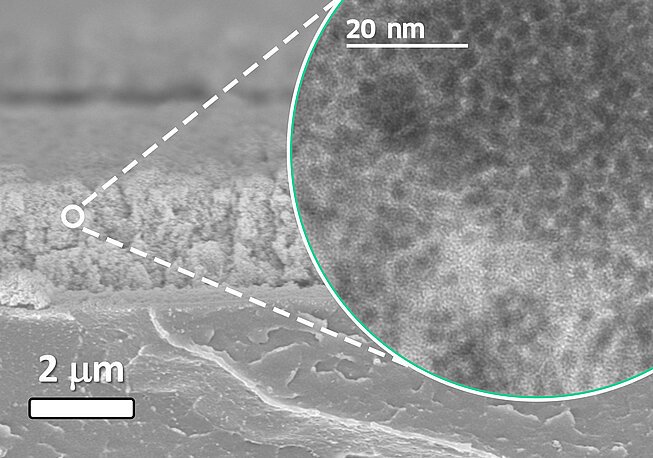
VSParticle's flagship product, VSP-P1, enables a fast and easy synthesis and printing of (semi-) conductive nanoporous layers for various applications. The versatility of the nanoprinters developed by VSParticle is also another aspect that can be exploited in the catalyst manufacturing process. In fact, when the VSP-P1 nanoprinter is coupled with multiple nanoparticles G1 generators, many unexplored materials can be created in a relatively short time, for example, high entropy materials (HEM) with five or more metals in equiatomic or near atomic ratios.
CATEGORY
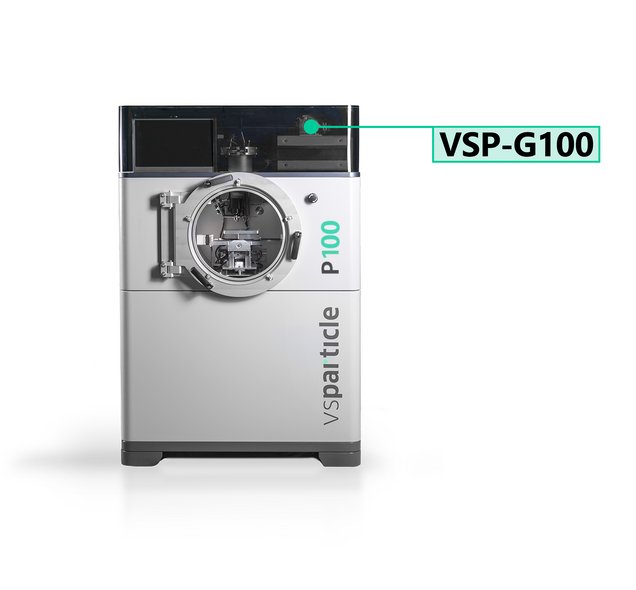
When the desired material is discovered, the printing process needs to be optimised for production. This can be done on the Process Development Tool (PDT) equipped with the next-generation VSP-G100 Nanoparticle Generator. With a target of 25,000 sparks per second, the PDT is set to reach a printing speed 100x faster than current models operating at 300-500 sparks per second.
CATEGORY
