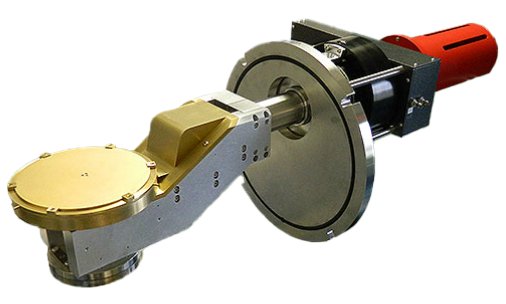
AJA’s SHQ-TS Series can be tilted between +/- 200° in the plane of the substrate surface. With stepper motor control, angular precision is within 0.1°. Azimuthal rotation is available on many of our configuration in conjunction with heating, water-cooling, and RF/DC biasing.Stepper motor controlled tiling and LN2 cooling is also available.This powerful combination of features are typically used in evaporation, ion milling, and multi-technique systems (sputter + e-beam). 6” H2O cooled, rotating, tilting substrate holder
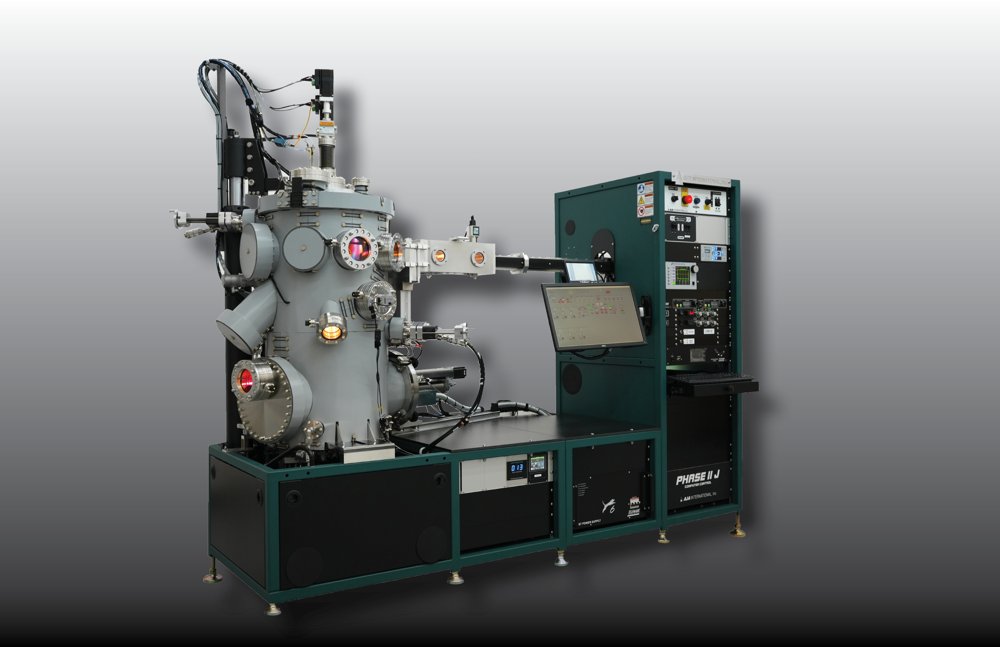
AJA International ATC-E UHV Series Electron Beam Evaporation Systems are available in ATC-1800E and ATC-2200E cylindrical, UHV style chambers. These physical vapor deposition systems offer exceptional value while delivering optimal performance and utilizing top quality sub-components. They inherit many design features and common parts from the highly evolved ATC & ATC Orion sputtering tools and can be outfitted with single or multi-pocket linear UHV e-beam sources, thermal evaporation sources, ion / plasma sources, Knudsen cells, low temperature evaporation cells for organic materials and Radak Sources. In addition, these systems are available with load-locks, QCM control, heated or cooled substrate holders with tilting capability, planetaries, various pumping packages and automated control. AJA offers a variety of sources on our ATC-E Series Evaporation Systems. The vertical cylinder ATC-E series chambers are best suited for linear, multi-pocket, UHV, e-beam sources which are side mounted and attached to a convenient slide rail for service and loading access. Spare ports on the chamber bottom straddling the linear e-beam source allow for the addition of multiple secondary thermal evaporation sources. Secondary thermal sources are typically optimized for specific materials (organic materials) or to allow co-evaporation capabilities. The ATC 2200-E system allows (2) UHV multi-pocket linear e-beam evaporation sources for co-evaporation along with secondary thermal sources as well. Typical Rate/Uniformity Data: The ATC-E Series Evaporation Systems can be configured for high rate, low rate, multi-layer and co-deposition applications depending on the chamber, sources, substrate carrier and general configuration chosen. Proper power, crucible liner or boat material, soak, and XY sweep decisions must be made for each material to be evaporated to ensure the desired rates, stability and film characteristics. Typically, materials with good heat transfer properties (eg. Al) do not require XY sweep but may require a liner (Au) whereas materials with poor thermal properties (eg. Cr) tend to tunnel and spit unless the e-beam power is diffused with an XY sweep. Proper substrate fixturing is required to obtain the best uniformity. Substrate Holders - Heating/Cooling: AJA can fit your customized evaporation system with a wide variety of substrate holders. Our substrate heaters can be equipped with azimuthal rotation, heating up to 1000°C, RF/DC bias capability and tilting in a single axis plane. Our cooled stages can be equipped with H2O or LN2 cooling in the static or rotational modes. Additional features include azimuthal rotation, RF/DC bias and tilting in a single axis plane. Substrate holders can be semi-automatic or fully automated depending on the process requirements. Custom configurations are also available when heating and cooling are required. For batch coating applications domed-styled substrate carriers optimized for lift-off processing and planetary-style holders are also available. Process gas ring or gas distributor options are offered for reactive processing or applications requiring an anneal step.
CATEGORY
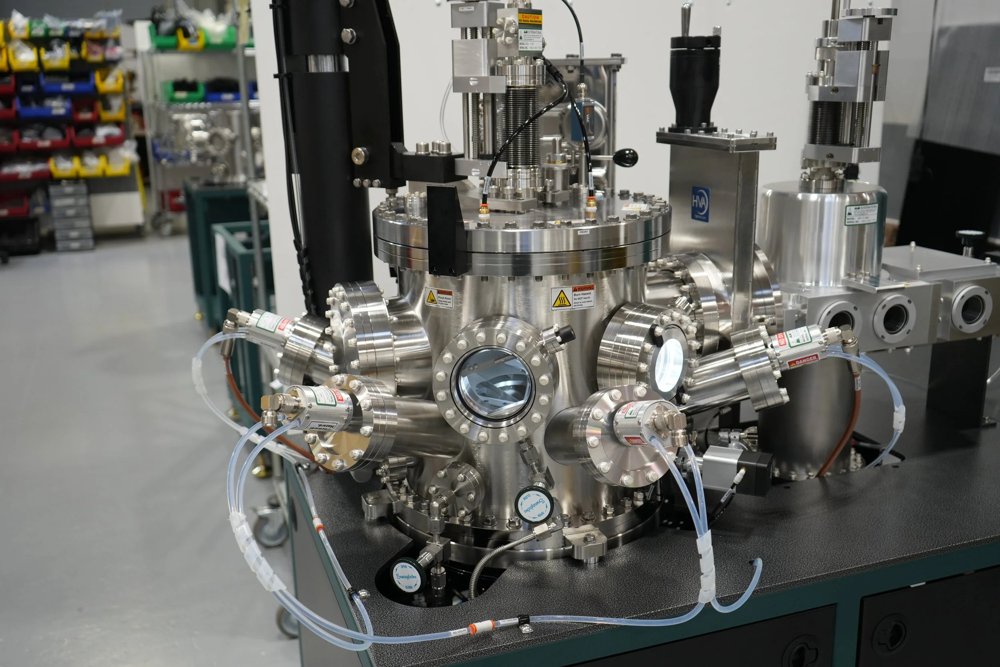
Nano-engineered materials enable discoveries in fields such as spintronics for electronic memory and logic applications, ferroelectric memories, sensors based on giant magnetoresistance or tunneling magnetoresistance (GMR and TMR), superconductors, and the like. Epitaxial thin films, with their excellent crystallographic structure and flat, atomically precise interfaces are required to explore the fundamental interactions giving rise to these phenomena and to develop corresponding applications. The SBE-6 Series Sputter Beam Epitaxy (SBE) Deposition System combines deposition quality that rivals molecular beam epitaxy (MBE) with the ease, flexibility, and lower cost of sputtering. The SBE-6 Series is positioned as a leading-edge solution in thin-film fabrication. The SBE-6 Series was developed in collaboration with Professor Adam Hauser at the University of Alabama. In contrast to conventional "off-axis" sputtering configurations, the SBE-6 Series enables the co-deposition or sequential deposition of up to six distinct materials while minimizing cross-contamination. This advanced platform integrates years of refinement in deposition dynamics within AJA International’s proven engineering framework and high-performance components recognized globally for their reliability. Key Features of the SBE-6 Series Sputter Beam Epitaxy System Magnetron Sputtering Sources: The SBE-6 system accommodates up to six 1.5” or 2” magnetron sputtering sources, each equipped with individual isolation shielding and specially designed shutters to minimize cross-contamination and enable precise control of deposition parameters. The geometry works in configuration with thoroughly researched stage positioning and substrate rotation parameters to obtain precise film stoichiometry and atomically flat interfaces. Substrate Holder: The substrate holder is highly configurable, supporting sample sizes ranging from small coupons to full wafers up to 4” diameter with excellent film thickness uniformity. (Speak with us about customized tools for working with larger substrates; AJA International provides configurations for wafers up to 8”.) Available functionalities include high-temperature substrate heating (up to 800–1,000 °C), cryogenic or water-based cooling (LN₂ or H₂O), azimuthal rotation for uniform film growth, motorized Z-axis motion, and RF/DC substrate biasing for advanced process control. Power Supply Options: DC and RF sources are preferred for sputter beam epitaxy, as they provide the lowest energy source particles, as required for atomically-ordered film growth. They further offer stability and compatibility with a wide range of materials. Any combination of up to six of these supplies can be provided for co-deposition, allowing access to a vast film stoichiometry space. AJA International does offer a comprehensive selection of power supplies, so pulsed DC and high-power impulse magnetron sputtering (HiPIMS) supply configurations can be provided to support further research into film growth dynamics. Ultra-High Vacuum (UHV) Design: The SBE-6 system is engineered to achieve base pressures ranging from the low 10⁻⁷ Torr to the low 10⁻¹⁰ Torr regime. Systems can be constructed using all-metal seal vacuum chambers, and in-house manufactured bakeout jackets are available for thorough vacuum conditioning and system degassing. Process Gas Delivery: The system supports up to four mass flow controllers (MFCs) for precise regulation of process gases. Typical gases used in epitaxial deposition include Ar, O₂, and N₂, allowing for a wide range of reactive and inert sputtering processes. Quartz Crystal Monitor: A quartz crystal microbalance (QCM) enables deposition rate calibration of each species, to precisely control the stoichiometry of multi-component films grown from elemental targets. This eliminates the need for costly composite targets, which are often difficult to procure. The QCM also provides real-time thickness monitoring during film growth. The system supports both manual and fully automated operation modes for precise film thickness control. Load-Lock System: AJA provides multiple load-lock configurations to meet varying throughput requirements, including manual and automated sample transfer mechanisms. For high-throughput applications, cassette-based systems can accommodate 2 to 10 carriers. Optional modules for sample pre-cleaning, degassing, oxidation, or in-situ analytical diagnostics can be integrated as needed. In-Situ Analytical Capabilities: The SBE-6 platform is compatible with a wide range of in-situ characterization tools, including reflection high-energy electron diffraction (RHEED), ellipsometry, optical emission spectroscopy (OES), pyrometry, and residual gas analysis (RGA), enabling real-time monitoring of growth conditions and film properties. Multi-Chamber Integration: The SBE-6 Series can be configured for multi-chamber operation, supporting direct vacuum-compatible connections with additional process modules. These may include co-focal sputtering systems, electron-beam deposition sources, or third-party equipment. Designed with future expansion in mind, the system facilitates in-situ sample transfer between chambers to preserve vacuum integrity and minimize exposure. The SBE-6 Series Sputter Beam Epitaxy (SBE) Deposition System represents a unique solution available from AJA International. The SBE-6 combines AJA’s trusted engineering with breakthrough deposition geometry to deliver MBE-like film quality using advanced magnetron sputtering. Its unmatched material isolation, configurability, and ultra-high vacuum performance make it the ideal platform for high-precision thin-film research and production.
CATEGORY
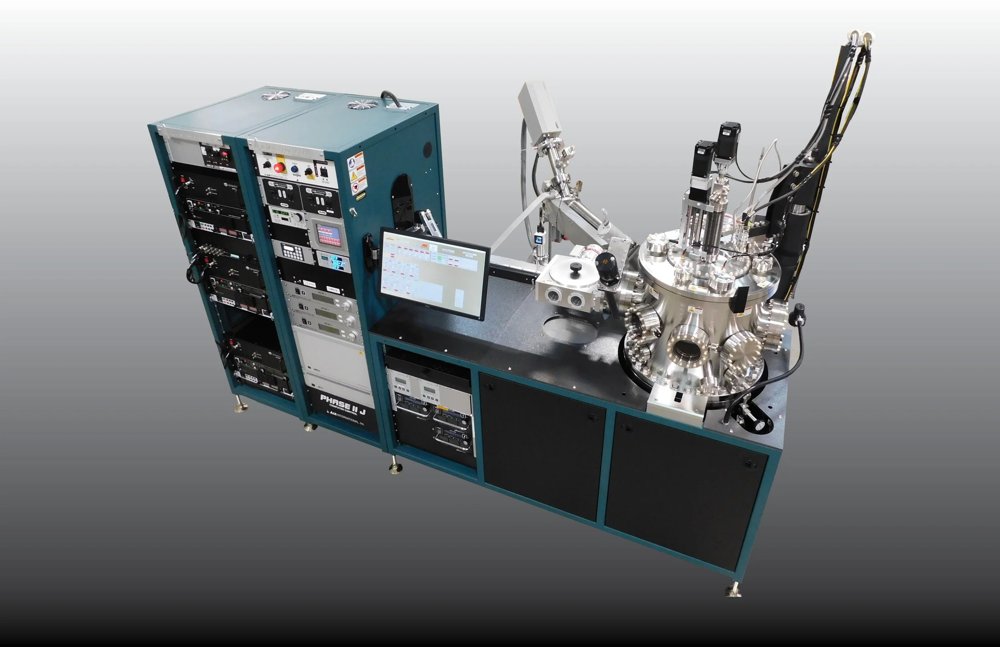
AJA International Orion and ATC Series sputtering systems are designed to seamlessly integrate HiPIMS technology, giving materials scientists numerous options for advanced thin film development. Key Features of the Orion and ATC Sputtering Systems for HiPIMS Magnetron Sputtering Sources: Each system offers configurations for mounting several magnetrons, in either sputter up or sputter down configurations. The ATC Series can support up to 13 guns in combinations of confocal, direct, and off-axis sputtering geometries for exploring large material spaces and for completing devices with a selection of capping and electrical lead options. The guns feature integral gas injection rings for local process gas delivery. This allows great freedom in exploring composition space and complex device architectures. Magnetrons are available for both high vacuum (Stiletto Series) and ultra-high vacuum (A300 Series) applications. Our guns magnet arrays are modular and can be exchanged in the field, allowing the user to switch between balanced, unbalanced, and magnetic material modes depending on the application. Analytical Options: An optional quartz crystal monitor and controller allows calibration of deposition rates. Other add-ons such as RHEED, ellipsometry, energy analyzers, stress analysis, and others allow for thorough characterization of both deposition dynamics and the resulting films. Sufficient spare ports are provided for measurement devices the user may desire to incorporate. Substrate Holder: The substrate holder is highly configurable, supporting sample sizes ranging from small coupons to full wafers up to 6” (Orion) or 12” (ATC) diameter with excellent film thickness uniformity. Available functionalities include high-temperature substrate heating (up to 800–1,000 °C), cryogenic or water-based cooling (LN₂ or H₂O), azimuthal rotation for uniform film growth, and motorized Z-axis motion. RF/DC substrate biasing provides advanced process control that can be synchronized with the HiPIMS pulsing, in order to further control the deposited ion energy. Process Gas Delivery: The system supports up to four mass flow controllers (MFCs) for precise regulation of process gases. Typical gases used in epitaxial deposition include Ar, O₂, and N₂, allowing for a wide range of inert and reactive sputtering processes. A gas ring can be provided at the substrate for reactive deposition of oxides and nitrides. Other process gases are supported, as well, per customer request. Deposition Recipe Generator: Recipe-driven automation ensures accurate, repeatable process execution. The software makes it simple to create and store up to 100+ recipes for depositing layer stacks such as superlattices. It is easy to write extensive recipes, and the Excel spreadsheet layout allows line by line layer stacking and review of recipes for accuracy and data extraction if needed. Recipe operation automates the entire deposition process, with auto-abort in case setpoints fail to be reached. Our AJA Excel Spread Sheet Software Emulator makes possible remote recipe creation offline from the system for later import and execution. Vertically Integrated System Design: AJA International manufactures many of the components in the systems. This ensures compatibility and quality, while controlling tool costs. This also speeds up service and provides long service life for the systems. Power Supply Options: DC, pulsed DC, RF and HiPIMS supplies can all be configured into the system. AJA’s standard Phase II-Au control system will accommodate up to (5) DC power supplies with integral 4-way switchboxes, (4) RF power supplies, and (1) 4-way RF switchbox. High-stability power supplies provide precise, repeatable deposition. Multiple HiPIMS supplies can run simultaneously in unipolar or bipolar mode, with the option of adding a synchronization unit to time the pulses for simultaneous or fixed delay firing. AJA International’s Orion and ATC Series Deposition Systems provide high flexibility and customization options for advanced film growth by HiPIMS. The ability to run multiple pulse-synchronized guns, grow compounds reactively, configure the gun plasma confinement, and tailor the impact energy of the various species all highlight the design of the systems to support complex growth modes for important functional materials. Please inquire for summaries of other applications that are enabled by this technique.
CATEGORY
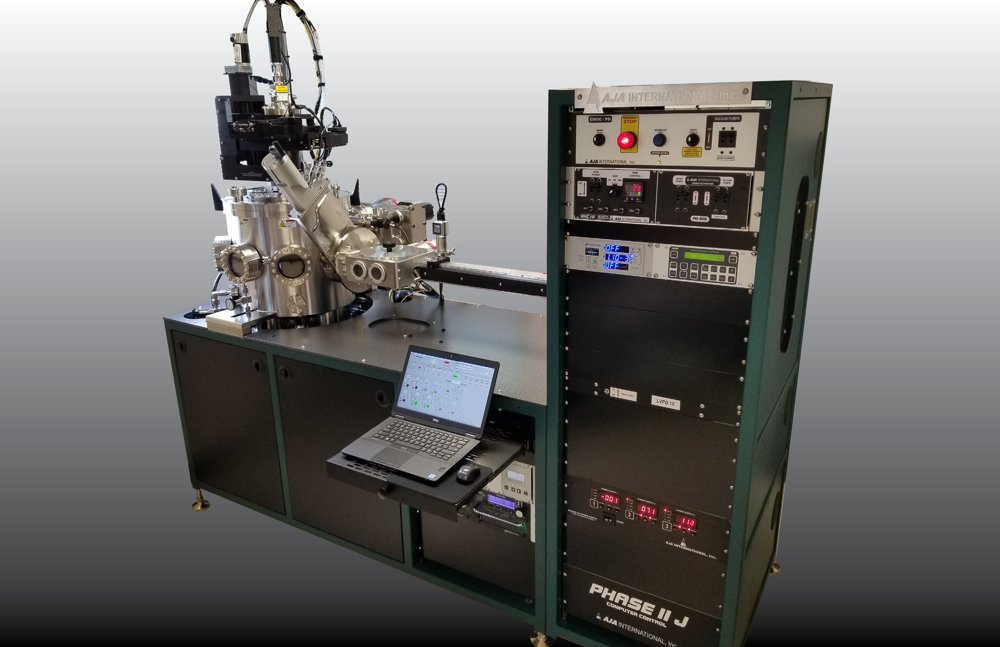
AJA International's Combinatorial Deposition Systems offer a powerful solution for high-throughput materials research. These advanced platforms enable deposition of discrete thin film arrays or continuous compositional gradients on substrates up to 200 mm. Featuring in-situ tiltable magnetron sources, motorized substrate holders, and integrated masking, they deliver precise control over film composition and uniformity. Compatible with high-temperature heating, cryogenic cooling, and in-situ analytics, these systems are ideal for rapid materials discovery and process optimization. Key Features of AJA Combinatorial Deposition Systems AJA International offers a range of deposition platforms configured for advanced combinatorial materials research. These systems support a variety of deposition techniques—including magnetron sputtering, electron beam evaporation, and hybrid configurations—designed to meet the complex demands of academic and industrial R&D environments. Magnetron Sputtering Sources: Our systems commonly feature in-situ tiltable magnetron sputtering sources, allowing angular adjustment without breaking vacuum. This enables precise control over compositional gradients and film uniformity across discrete samples – or the entire substrate surface, if blanket films are required. Optimizing gun array patterns support the systematic fabrication of binary, ternary, quaternary or higher complexity compound libraries – up to the number of guns and power supplies available. This flexibility is critical for high-throughput materials discovery and optimization. Combinatorial Substrate Holder: AJA’s combinatorial substrate holders build upon our robust standard designs and are enhanced with UHV-compatible X/Y stepper motor-driven bellows mechanisms. These holders accommodate multiple discrete samples on a single substrate, with common configurations including 5×5 and 10×10 arrays of 5 mm specimens (25 and 100 samples, respectively). An integrated automated masking system—with interchangeable apertures—allows flexible specimen sizing and isolation. The mask assembly can be retracted for gradient film deposition or traditional confocal sputtering geometries with azimuthal substrate rotation for uniform coatings. All substrate holders are compatible with high-temperature heating (up to 1000°C), RF/DC biasing, and cryogenic cooling (LN₂ or H₂O), enabling a wide range of process conditions. Power Supply Configurations: AJA systems support an extensive suite of power delivery options tailored to diverse materials and process requirements. Available configurations include DC, RF, pulsed DC, and high-power impulse magnetron sputtering (HiPIMS). Load-Lock and Sample Transfer Systems: To support varying levels of throughput, AJA provides flexible load-lock solutions, including both manual and fully automated sample transfer systems. For high-throughput screening, cassette-based modules are available to accommodate 2 to 10 carriers. Optional pre-processing modules—such as sample pre-cleaning, degassing, surface oxidation, and in-situ diagnostics—can be integrated to enhance process efficiency and reproducibility. In-Situ Analytical Capabilities: Our combinatorial platforms are designed for integration with a broad range of in-situ analytical tools to enable real-time process monitoring and film characterization. Compatible diagnostics include reflection high-energy electron diffraction (RHEED), ellipsometry, optical emission spectroscopy (OES), pyrometry, and residual gas analysis (RGA), providing researchers with the data needed to understand and control film growth at the atomic level. Combinatorial chemistry – also referred to as high throughput materials discovery or high throughput experimentation –accelerates materials discovery by making large numbers of samples with differing compositions and rapidly screening them for effectiveness in an application. For example, battery materials for electric vehicles must provide high energy density for long range power, while simultaneously seeking to eliminate critical metals such as nickel and cobalt. At the same time, lightweight yet strong alloys for automobile bodies can serve to reduce the power needed from those batteries. The challenge in discovering these materials lies in their complexity. High entropy alloys (HEA) are an example of an active field of research, holding out great promise for materials with applications at high temperature, in difficult corrosive environments, in areas where light weight and high strength must be combined, for high hardness, and for energy storage – to give a partial list. HEA’s are defined as having at least five elements in their composition, each with a significant atomic fraction. The number of possible HEA’s then rises into the billions, based on this requirement. Clearly, a one-sample-at-a-time approach will not suffice to explore such a large composition space. This is where high throughput experimentation – and AJA International’s solutions – come into play. Our combinatorial deposition tools offer the ability to make a large number of thin film samples in one run on a single substrate using a masking system with a step-and-repeat process – or multiple substrates if using a cassette loader. Continual composition gradient films are also possible. The system can be designed for substrates up to 200 mm in diameter. Multiple magnetrons can co-sputter to make practically any desired composition. Testing, in-situ in or after the samples are removed, can rapidly screen many sample spots for optimal properties.
CATEGORY
