By Xenocs
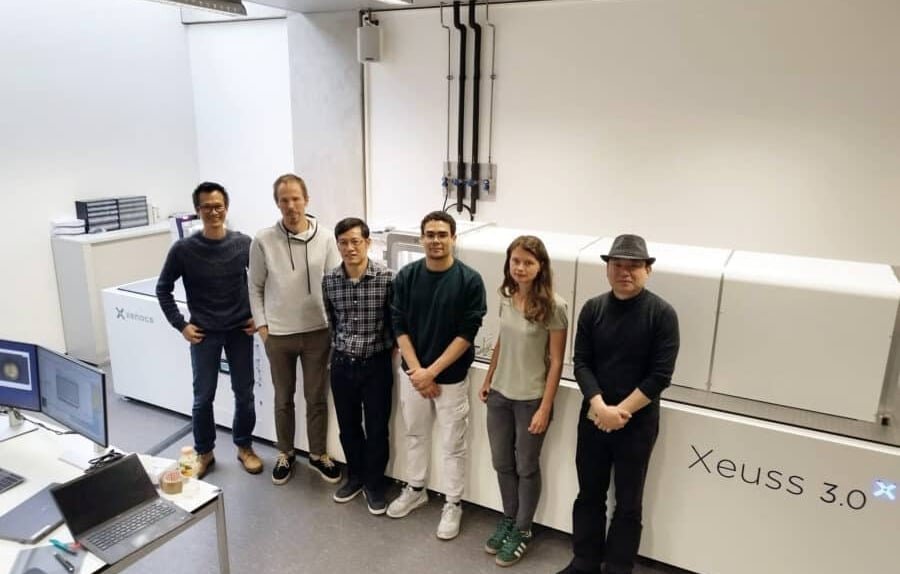
Xeuss 2.0 HR SAXS/WAXS system equipped with a Pilatus3 200K detector and SWAXS module. The instrument will be used to expand the characterization capabilities of the lab, in particular for grazing incidence applications (GISAXS/GIWAXS), 2D WAXS measurements and simultaneous SAXS/WAXS measurements during dynamic studies, using shear or temperature cells. Such features will be especially useful for the study of organo-photovoltaic thin film structural characterization, polymer crystallization, block copolymer composites, ionic and conjugated polymers, rheo-SAXS, bio-synthetic hybrid materials and ultimately biological samples in solutions. "The Xeuss 2.0 was selected for a variety of reasons. The first, and perhaps one of the most important reasons, was the uncomparable amount of effort that XENOCS put into demonstrating the capability of the instrument and the scientists behind the instrument. The process began more than one year prior to purchase with XENOCS measuring a number of samples and then presenting the results to our faculty and students. The time dedicated to both obtaining the highest quality results possible and to presenting those results was unprecedented. We were impressed from this point forward. The reason for this is that our laboratory is looking for more than the typical vendor-customer relationship. We want to be a partner with our vendor and based on the depth of interaction provided during the evaluation process, we were convinced that XENOCS is able and willing to provide that deeper relationship. We look forward to continuing and developing that relationship once the instrument is on site. A second reason is generation of high accuracy data in absolute intensity measurement in an automated fashion. Our previous system required a processing routine for every sample to convert the data to absolute intensity values which consumed valuable analyst time. Additionally, the promised high resolution mapping capability (down to less than 200 microns) will offer substantial benefit to our researchers that are working in the area of plastic engineering and production. Finally, competitive pricing was highly significant. All of these features, when combined, make the Xeuss 2.0 the logical choice for our laboratory. We anxiously await its' arrival so that we can begin a new chapter of SAXS measurements at The Pennsylvania State University."
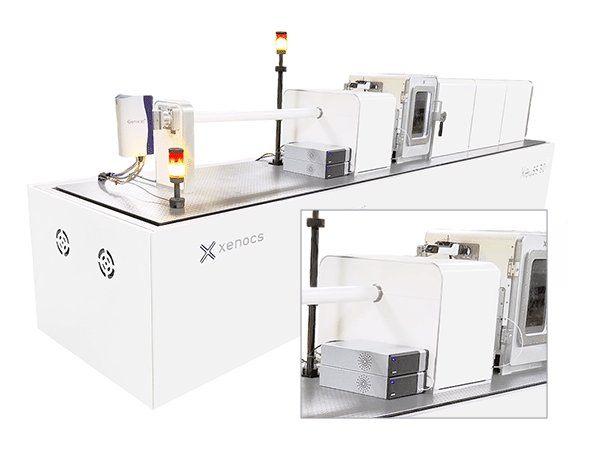
InXight is an X-ray imaging module option for the Xeuss Pro offering a fast and automatic switch between X-ray scattering measurements and X-ray imaging. It expands the capabilities of the Xeuss Pro instrument by enabling you to: - Access structural information of your samples from Å to mm - Map with imaging and probe with scattering - Reveal nanostructure differences, interfaces and orientation with InXight Dark-field and Phase-contrast imaging (DF-PCI) option. Get the bigger picture on your samples Development of polymers, foams, composites, biomaterials for new applications require not only the understanding of their material structure but also evaluating the impact of manufacturing processes and conditions of use. By measuring the macrostructure of processed or heterogenous materials, in combination with the Xeuss Pro scattering measurements, InXight module helps understanding the relationship between macrostructural heterogeneities and nano- or atomic-structure. The large field of view of the X-ray image and its resolution down to tens of microns is ideal for selecting points of interest for local scattering measurements. Through the fast switching of measurement configuration, InXight enables operando dynamic studies while collecting both X-ray images and X-ray scattering patterns. Typical materials for analysis include polymers, composites, glasses, or thin inorganic samples. Map orientation of your sample structure Heterogeneous samples with similar sample density generate low attenuation contrast in standard radiography. InXight equipped with the DF-PCI option provides additional image components which enhance the understanding of such samples. The DF-PCI option reveals structure edges, interfaces (phase-contrast image component)or nanostructure presence (dark-field image component).The orientation of the dark-field signal maps the anisotropy in the sample structure, enabling optimal targeting of scattering experiments. Automatic and fast switch of X-ray sources between scattering and imaging InXight patented measuring configuration includes an X-ray imaging source producing a cone-shaped beam to illuminate samples positioned on the Xeuss Pro sample stage with a large field of view and project the X-ray transmission image on the Q-Xoom detector. Motorized and fast switch of X-ray sources ensure automatic sequential X-ray scattering and X-ray imaging on the same sample. Patent EP 3 845 892 B1, US 11 796 485, patent pending in Japan, China.
CATEGORY
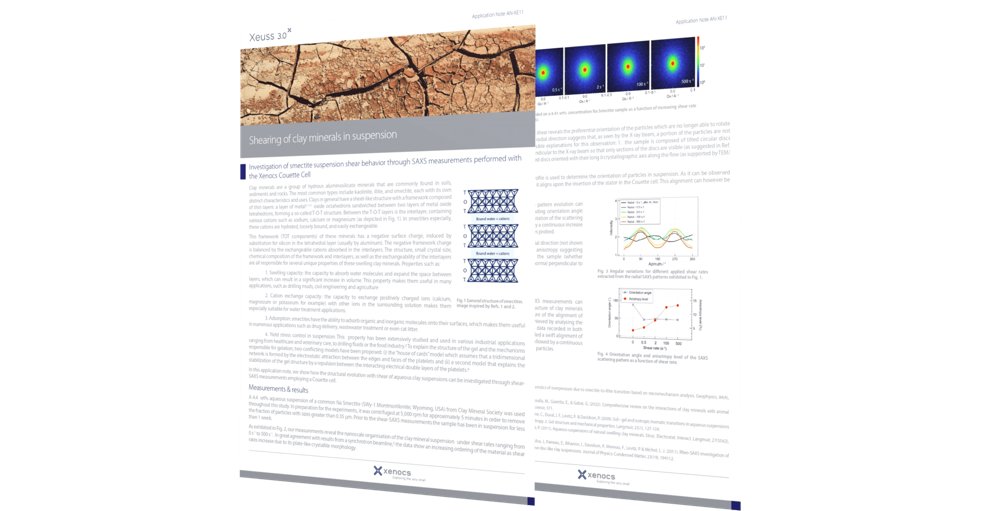
The microstructure of soft matter materials can easily be modified under applied shear stress. Beyond macrostructural analysis, observing how the sample’s molecular structure changes under deformation can be essential to better understand the dynamics of materials and develop new materials functions. The Xenocs Couette stage for shearSAXS is made for X-ray scattering studies of soft materials under temperature-controlled shear flow. It was developed for use on the Xeuss Pro SAXS/WAXS instrument to expand further its measurement capabilities. Complement your rheological studies with nanostructural information The Couette stage complements nicely rheological measurements with nanostructural characterization under mechanical strain measured in optimized X-ray conditions. Discover how the structural evolution of a high-concentration cellulose nanocrystals system under varying shear rates is perfectly described using the Xenocs Couette stage showing excellent agreement with rheoSAXS measurements. Key benefits of the Xenocs Couette stage for shearSAXS X-ray structural characterization of samples at the nanoscale during shearing experiments over a broad viscosity range Smooth sample loading and low sample volume requirements Nanostructure characterization either parallel or perpendicular to the flow direction, with automatic change of measurement plane (enabled by the cylindrical Couette stage design) Learn more about features and specifications Xenocs Couette stage is designed to handle both liquids and viscous samples under high shear rates during X-ray measurements. It uses both a stator sleeve and a rotor cup made of low-scattering polycarbonate material for an efficient acquisition of X-ray scattering data. Measurements both along tangential and rotor radial directions are available, with a motorized change of configuration so that the nanostructure can be analyzed parallel and perpendicular to the flow direction respectively. The rather compact design of this type of shearing device enables a safe and straightforward installation on the Xeuss Pro. Typical specifications of the Xenocs Couette stage for shearSAXS are: - Temperature range: +10°C to +65°C - Shear rate: 0.2 s⁻¹ to 1020 s⁻¹
CATEGORY
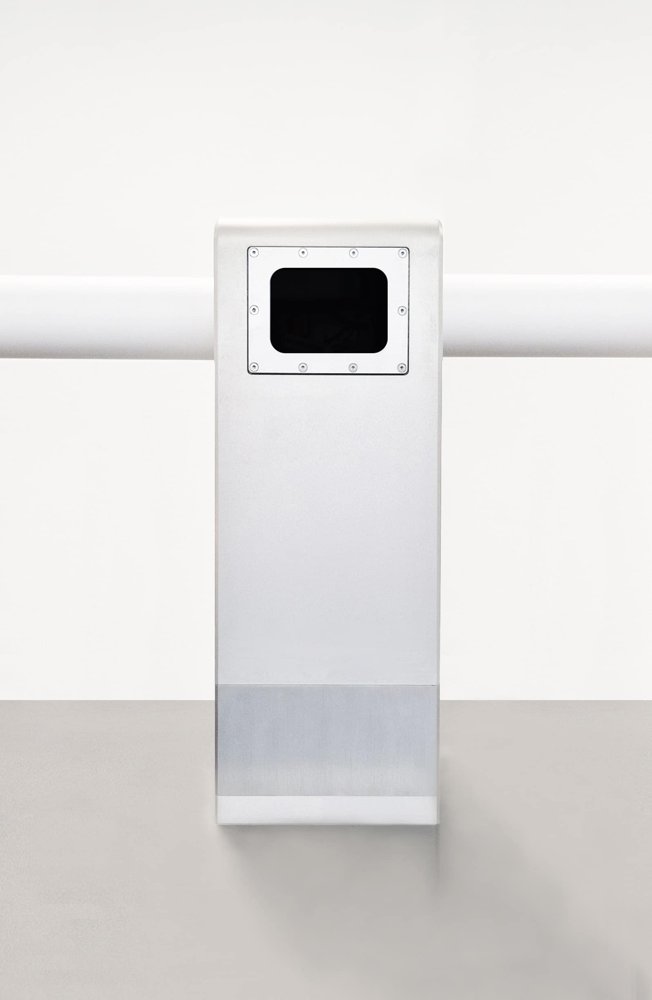
Q-Xtend is an advanced collimation module option for the Xeuss Pro dedicated to analysis of structural parameters with large dimensions (typically from 100 nm to 1 μm or more). Its measurements can easily be combined with standard SAXS/WAXS and Bonse-Hart USAXS measurement modes of the Xeuss Pro instrument for multiscale analysis of soft matter samples. With Q-Xtend you can: - Measure larger particles than with standard high resolution SAXS measurements - Get more information from your SAXS curve such as information about particles morphology or interactions thanks to more information close to the transmitted beam - Measure micron-sized structures within short measuring times for standalone SAXS measurements, for combined Bonse-Hart USAXS and SAXS measurements, or for sample screening. Measurement of large particles Q-Xtend enables you to measure particle sizes up to 1.5 µm depending on the Xeuss Pro instrument model. It makes use of an extremely fine beam resolution coupled to long sample to detector distance to detect structural parameters of larger dimensions compared to standard high resolution SAXS measurements. Depending on the sample property, Q-Xtend can provide more accurate data modelling on large particles (detection of structure factors, better characterization of sample monodispersity). It can be used as a standalone measurement mode for large micron-sized structures or in combination with state-of-the-art Bonse-Hart USAXS. Combined Bonse-Hart USAXS/Q-Xtend/SAXS/WAXS: Patented measuring configuration (EP 4 095 522) Get more information from your SAXS scattering data Q-Xtend expands the range of scattering data collected at low scattering angles providing more information in case of measurement of large particles or for sample aggregation studies. By collecting more scattering data close to the transmitted beam and depending on the type of sample, information such as sample morphology can be detected to confirm scattering models used for data modelling. Guinier regime can even be achieved for radius of gyration measurement of moderately large particles.
CATEGORY
AuX source: X-ray beam focusing channel The AuX source module is an additional incident X-ray beam channel for the Xeuss Pro where the X-ray beam is focused on the sample. The increased photon density (by more than one order of magnitude) compared with the main SAXS/WAXS source is an asset for applications requiring a small and intense X-ray beam. Improved data quality for small spot X-ray scattering applications The AuX source module is highly advantageous for applications where a small beam spot on the sample is the requirement or preferred configuration. It can for example be used for mapping the nanostructure or to gain atomic scale information on semi-crystalline polymers or biomaterials with increased data quality or reduced exposure time. For certain GIWAXS applications, the AuX source can provide a scattering intensity increase of more than a factor of 10 depending on the angle of incidence. From WAXS to SAXS up to particle sizes of 50 nm The adjustable optical design of the AuX source, which uses scatterless slits coupled with a motorized Q-Xoom detector, offers access to both SAXS and WAXS measurements. Particle sizes as large as 50 nm can be measured using the AuX source on spot sizes of 150 microns and with measuring times in the range of a minute or less. Modular design with automatic and rapid source switch The AuX source is mounted on VersaXtage enabling a rapid and automated switch between measuring configurations. Both incident beamlines maintain a colinear full-in vacuum set-up for throughput. VersaXtage can be mounted with both InXight and AuX source modules simultaneously so that the user can select between two additional incoming beam set-ups in addition to the standard SAXS/WAXS source. A combination of InXight imaging and scattering measurements performed using the AuX source could be very useful for the characterization of inhomogeneous samples. For characterization of such materials, the fine spatial resolution, achieved with the AuX source, will complement the large field of view image provided by InXight.
CATEGORY
