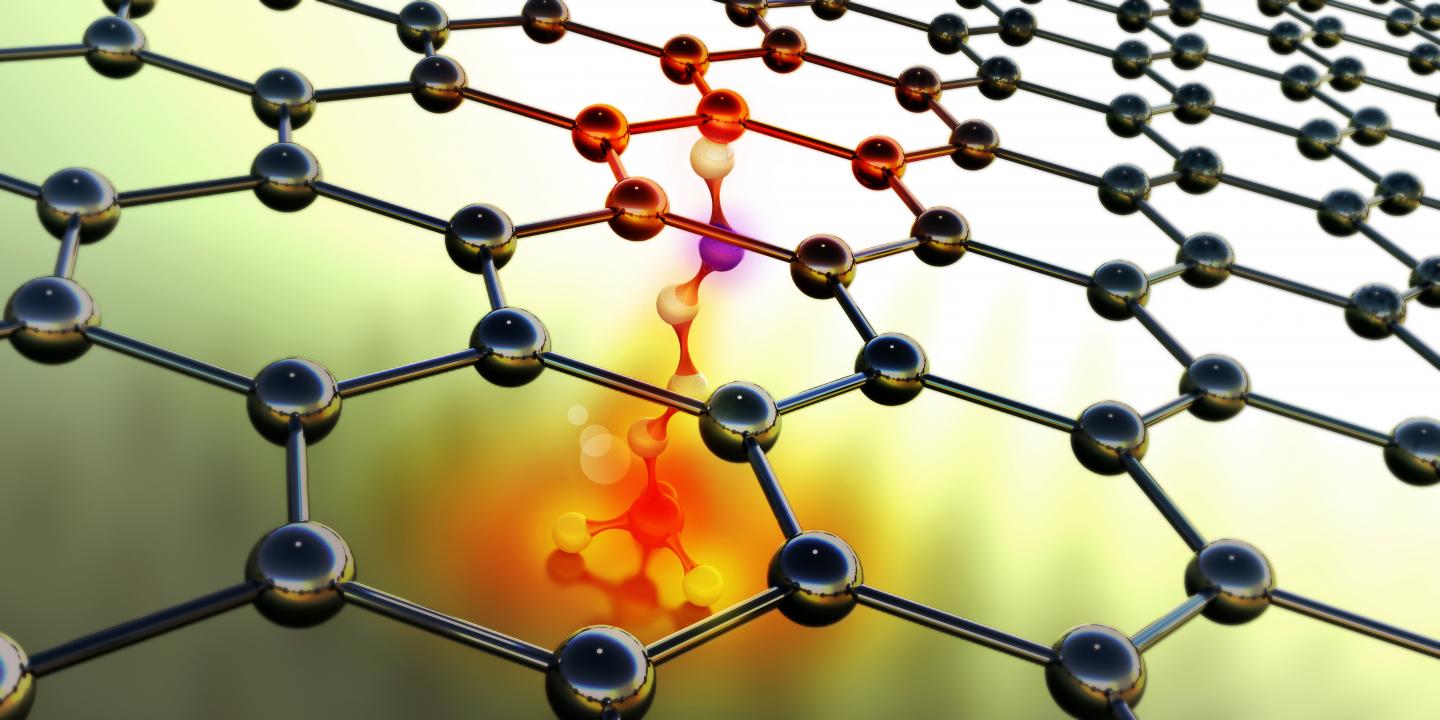
Heat dissipation in electronics and optoelectronics is a severe bottleneck in the further development of systems in these fields. To come to grips with this serious issue, researchers at Chalmers University of Technology have developed an efficient way of cooling electronics by using functionalized graphene nanoflakes. The results will be published in the renowned journal Nature Communications.
"Essentially, we have found a golden key with which to achieve efficient heat transport in electronics and other power devices by using graphene nanoflake-based film. This can open up potential uses of this kind of film in broad areas, and we are getting closer to pilot-scale production based on this discovery," says Johan Liu, Professor of Electronics Production at Chalmers University of Technology in Sweden.
The researchers studied the heat transfer enhancement of the film with different functionalized amino-based and azide-based silane molecules, and found that the heat transfer efficiency of the film can be improved by over 76 percent by introducing functionalization molecules, compared to a reference system without the functional layer. This is mainly because the contact resistance was drastically reduced by introducing the functionalization molecules.
Meanwhile, molecular dynamic simulations and ab initio calculations reveal that the functional layer constrains the cross-plane scattering of low-frequency phonons, which in turn enhances in-plane heat-conduction of the bonded film by recovering the long flexural phonon lifetime. The results suggested potential thermal management solutions for electronic devices.
In the research, scientists studied a number of molecules that were immobilized at the interfaces and at the edge of graphene nanoflake-based sheets forming covalent bonds. They also probed interface thermal resistance by using a photo-thermal reflectance measurement technique to demonstrate an improved thermal coupling due to functionalization.
"This is the first time that such systematic research has been done. The present work is much more extensive than previously published results from several involved partners, and it covers more functionalization molecules and also more extensive direct evidence of the thermal contact resistance measurement," says Johan Liu.
Reference:
"Graphene-based film can be used for efficient cooling of electronics
DOI: 10.1002/adfm.201500990
Chalmers University
#Graphene
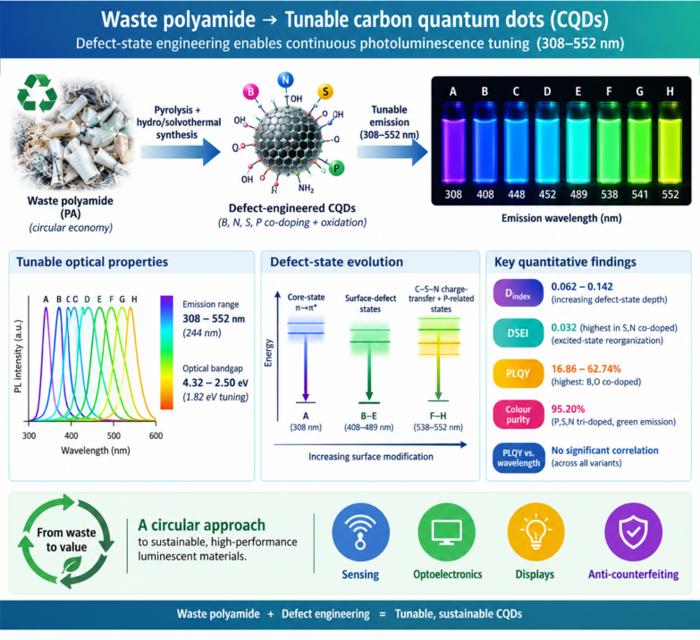
Waste polyamide-derived CQDs show continuous photoluminescence tuning from 308 to 552 nm through sequential defect-state engineering, with optical transition energies decreasing from 4.32 to 2.50 eV. @Christian Ebere Enyoh from Saitama University Carbon quantum dots (CQDs) are fluorescent carbon nanomaterials with potential applications in sensing, optoelectronics, displays, anti-counterfeiting, and environmental technologies. Their optical properties can be adjusted by modifying the carbon...
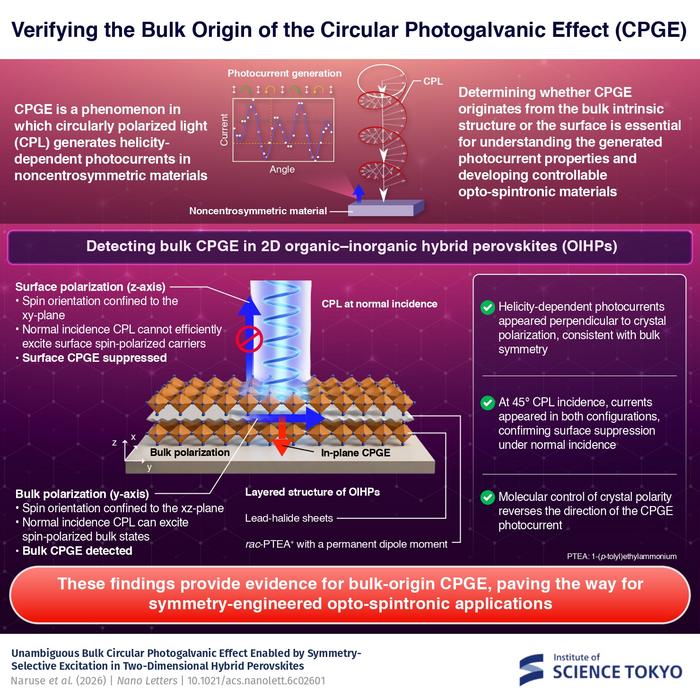
The researchers used circularly polarized light at normal incidence and found that helicity-dependent photocurrents appeared perpendicular to the crystal’s polarization but vanished when measured parallel to it, supporting a bulk origin of CPGE. @Institute of Science Tokyo The circular photogalvanic effect (CPGE), a phenomenon that generates helicity-dependent photocurrents in noncentrosymmetric materials, can originate purely from a crystal's internal structure without contribution from the...
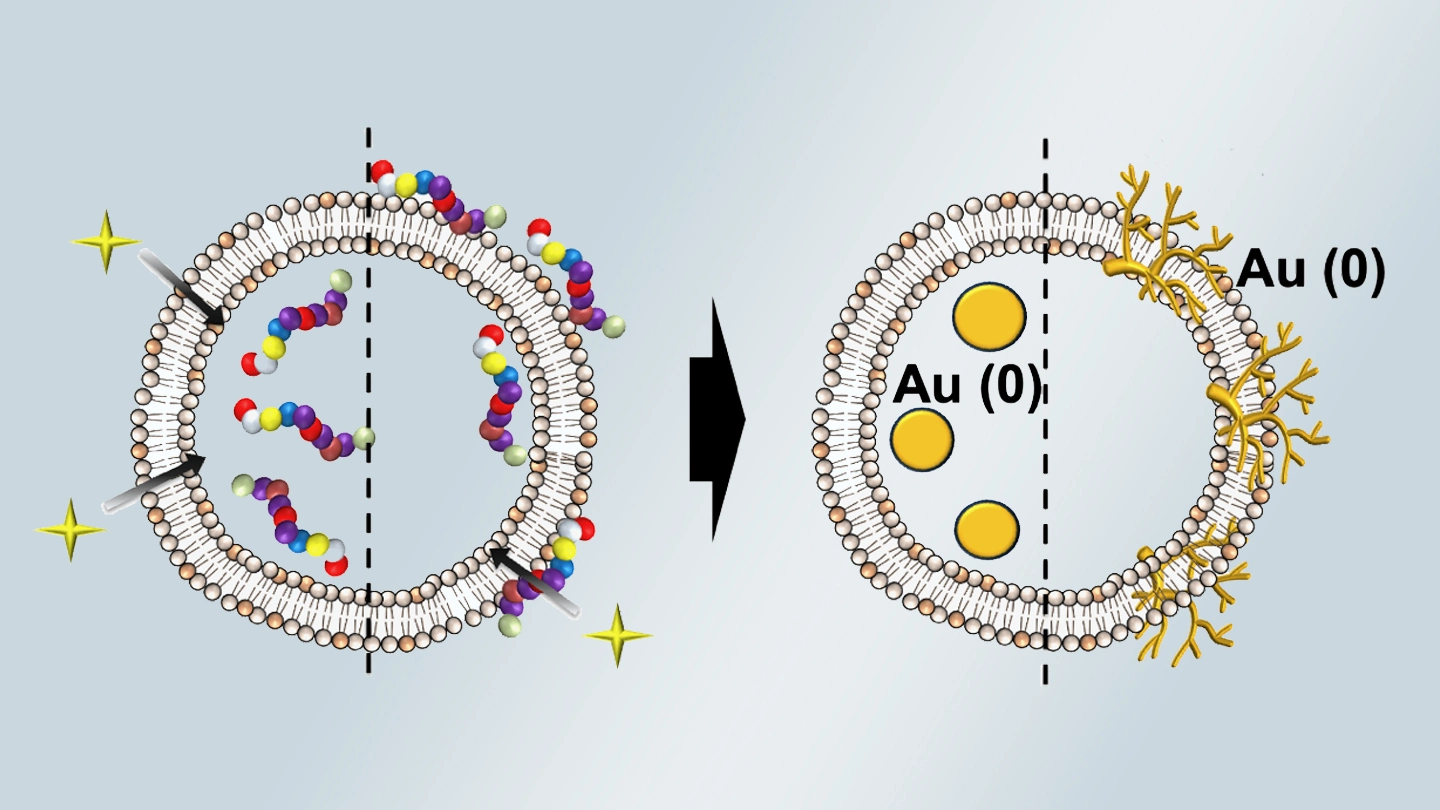
Summary of gold nanoparticle growth programming in liposome based on localization of biomineralization peptide The position of biomineralization peptides within liposomes can influence how gold nanoparticles grow, reports a research team from Institute of Science Tokyo. Peptides localized at the membrane interface promote branched structures, while those confined to the liposome interior favor spherical nanoparticles. The findings offer a new strategy for controlling nanoscale reaction...
