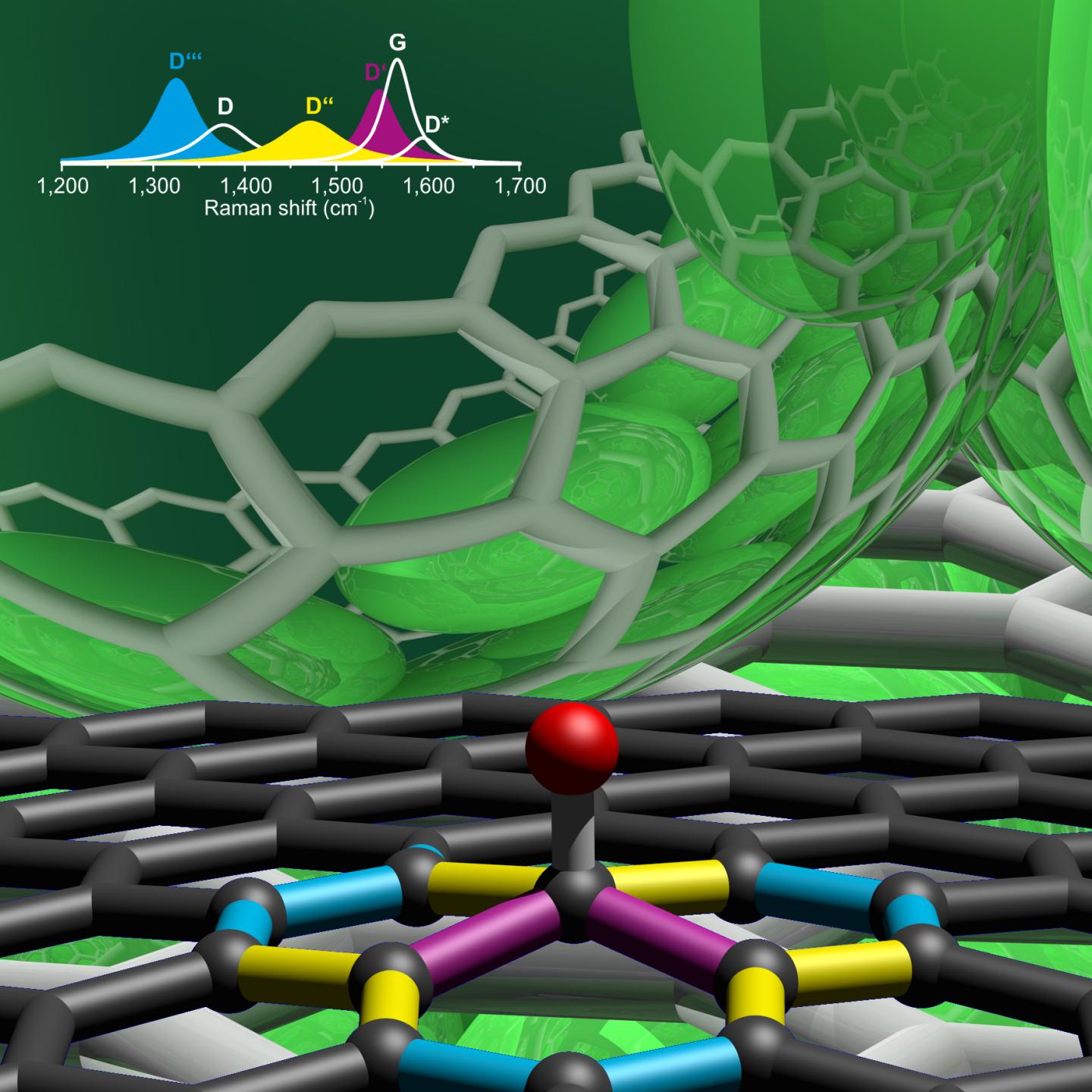
Two-dimensional graphene consists of single layers of carbon atoms and exhibits intriguing properties. The transparent material conducts electricity and heat extremely well. It is at the same time flexible and solid. Additionally, the electrical conductivity can be continuously varied between a metal and a semiconductor by, e.g., inserting chemically bound atoms and molecules into the graphene structure - the so-called functional groups.
These unique properties offer a wide range of future applications as e.g. for new developments in optoelectronics or ultrafast components in the semiconductor industry. However, a successful use of graphene in the semiconductor industry can only be achieved if properties such as the conductivity, the size and the defects of the graphene structure induced by the functional groups can already be modulated during the synthesis of graphene.
In an international collaboration scientists led by Andreas Hirsch from the Friedrich-Alexander-Universität Erlangen-Nürnberg in close cooperation with Thomas Pichler from the University of Vienna accomplished a crucial breakthrough: using the latter's newly developed experimental set-up they were able to identify, for the first time, vibrational spectra as the specific fingerprints of step-by-step chemically modified graphene by means of light scattering.
This spectral signature, which was also theoretically attested, allows to determine the type and the number of functional groups in a fast and precise way. Among the reactions they examined, was the chemical binding of hydrogen to graphene. This was implemented by a controlled chemical reaction between water and particular compounds in which ions are inserted in graphite, a crystalline form of carbon.
Additional benefits
"This method of the in-situ Raman spectroscopy is a highly effective technique which allows controlling the function of graphene in a fast, contact-free and extensive way already during the production of the material," says J. Chacon from Yachay Tech, one of the two lead authors of the study. This enables the production of tailored graphene-based materials with controlled electronic transport properties and their utilisation in semiconductor industry.
Publication in Nature Communications:
Philipp Vecera, Julio C. Chacon-Torres, Thomas Pichler, Stephanie Reich, Himadri R. Soni, Andreas Görling, Konstantin Edelthalhammer, Herwig Peterlik, Frank Hauke, Andreas Hirsch "Precise determination of graphene functionalization by in-situ Raman spectroscopy". Nature Communications: DOI: 10.1038/ncomms15192 (2017).
Contact
Univ.-Prof. Mag. Dr. Thomas Pichler
Faculty of Physics
University of Vienna
Boltzmanngasse 5, 1090 Vienna, Austria
M +43-664-60277-514 66
thomas.pichler@univie.ac.at
University of Vienna
#Graphene #MaterialScience #Spectroscopy
IMB-CNM-CSIC is a partner in POLARIS, an EIC Pathfinder Open 2026 project led by ICN2 to develop graphene-based brain implants. Researcher Anton Guimerà leads the institute's contribution.
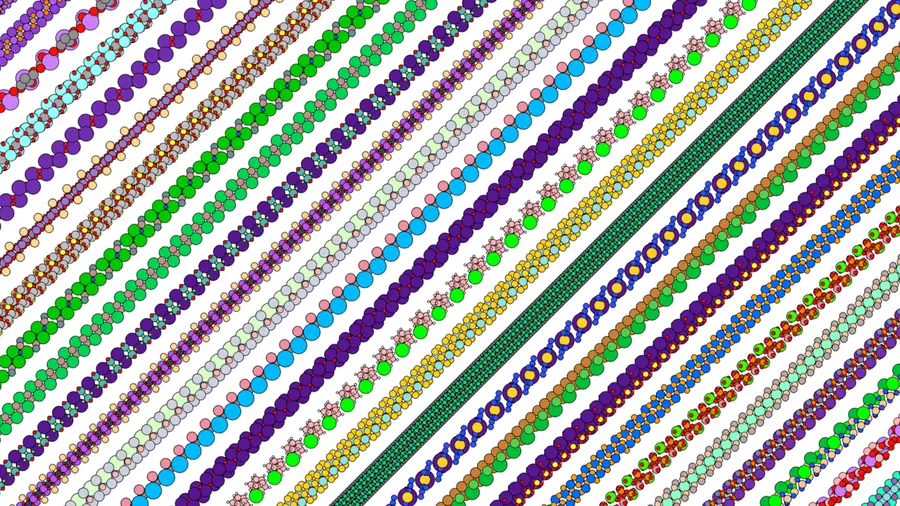
A computational method developed at TU Dresden and HZDR predicts separable atomic layers in any crystal, not just classic van der Waals stacks. Screening more than 24,000 structures, the team flagged 2,531 promising candidates for 2D materials, many with low exfoliation energies and favourable stability.
California Nanotechnologies Corp. has received purchase orders totaling US$147,000 from a Texas-based aerospace company for components used in commercial satellite systems, following about US$170,000 in R&D orders in 2026.
This week in nanotech
$271M raised
6 funding rounds · 30 deals tracked
New products
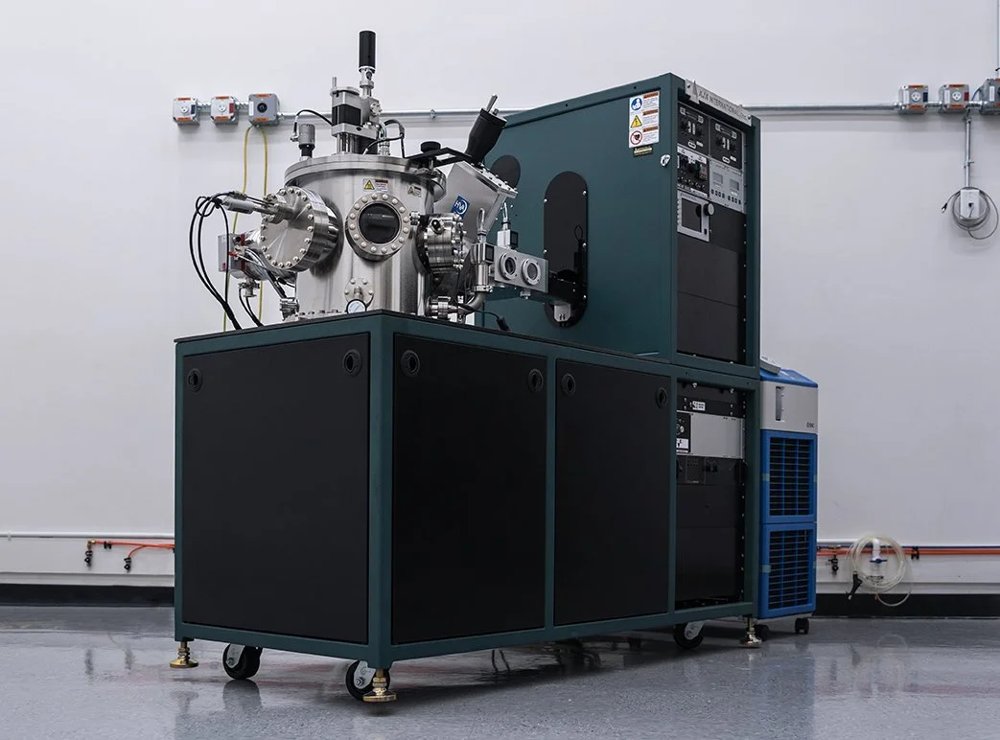 Orion Sputtering Deposition SystemsAJA International Featured
 Ti-WCMBN Nanomaterialia Featured
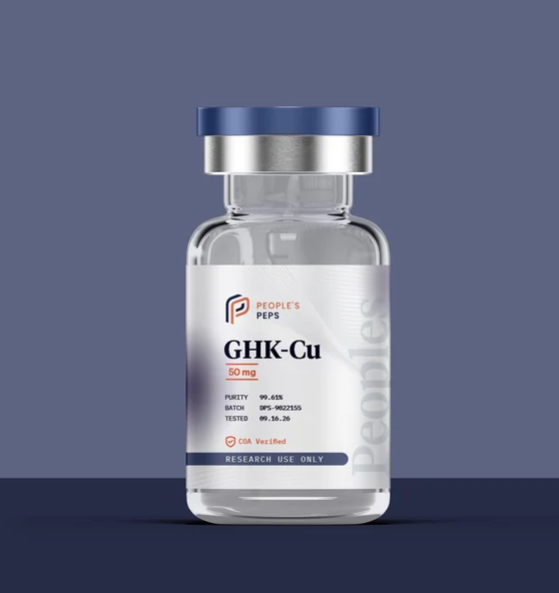 GHK-CuPeoples Peps
Market insights
Last 30 days: Quantum Technologies drew the most money: $3.17B.
Money raised per month