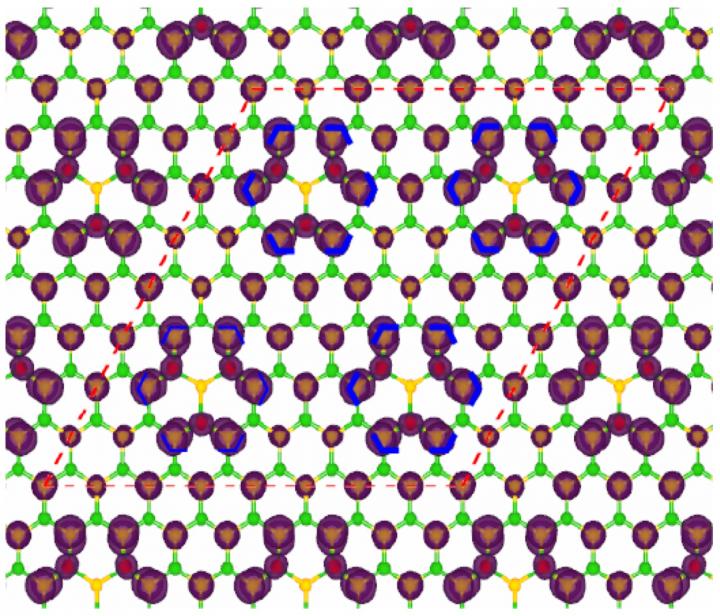
A little fluorine turns an insulating ceramic known as white graphene into a wide-bandgap semiconductor with magnetic properties. Rice University scientists said that could make the unique material suitable for electronics in extreme environments.
A proof-of-concept paper from Rice researchers demonstrates a way to turn two-dimensional hexagonal boron nitride (h-BN) - aka white graphene - from an insulator to a semiconductor. The magnetism, they said, is an unexpected bonus.
Because the atomically thin material is an exceptional conductor of heat, the researchers suggested it may be useful for electronics in high-temperature applications, perhaps even as magnetic memory devices.
The discovery appears this week in Science Advances.
"Boron nitride is a stable insulator and commercially very useful as a protective coating, even in cosmetics, because it absorbs ultraviolet light," said Rice materials scientist Pulickel Ajayan, whose lab led the study. "There has been a lot of effort to try to modify its electronic structure, but we didn't think it could become both a semiconductor and a magnetic material.
"So this is something quite different; nobody has seen this kind of behavior in boron nitride before," he said.
The researchers found that adding fluorine to h-BN introduced defects into its atomic matrix that reduced the bandgap enough to make it a semiconductor. The bandgap determines the electrical conductivity of a material.
"We saw that the gap decreases at about 5 percent fluorination," said Rice postdoctoral researcher and co-author Chandra Sekhar Tiwary. The gap gets smaller with additional fluorination, but only to a point. "Controlling the precise fluorination is something we need to work on. We can get ranges but we don't have perfect control yet. Because the material is atomically thin, one atom less or more changes quite a bit.
"In the next set of experiments, we want to learn to tune it precisely, atom by atom," he said.
They determined that tension applied by invading fluorine atoms altered the "spin" of electrons in the nitrogen atoms and affected their magnetic moments, the ghostly quality that determines how an atom will respond to a magnetic field like an invisible, nanoscale compass.
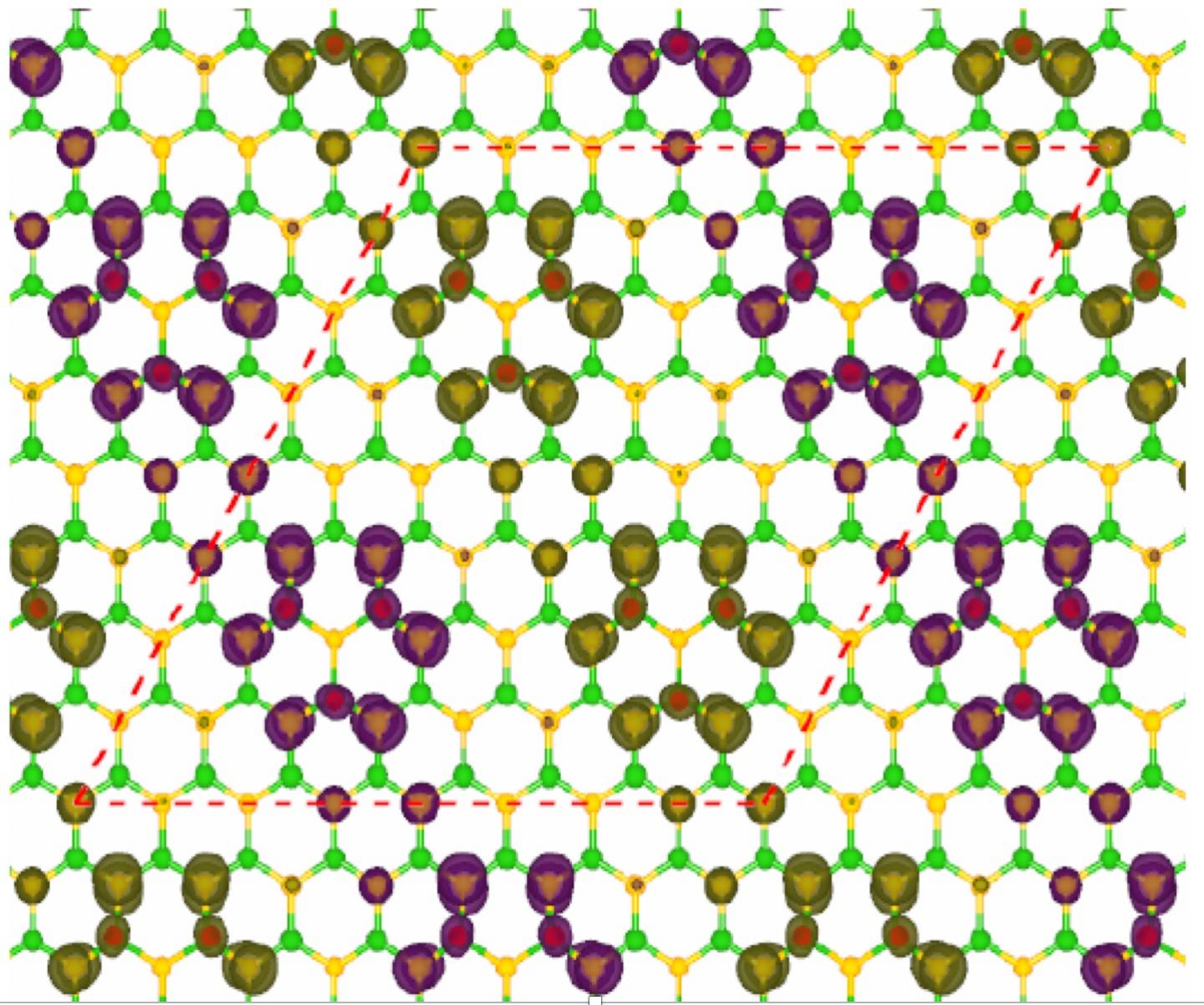
"We see angle-oriented spins, which are very unconventional for 2-D materials," said Rice graduate student and lead author Sruthi Radhakrishnan. Rather than aligning to form ferromagnets or canceling each other out, the spins are randomly angled, giving the flat material random pockets of net magnetism. These ferromagnet or anti-ferromagnet pockets can exist in the same swatch of h-BN, which makes them "frustrated magnets" with competing domains.
The researchers said their simple, scalable method can potentially be applied to other 2-D materials. "Making new materials through nanoengineering is exactly what our group is about," Ajayan said.
Co-authors of the paper are graduate students Carlos de los Reyes and Zehua Jin, chemistry lecturer Lawrence Alemany, postdoctoral researcher Vidya Kochat and Angel Martí, an associate professor of chemistry, of bioengineering and of materials science and nanoengineering, all of Rice; Valery Khabashesku of Rice and the Baker Hughes Center for Technology Innovation, Houston; Parambath Sudeep of Rice and the University of Toronto; Deya Das, Atanu Samanta and Rice alumnus Abhishek Singh of the Indian Institute of Science, Bangalore; Liangzi Deng and Ching-Wu Chu of the University of Houston; Thomas Weldeghiorghis of Louisiana State University and Ajit Roy of the Air Force Research Laboratories at Wright-Patterson Air Force Base.
Ajayan is chair of Rice's Department of Materials Science and NanoEngineering, the Benjamin M. and Mary Greenwood Anderson Professor in Engineering and a professor of chemistry.
Fluorinated h-BN as a magnetic semiconductor
Sruthi Radhakrishnan, Deya Das, Atanu Samanta, Carlos A. de los Reyes, Liangzi Deng, Lawrence B. Alemany, Thomas K. Weldeghiorghis, Valery N. Khabashesku, Vidya Kochat, Zehua Jin, Parambath M. Sudeep, Angel A. Martí, Ching-Wu Chu, Ajit Roy, Chandra Sekhar Tiwary, Abhishek K. Singh, and Pulickel M. Ajayan1,
Science Advances 14 Jul 2017: Vol. 3, no. 7, e1700842
DOI: 10.1126/sciadv.1700842
Rice University
#Graphene #Nanoengineering #Semiconductors #2DMaterials #MaterialScience
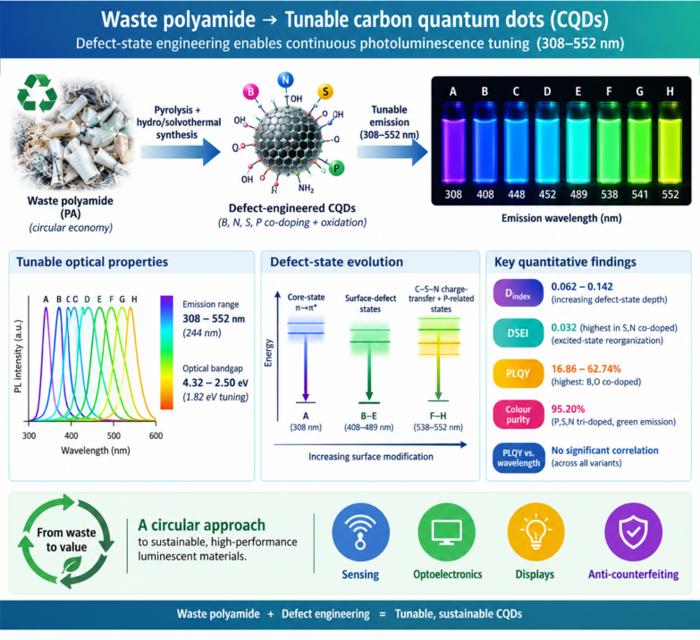
Waste polyamide-derived CQDs show continuous photoluminescence tuning from 308 to 552 nm through sequential defect-state engineering, with optical transition energies decreasing from 4.32 to 2.50 eV. @Christian Ebere Enyoh from Saitama University Carbon quantum dots (CQDs) are fluorescent carbon nanomaterials with potential applications in sensing, optoelectronics, displays, anti-counterfeiting, and environmental technologies. Their optical properties can be adjusted by modifying the carbon...
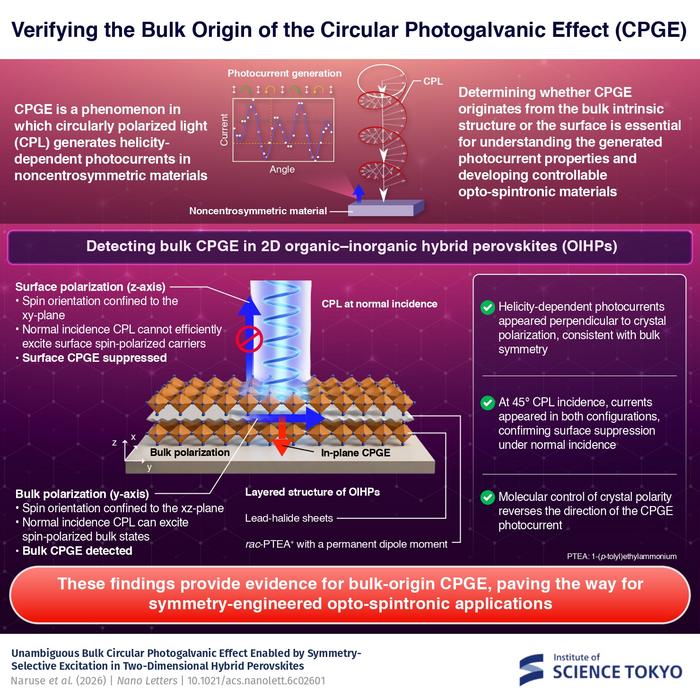
The researchers used circularly polarized light at normal incidence and found that helicity-dependent photocurrents appeared perpendicular to the crystal’s polarization but vanished when measured parallel to it, supporting a bulk origin of CPGE. @Institute of Science Tokyo The circular photogalvanic effect (CPGE), a phenomenon that generates helicity-dependent photocurrents in noncentrosymmetric materials, can originate purely from a crystal's internal structure without contribution from the...
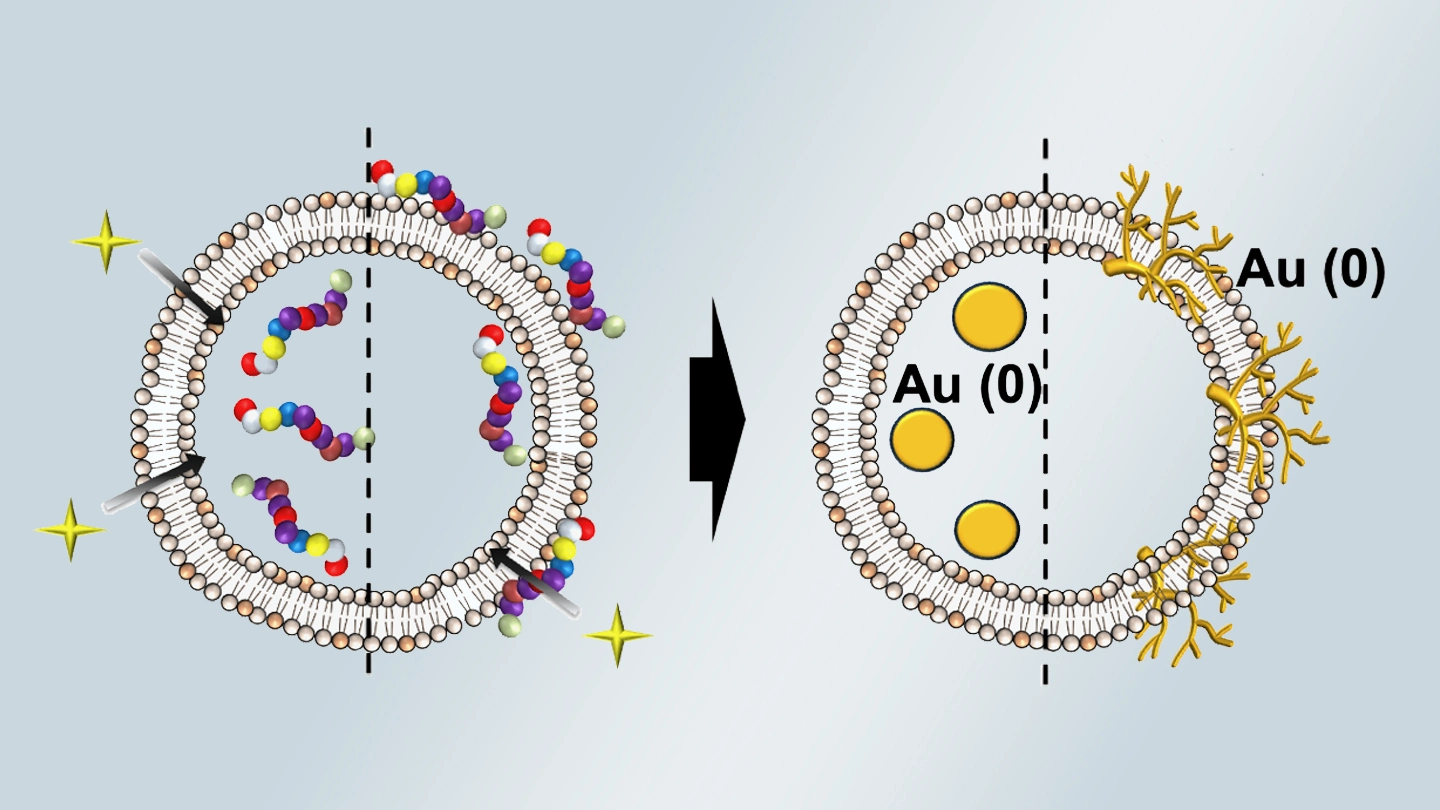
Summary of gold nanoparticle growth programming in liposome based on localization of biomineralization peptide The position of biomineralization peptides within liposomes can influence how gold nanoparticles grow, reports a research team from Institute of Science Tokyo. Peptides localized at the membrane interface promote branched structures, while those confined to the liposome interior favor spherical nanoparticles. The findings offer a new strategy for controlling nanoscale reaction...
