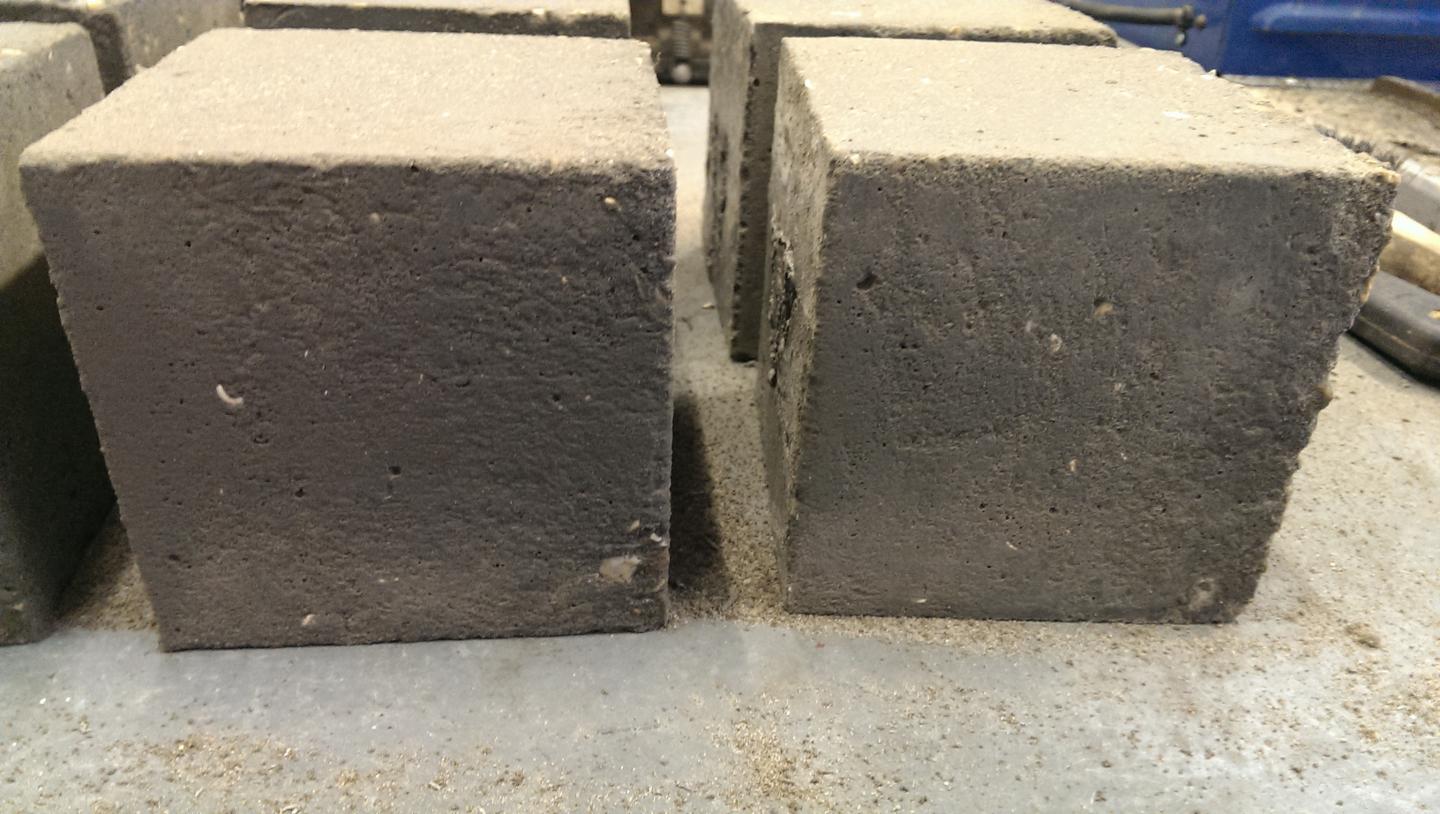
A new greener, stronger and more durable concrete that is made using the wonder-material graphene could revolutionise the construction industry.
Experts from the University of Exeter have developed a pioneering new technique that uses nanoengineering technology to incorporate graphene into traditional concrete production.
The new composite material, which is more than twice as strong and four times more water resistant than existing concretes, can be used directly by the construction industry on building sites. All of the concrete samples tested are according to British and European standards for construction.
Crucially, the new graphene-reinforced concentre material also drastically reduced the carbon footprint of conventional concrete production methods, making it more sustainable and environmentally friendly.
The research team insist the new technique could pave the way for other nanomaterials to be incorporated into concrete, and so further modernise the construction industry worldwide.
The research is published in the journal Advanced Functional Materials, on Monday, April 23 2018.
Professor Monica Craciun, co-author of the paper and from Exeter's engineering department, said: "Our cities face a growing pressure from global challenges on pollution, sustainable urbanization and resilience to catastrophic natural events, amongst others.
"This new composite material is an absolute game-changer in terms of reinforcing traditional concrete to meets these needs. Not only is it stronger and more durable, but it is also more resistant to water, making it uniquely suitable for construction in areas which require maintenance work and are difficult to be accessed .
"Yet perhaps more importantly, by including graphene we can reduce the amount of materials required to make concrete by around 50 per cent - leading to a significant reduction of 446kg/tonne of the carbon emissions.
"This unprecedented range of functionalities and properties uncovered are an important step in encouraging a more sustainable, environmentally-friendly construction industry worldwide."
Previous work on using nanotechnology has concentrated on modifying existing components of cement, one of the main elements of concrete production.
In the innovative new study, the research team has created a new technique that centres on suspending atomically thin graphene in water with high yield and no defects, low cost and compatible with modern, large scale manufacturing requirements.
Dimitar Dimov, the lead author and also from the University of Exeter added: "This ground-breaking research is important as it can be applied to large-scale manufacturing and construction. The industry has to be modernised by incorporating not only off-site manufacturing, but innovative new materials as well.
"Finding greener ways to build is a crucial step forward in reducing carbon emissions around the world and so help protect our environment as much as possible. It is the first step, but a crucial step in the right direction to make a more sustainable construction industry for the future."
University of Exeter
#Graphene #MaterialScience #Nanoengineering
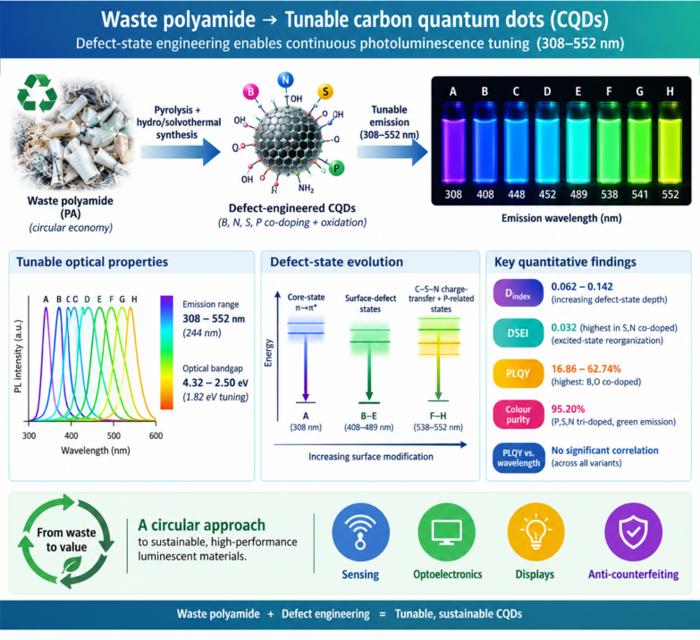
Waste polyamide-derived CQDs show continuous photoluminescence tuning from 308 to 552 nm through sequential defect-state engineering, with optical transition energies decreasing from 4.32 to 2.50 eV. @Christian Ebere Enyoh from Saitama University Carbon quantum dots (CQDs) are fluorescent carbon nanomaterials with potential applications in sensing, optoelectronics, displays, anti-counterfeiting, and environmental technologies. Their optical properties can be adjusted by modifying the carbon...
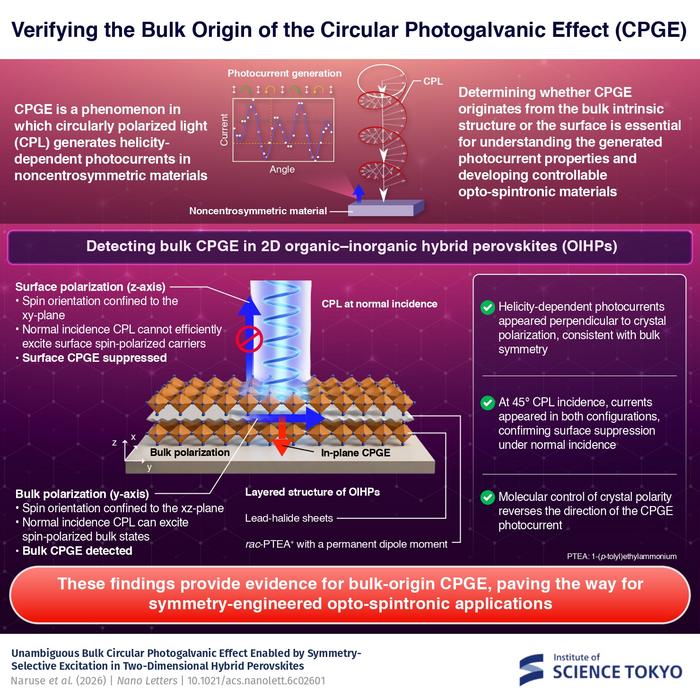
The researchers used circularly polarized light at normal incidence and found that helicity-dependent photocurrents appeared perpendicular to the crystal’s polarization but vanished when measured parallel to it, supporting a bulk origin of CPGE. @Institute of Science Tokyo The circular photogalvanic effect (CPGE), a phenomenon that generates helicity-dependent photocurrents in noncentrosymmetric materials, can originate purely from a crystal's internal structure without contribution from the...
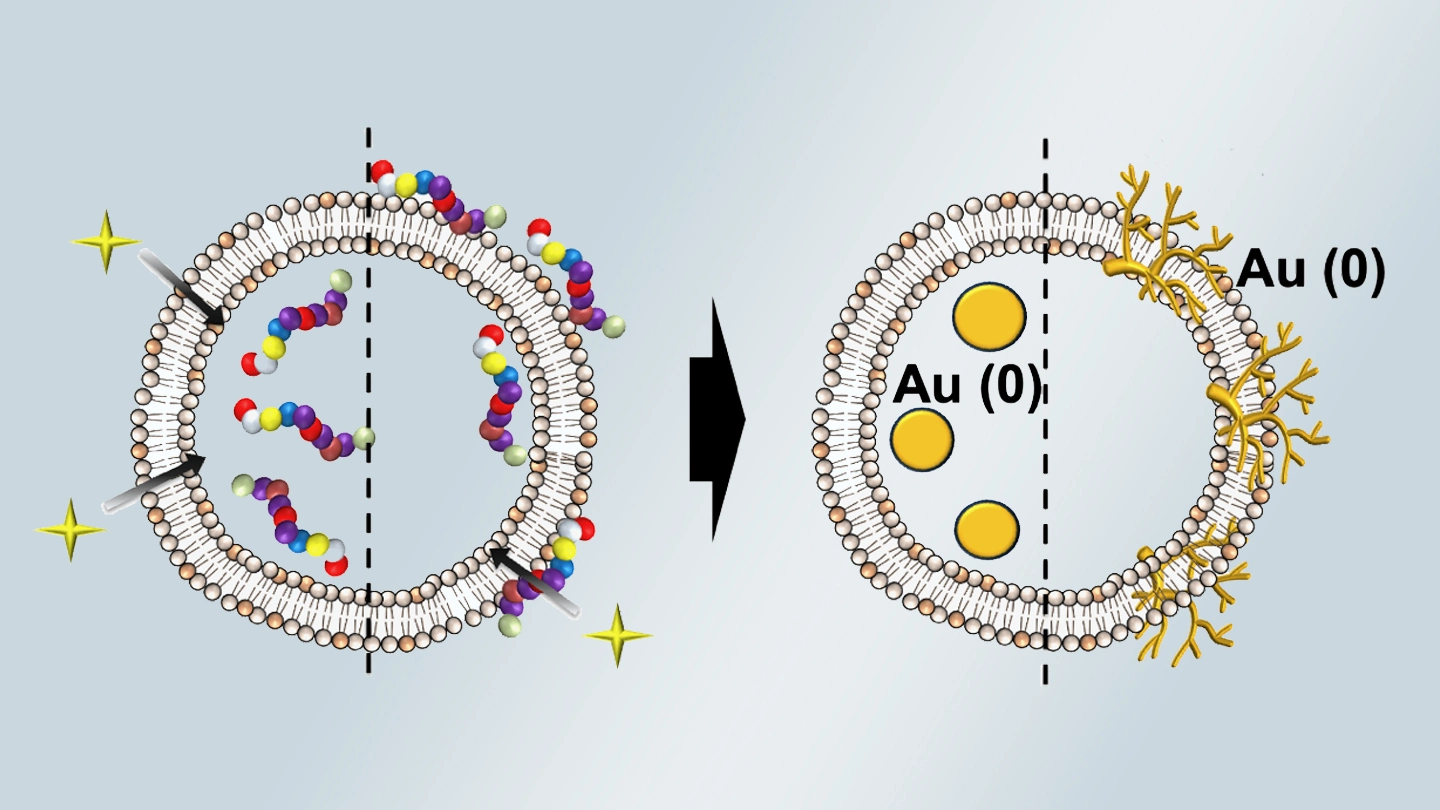
Summary of gold nanoparticle growth programming in liposome based on localization of biomineralization peptide The position of biomineralization peptides within liposomes can influence how gold nanoparticles grow, reports a research team from Institute of Science Tokyo. Peptides localized at the membrane interface promote branched structures, while those confined to the liposome interior favor spherical nanoparticles. The findings offer a new strategy for controlling nanoscale reaction...
