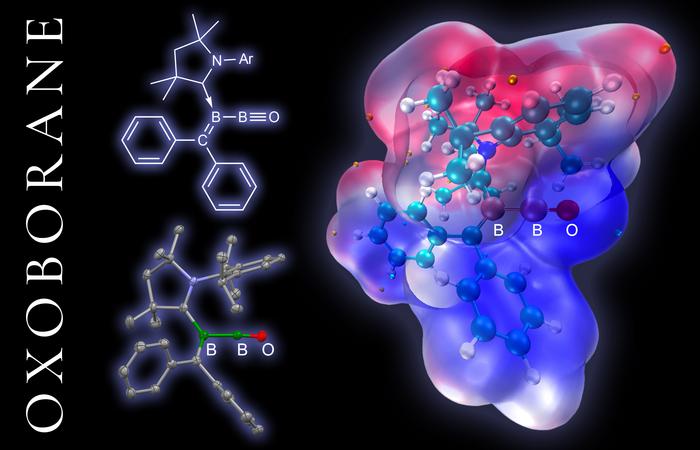
In a new publication in the journal Nature Chemistry, chemists in Professor Holger Braunschweig's team at the University of Würzburg, supported by computational work from the team of Professor Ashwini K. Phukan at Tezpur University in India, detail their discovery of a method for preparing and isolating a range of surprisingly stable oxoboranes – a challenge that has stood for over 60 years.
Oxoboranes: Stumping the best minds in chemistry
The element boron does not like to form triple bonds – this challenge has motivated Würzburg chemist Professor Holger Braunschweig to make molecules with boron-containing triple bonds for over 15 years.
In 2012, his team reported the first molecule with a boron-boron triple bond, and in 2025 they reported the first neutral molecule with a boron-carbon triple bond. In the first row of the periodic table's p-block just one challenge remained: organic oxoboranes, compounds with boron-oxygen triple bonds.
Since at least the early 1960s, oxoboranes have been the target of decades of synthetic attempts from a wide range of inorganic and organic chemists around the world. They have been trapped and detected under extreme conditions, their existence inferred from chemical reactions, and a number of derivatives have been made – but isolation of stable examples remained elusive.
Creating the right conditions for serendipity
When Würzburg chemistry doctoral students Lukas Lubczyk and Christian Markl combined a molecule called a diboracumulene with different ketones – standard reagents in organic chemistry – they independently noted that the reactions had led to unusual orange or yellow solids. 'The discovery was a pleasant surprise. I never thought the diboracumulene would react the way it did, let alone with multiple different, simple substrates. And when Christian came to me with his compound, I knew we were onto something.' says Lukas Lubczyk.
It was a great surprise that, out of many other seemingly more likely outcomes, and despite decades of attempts to prepare these compounds, the elusive oxoboranes would be the main products of these reactions. 'Nearly everybody in the field had given up on oxoboranes, as they were thought to be just too unstable to be isolated. So we were stunned to see them spontaneously form in these reactions and stick around long enough that we could study them', says Holger Braunschweig.
Three oxoboranes were prepared, showing that the method could lead to many new oxoboranes in the future. The team is now trying to see just how far the method can be pushed, to prepare other elusive molecules across the periodic table.
Partners and Sponsors
The Würzburg team published these results together with the group led by Professor Ashwini K. Phukan from Tezpur University (India).
The work was funded by the German Research Foundation (DFG), the German Academic Exchange Service (DAAD) and the Department of Science & Technology (DST) of India.
Reference
Synthesis and isolation of stable oxoboranes
Lukas Lubczyk, Christian Markl, Mudit Jain, Sourav Kar, Thomas Kupfer, Rian D. Dewhurst, Ashwini K. Phukan, and Holger Braunschweig
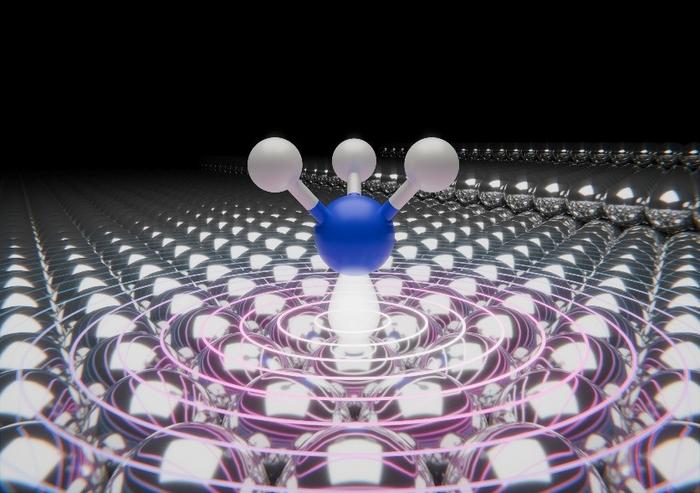
Researchers at MPI-NAT and QNS have shown that chemical bonding on metal surfaces reaches far beyond the atoms touching a molecule. On precisely structured platinum surfaces, moving an atomic step roughly 10 nanometers away changed adsorption energies by up to 0.2 electron volts, with effects persisting over 4 to 7 nanometers depending on the molecule. A new Frontier Orbital-Band Model explains the molecule-specific response.
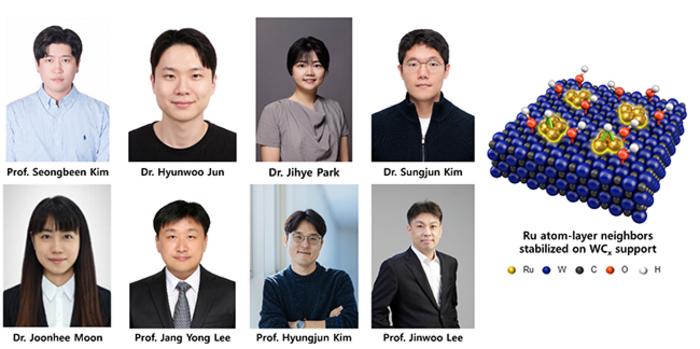
A KAIST team has developed a water electrolysis catalyst that clusters three or four ruthenium atoms in a single-atom-thick layer on a tungsten carbide support, letting neighbouring atoms cooperate while using far less precious metal. In an anion-exchange membrane electrolyzer the catalyst reached 9.82 A/cm² at 2.0 V and 80°C, matching commercial platinum while using 75% less precious metal, with roughly four times the activity per unit mass and about half the performance loss over 500 hours.
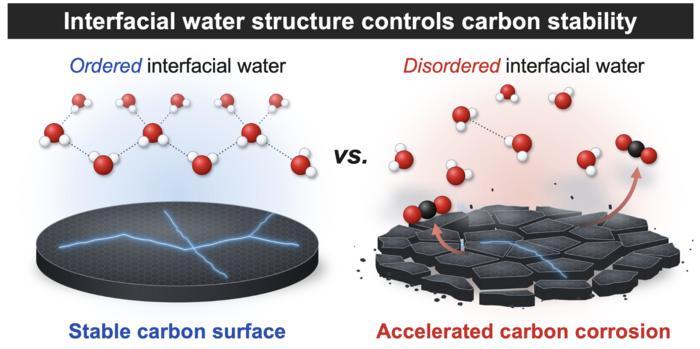
Carbon electrodes corrode under strongly oxidizing conditions, and researchers at the University of Osaka have traced part of that degradation to interfacial water. Monitoring corrosion and water structure during operation showed that weakly connected water networks were preferentially involved in oxidizing carbon to carbon dioxide, and disrupting the network increased corrosion. Reorganizing surface water with the ionomer Sustainion cut corrosion by about 51% versus Nafion.
This week in nanotech
$740.7M raised
5 funding rounds · 35 deals tracked
New products
 Nion-compatible In Situ STEM Holders for Electrical BiasingHummingbird Scientific Featured
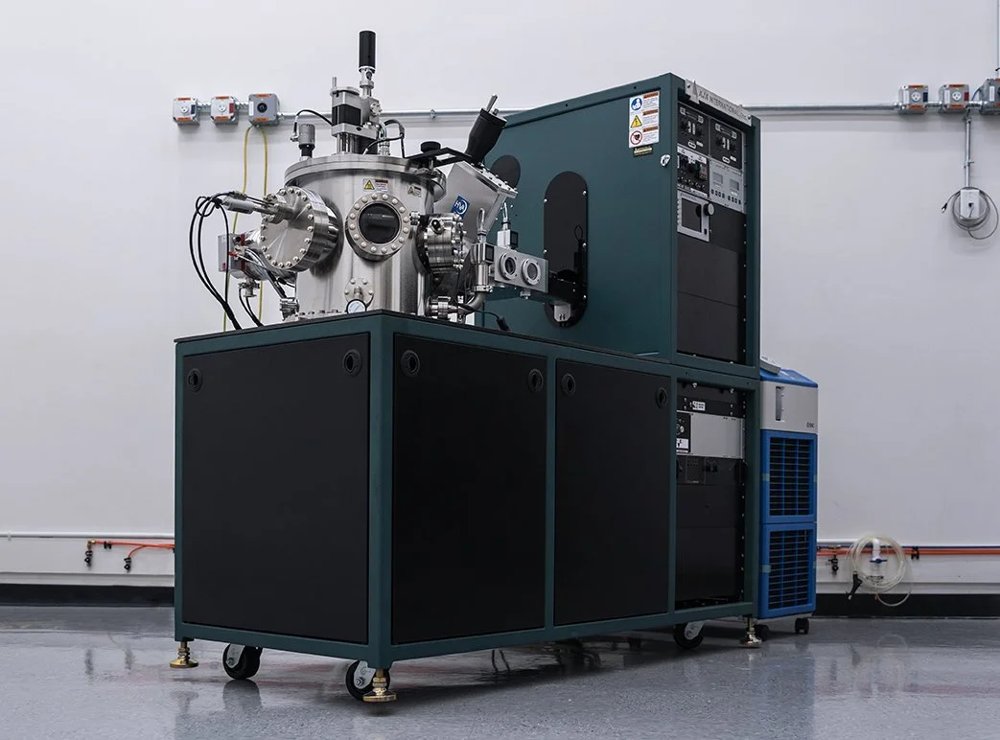 Orion Sputtering Deposition SystemsAJA International Featured
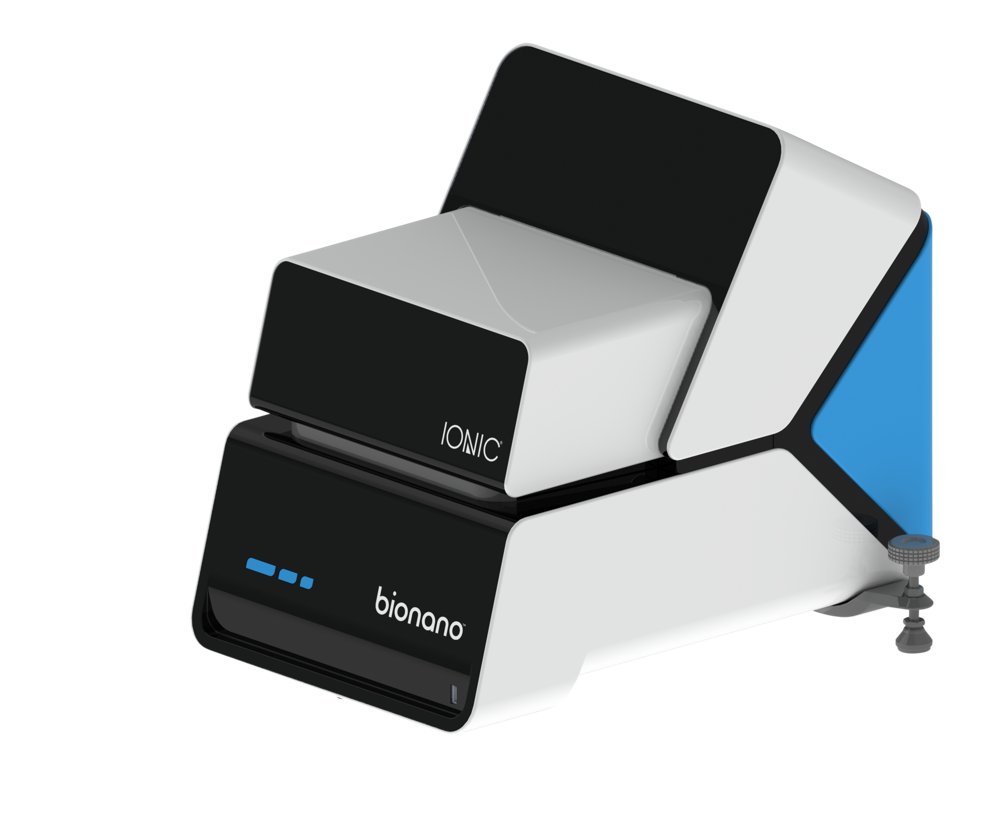 Ionic® Purification SystemBionano Genomics, Inc.
Market insights
Last 30 days: Quantum Technologies drew the most money: $3.18B.
Money raised per month
Behind the deal
Who led Institut de Microelectronica de Barcelona (IMB-CNM, CSIC)’s $185.7M Grant?
See the investors with Insights Pro →