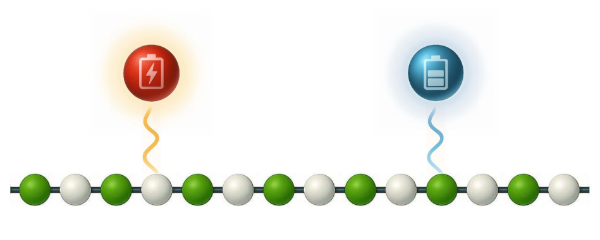
Researchers from the RIKEN Center for Quantum Computing and Huazhong University of Science and Technology have conducted a theoretical analysis demonstrating how a “topological quantum battery”—an innovative device that leverages the topological properties of photonic waveguides and quantum effects of two-level atoms—could be efficiently designed. The work, published in Physical Review Letters, holds promise for applications in nanoscale energy storage, optical quantum communication, and distributed quantum computing.
With increasing global awareness of the importance of environmental sustainability, developing next-generation energy storage devices has become a critical priority. Quantum batteries—hypothetical miniature devices that, unlike classical batteries that store energy via chemical reactions, rely on quantum properties such as superposition, entanglement, and coherence—have the potential to enhance the storage and transfer of energy. From a mechanistic perspective, they offer potential performance advantages over classical batteries, including improved charging power, increased capacity, and superior work extraction efficiency.
Although various proposals for quantum batteries have been put forward, the practical realization of such devices remains elusive. In practical scenarios involving remote charging and energy dissipation, quantum batteries are significantly affected by energy loss and decoherence, a common issue in quantum devices where a quantum system loses its key properties, such as entanglement and superposition, resulting in suboptimal performance. With regard to energy loss, in photonic systems that use non-topological waveguides—meaning waveguides that are affected by being bent, for example—to channel the photons, energy storage efficiency is significantly degraded due to the dispersion of photons within the waveguide. Other obstacles include environmental dissipation, noise, and disorder, all of which induce decoherence and degrade the performance of the batteries.
In the current study, the joint research team employed analytical and numerical methods in a theoretical framework to address two long-standing challenges that have hindered the practical performance of quantum batteries. By leveraging topological properties—features of a material that remain unchanged under continuous deformations such as twisting or bending—they demonstrated the feasibility of achieving perfect long-distance charging and dissipation immunity of quantum batteries. Surprisingly, they found that dissipation—typically regarded as harmful to battery performance—can also be used to enhance the charging power of quantum batteries transiently.
They demonstrated several key advantages that could make topological quantum batteries feasible for practical applications. One crucial finding was that it is possible to achieve near-perfect energy transfer by leveraging the topological properties of photonic waveguides. The other notable finding is that when the charger and battery are placed at the same site, the system exhibits dissipation immunity confined to a single sublattice. Additionally, the research team revealed that as dissipation exceeds a critical threshold, the charging power undergoes a transient enhancement, breaking the conventional expectation that dissipation always hinders performance.
“Our research provides new insights from a topological perspective and gives us hints toward the realization of high-performance micro-energy storage devices. By overcoming the practical performance limitations of quantum batteries caused by long-distance energy transmission and dissipation, we hope to accelerate the transition from theory to practical application of quantum batteries,” said Zhi-Guang Lu, the first author of the study. “Looking ahead,” says Cheng Shang, the corresponding author of the international research team, “we will continue working to bridge the gap between theoretical study and the practical deployment of quantum devices—ushering in the quantum era we have long envisioned.”
Reference
Topological Quantum Batteries
Zhi-Guang Lu, Guoqing Tian, Xin-You Lü, and Cheng Shang
https://journals.aps.org/prl/abstract/10.1103/PhysRevLett.134.180401
RIKEN
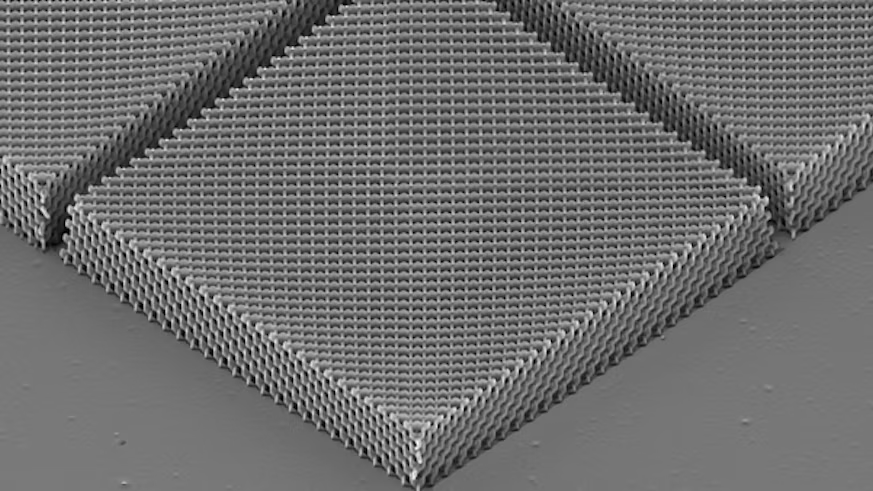
Over the last 5 years, the Cardiff team has pioneered methods for producing a special type of 3D printing on a tiny scale, yielding magnetic elements around 1,000 times smaller than the width of a human hair.
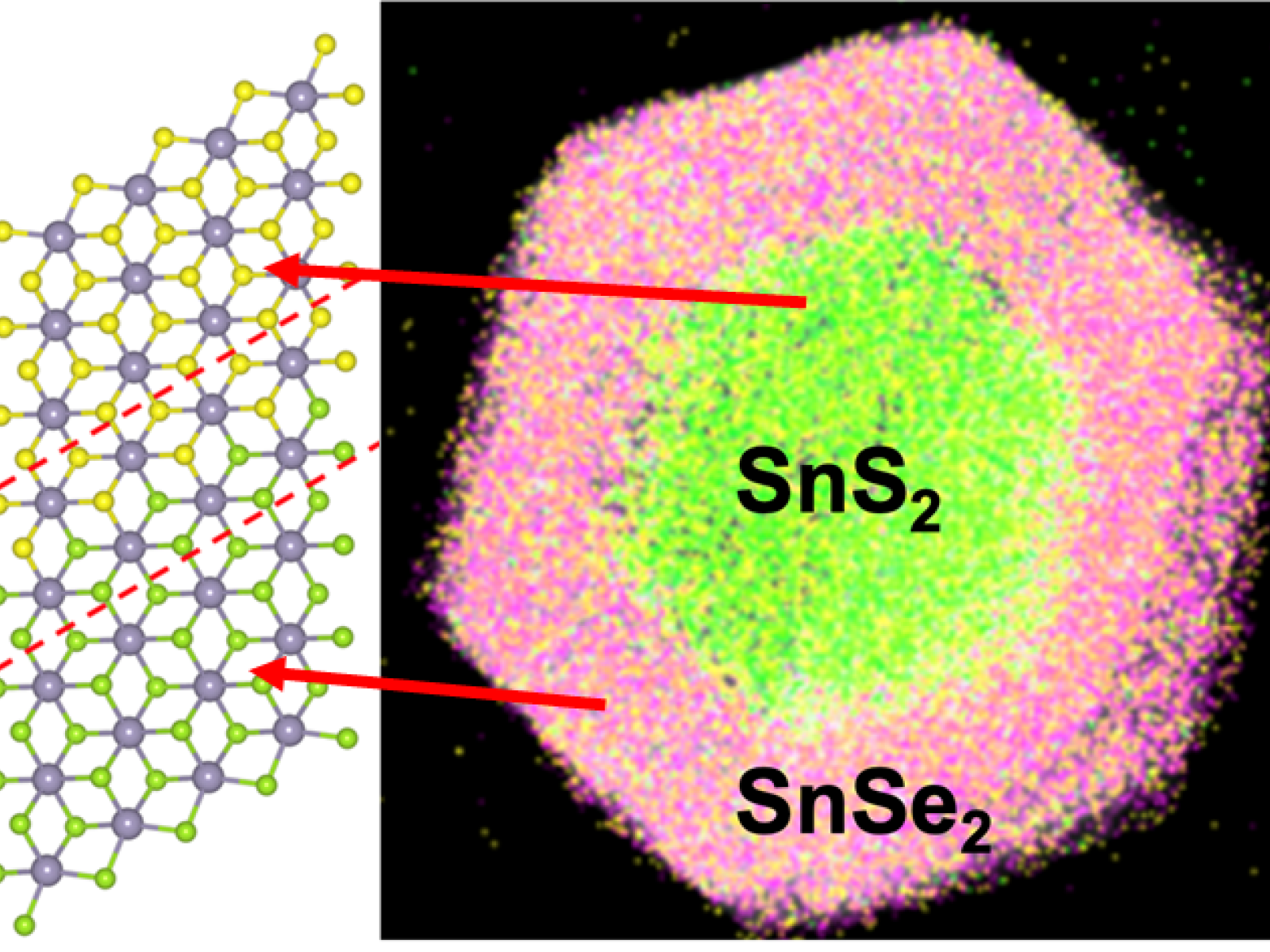
The newly developed method leverages a structure-directing agent to modify the crystal structure of the seed edges. It also redirects growth of the second phase from the formation of isolated particles to epitaxial growth at the seed edges. The modified synthesis is expected to be extendable to other layered materials, enabling the fabrication of a range of 2-D heterostructures for optoelectronic and electronic devices.

MIT researchers have developed a novel AI hardware accelerator that is specifically designed for wireless signal processing. Their optical processor performs machine-learning computations at the speed of light, classifying wireless signals in a matter of nanoseconds.
This week in nanotech
$18.9M raised
4 funding rounds · 36 deals tracked
New products
 Nion-compatible In Situ STEM Holders for Electrical BiasingHummingbird Scientific Featured
 Ti-WCMBN Nanomaterialia Featured
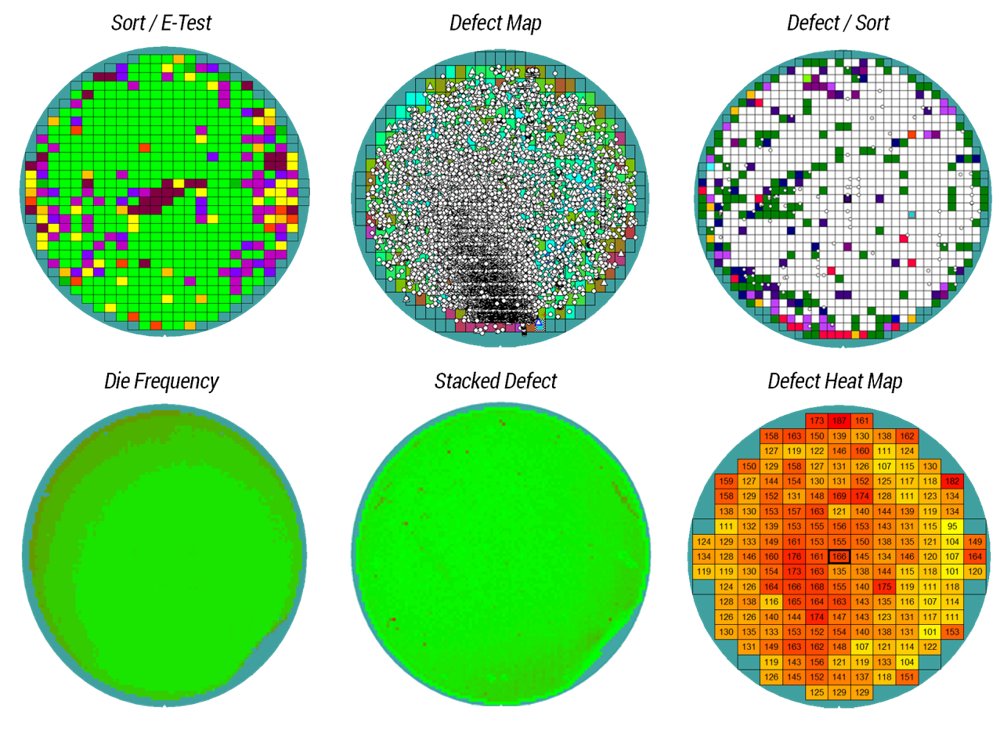 Discover Mapping SuiteOnto Innovation
Market insights
Last 30 days: Semiconductors & Electronics was the busiest vertical: 52 of 170 events (31%).
Money raised per month