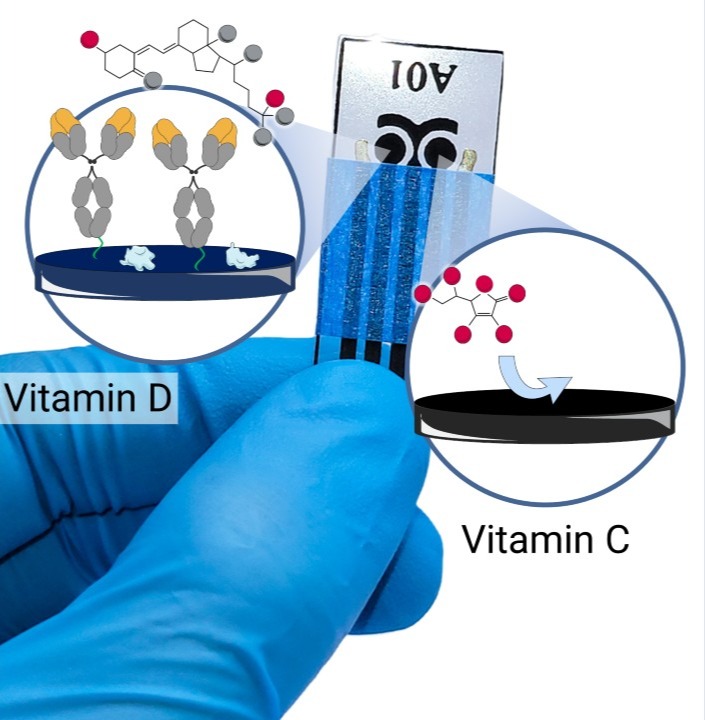
Researchers at the University of São Paulo (USP) in Brazil have developed a bioelectronic chip that simultaneously detects vitamins C and D in body fluids. It is flexible and easy to use, and can be adapted for use in a wearable device to assist with a personalized diet. Details are described in an article published in ACS Applied Nano Materials, and featured on the cover of the journal.
Vitamins C and D are micronutrients that play a vital role in the immune system as participants in the metabolic pathways involved in combating viruses and bacteria. Monitoring these vitamins in the organism can help ensure their levels are neither deficient nor excessive.
However, the methods currently available for this require costly laboratory equipment operated by specialized professionals. They entail collection of blood samples and produce hazardous waste. Detecting and analyzing both vitamins in the same sample at the same time is difficult.
To simplify the process, researchers affiliated with the São Carlos Institute of Physics (IFSC-USP) and supported by FAPESP (projects 22/03758-0, 22/15122-3, 19/13514-9, 22/00243-0 and 18/22214-6) used relatively inexpensive resources, such as carbon, and rapid operating protocols to develop an electrochemical chip for self-monitoring of vitamins C and D.
The chip is disposable and contains two sensors, each of which uses electric current to detect a vitamin. In the case of vitamin C, the sensor is made of carbon nanoparticles and acts as an electrocatalyst. The vitamin D sensor is made of graphitic carbon nitride and gold nanoparticles combined with a layer of 25(OH)D3 antibodies. 25(OH)D3 is the most abundant circulating form of vitamin D owing to its long half-life.
The chip is easy to operate. All the user has to do is connect it to a small portable electronic device similar to a glucometer, insert a sample of saliva or blood serum, and wait for the electric current to indicate the presence and levels of the vitamins. The result is obtained in under 20 minutes.
“By immobilizing electrochemically active species on the surface of one of the sensors, we were able to eliminate the need for labels and redox probes, simplifying the device and reducing the complexity of the analysis,” said Thiago Serafim Martins, first author of the article and currently a researcher at Imperial College London in the United Kingdom.
“This makes the chip potentially more practical and efficient, enabling it to be used directly in pharmacies, clinics and so on. Also, it’s flexible enough to be adapted for use as a wearable device, embedded in a mouthguard or teether, and applied directly to the skin.”
Its selectivity and specificity were confirmed in control experiments designed to measure potential interference by other substances normally present in blood and saliva samples, such as vitamins B12, B1 and B3, glucose, lactate, sodium chloride and potassium chloride.
Challenges
The main challenge faced by the researchers in developing a bioelectronic chip to detect vitamins C and D was ensuring there would be no cross-reactions between vitamins in the sample analyzed by the chip.
“To address this challenge, we designed the chip to have two work areas or sensors with different surface chemistries and configured them to operate at different electric potentials,” Martins explained.
The scientists see potential for extending the chip’s capabilities to detect other biomarkers, including those for several types of cancer, although more research must first be done to validate the sensors. After that, they plan to file for a patent and eventually license the technology to a manufacturer.
The study was also supported by Brazil’s National Council for Scientific and Technological Development (CNPq).
Reference
Label- and Redox Probe-Free Bioelectronic Chip for Monitoring Vitamins C and the 25-Hydroxyvitamin D3 Metabolite
Thiago S. Martins, José L. Bott-Neto, and Osvaldo N. Oliveira Jr.
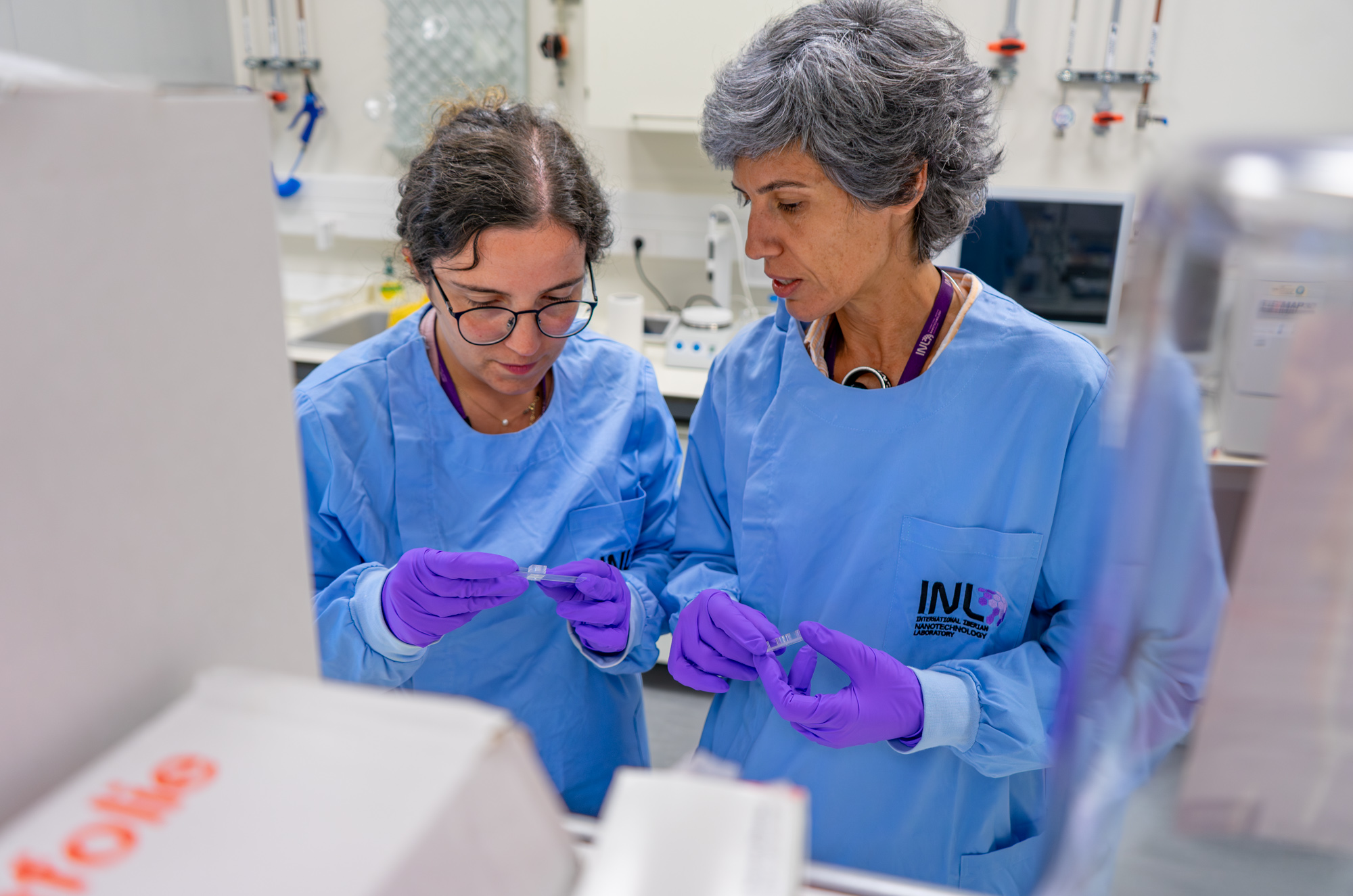
Nanoparticles are found in many everyday products, from cosmetics and textiles to air pollution. While they offer many benefits, scientists still need better ways to understand how long-term exposure may affect our skin. Researchers from Alfaro-Moreno group at INL have developed a new skin-on-a-chip platform that closely mimics human skin, providing a more realistic way to study how nanoparticles interact with our body's first protective barrier. Unlike conventional lab models (which grow...
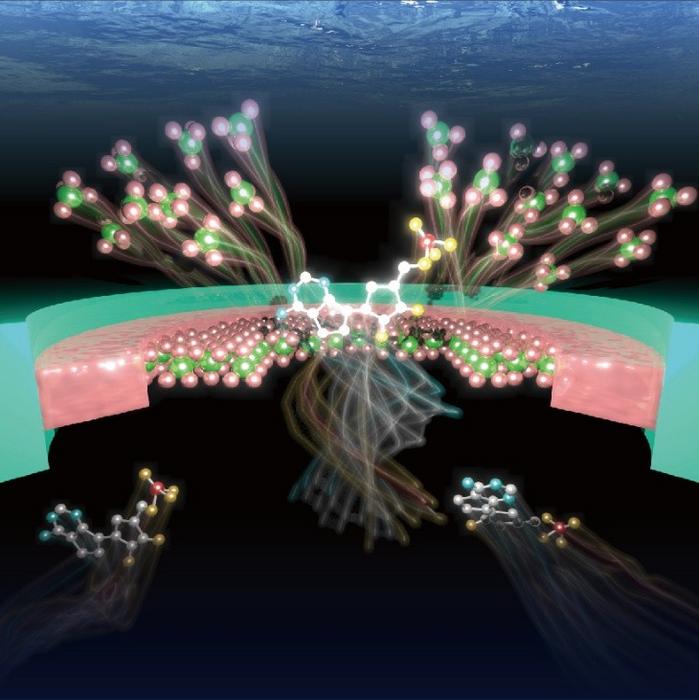
Researchers at the University of Osaka have developed an autonomous solid-state nanopore that senses molecules, generates electrical signals, and retains memory of recent events without external control. Chemical reactions inside the pore continuously reshape its structure, producing molecule-specific signal patterns. Machine learning distinguished DNA nucleotides and amino acids from these signatures. Published in ACS Nano.
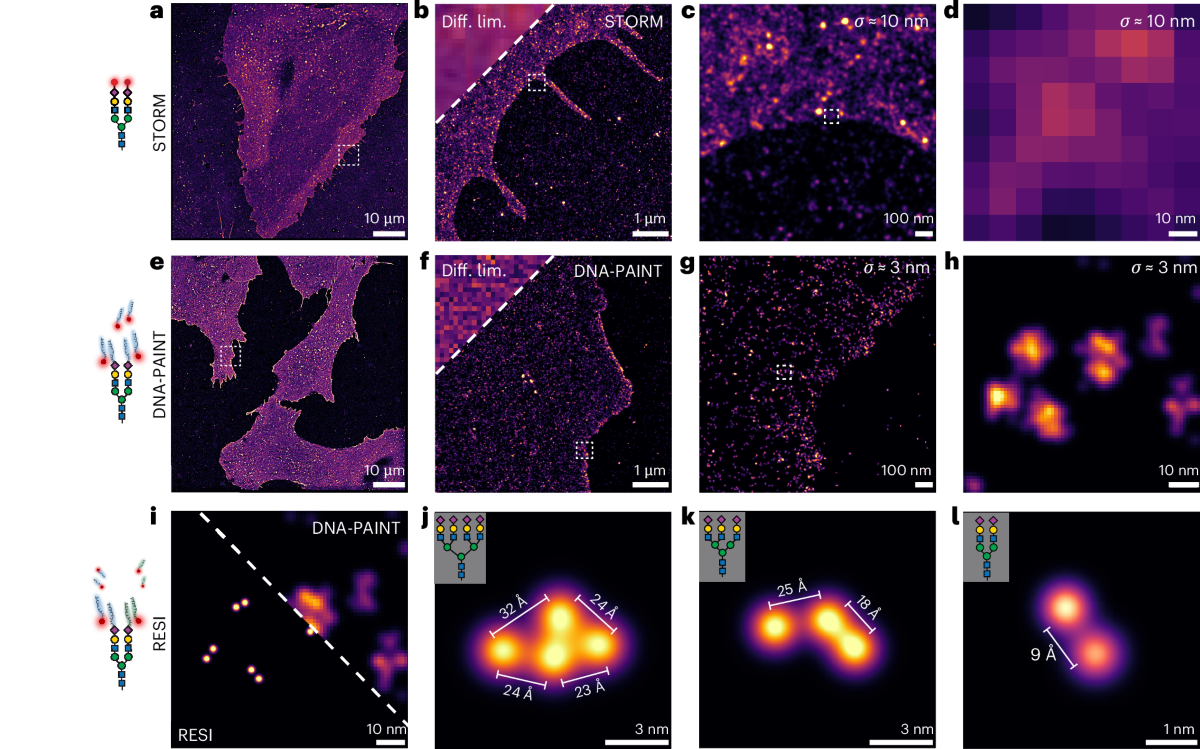
Scientists have developed “glycan atlassing,” a breakthrough super-resolution technique that maps the precise nanoscale architecture of sugars on cell surfaces. Published in Nature Nanotechnology, the method reveals that the spatial organization of glycans encodes critical information about cell state — opening powerful new possibilities for cancer diagnostics, stem cell research, and precision nanomedicine.
