Kumamoto University’s research team, led by Assistant Professor Kazuto Hatakeyama and Professor Shintaro Ida of Institute of Industrial Nanomaterials, has announced a groundbreaking development in hydrogen ion barrier films using graphene oxide (GO) that lacks internal pores. This innovative approach promises significant advancements in protective coatings for various applications.
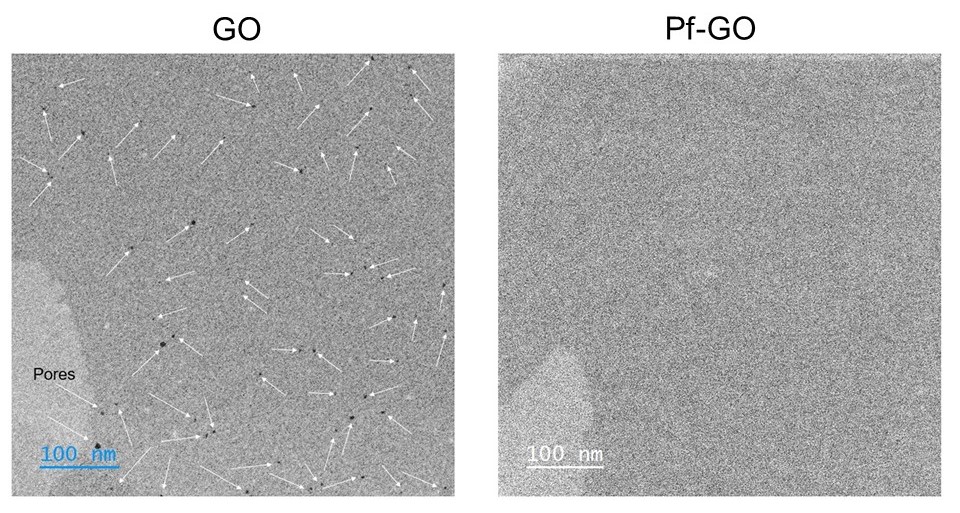
In their study, the research team successfully synthesized and developed a thin film from a new form of graphene oxide that does not contain pores. Traditionally, GO has been known for its high ionic conductivity, which made it challenging to use as an ion barrier. However, by eliminating the internal pores, the team created a material with dramatically improved hydrogen ion barrier properties.
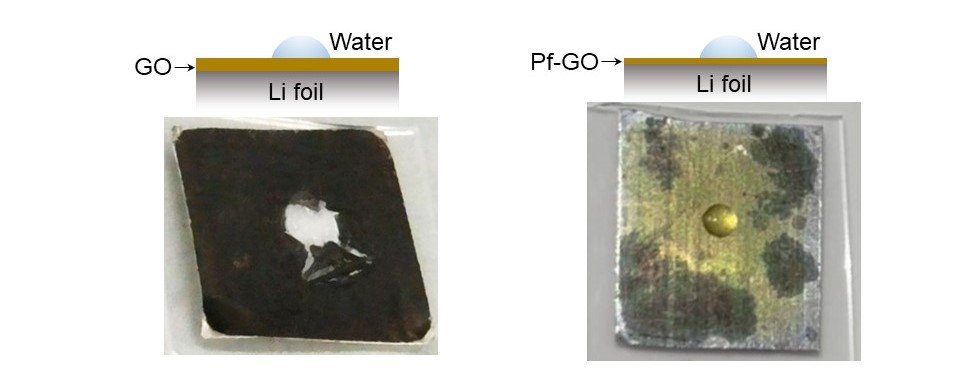
The new graphene oxide film exhibits up to 100,000 times better hydrogen ion barrier performance compared to conventional GO films, as demonstrated by out-of-plane proton conductivity results from AC impedance spectroscopy. This breakthrough was further confirmed in experiments where the non-porous graphene oxide coating effectively protected lithium foil from water droplets, preventing any reaction between the lithium and the water.
The study also confirmed that hydrogen ions move through the pores in conventional GO, highlighting the significance of eliminating these pores to enhance barrier capabilities. This advancement opens doors to new applications in protective coatings, rust prevention, and hydrogen infrastructure.
This research marks a significant advance in materials science and could pave the way for next-generation coatings with enhanced protective properties. "Moving forward, we plan to harness the hydrogen ion barrier performance for practical applications, while also addressing the challenges posed by the 'pores' in the GO structure to unlock additional functionalities," explained Assistant Professor Hatakeyama as he outlined the next steps in his research.
Reference
Anomalous Proton Blocking Property of Pore-Free Graphene Oxide Membrane
Tatsuki Tsugawa, Kazuto Hatakeyama, Michio Koinuma, Norihiro Moriyama, Shintaro Ida
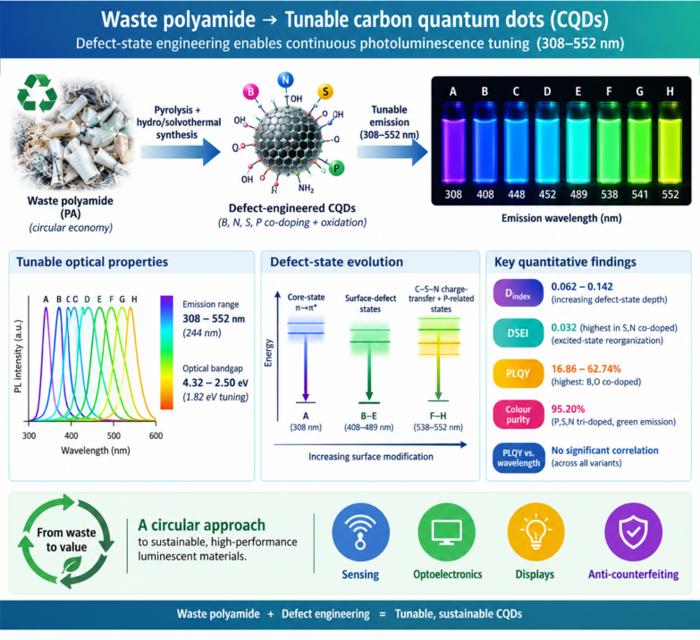
Waste polyamide-derived CQDs show continuous photoluminescence tuning from 308 to 552 nm through sequential defect-state engineering, with optical transition energies decreasing from 4.32 to 2.50 eV. @Christian Ebere Enyoh from Saitama University Carbon quantum dots (CQDs) are fluorescent carbon nanomaterials with potential applications in sensing, optoelectronics, displays, anti-counterfeiting, and environmental technologies. Their optical properties can be adjusted by modifying the carbon...
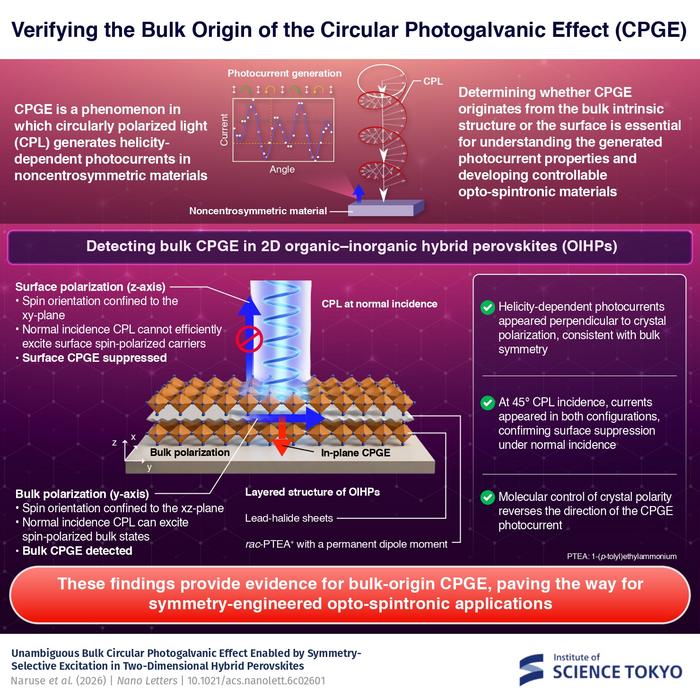
The researchers used circularly polarized light at normal incidence and found that helicity-dependent photocurrents appeared perpendicular to the crystal’s polarization but vanished when measured parallel to it, supporting a bulk origin of CPGE. @Institute of Science Tokyo The circular photogalvanic effect (CPGE), a phenomenon that generates helicity-dependent photocurrents in noncentrosymmetric materials, can originate purely from a crystal's internal structure without contribution from the...
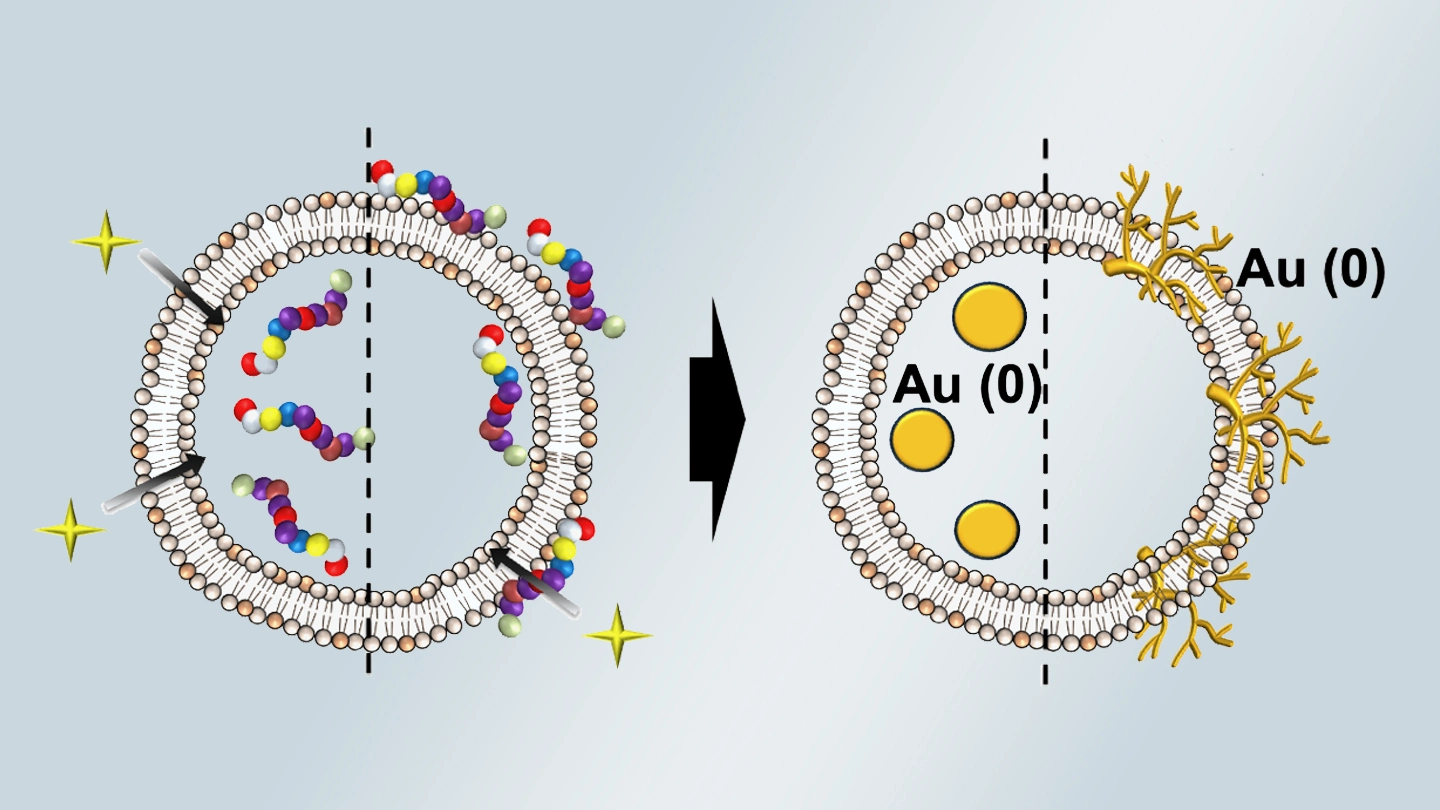
Summary of gold nanoparticle growth programming in liposome based on localization of biomineralization peptide The position of biomineralization peptides within liposomes can influence how gold nanoparticles grow, reports a research team from Institute of Science Tokyo. Peptides localized at the membrane interface promote branched structures, while those confined to the liposome interior favor spherical nanoparticles. The findings offer a new strategy for controlling nanoscale reaction...
