North Carolina State University
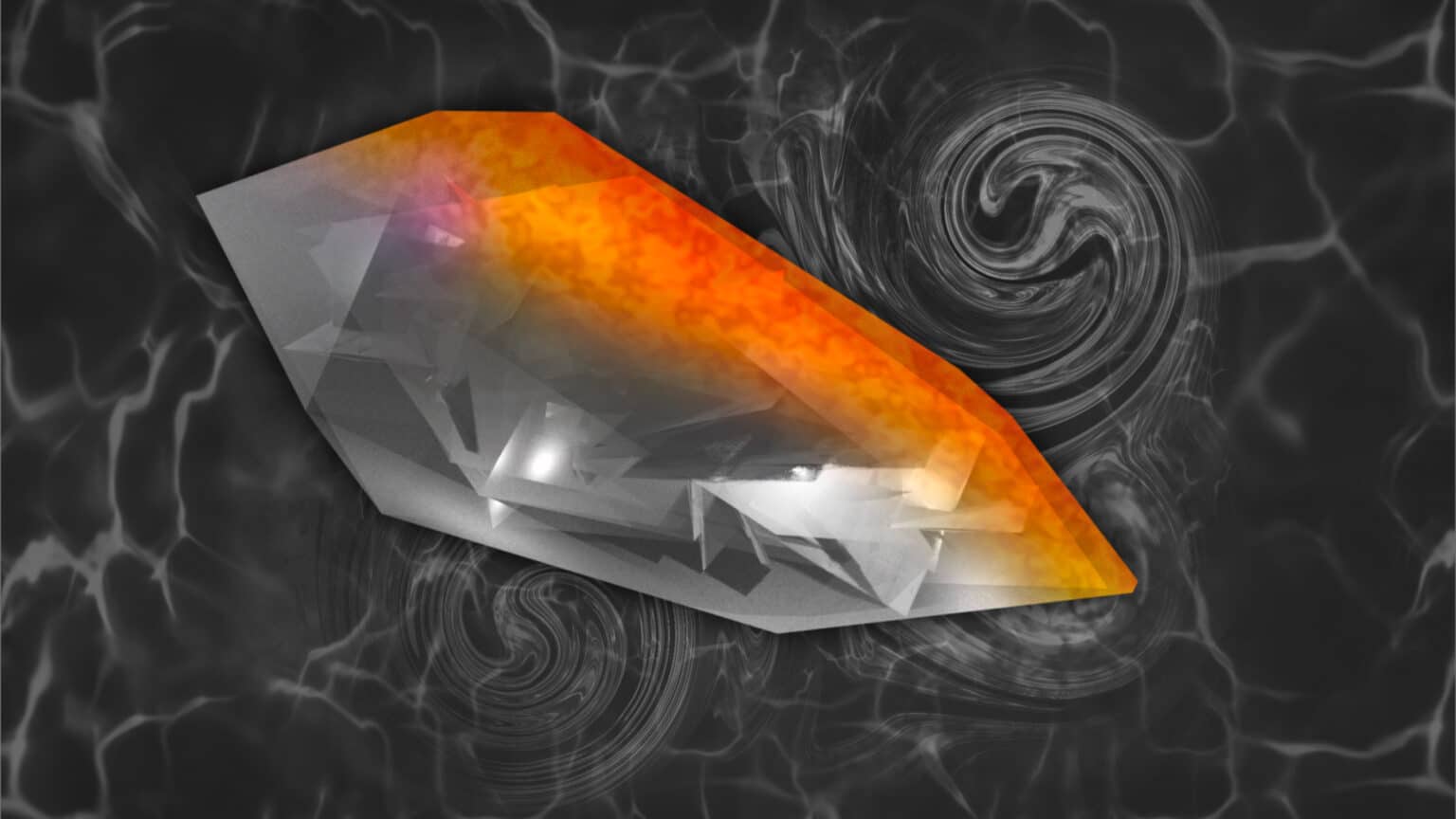
In a new study, an international group of researchers has found that chiral phonons can create orbital current without needing magnetic elements – in part because chiral phonons have their own magnetic moments. Additionally, this effect can be achieved in common crystal materials. The work has potential for the development of less expensive, energy-efficient orbitronic devices for use in a wide array of electronics.
All electronic devices are based upon the charge of an electron, and electrons have three intrinsic properties: spin, charge and orbital angular momentum. While researchers have long explored the use of spin as a more efficient way to create current, the field of orbitronics – based upon using an electron’s orbital angular momentum, rather than its spin, to create a current flow – is still relatively new.
“Traditionally it has been technically challenging to generate orbital current,” says Dali Sun, co-corresponding author on the study. Sun is a professor of physics and member of the Organic and Carbon Electronics Lab (ORaCEL) at North Carolina State University.
“The generation of orbital currents traditionally necessitates the injection of charge current into specific transition metals, and many of these elements are now classified as critical materials – substances that the U.S. government identifies as essential to energy technologies, economic and national security, and the manufacture of key products. But this work shows that we can use a heat gradient to drive out chiral phonons in a quartz (i.e., SiO2) substrate, and the chiral phonons can be converted into orbital current.”
“There are other ways to generate orbital angular momentum, but this method allows for the use of cheaper, more abundant materials,” Sun says.
The new paper builds upon previous work that found spin current can be created and controlled by applying a thermal gradient to non-magnetic hybrid semiconductors that contain chiral phonons.
Chiral phonons are groups of atoms that move in a circular direction when excited by an energy source such as heat. As the phonons move through a material, they propagate that circular motion, or angular momentum, through it.
“In this work we show that we can use that angular momentum from the chiral phonon and convert it to orbital current instead of spin,” says Jun Liu, associate professor of mechanical and aerospace engineering at NC State and member of ORaCEL. “And we can do it in very simple non-magnetic insulators containing chiral phonons, because the rotation of the chiral phonon generates magnetism.” Liu is a co-corresponding author of the research.
The researchers hope that the work can pave the way toward cost-effective orbitronic applications.
“The work also answers fundamental questions around the interplay between structural chirality and orbital currents, which will hopefully help expand the field of orbitronics further,” Sun says.
Reference
Orbital Seebeck effect induced by chiral phonons
Yoji Nabei, Cong Yang, Hong Sun, Hana Jones, Thuc Mai, Tian Wang, Rikard Bodin, Binod Pandey, Ziqi Wang, Yuzan Xiong, Andrew H. Comstock, Benjamin Ewing, John Bingen, Rui Sun, Dmitry Smirnov, Wei Zhang, Axel Hoffmann, Rahul Rao, Ming Hu, Z. Valy Vardeny, Binghai Yan, Xiaosong Li, Jun Zhou, Jun Liu & Dali Sun
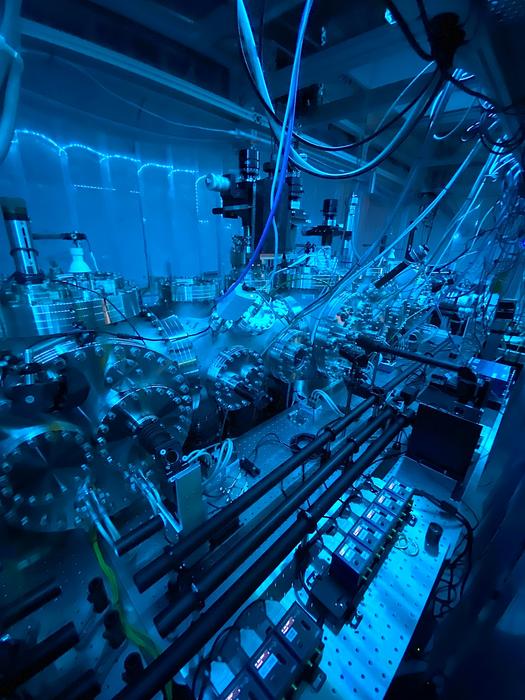
Can a small lump of metal be in a quantum state that extends over distant locations? A research team at the University of Vienna answers this question with a resounding yes. In the journal Nature, physicists from the University of Vienna and the University of Duisburg-Essen show that even massive nanoparticles consisting of thousands of sodium atoms follow the rules of quantum mechanics. The experiment is currently one of the best tests of quantum mechanics on a macroscopic scale.
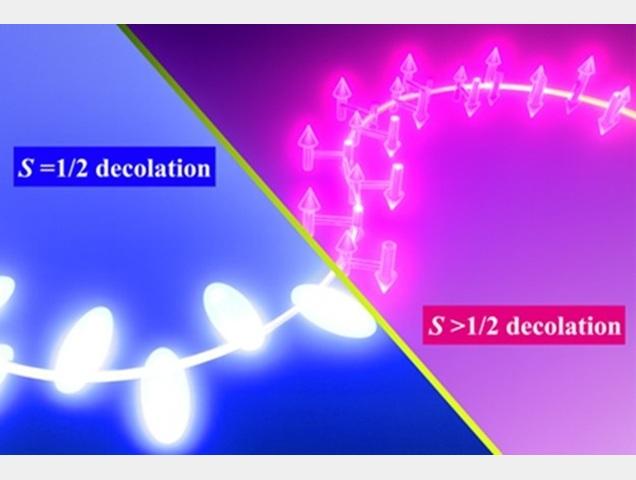
Quantum spins interacting collectively create unique behaviors impossible for individual particles. The Kondo effect—where localized spins interact with conduction electrons—is central to understanding these phenomena, but in real materials, additional electron behaviors obscure the pure spin interactions. For nearly 50 years, physicists sought to realize the Kondo necklace model, which isolates spin interactions by removing this complexity. Researchers at Osaka Metropolitan University achiev...
Electronic order in quantum materials often emerges not uniformly, but through subtle and complex patterns that vary from place to place. One prominent example is the charge density wave (CDW), an ordered state in which electrons arrange themselves into periodic patterns at low temperatures. Although CDWs have been studied for decades, how their strength and spatial coherence evolve across a phase transition has remained largely inaccessible experimentally. Now, a team led by Professor Yongso...
This week in nanotech
$109M raised
3 funding rounds · 18 deals tracked
New products
 Nion-compatible In Situ STEM Holders for Electrical BiasingHummingbird Scientific Featured
 Ti-WCMBN Nanomaterialia Featured
 Aether®Lam Research
Market insights
Last 30 days: Semiconductors & Electronics drew the most money: $545M.
Money raised per month