Aalto University
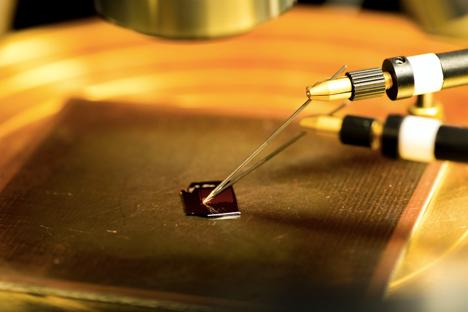
Single-wall carbon nanotubes (SWCNT) have found many uses in electronics and new touch screen devices. Carbon nanotubes are sheets of one atom-thick layer of graphene rolled up seamlessly into different sizes and shapes. To be able to use them in commercial products like transparent transistors for phone screens, researchers need to be able to easily test nanotubes for their materials properties, and the new method helps with this.
Professor Esko I. Kauppinen's group at Aalto has years of experience in making carbon nanotubes for electronic applications. The team's unique method uses aerosols of metal catalysts and gasses containing carbon. This aerosol-based method allows the researchers to carefully control the nanotube structure directly.
Fabricating single carbon nanotube transistors is usually tedious. It often takes days from raw carbon nanotube material to transistors, and the devices were contaminated with processing chemicals, degrading their performance. However the new method makes it possible to fabricate hundreds of individual carbon nanotube devices within 3 hours, an over ten times increase in efficiency.
Most importantly, these fabricated devices do not contain degrading processing chemicals on their surface. These so-called ultra-clean devices have been previously even more difficult to manufacture than regular single carbon nanotube transistors.
'These clean devices help us to measure the intrinsic material properties. And the large number of devices helps to get a more systematic understanding of the nanomaterials, rather than just a few data points.' says Dr. Nan Wei, a postdoctoral researcher in the group.
This study shows the aerosol-based nanotubes are superb in terms of their electronic quality, their ability to conduct electricity is almost as good as theoretically possible for SWCNTs.
More importantly, the new method can also contribute to applied research. One example is that by studying the conducting property of SWCNT bundle transistors, scientists may find ways to improve performance of flexible conductive films. This could prove useful for designers trying to build flexible, smash-proof phones. Follow-up work by the groups in Japan and Finland is already underway.
Fast and Ultraclean Approach for Measuring the Transport Properties of Carbon Nanotubes
Nan Wei, Patrik Laiho, Abu Taher Khan, Aqeel Hussain, Alina Lyuleeva, Saeed Ahmed, Qiang Zhang, Yongping Liao, Ying Tian, Er‐Xiong Ding, Yutaka Ohno, Esko I. Kauppinen
Advanced Funcional Materials (2019)
Contact information:
Nan Wei
Aalto Postdoctoral Researcher
nan.wei@aalto.fi
Phone: +358 50 433 2236
Esko I. Kauppinen
Aalto Professor
esko.kauppinen@aalto.fi
Phone: +358 40 509 8064
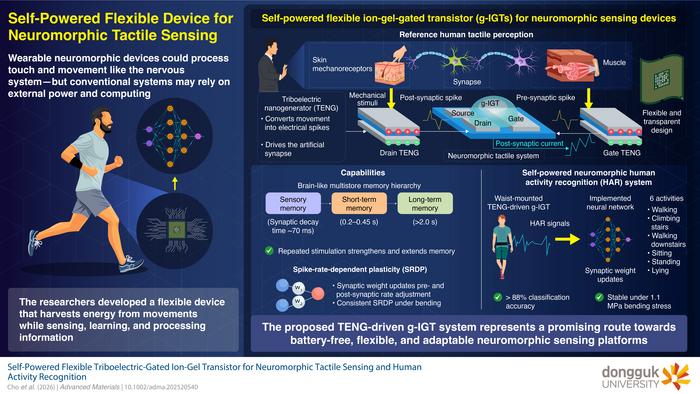
The proposed TENG-driven g-IGT is a flexible, self-powered neuromorphic device capable of reproducing multiple memory states and spike-rate-dependent learning Neuromorphic devices, which are designed to emulate aspects of biological neural networks, are promising candidates for developing low-power and intelligent sensing technologies, including wearable applications. Among the device architectures explored for neuromorphic computing, graphene-channel ion-gel-gated transistors (g-IGTs) are...

Rice University researchers have shown that sub-nanometer wrinkles in graphene generate flexoelectric charge separation, reshaping local electrical behavior through curvature alone. Extreme bending produces polarization far stronger than in larger systems and may enable geometry-controlled electronics without chemical doping. Published in Advanced Materials.
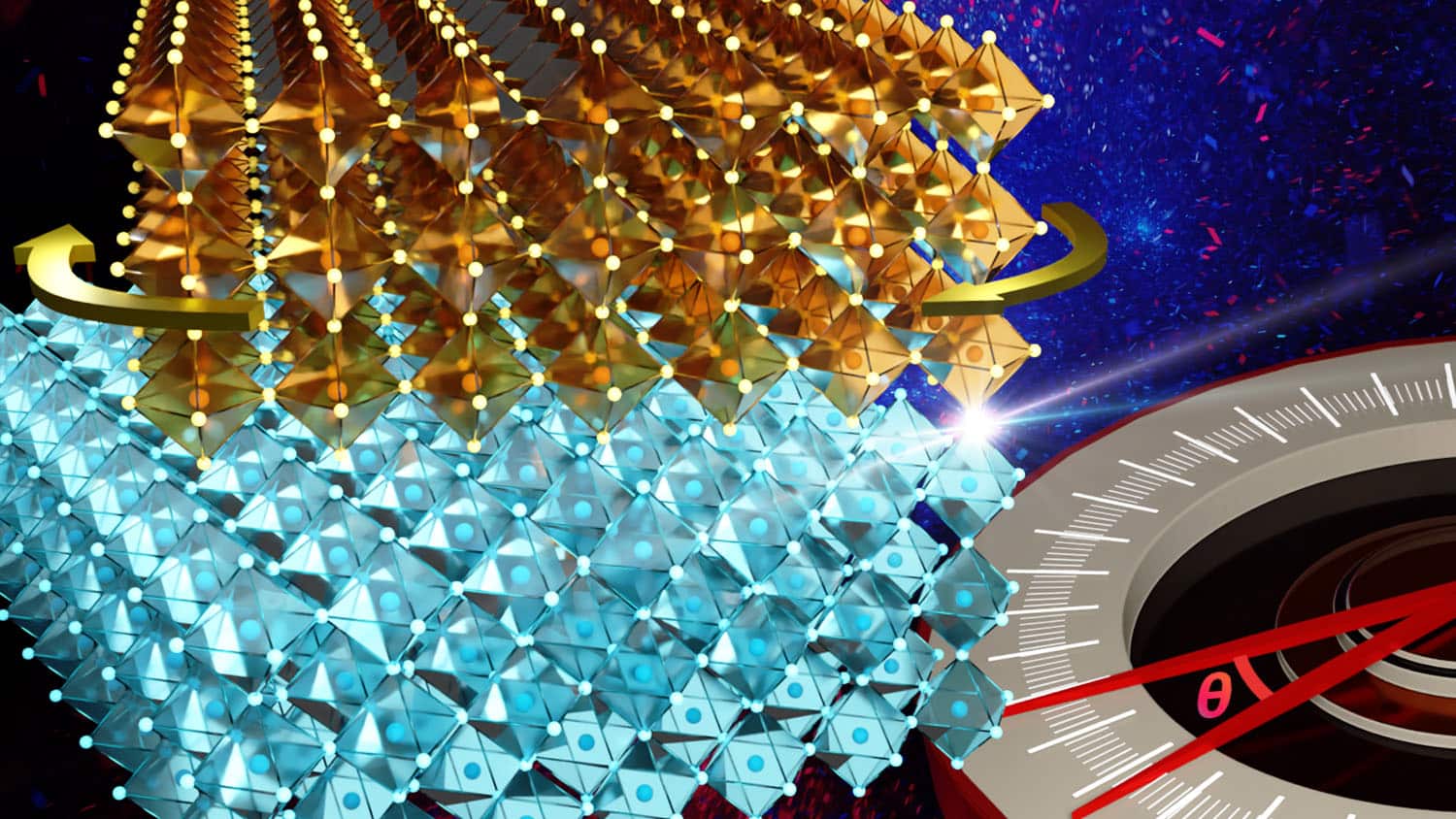
Researchers at NC State have extended twistronics beyond van der Waals materials into strongly bonded crystalline oxides. By stacking sodium niobate membranes with twist angles controlled down to 0.1 degrees, and confirming results via synchrotron X-ray diffraction, the team found interlayer bonds distort the atomic lattice, shifting phase structure and domain configuration. The technique works at near-millimeter scale, far larger than typical twistronic devices, marking a real step toward pract
