Graduate School of Arts and Sciences, College of Arts and Sciences, The University of Tokyo
As artificial intelligence moves increasingly toward edge devices, researchers are exploring electronic components that can combine memory and information processing. Memristive and synaptic devices are of particular interest because their electrical conductance can retain information about previous inputs, providing a physical basis for brain-inspired computing.
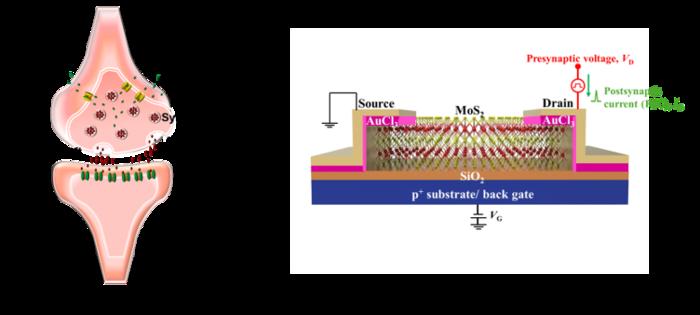
A research team led by Daisuke Kiriya at The University of Tokyo, with Durgadevi Elamaran and colleagues, investigated a different way to control memory behavior in a two-dimensional semiconductor device. Instead of introducing a switching material throughout the channel, the researchers selectively modified the electrical contacts of a planar MoS₂ memtransistor using a solution-based AuCl₃ treatment.
The contact treatment changes the electronic environment in which the metal electrode meets MoS₂. Measurements indicate that charge trapping and detrapping at this interface dynamically alters the effective Schottky barrier that controls carrier injection. This interfacial mechanism produces smooth, bipolar resistive switching while leaving the intrinsic MoS₂ channel largely unmodified.
Temperature-dependent electrical measurements supported a contact-limited transport mechanism. The extracted effective Schottky barrier height increased from approximately 40.8 meV in the pristine device to approximately 196 meV after AuCl₃ treatment. Raman spectroscopy, XPS and AFM were used to examine the material and chemical changes associated with the modified interface.
The researchers then tested whether the same contact-controlled dynamics could reproduce functions associated with biological synapses. Under drain-voltage pulse stimulation, the device exhibited gradual long-term potentiation and depression, spike-amplitude-dependent plasticity and timing-dependent conductance changes. The paired-pulse response contained both faster and slower temporal components, which was consistent with more than one characteristic interfacial charge-relaxation process.
To explore an application that depends on temporal information, the team used the MoS₂ device as a physical reservoir for ECG signal processing. A single memtransistor, rather than a physical array of devices, was operated with 10 time-multiplexed virtual nodes. The study used 23,818 heartbeat segments from the MIT-BIH arrhythmia database, with 19,053 segments used for training and 4,765 for testing.
For discrimination between normal and ventricular ectopic heartbeat classes, the reservoir-computing analysis produced an area under the receiver operating characteristic curve of 0.965 and an overall classification accuracy of 93.9%. The researchers emphasize that this experiment demonstrates the proof-of-concept demonstration of temporal signal processing using the dynamic response of a single contact-engineered device, rather than a clinical diagnostic system.
Because the switching mechanism is localized at the metal–MoS₂ interface and the contact treatment can be introduced through a solution-processing step compatible with lithographic device fabrication, the work provides a route for investigating planar, independently addressable artificial synaptic devices. Further work will be required to evaluate large-scale integration, long-term reliability and manufacturing compatibility.
Reference
Scalable Independently Tunable MoS₂ Memtransistor via Contact-Engineering for Cardiac Signal Processing
Durgadevi Elamaran, Masahiro Sakai, Liu Huiqin, Ryoichiro Naoi, Takashi Kobayashi, Kai Qi, Vincent Tung, Soma Sakota, Takeshi Yoshimura, Norifumi Fujimura, Bang Lu, Rafika Amalia Annur, Satoru Takakusagi, and Daisuke Kiriya
Keysight Technologies, the University of Glasgow, NPL and MPI Corp have collaborated on broadband characterization of sub-THz semiconductor devices, demonstrating continuous on-wafer measurement of InP HEMTs from near-DC to 250GHz in a single sweep.
HORIBA STEC KOREA will produce the D500 series mass flow controller in Korea, with mass production slated from June 2021 and a target of 1,000 units per month by the end of 2021.
Allwin21 provides upgrade kits for Branson/IPC L3200 plasma systems, replacing obsolete controllers, electronics and control modules while preserving the original process platform.
This week in nanotech
$110M raised
9 funding rounds · 58 deals tracked
New products
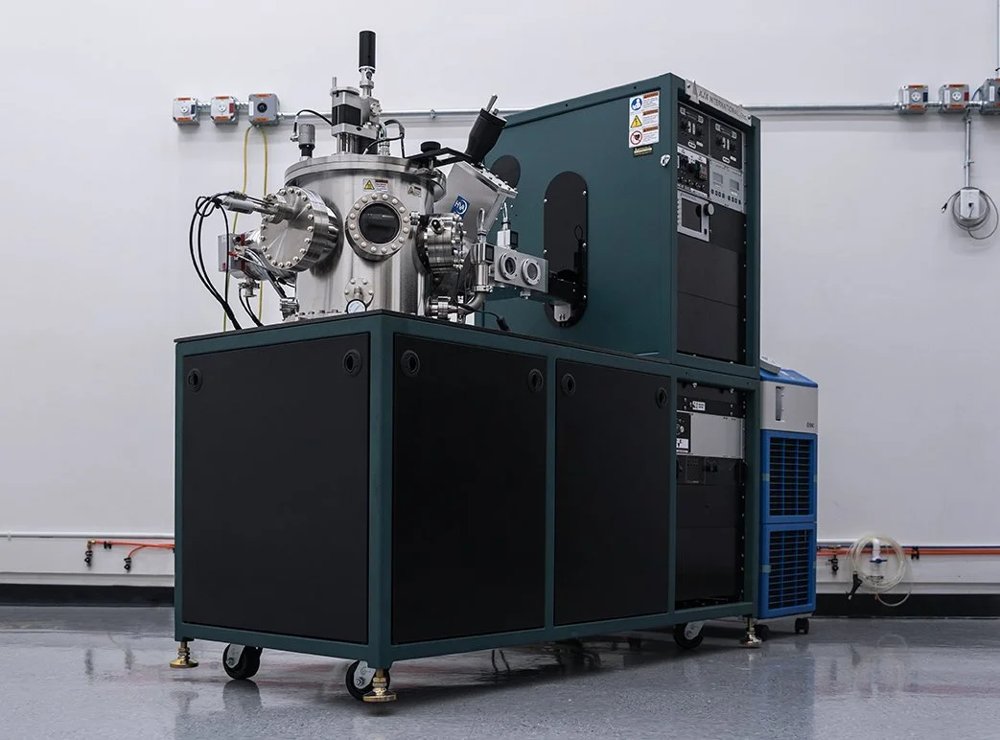 Orion Sputtering Deposition SystemsAJA International Featured
 Nion-compatible In Situ STEM Holders for Electrical BiasingHummingbird Scientific Featured
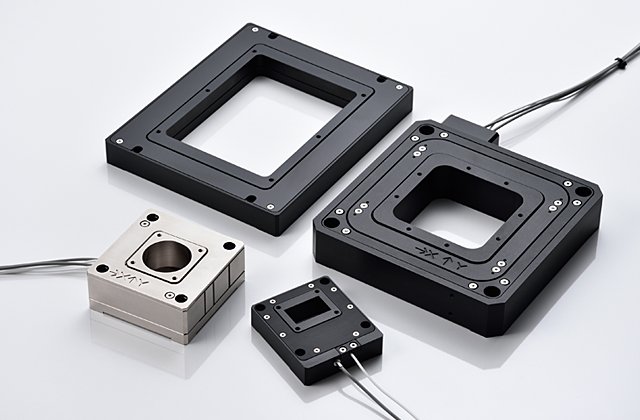 PKVH / PKVL ZAxis With an opening modelTHK PRECISION CO.,LTD.
Market insights
Last 30 days: Quantum Technologies drew the most money: $3.17B.
Money raised per month