North Carolina State University
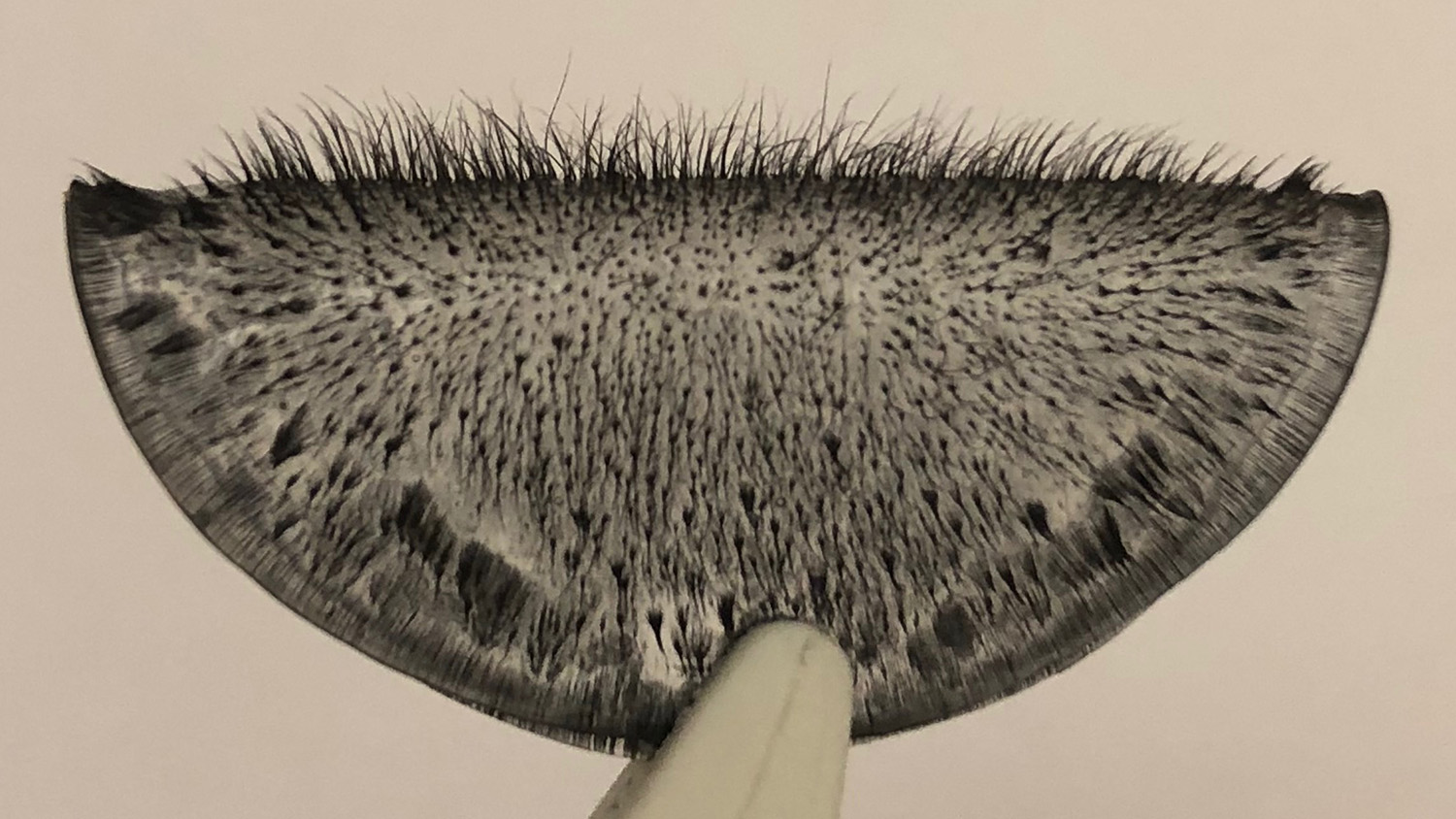
Researchers from North Carolina State University and Elon University have made artificial cilia, or hair-like structures, that can bend into new shapes in response to a magnetic field, then return to their original shape when exposed to the proper light source.
"This work expands the capabilities of magnetic cilia and our understanding of their behaviors, which has potential applications in soft robotics, including microrobotics," says Joe Tracy, corresponding author of a paper on the work and a professor of materials science and engineering at NC State. "A key point of this work is that we've demonstrated shape memory magnetic cilia whose shape can be set, locked, unlocked and reconfigured. This property will be useful for enhanced and new applications."
The finding builds on the team's earlier research designing soft robots that could be controlled using magnets and light. However, there are significant departures from the previous work.
"The cilia are actuated by magnetic torques, which means the cilia rotate and align with the field from an inexpensive permanent magnet, instead of being pulled toward the magnet," says Ben Evans, co-author of the paper and a professor of physics at Elon. "Actuation of the soft robots in our earlier work relied on magnetic field gradients, which moved the robot by pulling it. The new approach offers another tool for designing soft robots."
The researchers also developed a theoretical model that allows users to predict how the shape memory magnetic cilia will respond when actuated, or set into motion. In addition, the model explains why the cilia respond the way they do.
"These shape memory magnetic cilia are also simple to fabricate through self-assembly using inexpensive permanent magnets," says Jessica Liu, first author of the paper and a recent Ph.D. graduate from NC State. "We're optimistic that these demonstrations and our model can help the research community design ciliary systems with new capabilities for specific applications."
"We think this work will contribute to advancing the capabilities of soft robotics," Tracy says.
Photothermally reconfigurable shape memory magnetic cilia
Jessica A.‐C. Liu, Benjamin A. Evans, Joseph B. Tracy
Advanced Materials Technologies (25 May 2020)
Contact information:
Professor of materials science and engineering at NC State
jbtracy@ncsu.edu
Phone: 919-513-2623
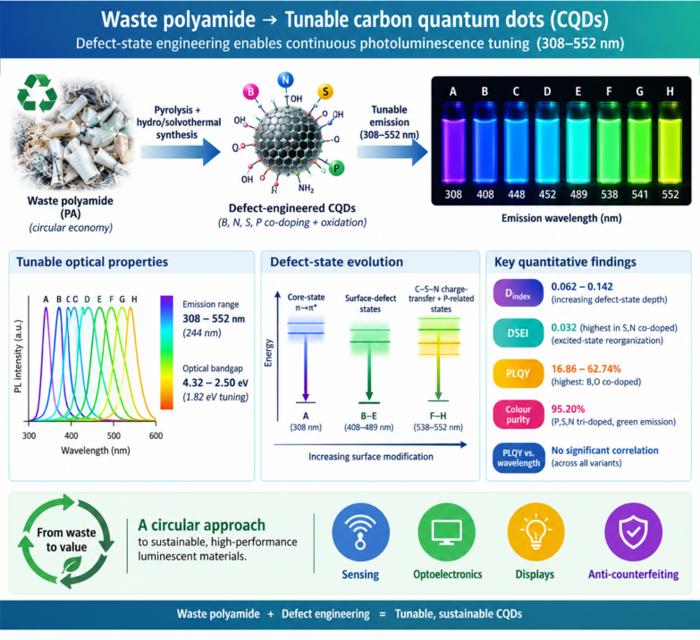
Waste polyamide-derived CQDs show continuous photoluminescence tuning from 308 to 552 nm through sequential defect-state engineering, with optical transition energies decreasing from 4.32 to 2.50 eV. @Christian Ebere Enyoh from Saitama University Carbon quantum dots (CQDs) are fluorescent carbon nanomaterials with potential applications in sensing, optoelectronics, displays, anti-counterfeiting, and environmental technologies. Their optical properties can be adjusted by modifying the carbon...
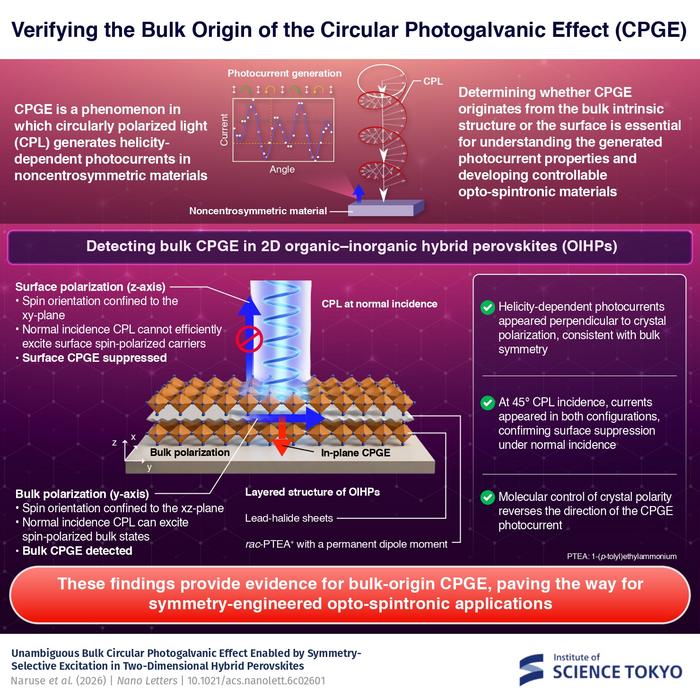
The researchers used circularly polarized light at normal incidence and found that helicity-dependent photocurrents appeared perpendicular to the crystal’s polarization but vanished when measured parallel to it, supporting a bulk origin of CPGE. @Institute of Science Tokyo The circular photogalvanic effect (CPGE), a phenomenon that generates helicity-dependent photocurrents in noncentrosymmetric materials, can originate purely from a crystal's internal structure without contribution from the...
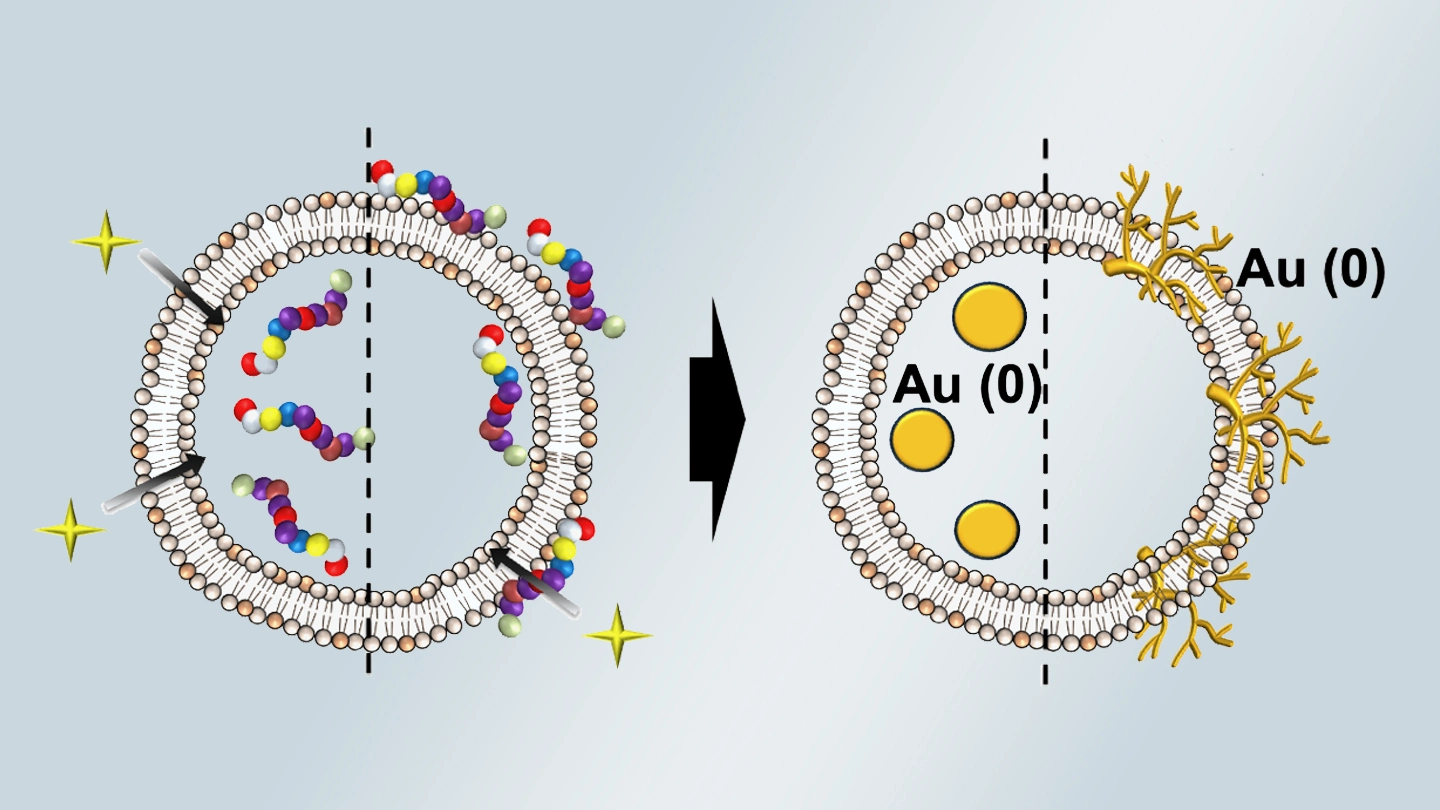
Summary of gold nanoparticle growth programming in liposome based on localization of biomineralization peptide The position of biomineralization peptides within liposomes can influence how gold nanoparticles grow, reports a research team from Institute of Science Tokyo. Peptides localized at the membrane interface promote branched structures, while those confined to the liposome interior favor spherical nanoparticles. The findings offer a new strategy for controlling nanoscale reaction...
