Delft University of Technology

Researchers at Delft University of Technology have succeeded in controlling the magnetism in the nucleus of a single atom with radio waves. This came as a surprise: until now, physicists believed that this nuclear spin could not be manipulated directly. The discovery could open up new possibilities for storing and reading quantum information. The research is published in the journal Nature Communications.
In metals such as iron and nickel, every atom is slightly magnetic. But inside the atom, different magnetic “compass needles”, known in quantum mechanics as spins, are also at work. “By far the strongest magnetism comes from the electrons,” says lead researcher Sander Otte. “But in some atoms, the nucleus also carries a spin. That spin is much weaker, but it is also much better shielded from the outside world.”
Otte’s group studies spins using a converted scanning tunnelling microscope. This enables electrical signals to be directed with extreme precision at a single atom. In the past, the researchers mainly focused on the electron spin, which is the easiest to read out. The nuclear spin appeared only indirectly, through the so-called hyperfine interaction. This causes the spins of the nucleus and the electron to become slightly entangled.
Control against expectations
In their latest experiment, main author Hester Vennema and her colleagues sent two different signals to an atom simultaneously: one targeting the electron and one targeting the nucleus. This allowed them to study the influence of each signal independently. To their surprise, they found that they could flip the nuclear spin even when the two spins were largely disentangled.
That result came unexpectedly. “According to our simple understanding, this should not really happen,” says Otte. “The nuclear spin should not be sensitive at all to the electrical signals from a scanning tunnelling microscope.”
Guitar strings
For this research, the team refined an established measurement technique known as double magnetic resonance for use on a single atom. This enabled them to address the magnetism of the atomic nucleus and that of an orbiting electron independently.
In magnetic resonance, the orientation of a spin is altered using a wave signal. According to quantum mechanics, only a limited number of such rotations are possible. As a result, the signal must have exactly the right frequency. “You can compare it to the strings of a guitar,” Vennema explains. “Each possible spin rotation is like a string with its own note. You have to play precisely the right note to make a particular string vibrate. The “notes” of a nuclear spin are a hundred to a thousand times lower than those of an electron spin.”
Secure quantum information
The nuclear spin of atoms is of particular interest for applications in which quantum information needs to be stored securely. The ability to control nuclear spins could provide new opportunities for storing and reading out quantum information. For now, however, the research mainly raises new questions about the mechanism driving the nuclear spin. “Back to the drawing board, then,” says Otte. “That is really how science works. There is always something new left to figure out.”

Photons are the basis for many next-generation quantum technologies, including ultra-secure quantum communications and potentially...
The Pritzker School of Molecular Engineering (PME) at the University of Chicago has announced the launch of a PhD in quantum science and...
Seven organizations including Nautilus Technologies, Fujitsu company 1Finity, IIJ, Waseda University and Nagoya University have begun building a distributed quantum computing platform that links quantum clusters with the Tsurugi relational database over ultra-low-latency optical networks.
This week in nanotech
$282.2M raised
8 funding rounds · 36 deals tracked
New products
 DLS-1 Mass Spectrometer for Fusion Gas AnalysisHiden Analytical Featured
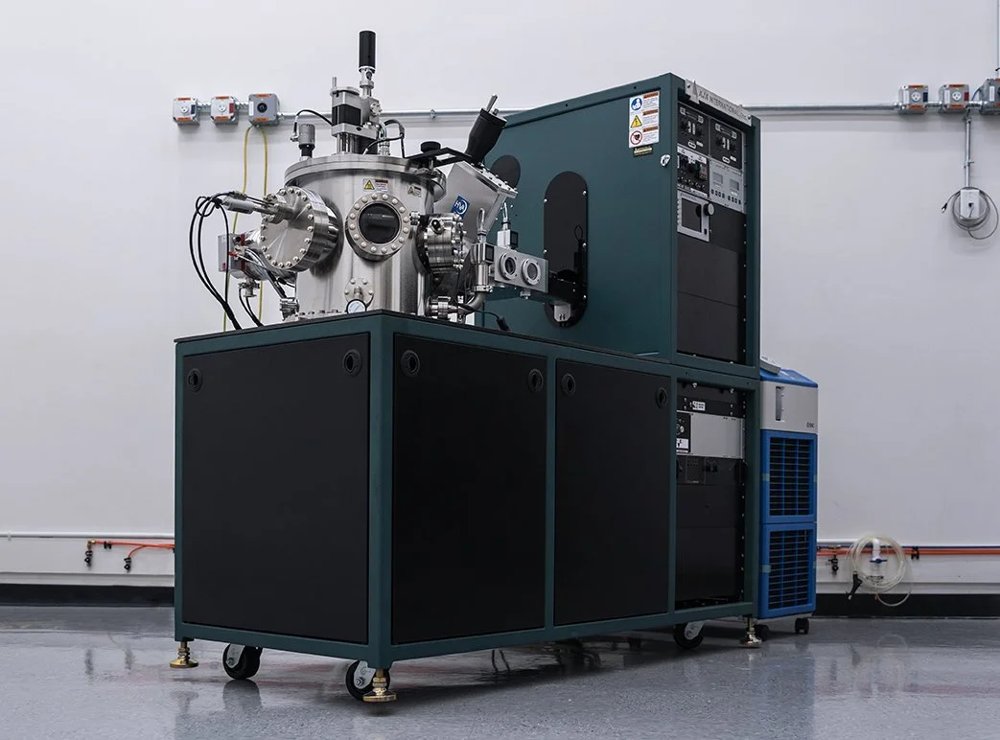 Orion Sputtering Deposition SystemsAJA International Featured
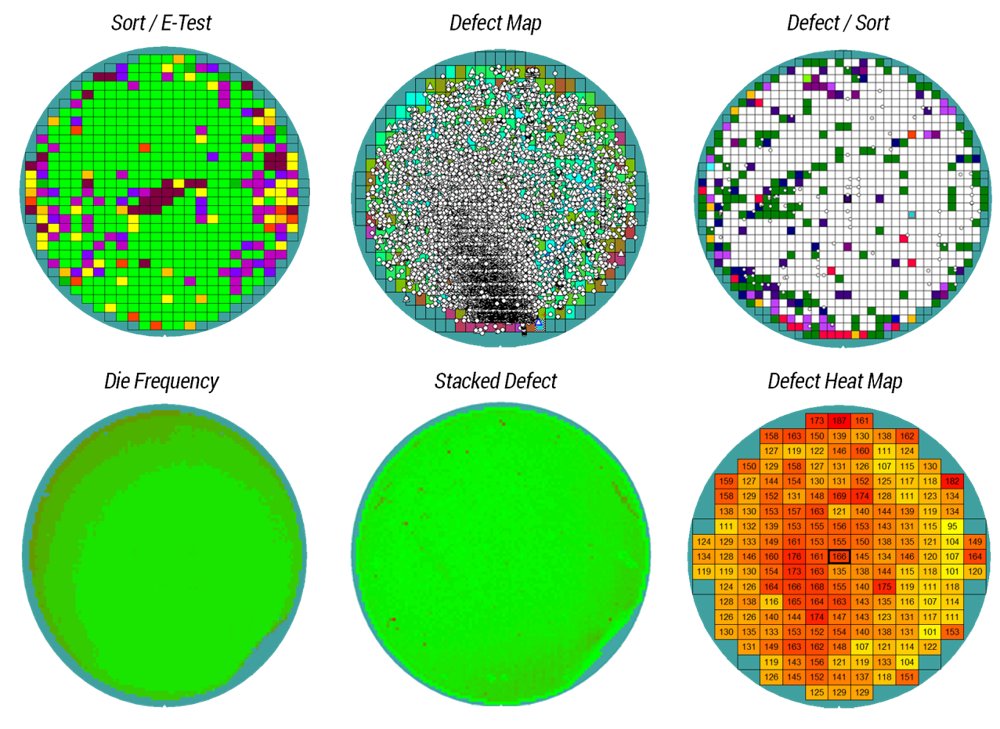 Discover Mapping SuiteOnto Innovation
Market insights
Last 30 days: Quantum Technologies drew the most money: $3.17B.
Money raised per month
Behind the deal
Who led Xanadu Quantum Technologies Limited’s $10M Grant?
See the investors with Insights Pro →