University of Michigan
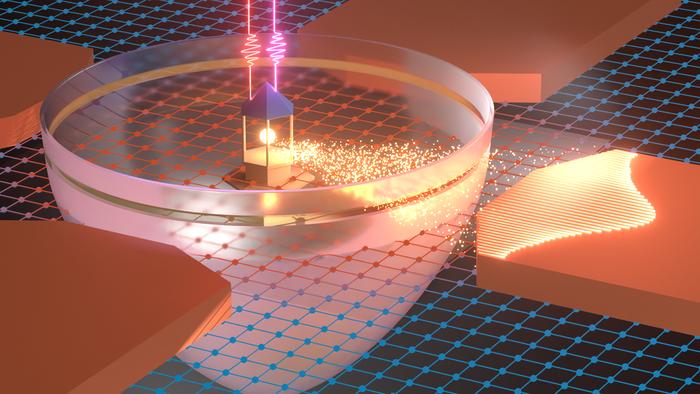
Researchers at the University of Michigan have created a device that enables them to control the flow of electrons through a semiconductor using only laser light—no electrical power source required.
This device was built to explore fundamental physics and realize a previously unobserved behavior, but it could also open doors for new applications in areas that bridge optics and electronics, including sensing, imaging and telecommunications. The phenomenon could help improve how signals are sent through and between devices, as well as create new opportunities to store more information in those signals.
"This electrical device that we manufactured at the Lurie Nanofabrication Facility has the potential to turn into something that measures different aspects of light," said Yiming Gong, who helped lead the project as a doctoral student in the U-M Department of Physics. "But this originates from a very fundamental level of physics, which is the interference between different optical absorption processes."
With federal support from the U.S. National Science Foundation, the researchers showed they could induce the orderly flow of electrons through a semiconductor using two different colors of light. By rotating the polarization of the two optical fields—the direction that the light waves wiggle—the researchers could also control the direction of the electronic current.
"This isn't the way things normally work. When you think about electrons moving through a material, they're moving because you've applied an electrical field and they actually bounce around and drift across the materials. Here, using light, you can actually sort of squirt the electrons in a specific direction without applying an electric field," said U-M physicist Steven Cundiff, senior author of the team's new report in the journal Physical Review Letters.
Although previous work had shown the ability of light to get electrons flowing with light alone, this work goes a step further and shows the light gets electrons flowing in a narrow beam in a specific direction.
"The light no longer merely switches the current on; it also aims it," Cundiff said.
Cundiff likens this to a lighthouse, which sweeps a beam of light by rotating its lamp. Here, the beam is made of electrons and that beam can be rotated by rotating the polarization of the two phase-coherent optical fields.
The phenomenon relies on quantum interference, which arises when two colors of light drive different absorption pathways to the same final state. The light transfers energy to the semiconductor material in discrete, or quantized, packets called photons, which mobilize the material's electric charge carriers.
In the U-M set-up, the incident light is absorbed by two routes at once, and the routes can be thought of as overlapping ripples, Cundiff said. Those ripples line up and enhance each other for electrons traveling a certain direction, but cancel each other out for electrons moving in other directions.
A collaborator on an earlier project, J.E. Sipe of the University of Toronto, had predicted it would be possible to create such an "electron lighthouse." Now, working with the Lurie Nanofabrication Facility, Gong was able to realize such a device.
"The LNF is an amazing facility," Gong said, adding it was a painstaking process to meld the device's materials together in a way that didn't introduce any extraneous electric fields.
"That was the biggest puzzle to solve for me, because there isn't a standard way to do that. So I worked with the LNF staff to play around with different recipes and temperatures to come up with a manufacturing process."
Kai Wang, a former postdoctoral scientist with Cundiff and now a professor of electronics and information at Sun Yat-Sen University in China, provided Gong with additional guidance on this project. Gong has earned his doctorate from U-M and now works in Chicago as a machine learning scientist, where he applies the quantitative and analytical skills developed through his physics research to machine learning.
Reference
Directional Photocurrent Generated by Quantum Interference Control
Yiming Gong, Kai Wang and Steven T. Cundiff
Phys. Rev. Lett. 137, 036901 – Published 16 July, 2026
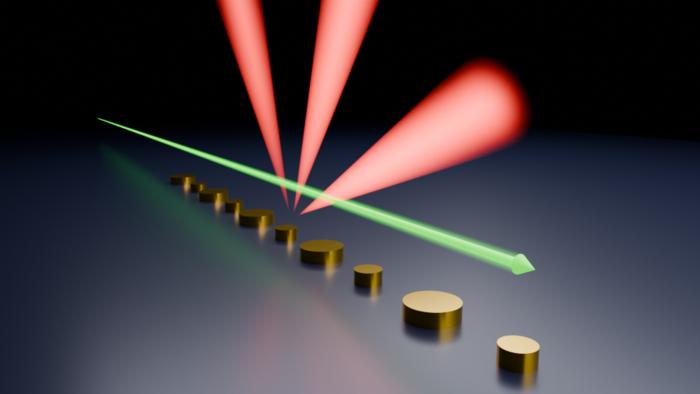
When fast-moving electrons pass over nanostructured materials, they can make those materials emit light — a phenomenon called cathodoluminescence, already widely used in electron microscopy. The catch has always been controlling where that light goes once it's generated. Researchers from the University of Southern Denmark, with collaborators at ICFO and AMOLF, have now proposed a theoretical fix: programmable metasurfaces built from individually tunable nanoscale elements, using materials like g
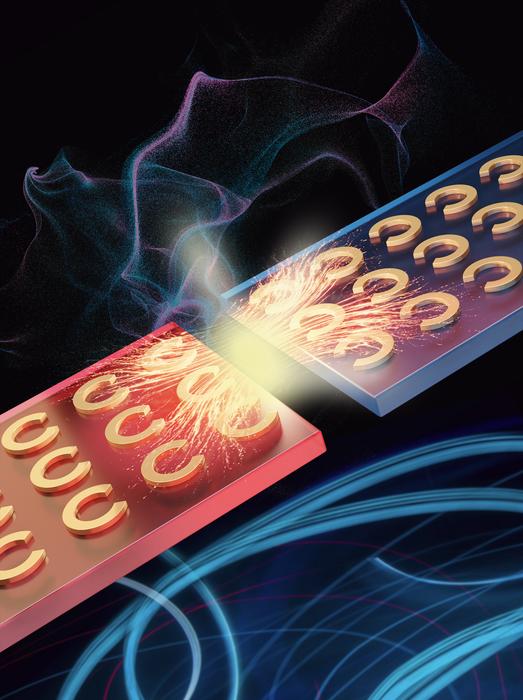
Researchers at Carnegie Mellon University, in collaboration with Stanford and Purdue, have demonstrated a powerful new way to control heat at the nanoscale. Using carefully engineered metamaterials — microscopic gold patterns on thin membranes — they achieved up to four times more heat transfer across a tiny gap compared to conventional setups.
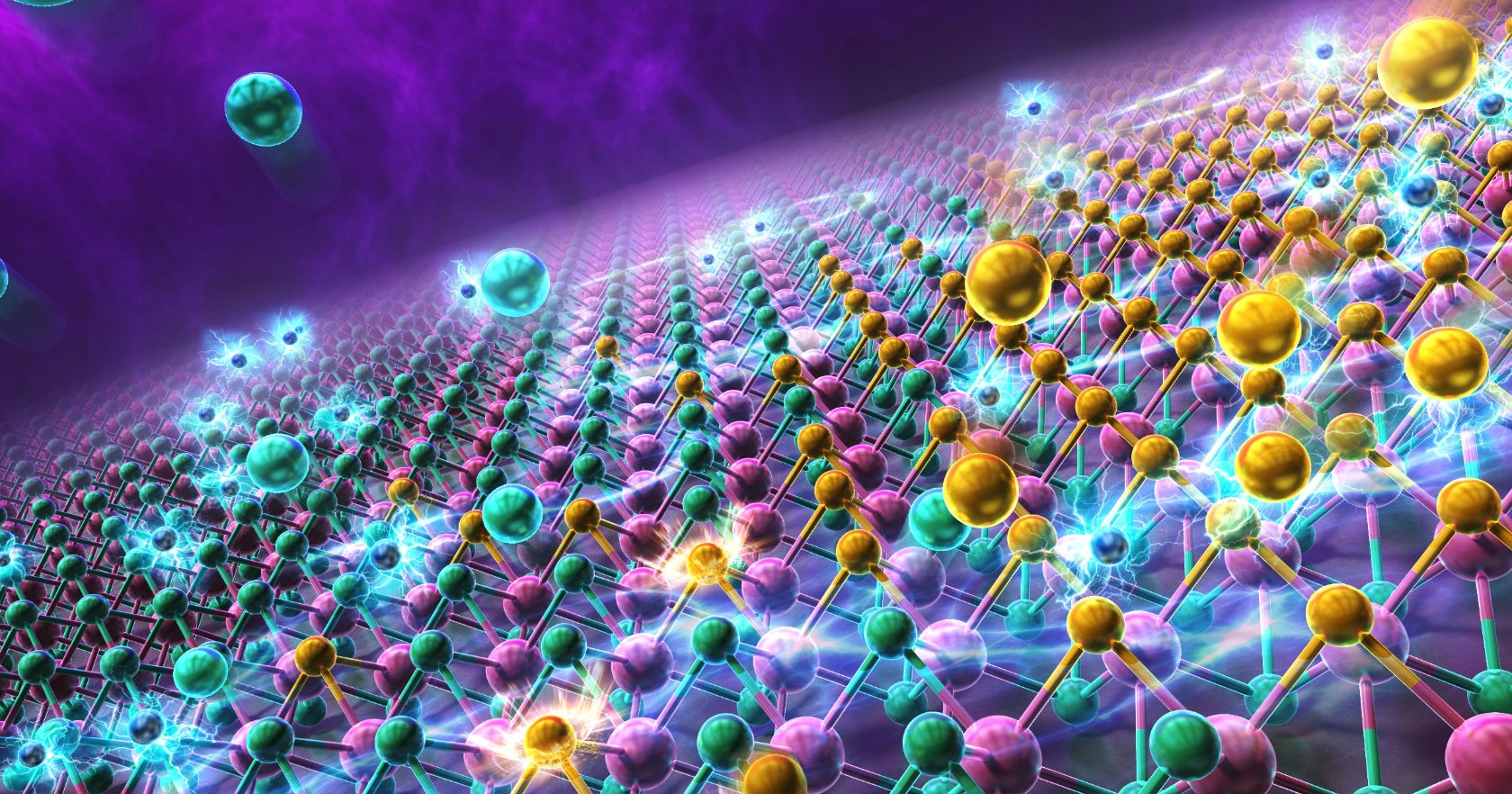
Researchers at Tohoku University have uncovered the long-standing mystery behind the synthesis of Janus two-dimensional (2D) semiconductors, paving the way for more precise manufacturing of materials used in future electronics and clean energy technologies. Janus 2D materials are named after the two-faced Roman god because their top and bottom surfaces are composed of different elements. This asymmetry creates a strong internal electric field, making them attractive for applications such as...
This week in nanotech
$816M raised
7 funding rounds · 34 deals tracked
New products
 Ti-WCMBN Nanomaterialia Featured
 Nion-compatible In Situ STEM Holders for Electrical BiasingHummingbird Scientific Featured
 Discover Mapping SuiteOnto Innovation
Market insights
Last 30 days: Quantum Technologies drew the most money: $3.17B.
Money raised per month