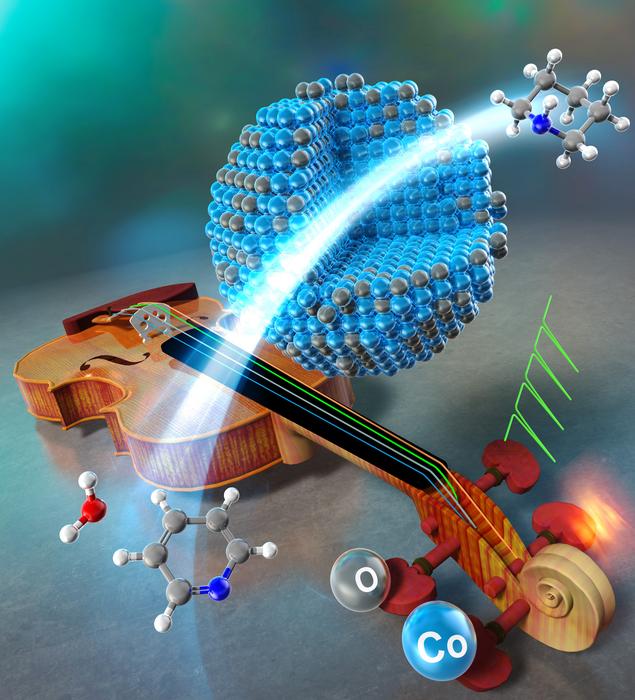
Finding alternatives to precious metals in chemical manufacturing may be less like sourcing a substitute and more like tuning an instrument already in hand.
YOKOHAMA National University scientists have found that an earth-abundant cobalt catalyst can selectively hydrogenate nitrogen-containing compounds when the balance between metallic cobalt and cobalt oxide is carefully tuned. Their findings could allow for more sustainable approaches to chemical manufacturing that do not depend on the use of very valuable, very rare metals.
The study will be published in the Journal of the American Chemical Society on September 29.
From medicines to plastics, many products we rely on every day begin with chemical transformations that require carefully designed catalysts. One important example is hydrogenation, which adds hydrogen to molecules to produce useful chemical compounds.
Conventional hydrogenation commonly relies on hydrogen gas, but electrocatalytic hydrogenation can generate hydrogen equivalents from water using electricity. This offers a potentially more sustainable approach to reductive chemical transformations, particularly when powered by renewable electricity.
This technology, however, has its own shortcomings.
“A major challenge in electrocatalytic hydrogenation is replacing scarce platinum-group metals with earth-abundant catalysts without sacrificing activity or selectivity,” said Mahito Atobe, professor at YOKOHAMA National University’s Faculty of Engineering and a corresponding author of the study.
In a quest for alternatives, the team turned to cobalt, an abundant and economical metal.
“We wanted to understand how the oxidation state of cobalt changes under operating conditions and whether controlling the balance between metallic cobalt and cobalt oxide could provide an effective catalyst,” said Naoki Shida, associate professor from the same Faculty and co-corresponding author.
The researchers prepared their catalyst from cobalt sulfate and calcined it at 750 °C. They then tested it in an anion-exchange membrane electrolyzer, in which electricity drives hydrogenation reactions.
The optimized catalyst converted pyridine to piperidine with a yield of more than 99% under ambient electrolysis conditions. In other words, almost all of the pyridine that reacted was converted into the desired product rather than unwanted byproducts. Piperidine is an important building block in synthetic and medicinal chemistry, making this reaction a useful test of the catalyst’s ability to carry out selective hydrogenation.
Such performance, however, is not always guaranteed.
“We found that the catalytic performance of cobalt is determined not simply by its elemental composition, but by its dynamic oxidation state during electrolysis,” Atobe said.
During electrolysis, cobalt can shift between metallic Co(0) and cobalt oxide, CoOx. The researchers found that catalysts containing too much of either form were less active. Instead, the best performance came from an intermediate Co(0)/CoOx ratio.
To understand why, the team combined experimental characterization with in situ X-ray spectroscopy and theoretical calculations. The results suggest that the coexistence of metallic Co and residual CoOx creates a favorable environment for pyridine adsorption and hydrogenation.
“Maintaining an appropriate balance between metallic Co and residual CoOx enables highly selective hydrogenation,” Atobe said.
The catalyst also selectively hydrogenated a broad range of nitrogen-containing compounds, including pyridines, quinolines, pyrazines, nitriles and nitroarenes. It also suppressed undesired hydrogenation pathways that are observed with rarer rhodium-based catalysts.
The researchers then addressed a practical challenge: prolonged electrolysis can over-reduce the catalyst, pushing it away from its optimal state. The team introduced intermittent electrolysis to help maintain the appropriate Co(0)/CoOx balance. The strategy enabled gram-scale conversion of pyridine to piperidine with an 89% yield while maintaining a stable cell voltage.
The findings highlight a broader principle for catalyst design: controlling a catalyst’s chemical state while it operates can be as important as choosing the catalyst itself.
The team plans to extend this oxidation-state-control strategy to other earth-abundant transition-metal catalysts and a broader range of synthetically important reactions.
“Our ultimate goal is to develop scalable electrochemical processes in which catalyst states can be actively controlled under operating conditions,” Shida said. “This could enable selective chemical manufacturing without relying on scarce precious metals.”
Funding
JSPS KAKENHI Grant Numbers JP22K14541, JP23H04916 (Green Catalysis Science), JP23K23386, JP23K17370, JP24K01279.
Japan Science and Technology Agency (JST) as a part of PRESTO program (JST Grant No. JPMJPR2373 and JPMJPR2471),
Adopting Sustainable Partnerships for Innovative Research Ecosystem (ASPIRE), Grant Number JPMJAP2528.
Reference
Oxidation-State Control of Cobalt Electrocatalysts Enables Selective Hydrogenation of Nitrogen-Containing Aromatics
Akizumi Yonezawa, Yugo Shimizu, Juri Harada, Ryo Kurihara, Atsuki Hirama, Yusuke Muto, Reno Fukui, Ayaka Wakasugi, Koji Harano, Kazuhide Kamiya, Shoji Iguchi, Naoki Shida, and Mahito Atobe
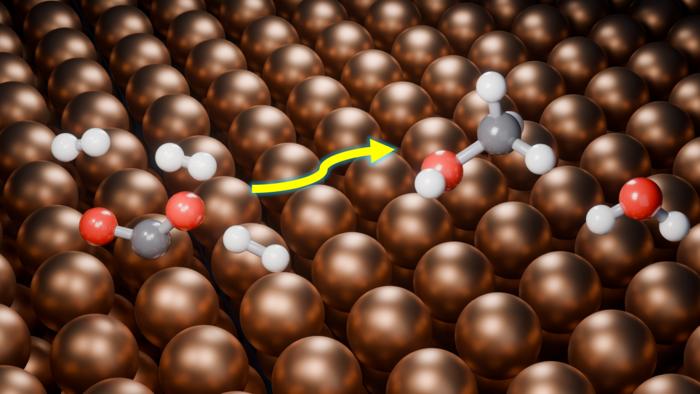
A data-driven framework from Indian Institute of Science researchers mapped nearly 10,000 elementary reactions in CO2 hydrogenation over copper, using quantum-mechanical simulations to train machine learning models that predict activation energy barriers and automated tools to enumerate reactions among 105 surface species.
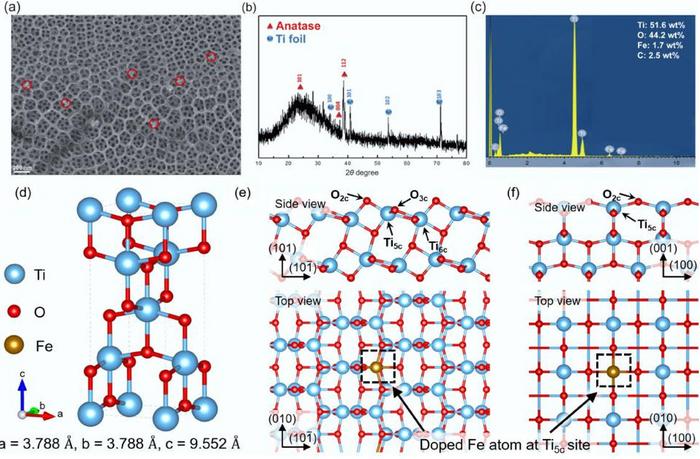
Iron-modified titanium dioxide nanotube electrodes removed 92.1% of nitrobenzene from water within two hours when combined with heat, electricity and ultraviolet light, versus 7.5% for electrical treatment alone. Nitrate-based estimates put mineralization at 62.4%, and intermediate products pointed to a shorter degradation pathway.

Researchers led by Professor Jaeyune Ryu at Seoul National University identified local pH near electrodes as a decisive variable in organic electrosynthesis. By designing a reactor that narrows electrode spacing and flows electrolyte to counterbalance acidic and alkaline zones, they raised selectivity for lactones and epoxides, feedstocks for biodegradable plastics, polyurethanes, adhesives, and epoxy resins, from about 16% to 97% using only oxygen and electricity, eliminating added peroxide…






