Maximum Academic Press
A research team has developed an iron-modified titanium dioxide electrode that substantially improves the breakdown of nitrobenzene, a persistent wastewater pollutant. In a laboratory reactor combining electrical treatment, heat and ultraviolet light, the system removed 92.1% of nitrobenzene within two hours. A nitrate-based calculation indicated 62.4% mineralization over the same period, showing that breakdown had advanced substantially but remained incomplete. The findings suggest a way to make combined treatment systems more effective and guide the design of electrodes for removing difficult organic contaminants from wastewater.
Nitrobenzene can enter wastewater from industrial activities and resists many conventional treatment methods. Existing approaches may require added chemicals or convert the pollutant into intermediate compounds that need further treatment. Researchers have therefore explored ways to combine electrochemistry, heat and photocatalysis to speed degradation. Titanium dioxide is an appealing electrode material, but its response to light is limited largely to ultraviolet wavelengths. Some alternative electrodes rely on costly materials. The researchers investigated whether modifying titanium dioxide nanotubes with iron could improve pollutant interactions at the electrode surface and increase the effectiveness of a combined treatment process.
A study (DOI: 10.48130/een-0026-0018) published in Energy & Environment Nexus on 15 September 2026 by Jiayue Hu's & Ling Liu's team, Southeast University, reports that an iron-modified titanium dioxide nanotube electrode, used with heat, electricity and ultraviolet light, achieved substantially greater nitrobenzene removal and nitrate-based mineralization than the comparison treatments.
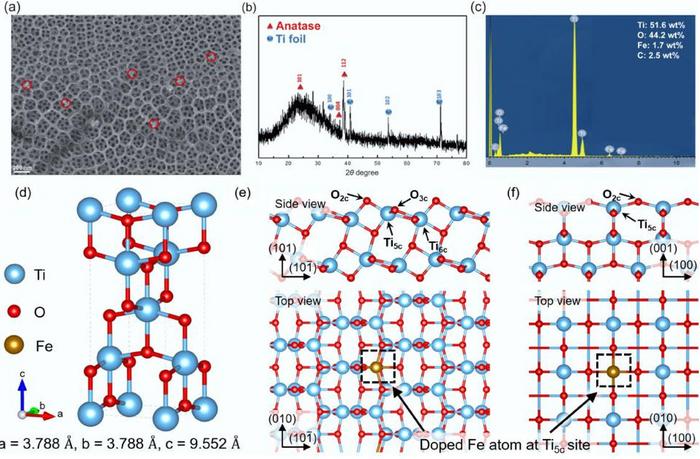
To make the electrode, the team formed titanium dioxide nanotube arrays on titanium foil and introduced iron through a soaking and heating process. Microscopy showed aligned nanotubes, while elemental analysis confirmed iron on the electrode. The researchers also used computational models to examine how iron might affect the electrode’s electronic structure and nitrobenzene adsorption. In a simplified model of an iron-containing surface, iron-related electronic states reduced the calculated effective gap and helped explain how the surface could support charge transfer. The calculations offered a possible mechanism; they were not a measurement of the finished electrode's optical bandgap.
The team then tested three operating modes in a small reactor containing nitrobenzene solution. Electrical treatment alone removed 7.5% of the pollutant after two hours. Adding heat raised removal to 52.5%. When the iron-modified electrode and ultraviolet light were added to form the full solar thermal electrochemical photocatalytic, or STEP, system, removal reached 92.1%. The corresponding nitrate-based mineralization estimates were 3.2%, 31.2% and 62.4%, respectively. Chemical analyses provided further clues about what happened during treatment. Phenol and para-benzoquinone appeared in the electrical and heated treatments, whereas neither was detected under STEP conditions. Maleic acid was the dominant detected intermediate in the STEP system, followed by evidence of its further conversion to oxalic acid. Together, these observations support a shorter proposed breakdown route, although the researchers say further analysis is needed to confirm the intermediates and reaction pathway. The nitrate-based estimate also does not establish complete conversion of all pollutant carbon to carbon dioxide.
The study shows how electrode design and combined energy inputs can improve nitrobenzene treatment in a controlled experiment. Its “solar” modes were tested with an external heater and ultraviolet lamp, rather than under the full solar spectrum. Tests under simulated sunlight, along with measurements of energy use, electrode durability and possible iron release, will be needed to assess whether the approach can work in practical wastewater treatment.
Reference
Enhanced nitrobenzene mineralization in a STEP system
Bin Bian, Jiayue Hu, Xinrui Ma, Pengkai Wang, Zhan Shen, Pascal E. Saikaly, and Ling Liu
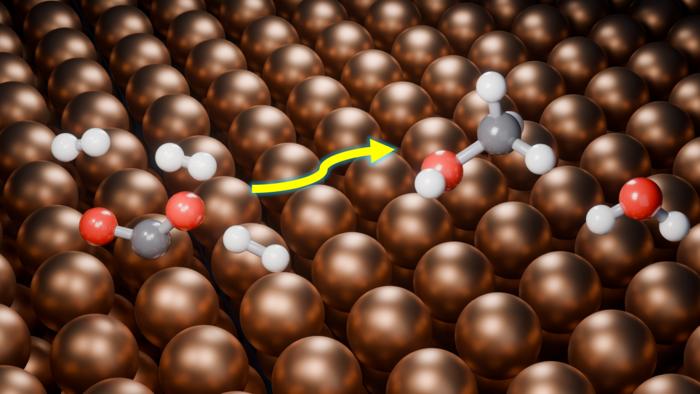
A data-driven framework from Indian Institute of Science researchers mapped nearly 10,000 elementary reactions in CO2 hydrogenation over copper, using quantum-mechanical simulations to train machine learning models that predict activation energy barriers and automated tools to enumerate reactions among 105 surface species.
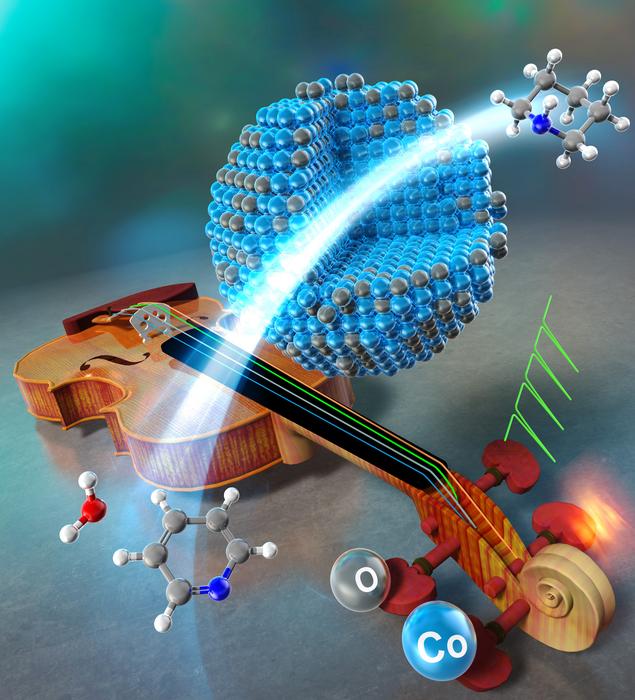
Yokohama National University researchers show that an earth-abundant cobalt catalyst can selectively hydrogenate nitrogen-containing compounds when the ratio between metallic cobalt and cobalt oxide is carefully tuned. The optimized catalyst converted pyridine to piperidine with over 99% yield under ambient electrolysis, and intermittent electrolysis maintained that balance for gram-scale synthesis.

Researchers led by Professor Jaeyune Ryu at Seoul National University identified local pH near electrodes as a decisive variable in organic electrosynthesis. By designing a reactor that narrows electrode spacing and flows electrolyte to counterbalance acidic and alkaline zones, they raised selectivity for lactones and epoxides, feedstocks for biodegradable plastics, polyurethanes, adhesives, and epoxy resins, from about 16% to 97% using only oxygen and electricity, eliminating added peroxide…






