13 October 2026. Rolf Aschenbrenner, deputy director of the Fraunhofer Institute for Reliability and Microintegration (IZM), and Lars Lust, executive director of Swissbit Germany, described Europe's advanced packaging gap in interviews with EE Times. The gap sits between pilot production and mass manufacturing, where volumes are too low for research organizations to support indefinitely and too small for high-volume outsourced semiconductor assembly and test providers.
Aschenbrenner cited fan-out wafer-level packaging as an example. A company developing RF products might require only around 100 wafers per year. "If you go to a large OSAT and ask for 100 wafers per year, that's nothing for them," he said. "They won't do it." He also described a customer making miniature cameras for medical applications that requires about 20 wafers annually. "Twenty wafers per year is the full volume," he said. "They don't need more. But nobody else can do those 20 wafers."
Fraunhofer also worked for a medical technology company on detector arrays for a novel CT scanner. The design uses through-silicon vias to route connections to the backside because conventional wire bonding creates gaps that can affect imaging performance. Aschenbrenner said no company in Europe had the technology available at that volume.
Lust said Swissbit integrates semiconductors rather than manufacturing them. "Advanced packaging is a must-have for our products," he said. He argued low-volume manufacturing can be economic with a standard tool chain and common platform. Swissbit has roughly 3,500 products in its catalog and around 150 active products moving through production in a typical month.
Aschenbrenner said Fraunhofer's packaging equipment is close to what is used in industry, making process transfer easier. "We can fill a gap," he said. "But manufacturing should be industrialized. We are very interested in transferring our knowledge and processes so industry can do it."
Source: EE Times

TESCAN ORSAY HOLDING, a.s. has described an A15 semiconductor failure analysis workflow that connects X-ray CT, ultrafast laser processing, optical and confocal microscopy, and SEM for progressive access to buried structures.
Applied Materials opened its Equipment and Process Innovation and Commercialization (EPIC) Center in Silicon Valley on Oct. 12. The company bets $5 billion on the facility to develop future semiconductor technologies.
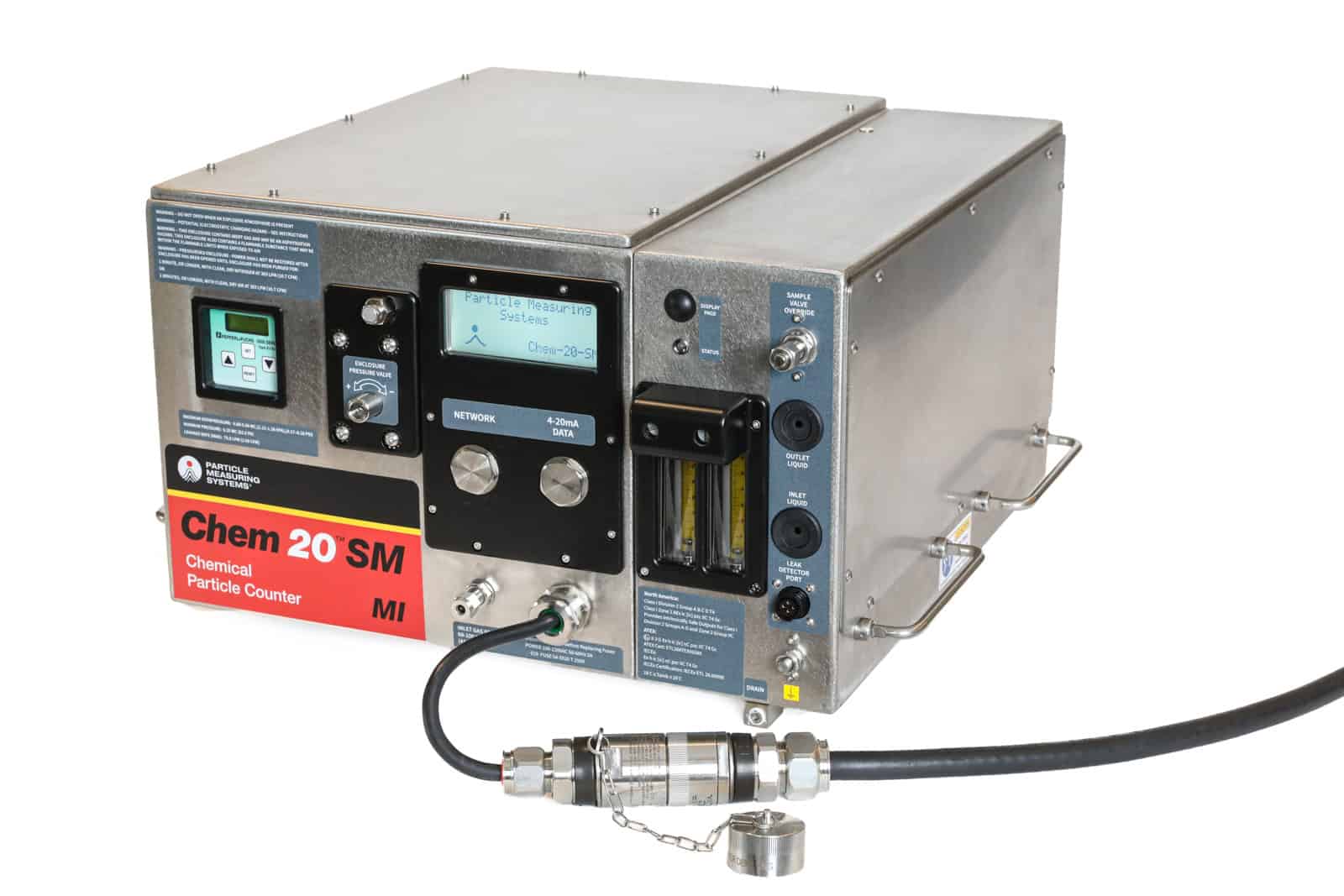
Particle Measuring Systems has launched the Chem 20 SM, a 20 nm solvent particle counter engineered for use in hazardous areas. It monitors solvents such as IPA and PGMEA and is designed to meet IECEx, ATEX and NFPA 70 NEC Class I Division 2 standards.






