Tsinghua University Press
As conventional electronics approach their scaling limits, researchers are exploring new ways to process information beyond the charge of electrons alone. One promising option is valleytronics, which uses the valley degree of freedom in two-dimensional semiconductors as an additional information carrier. Monolayer transition metal dichalcogenides such as WS2 are especially attractive for this purpose because their electronic valleys are coupled to electron spin and can be selectively addressed with circularly polarized light. However, intervalley scattering can quickly weaken valley polarization, limiting the performance of valleytronic devices.
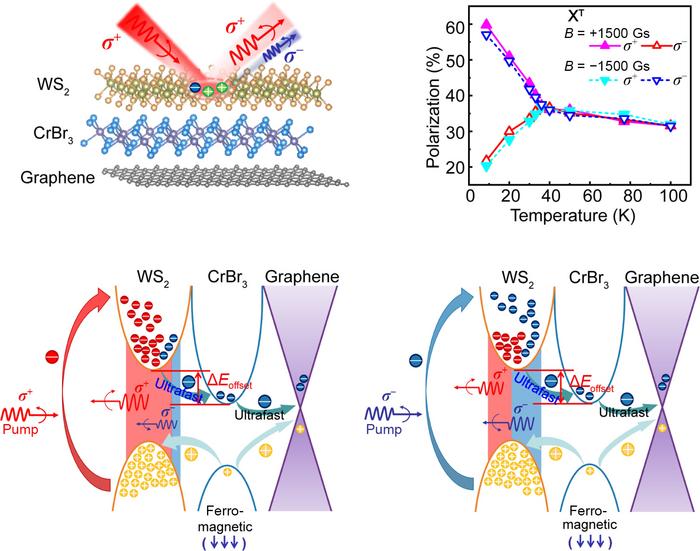
A research team from Xiamen University has now developed a strategy to overcome this limitation by controlling how fast spin-polarized charges move across an interface. In a new study reported in Nano Research, the team introduced graphene into a WS2/CrBr3 van der Waals heterostructure and found that graphene proximity coupling sharply accelerated interlayer spin-charge transfer. The transfer time between WS2 and CrBr3 decreased from 17.3 picoseconds to 1.3 picoseconds, while the maximum valley polarization and valley polarization splitting of trion excitons in WS2 increased by 32% and 261%, respectively.
The team published their research in Nano Research on July 23, 2026.
“Most previous efforts have focused on suppressing intervalley scattering to preserve valley polarization,” said Zhiming Wu, a corresponding author of the study from Xiamen University. “Our work shows that actively accelerating spin-selective charge transfer is another effective route. By using graphene as a nearby charge extraction layer, we were able to reshape the exciton dynamics and greatly amplify the valley response.”
The researchers fabricated three types of samples: monolayer WS2, WS2/CrBr3, and WS2/CrBr3/graphene heterostructures. Optical measurements showed that the WS2/CrBr3 structure already exhibited chirality-dependent valley polarization at low temperature due to spin-selective charge transfer into the magnetic CrBr3 layer. After graphene was added, the effect became much stronger. The maximum degree of valley polarization of trion excitons reached 59.8%, and the valley polarization splitting increased to 37.9%.
To explain the enhancement, the team combined first-principles calculations with time-resolved photoluminescence measurements. The calculations showed that under photoexcitation, the conduction-band offset in WS2/CrBr3 decreases substantially, which weakens the driving force for interlayer transfer. By contrast, when graphene is present, photogenerated charges can be rapidly extracted into the graphene layer, allowing the heterostructure to retain a relatively large conduction-band offset. This helps sustain much faster spin-charge transfer from WS2 to CrBr3. The accelerated transfer occurs on a timescale much shorter than the exciton lifetime, creating a larger imbalance between spin populations in the two valleys and thereby producing the giant valley polarization splitting.
The team also demonstrated the practical potential of the structure by fabricating circularly polarized photodetectors. Compared with devices based on WS2/CrBr3, the WS2/CrBr3/graphene photodetectors showed a higher circular anisotropy ratio, reaching 88%, and a 370% improvement in photoresponsivity. These results indicate that proximity coupling can be used not only to tune fundamental exciton behavior, but also to improve the performance of polarization-sensitive optoelectronic devices.
“This study provides a new design principle for valleytronic materials and devices,” Wu said. “In the future, similar proximity-coupling strategies may be extended to other two-dimensional magnetic heterostructures to realize faster, more sensitive, and more energy-efficient spintronic and optoelectronic technologies.”
Other contributors to the study include Ying Ye, Mengyu Liu, Jian Huang, Jingwen Guo, Yuxiang Zhang, Wei Wu, Jiangpeng Zhou, Boyu Zhou, Chenhao Zhang, Xuanli Zheng, Xu Li, Yaping Wu, and Junyong Kang from Xiamen University.
The work is supported by the National Natural Science Foundation of China (Grant Nos. 62374144, 62374143, 62274139 and 62304188), the Natural Science Foundation of Fujian Province (No. 2025J011001), the Natural Science Foundation of Xiamen (No. 3502Z20227009), and the Basic Research Funds for Central Universities (Grant Nos. 20720220025 and 20720230018).
Reference
Graphene accelerates spin-charge transfer to boost valley polarization in 2D magnetic heterostructures
Ying Ye, Mengyu Liu, Jian Huang, Jingwen Guo, Yuxiang Zhang, Wei Wu, Jiangpeng Zhou, Boyu Zhou, Chenhao Zhang, Xuanli Zheng, Xu Li, Yaping Wu, Zhiming Wu, and Junyong Kang
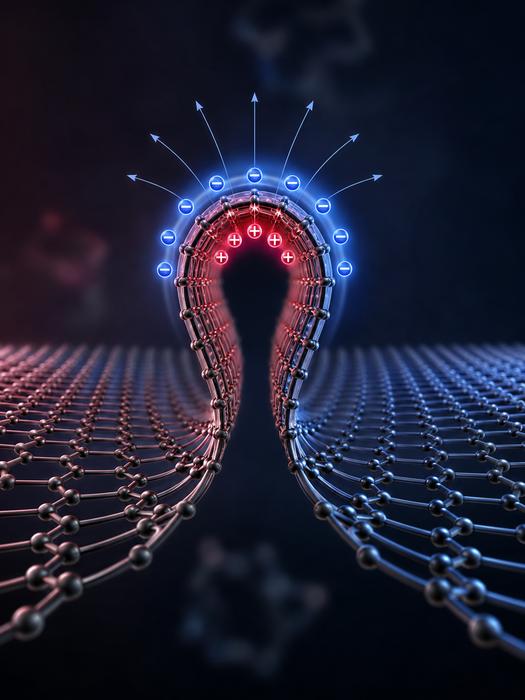
Rice University researchers have shown that sub-nanometer wrinkles in graphene generate flexoelectric charge separation, reshaping local electrical behavior through curvature alone. Extreme bending produces polarization far stronger than in larger systems and may enable geometry-controlled electronics without chemical doping. Published in Advanced Materials.
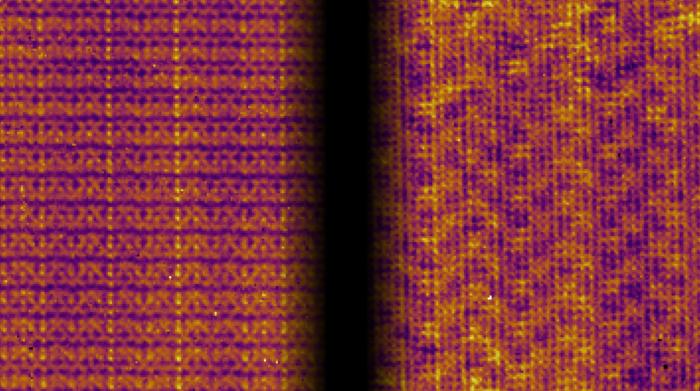
Researchers at OIST and Hiroshima University have shown that a small magnetic field switches the graphene-like quantum material CeTe₃ between competing electronic patterns — striped and checkerboard. Scanning tunneling microscopy revealed the transformation near absolute zero, driven by electronic frustration coupled to magnetism. The findings, published in Nature Communications, offer a new strategy for controlling collective electronic states in quantum materials with potential applications in
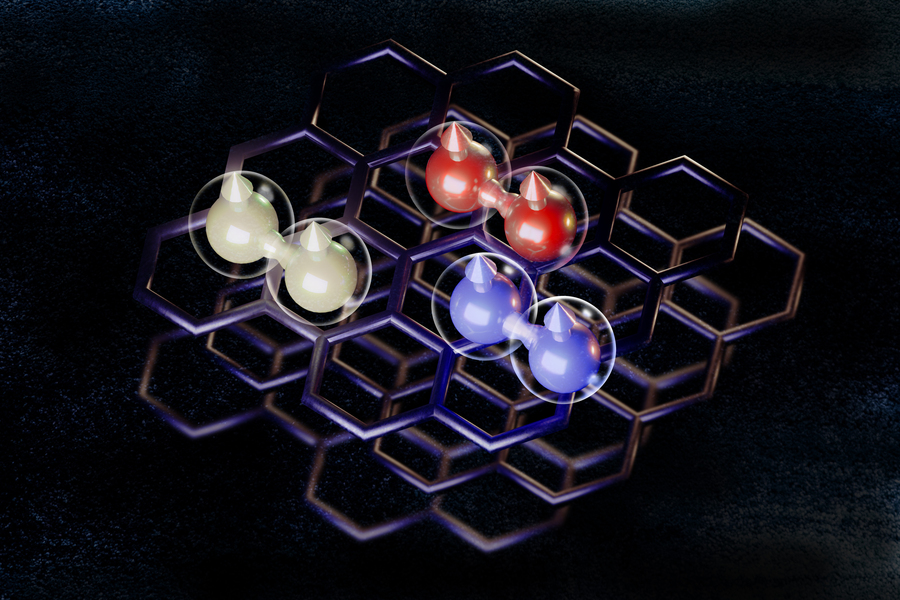
MIT researchers have found that rhombohedral graphene — a naturally occurring staircase-like stack of four or five atomically thin carbon layers found in ordinary graphite — can host multiple distinct superconducting states simultaneously, a rarity among known superconductors. Publishing in Nature, the team reports that three of these states not only survive exposure to magnetic fields up to around 9 tesla (roughly 180,000 times Earth's magnetic field), which would normally destroy supercondu...
This week in nanotech
$108.5M raised
7 funding rounds · 39 deals tracked
New products
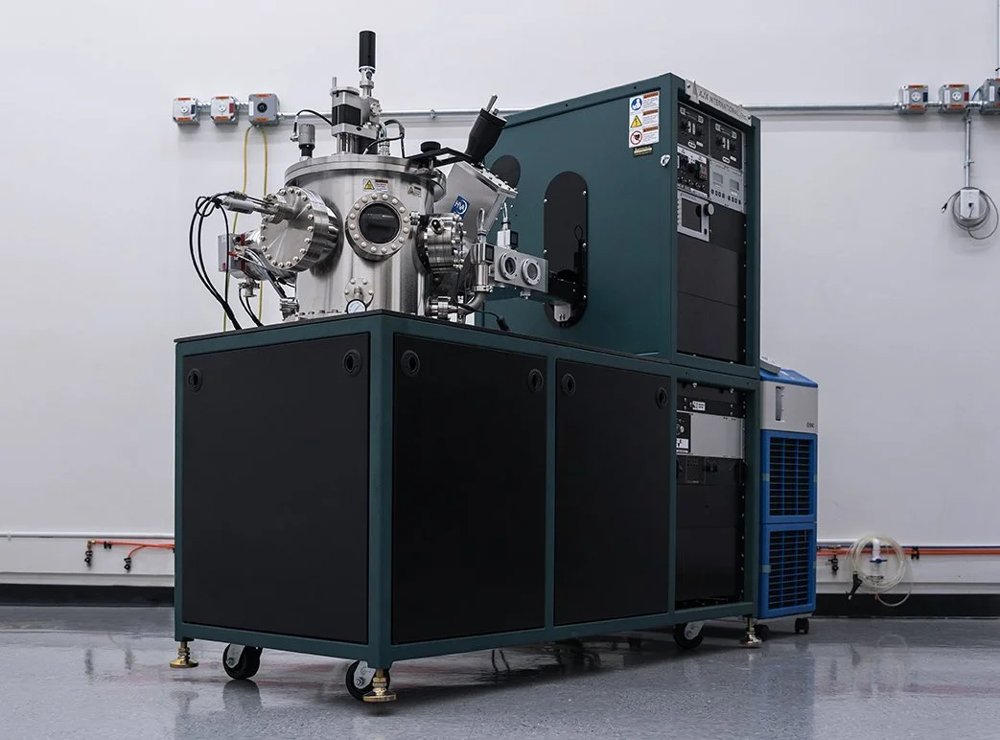 Orion Sputtering Deposition SystemsAJA International Featured
 Ti-WCMBN Nanomaterialia Featured
 GiiiGii
Market insights
Last 30 days: Quantum Technologies drew the most money: $3.17B.
Money raised per month