University of Illinois
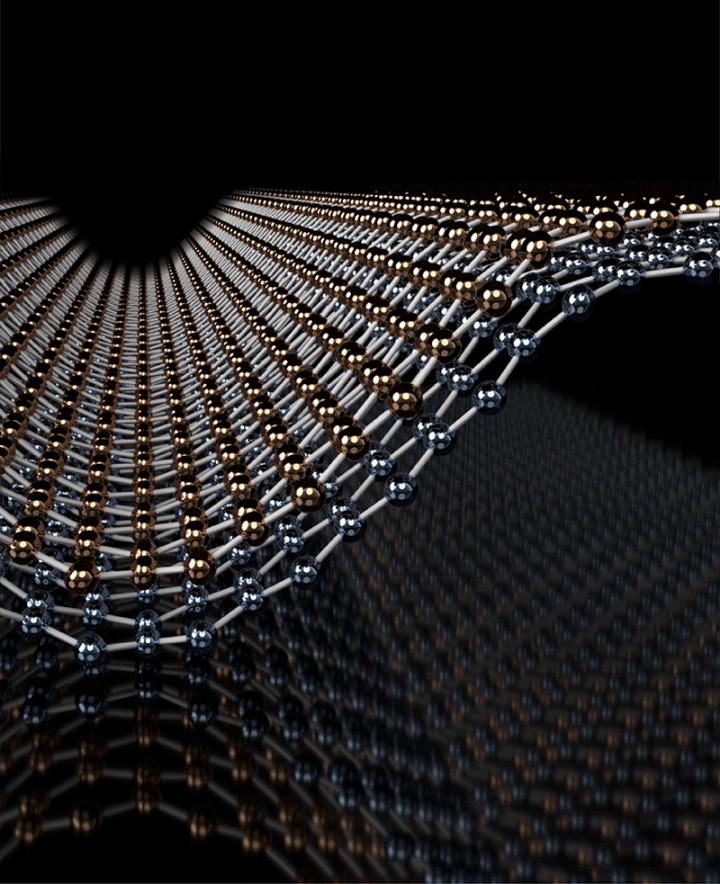
New research by engineers at the University of Illinois combines atomic-scale experimentation with computer modeling to determine how much energy it takes to bend multilayer graphene - a question that has eluded scientists since graphene was first isolated. The findings are reported in the journal Nature Materials.
Graphene - a single layer of carbon atoms arranged in a lattice - is the strongest material in the world and so thin that it is flexible, the researchers said. It is considered one of the key ingredients of future technologies.
Most of the current research on graphene targets the development of nanoscale electronic devices. Yet, researchers say that many technologies - from stretchable electronics to tiny robots so small that they cannot be seen with the naked eye - require an understanding of the mechanics of graphene, particularly how it flexes and bends, to unlock their potential.
"The bending stiffness of a material is one of its most fundamental mechanical properties," said Edmund Han, a materials science and engineering graduate student and study co-author. "Even though we have been studying graphene for two decades, we have yet to resolve this very fundamental property. The reason is that different research groups have come up with different answers that span across orders of magnitude."
The team discovered why previous research efforts disagreed. "They were either bending the material a little or bending it a lot," said Jaehyung Yu, a mechanical science and engineering graduate student and study co-author. "But we found that graphene behaves differently in these two situations. When you bend multilayer graphene a little, it acts more like a stiff plate or a piece of wood. When you bend it a lot, it acts like a stack of papers where the atomic layers can slide past each other."
"What is exciting about this work is that it shows that even though everyone disagreed, they were actually all correct," said Arend van der Zande, a professor of mechanical science and engineering and study co-author. "Every group was measuring something different. What we have discovered is a model to explain all the disagreement by showing how they all relate together through different degrees of bending."
To make the bent graphene, Yu fabricated individual atomic layers of hexagonal boron nitride, another 2D material, into atomic-scale steps, then stamped the graphene over the top. Using a focused ion beam, Han cut a slice of material and imaged the atomic structure with an electron microscope to see where each graphene layer sat.
The team then developed a set of equations and simulations to calculate the bending stiffness using the shape of the graphene bend.
By draping multiple layers of graphene over a step just one to five atoms high, the researchers created a controlled and precise way of measuring how the material would bend over the step in different configurations.
"In this simple structure, there are two kinds of forces involved in bending the graphene," said Pinshane Huang, a materials science and engineering professor and study co-author. "Adhesion, or the attraction of atoms to the surface, tries to pull the material down. The stiffer the material, the more it will try to pop back up, resisting the pull of adhesion. The shape that the graphene takes over the atomic steps encodes all the information about the material's stiffness."
The study systematically controlled exactly how much the material bent and how the properties of the graphene changed.
"Because we studied graphene bent by different amounts, we were able to see the transition from one regime to another, from rigid to flexible and from plate to sheet behavior," said mechanical science and engineering professor Elif Ertekin, who led the computer modeling portion of the research. "We built atomic-scale models to show that the reason this could happen is that the individual layers can slip over each other. Once we had this idea, we were able use the electron microscope to confirm the slip between the individual layers."
The new results have implications for the creation of machines that are small and flexible enough to interact with cells or biological material, the researchers said.
"Cells can change shape and respond to their environment, and if we want to move in the direction of microrobots or systems that have the capabilities of biological systems, we need to have electronic systems that can change their shapes and be very soft as well," van der Zande said. "By taking advantage of interlayer slip, we have shown that the graphene can be orders of magnitude softer than conventional materials of the same thickness."
Ultrasoft slip-mediated bending in few-layer graphene
Edmund Han, Jaehyung Yu, Emil Annevelink, Jangyup Son, Dongyun A. Kang, Kenji Watanabe, Takashi Taniguchi, Elif Ertekin, Pinshane Y. Huang & Arend M. van der Zande
Nature Materials (2019)
DOI: 10.1038/s41563-019-0529-7
Contact information:
Arend van der Zande
Illinois professor of mechanical science and engineering
arendv@illinois.edu
Phone: 217-244-2912
Pinshane Huang
Illinois professor of materials science and engineering
pyhuang@illinois.edu
Phone: 217-300-2574
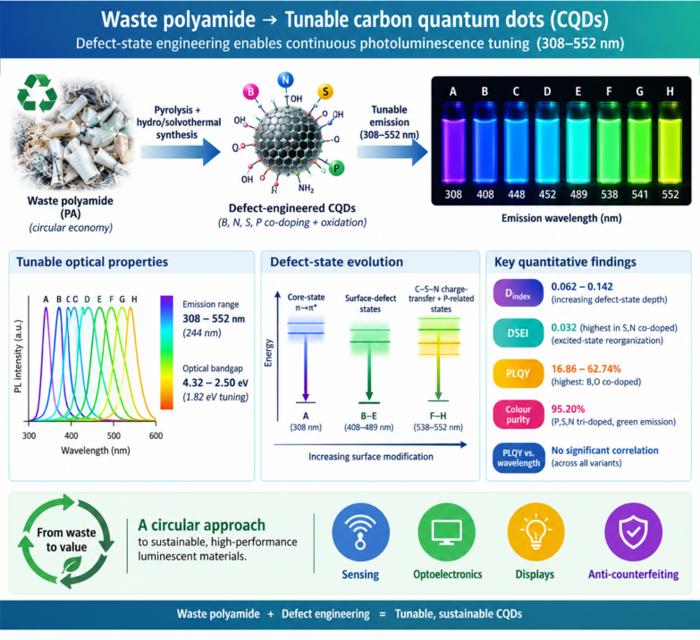
Waste polyamide-derived CQDs show continuous photoluminescence tuning from 308 to 552 nm through sequential defect-state engineering, with optical transition energies decreasing from 4.32 to 2.50 eV. @Christian Ebere Enyoh from Saitama University Carbon quantum dots (CQDs) are fluorescent carbon nanomaterials with potential applications in sensing, optoelectronics, displays, anti-counterfeiting, and environmental technologies. Their optical properties can be adjusted by modifying the carbon...

The researchers used circularly polarized light at normal incidence and found that helicity-dependent photocurrents appeared perpendicular to the crystal’s polarization but vanished when measured parallel to it, supporting a bulk origin of CPGE. @Institute of Science Tokyo The circular photogalvanic effect (CPGE), a phenomenon that generates helicity-dependent photocurrents in noncentrosymmetric materials, can originate purely from a crystal's internal structure without contribution from the...
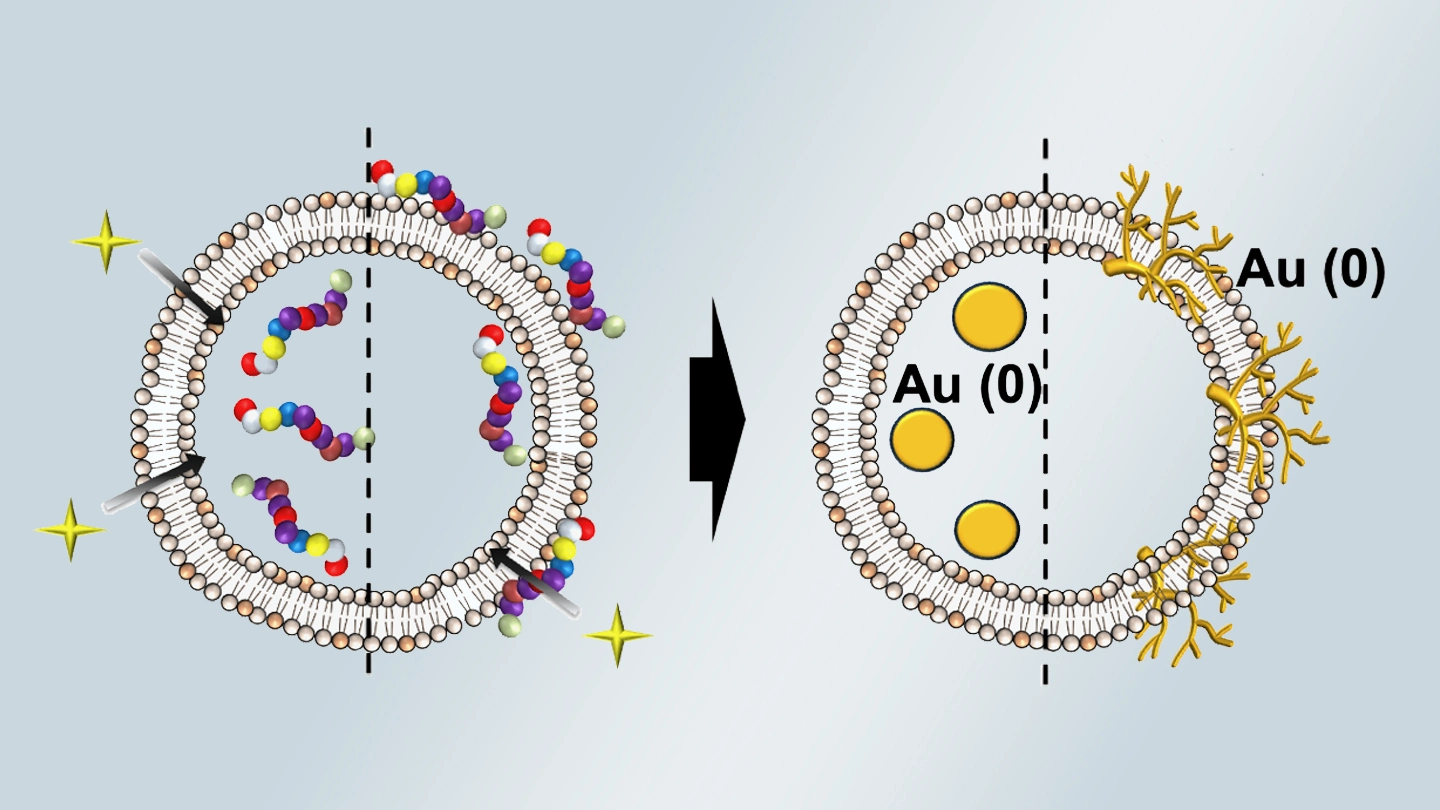
Summary of gold nanoparticle growth programming in liposome based on localization of biomineralization peptide The position of biomineralization peptides within liposomes can influence how gold nanoparticles grow, reports a research team from Institute of Science Tokyo. Peptides localized at the membrane interface promote branched structures, while those confined to the liposome interior favor spherical nanoparticles. The findings offer a new strategy for controlling nanoscale reaction...
