Louisville, 30 October 2026. Infleqtion (NYSE: INFQ) operated its Tiqker optical atomic clock continuously aboard the U.S. Navy's RV Merlin support vessel during the Maritime Big Play Pacific (MBP-P) military exercise, the company announced on October 30, 2026. The demonstration was intended to show quantum timing capabilities in support of navigation.
Infleqtion said it operated Tiqker continuously aboard RV Merlin for two weeks in the Southern California (SOCAL) operating area. The clock ran during the exercise, which the company said was sponsored by the Office of the Under Secretary of War for Research & Engineering.
The exercise included participation from across the U.S. Navy, the U.S. Marine Corps and Australia and UK (AUKUS) partners. Infleqtion described the event as a demonstration of quantum timing capabilities to support navigation.
Infleqtion, based in Louisville, Colo., describes itself as a provider of quantum computing and quantum sensing systems powered by neutral atom technology. The Tiqker clock was also referenced in the company's release as a validated advanced solution available to customers across defense, telecommunications and critical infrastructure sectors.
The release includes forward-looking statements regarding the potential deployment of Tiqker in operationally relevant environments, the expected performance, specifications and stability of the clock, and anticipated applications and platforms for Infleqtion's clocks and sensors.
Source: Infleqtion news
Infleqtion has been awarded £9 million (~$12M) by Innovate UK to continue development of a deployable quantum radio frequency direction finding system under the Quantum Missions Primer programme.
IonQ and Carahsoft Technology Corp. announced a strategic partnership. Carahsoft will serve as IonQ's Public Sector distributor, enabling Government agencies to purchase IonQ technology through its reseller partners.
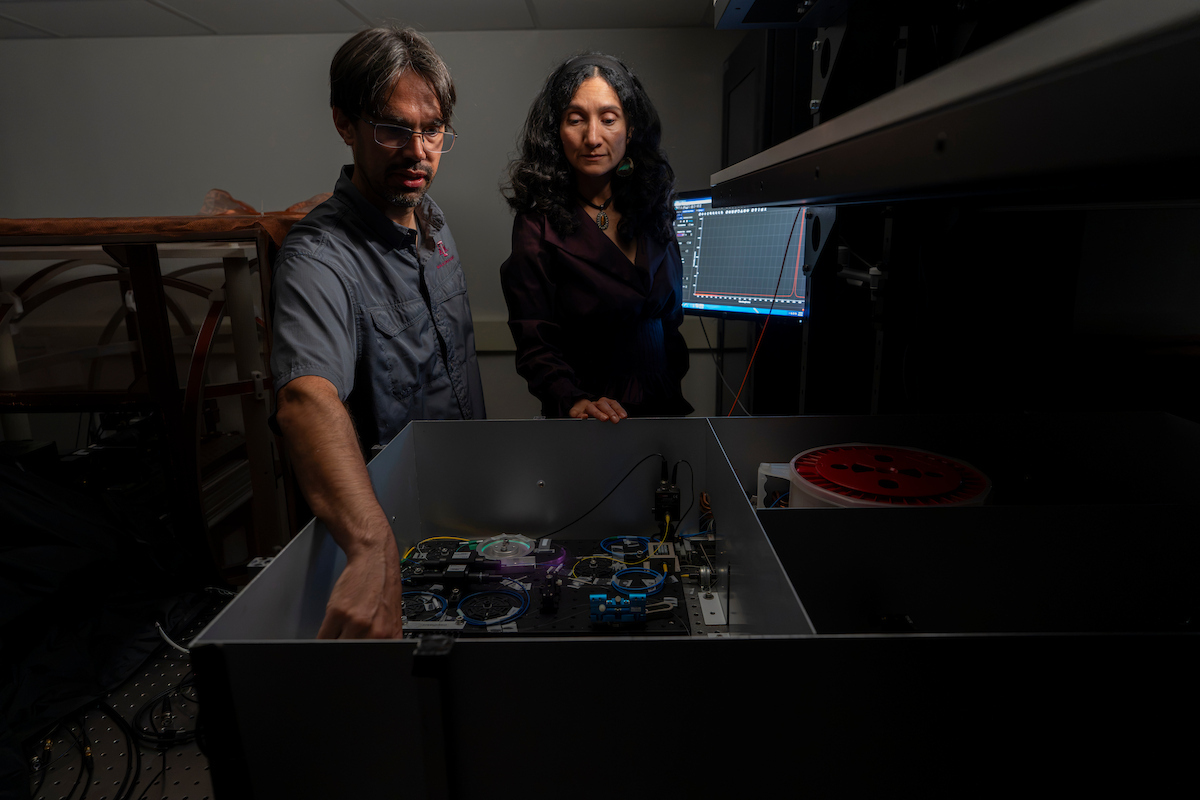
A Texas A&M team has combined two-photon excited image scanning microscopy with super-resolution optical fluctuation imaging (2PE-ISM-SOFI) to resolve cellular structures below 100 nanometers while still imaging deep into intact tissue. The approach, published in the Journal of Biomedical Optics, reaches lateral resolution near 75 nanometers, about five times sharper than conventional two-photon microscopy.
This week in nanotech
$109M raised
3 funding rounds · 18 deals tracked
New products
 Nion-compatible In Situ STEM Holders for Electrical BiasingHummingbird Scientific Featured
 Ti-WCMBN Nanomaterialia Featured
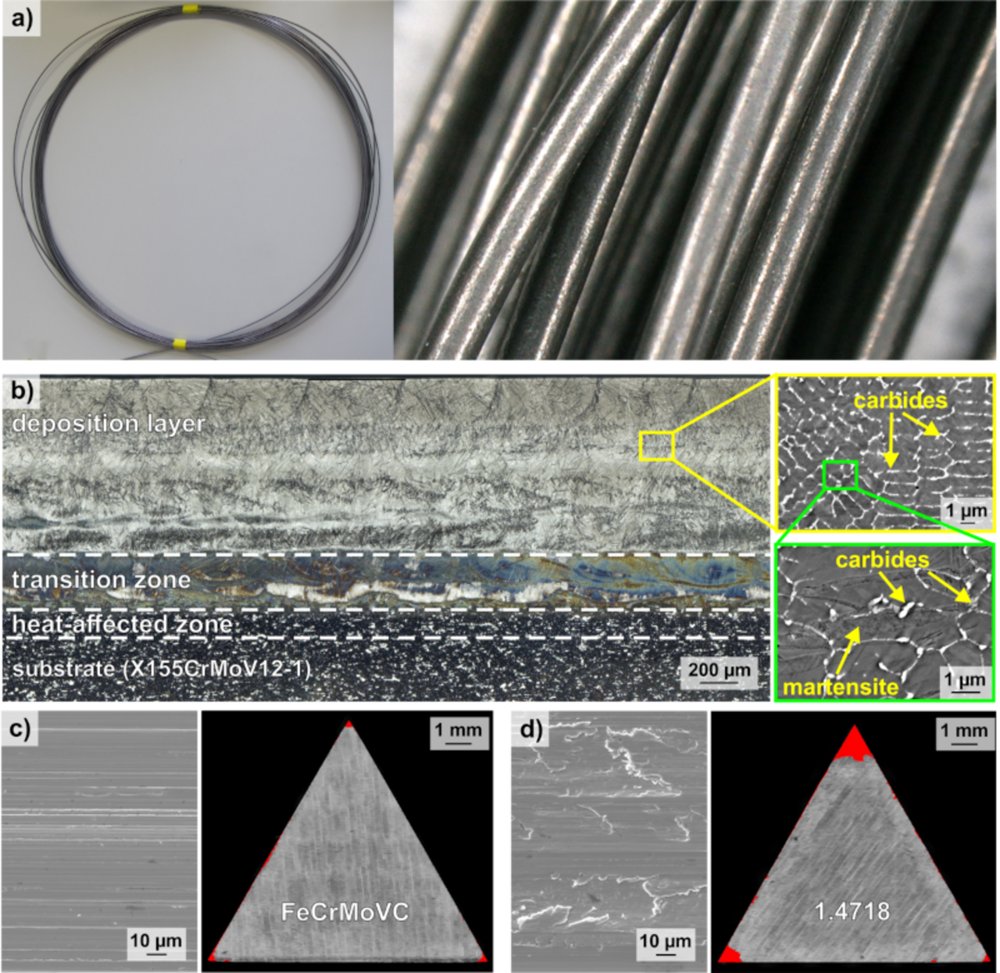 Fe85Cr4Mo8V2C1 wire filler materialLeibniz Institute for Solid State and Materials Research Dresden - IFW Dresden
Market insights
Last 30 days: Semiconductors & Electronics drew the most money: $545M.
Money raised per month