San Diego, 21 October 2026. Monarch Quantum has extended congratulations to Infleqtion on receiving a $20 million NASA follow-on contract supporting the Quantum Gravity Gradiometer Pathfinder (QGGPf). The mission is led by NASA's Jet Propulsion Laboratory in Southern California and is designed to demonstrate the world's first space-based Earth quantum gravity gradient sensor. The award advances the mission into its next phase of hardware development and testing.
Monarch Quantum supports Infleqtion's work on the mission by supplying integrated photonics hardware that delivers precise, stable light required to meet the performance of the sensor.
"NASA's continued investment in this pathfinder mission validates the progress being made to move quantum sensing beyond the laboratory and into demanding operational environments," said Tim Day, Chief Executive Officer and Chairman of Monarch Quantum. "Space-qualified quantum systems require exceptional systems engineering paired with reliability and precision. We are proud to support Infleqtion and NASA in advancing the photonics subsystems needed to make this mission possible."
QGGPf is designed to demonstrate quantum sensor technologies that could inform future gravity-mapping instruments in low-Earth orbit. By measuring subtle variations in Earth's gravitational field, future systems could provide new insight into changes in groundwater, ice, natural resources, and other geophysical conditions, supporting planetary science, environmental resilience, and national security decision-making.
Monarch Quantum develops compact photonics engines that integrate lasers, micro-optical components, fibers, and advanced control electronics into reliable subsystems. For QGGPf, this approach helps translate the highly controlled optical performance required for cold-atom sensing into a compact, rugged, and repeatable platform suitable for the demanding conditions of spaceflight development and testing.
"Quantum sensing is a systems challenge as much as it is a physics challenge," Day added. "The path to deployment depends on bringing together atomic physics, photonics, electronics, packaging, manufacturing, and rigorous qualification. This mission is an important example of the U.S. quantum ecosystem working across that full value chain."
The mission builds on NASA's heritage in space-based gravity mapping, including the GRACE and GRACE-FO missions, as well as prior work by JPL and Infleqtion on the Cold Atom Lab (CAL) aboard the International Space Station. NASA and Infleqtion expect to complete instrument hardware development, expecting to launch in 2030.
Source: Veeco news
Monarch Quantum is supplying integrated photonics hardware for the Quantum Gravity Gradiometer Pathfinder, a NASA mission led by JPL that received a $20 million follow-on contract. The mission is expected to launch in 2030.
UK Research and Innovation is backing British businesses developing quantum technologies with a share of £50 million through its Quantum Technologies Priority Programme. Projects include a quantum railway monitoring system and a handheld quantum eye scanner.

Quantum effects already underpin everyday devices such as transistors, lasers and MRI scanners, yet their full potential remains untapped. Researchers are engineering two-dimensional materials and quantum spin liquids to serve as building blocks for topological quantum computing and more stable qubits, combining theoretical modelling with material fabrication. Other efforts use quantum sensors to probe dark matter and read superconducting qubit data without disturbing it.
This week in nanotech
$110M raised
9 funding rounds · 58 deals tracked
New products
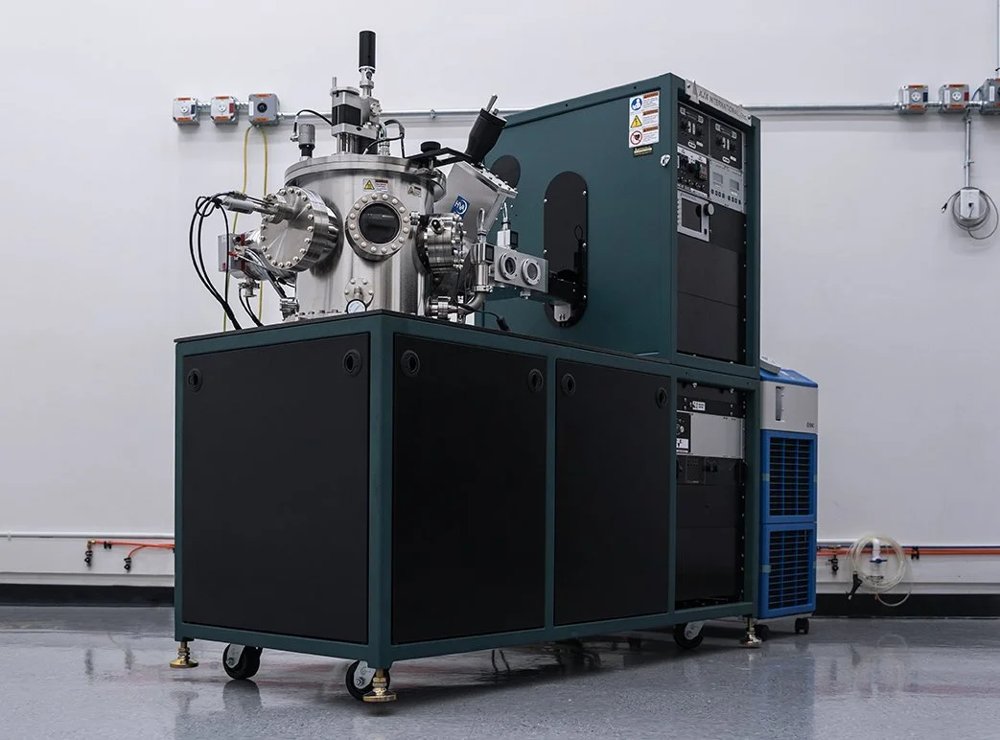 Orion Sputtering Deposition SystemsAJA International Featured
 Ti-WCMBN Nanomaterialia Featured
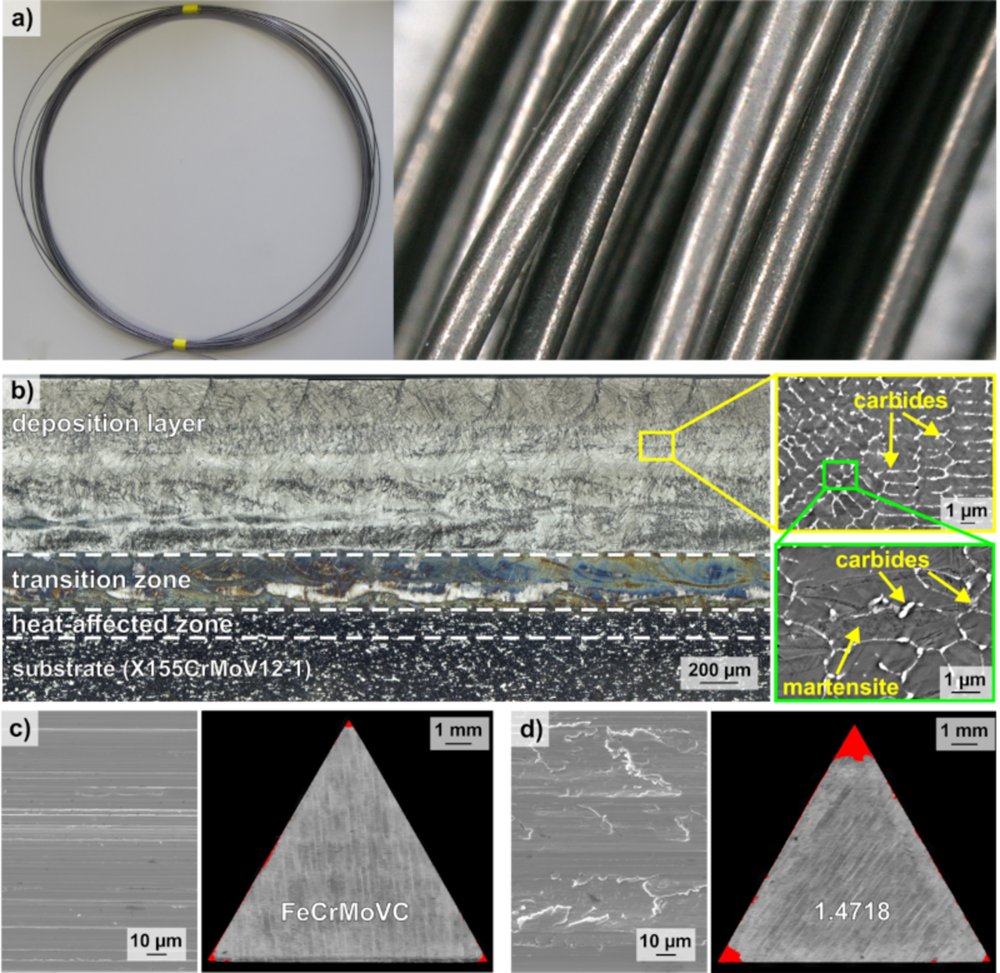 Fe85Cr4Mo8V2C1 wire filler materialLeibniz Institute for Solid State and Materials Research Dresden - IFW Dresden
Market insights
Last 30 days: Quantum Technologies drew the most money: $3.17B.
Money raised per month