
Quantum technologies sound like science fiction. In a sense, they are. Technologies that use quantum effects can seem to make the impossible possible. But in another sense, they’re very real – because they already exist.
While some quantum technologies, like quantum computing, are still in the early stages of their enormous promise, others are so common that they’re almost mundane. The billions of transistors—tiny electrical switches—inside smartphones and other modern devices couldn’t have been built without understanding quantum mechanics.
Another example is lasers, which were predicted by quantum mechanics in the early 20th century, decades before the first one was built. Today, lasers are a quantum technology that’s become entirely commonplace—you can buy one on a keychain for less than the price of a meal.
‘One of the most impressive examples of quantum sensors is MRI machines,’ says Jose Lado, a physics professor at Aalto University. ‘We take them for granted, but they let you see inside the body with a precision that was unthinkable before. To me, they’re truly a science fiction achievement of quantum technology.’
Magnetic resonance imaging, or MRI for short, works by detecting radio waves given off by the nuclei of hydrogen atoms in a magnetic field. Lado explains that these waves can only have very specific frequencies. It’s as though each nucleus can only hum at a specific pitch based on how strong the magnetic field is around it.
Quantum mechanics is the reason that works—it’s the cornerstone of MRI. ‘If you’re able to map all those frequencies, then you can create a three-dimensional map inside the body. Quantum mechanics is what sets those frequencies,’ he says.
Combining materials can create entirely new behaviours
Lado is working to develop materials ‘that have quantumness at macroscopic scales,’ which could serve as the building blocks for quantum sensing, quantum computing, or other technologies. His team do theoretical modelling to help understand existing quantum materials and predict which new formulations and configurations might be worth pursuing. One effort he’s focusing on is designing quantum materials that could be used to make a topological quantum computer. If they can be built, topological quantum computers would be free from errors, sidestepping a major challenge in scaling up quantum computing.
Theoretical modelling can help determine which avenues to pursue, but someone has to figure out how to build and test the materials. Lado collaborates with Peter Liljeroth, a physics professor at Aalto, whose team specializes in engineering quantum materials.
‘What we’re trying to do is come up with new kinds of quantum materials for devices that don’t exist yet,’ says Liljeroth.
A lot of Liljeroth’s and Lado’s work involves materials that are just a single atom thick. Many of these two-dimensional materials have remarkable properties of their own, but Liljeroth and Lado are especially curious about what happens when they’re brought together in different combinations.
‘It’s like a big toolbox of materials with interesting properties. That’s our starting point, and we want to combine them. We want to controllably bring them into intimate contact and create properties that don’t exist together in nature,’ says Liljeroth. Doing so would give scientists new tools to understand these materials and their properties, as well as the building blocks to push forward cutting-edge technologies.
A theoretical material could unlock quantum technologies
Liljeroth is also working on another type of material, quantum spin liquids, which can give us insights into fundamental questions and could help scientists build more stable, scalable qubits, among other possible uses. He describes them roughly as ‘a magnetic material that’s never magnetic.’
In a conventional magnet, all the atoms have the same magnetic alignment, so their north ends all line up. The atoms in a quantum spin liquid also have a magnetic alignment, but they are kept in a state that preserves their quantum properties: the atoms are entangled with each other, and each atom simultaneously has every possible alignment.
It’s a bit like a parade where everyone is linked arm-in-arm but each person is also somehow facing backwards and forwards at the same time. The upshot is that everybody is pulling both ways and nobody knows which way to march.
Nobody knows if quantum spin liquids exist in two-dimensional materials. ‘Jose can predict them in quantum mechanical models,’ says Liljeroth. But theoretical models assume ideal conditions and might make simplifications.
‘In real life, we don’t have model systems. We have real materials. And the question is which real material, if any, would be a quantum spin liquid. That’s what we’re trying to find out,’ he says.
If the team manage to create quantum spin liquids and understand them, it could open the door to other breakthroughs that scientists are working hard to achieve, like high temperature superconductivity.
Uncharted research paths could lead to tomorrow’s technologies
The path towards sci-fi technologies often isn’t obvious, so it’s good to set out in unexpected directions. That’s precisely what Aalto quantum scientist Sorin Paraoanu does in his effort to push forward the boundaries of the possible.
One of his research projects uses quantum sensors to try to detect hypothetical particles that might make up dark matter, one of the universe’s great enigmas. His team have also used developed a way to detect microwave pulses without absorbing them, a quantum trick that could help read data from quantum computers without disturbing their fragile state..
The team is also working on optical control technologies for superconducting qubits.
‘Then you could scale up to many more qubits, and you might not heat up a complex superconducting quantum system as much,’ he says. That’s important because heat disrupts the ‘quantumness’ of qubits, making it one of the major obstacles to scaling up quantum computers.
The truth is that it’s impossible to imagine what quantum materials and quantum technologies could unlock.
‘When the transistor was invented, nobody thought it was going to transform society the way it has,’ says Lado.
‘Nobody imagined smartphones or the way they let us access nearly all the information in the world and communicate with anybody. Quantum technologies might go in directions that are unthinkable now, but once they arrive they’ll feel unavoidable and completely natural in the way that we now feel that it’s natural to have smartphones and MRI machines.’
IonQ and the University of Cambridge have opened the first-ever university-based IonQ Quantum Innovation Centre at the Ray Dolby Centre, home of the Cavendish Laboratory. The Centre includes nine inaugural research projects.
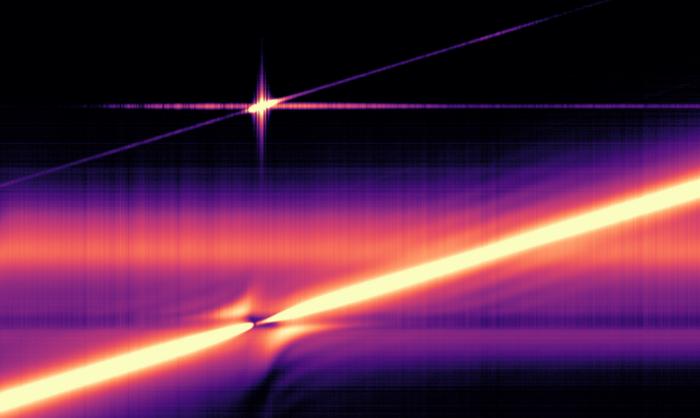
Researchers at the Max Planck Institute for the Science of Light and Leibniz University Hannover have achieved strong coupling between light and long-lived acoustic vibrations in an optical fiber for the first time, using stimulated Brillouin scattering at 4 K without any optical or mechanical resonator. A measurable gap in the spectral response confirms the effect, which typically appears only in cavity systems.
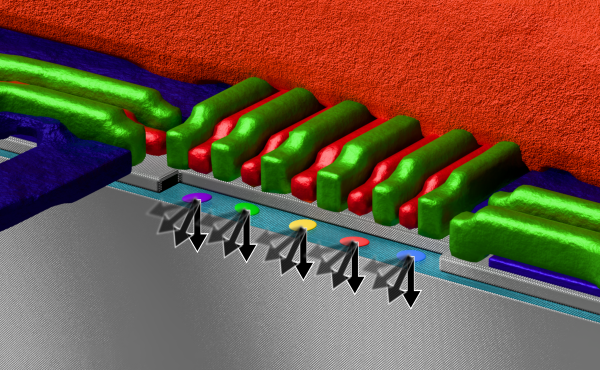
Silicon spin qubits usually lose accuracy when many qubits are driven in parallel, a barrier to scalable quantum processors. Writing in Nature Physics, RIKEN researchers traced the main error source to AC Stark shifts from shared microwave control signals. Their pairwise phase calibration protocol restored gate fidelities above 99.99% for up to three simultaneous qubits, and about 99.9% across all five, near fault-tolerant requirements.