top of page
NEWSROOM


HKU Engineering scholar demonstrates the smallest all-printed infrared photodetectors to date
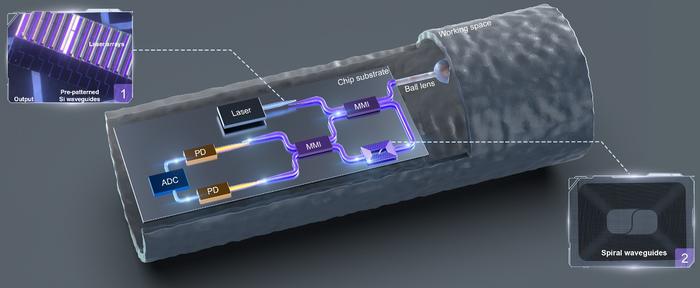
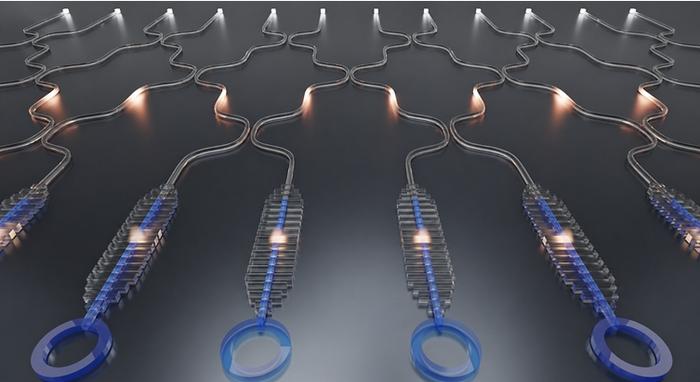
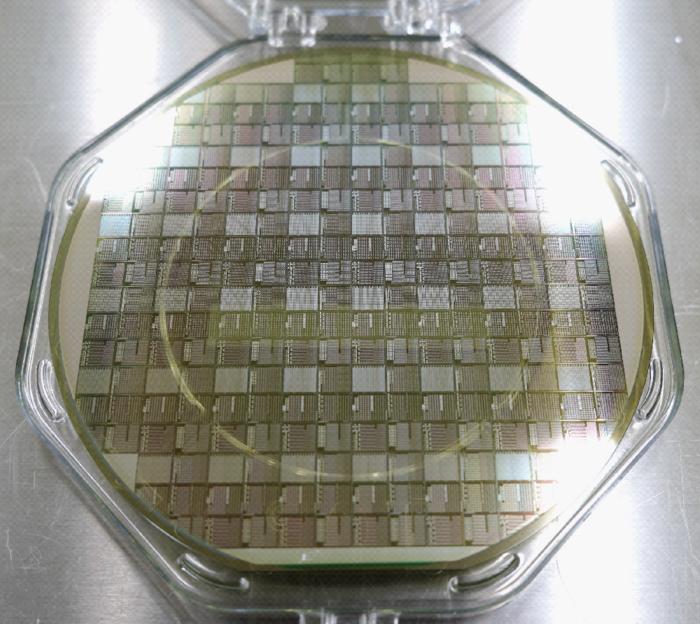
A research team led by Professor Leo Tianshuo Zhao from the Department of Electrical and Electronic Engineering at the Faculty of Engineering, University of Hong Kong (HKU), has developed the world’s smallest fully printed infrared photodetectors, which are an innovative room-temperature nano-printing platform that overcomes the limitations of traditional silicon-based technology. Near-infrared (NIR) technology is essential for applications such as autonomous systems, biomedi
55 minutes ago2 min read


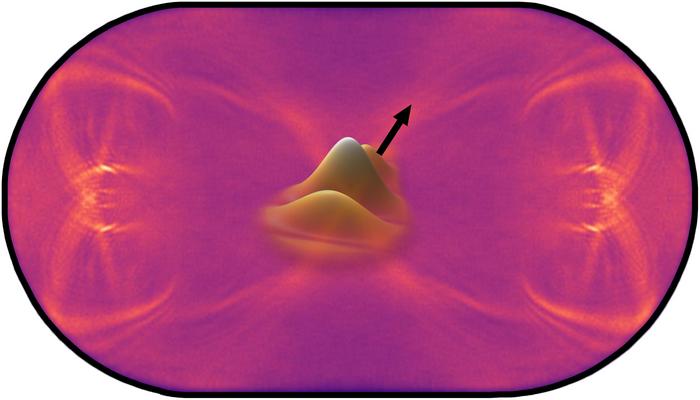
Electrons lag behind the nucleus
One of the great successes of 20th-century physics was the quantum mechanical description of solids. This allowed scientists to understand for the first time how and why certain materials conduct electric current and how these properties could be purposefully modified. For instance, semiconductors such as silicon could be used to produce transistors, which revolutionized electronics and made modern computers possible. To be able to mathematically capture the complex interplay
1 hour ago4 min read


Growing Mesocrystals Through Nanoplatelet Oriented Sliding and Attachment
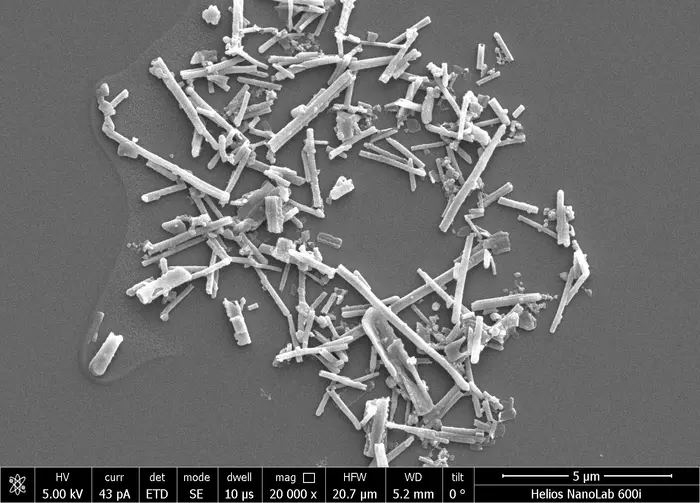
Nanosize platelets of an aluminum material slide and join in a staggered orientation to form larger crystals
2 days ago2 min read


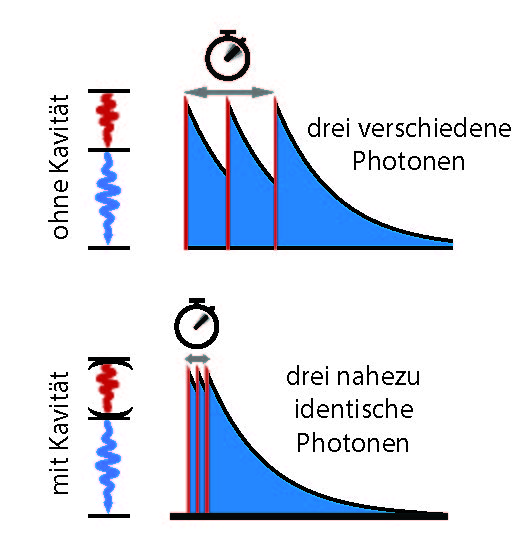
A Clear Signal Emerging from Quantum Noise
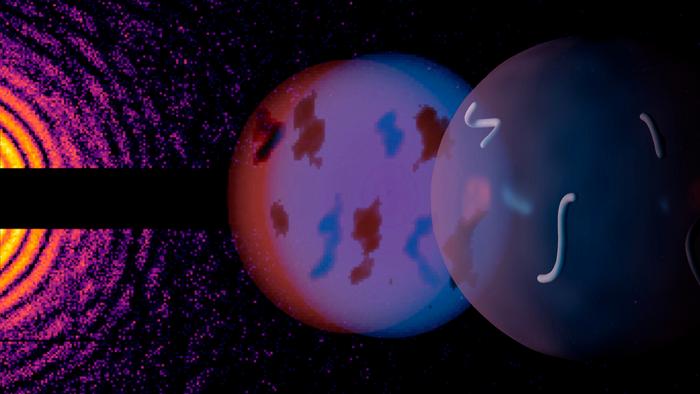
Surprising signals can arise from the coupling of light particles.
2 days ago4 min read


3D-printed helixes show promise as THz optical materials
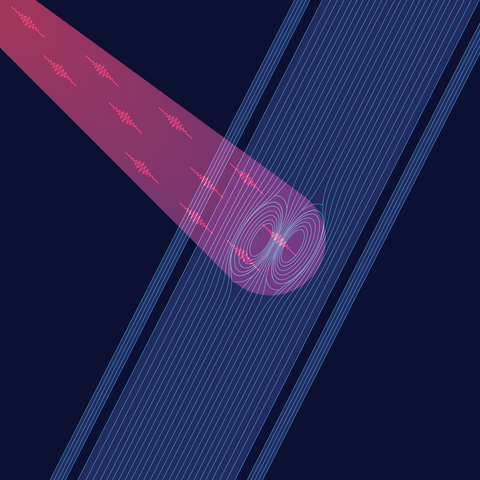
Researchers at Lawrence Livermore National Laboratory (LLNL) have optimized and 3D-printed helix structures as optical materials for Terahertz (THz) frequencies, a potential way to address a technology gap for next-generation telecommunications, non-destructive evaluation, chemical/biological sensing and more. The printed microscale helixes reliably create circularly polarized beams in the THz range and, when arranged in patterned arrays, can function as a new type of Quick R
Dec 18, 20254 min read


Scientists create stable, switchable vortex knots inside liquid crystals
In a new Nature Physics study, researchers created particle-like so-called “vortex knots” inside chiral nematic liquid crystals, a twisted fluid similar to those used in LCD screens. For the first time, these knots are stable and could be reversibly switched between different knotted forms, using electric pulses to fuse and split them.
Dec 17, 20255 min read


Laser light and the quantum nature of gravity
When two black holes merge or two neutron stars collide, gravitational waves can be generated. They spread at the speed of light and cause tiny distortions in space-time. Albert Einstein predicted their existence, and the first direct experimental observation dates from 2015. Now, Prof. Ralf Schützhold, theoretical physicist at the Helmholtz-Zentrum Dresden-Rossendorf (HZDR), is going one step further. He has conceived an experiment through which gravitational waves can not o
Dec 17, 20253 min read


Electrodes created using light
Visible light can be used to create electrodes from conductive plastics completely without hazardous chemicals. This is shown in a new study carried out by researchers at Linköping and Lund universities, Sweden. The electrodes can be created on different types of surfaces, which opens up for a new type of electronics and medical sensors.
Dec 15, 20252 min read


New window insulation blocks heat, but not your view
The group’s MOCHI material is a silicone gel with a twist: The gel traps air through a network of tiny pores that are many times thinner than the width of a human hair. Those tiny air bubbles are so good at blocking heat that you can use a MOCHI sheet just 5 millimeters thick to hold a flame in the palm of your hand.
Dec 12, 20253 min read
bottom of page