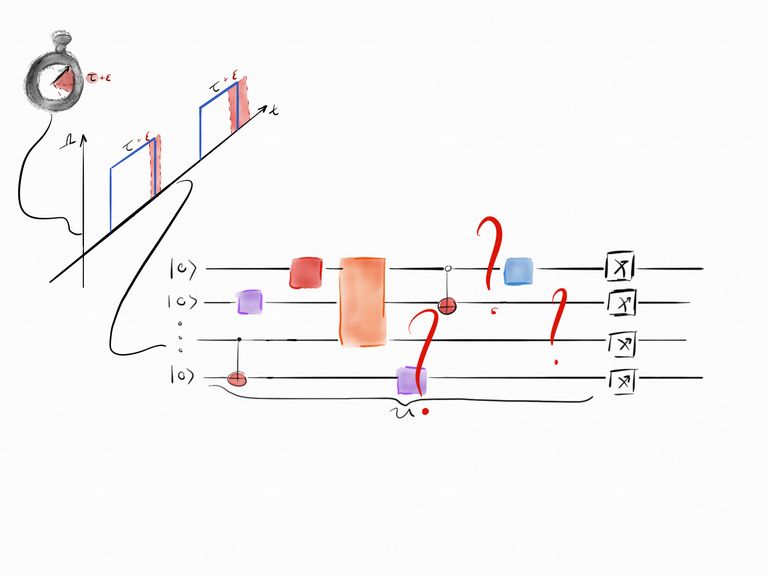
There are different ideas about how quantum computers could be built. But they all have one thing in common: you use a quantum physical system - for example individual atoms - and change their state by exposing them to very specific forces for a specific time. However, this means that in order to be able to rely on the quantum computing operation delivering the correct result, you need a clock that is as precise as possible.
But here you run into problems: perfect time measurement is impossible. Every clock has two fundamental properties: a certain precision and a certain time resolution. The time resolution indicates how small the time intervals are that can be measured - i.e. how quickly the clock ticks. Precision tells you how much inaccuracy you have to expect with every single tick.
The research team was able to show that since no clock has an infinite amount of energy available (or generates an infinite amount of entropy), it can never have perfect resolution and perfect precision at the same time. This sets fundamental limits to the possibilities of quantum computers.
Quantum calculation steps are like rotations
In our classical world, perfect arithmetic operations are not a problem. For example, you can use an abacus in which wooden balls are threaded onto a stick and pushed back and forth. The wooden beads have clear states, each one is in a very specific place, if you don't do anything the bead will stay exactly where it was.
And whether you move the bead quickly or slowly does not affect the result. But in quantum physics it is more complicated.
"Mathematically speaking, changing a quantum state in a quantum computer corresponds to a rotation in higher dimensions," says Jake Xuereb from the Atomic Institute at the Vienna University of Technology in the team of Marcus Huber and first author of the first paper. "In order to achieve the desired state in the end, the rotation must be applied for a very specific period of time. Otherwise you turn the state either too short or too far."
Entropy: Time makes everything more and more messy
Marcus Huber and his team investigated in general which laws must always apply to every conceivable clock. "Time measurement always has to do with entropy," explains Marcus Huber. In every closed physical system, entropy increases and it becomes more and more disordered. It is precisely this development that determines the direction of time: the future is where the entropy is higher, the past is where the entropy was even lower.
As can be shown, every measurement of time is inevitably associated with an increase in entropy: a clock, for example, needs a battery, the energy of which is ultimately converted into frictional heat and audible ticking via the clock's mechanics - a process in which a fairly ordered state occurs the battery is converted into a rather disordered state of heat radiation and sound.
On this basis, the research team was able to create a mathematical model that basically every conceivable clock must obey. "For a given increase in entropy, there is a tradeoff between time resolution and precision," says Florian Meier, first author of the second paper. "That means: Either the clock works quickly or it works precisely – both are not possible at the same time."
Limits for quantum computers
This realization now brings with it a natural limit for quantum computers: the resolution and precision that can be achieved with clocks limits the speed and reliability that can be achieved with quantum computers. "It's not a problem at the moment," says Marcus Huber. "Currently, the accuracy of quantum computers is still limited by other factors, for example the precision of the components used or electromagnetic fields. But our calculations also show that today we are not far from the regime in which the fundamental limits of time measurement play the decisive role."
Therefore, if the technology of quantum information processing is further improved, one will inevitably have to contend with the problem of non-optimal time measurement. But who knows: Maybe this is exactly how we can learn something interesting about the quantum world.
References
The Impact of Imperfect Timekeeping on Quantum Control
Jake Xuereb, Florian Meier, Paul Erker, Mark T. Mitchison, Marcus Huber
https://arxiv.org/abs/2301.10767
Fundamental accuracy-resolution trade-off for timekeeping devices
Florian Meier, Emanuel Schwarzhans, Paul Erker, Marcus Huber
Quantinuum reported third quarter 2026 financial results and raised its 2026 revenue outlook after landing its largest cloud agreement. The company also unveiled a roadmap for its Nexus developer platform.
IonQ reported record third quarter revenue of $173.8 million, up 336 percent year over year, and raised full year 2026 guidance to $505 to $515 million on 110 percent quantum computing growth. Backlog more than doubled to $1.2 billion, with demand led by Superion 256 system deployments, including NVIDIA's first on-premise quantum computer. The company also advanced to Stage C of DARPA's Quantum Benchmarking Initiative and acquired Elisity to extend quantum security.
IonQ announced a partnership with QuantumCT, Connecticut's statewide quantum initiative, which will purchase access to IonQ's trapped-ion quantum computers for state organizations. The contract includes more than 150 hours of cloud runtime.
This week in nanotech
$10.2M raised
1 funding round · 13 deals tracked
New products
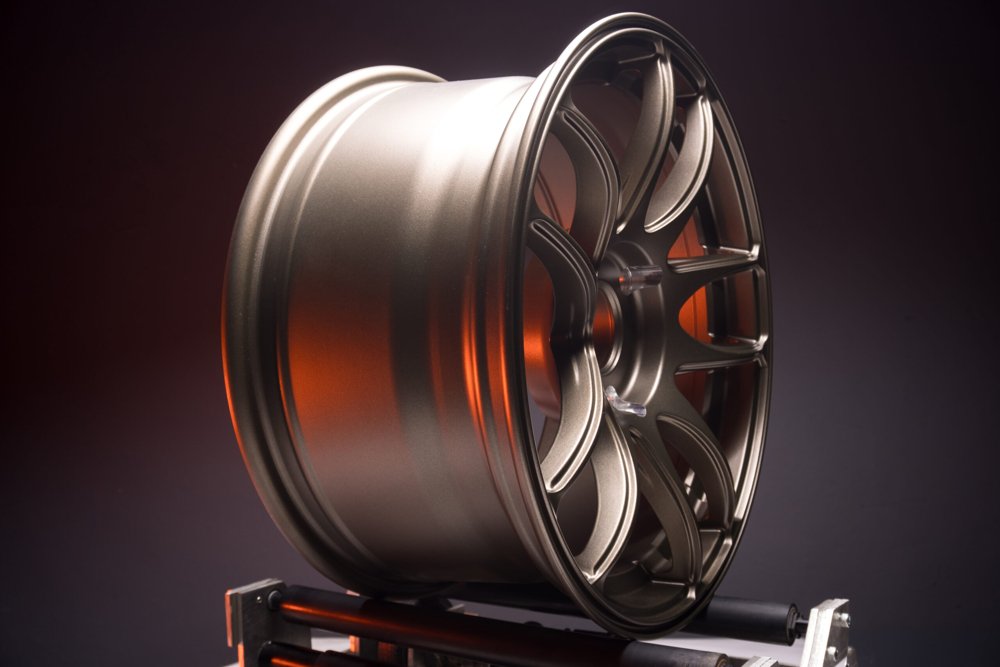 Ti-WCMBN Nanomaterialia Featured
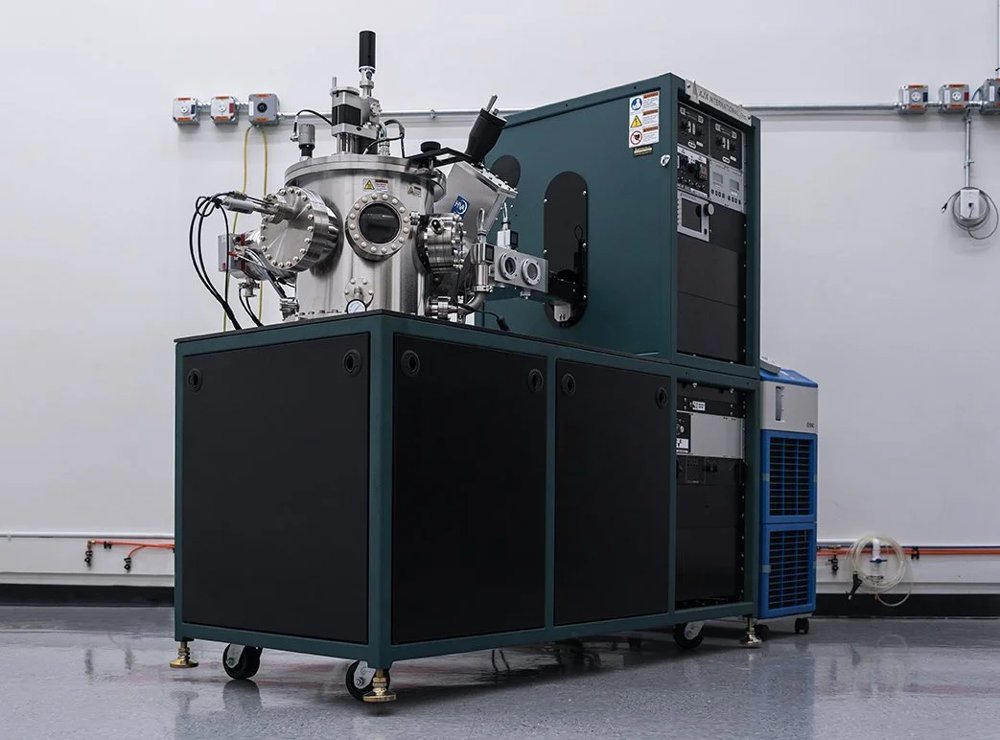 Orion Sputtering Deposition SystemsAJA International Featured
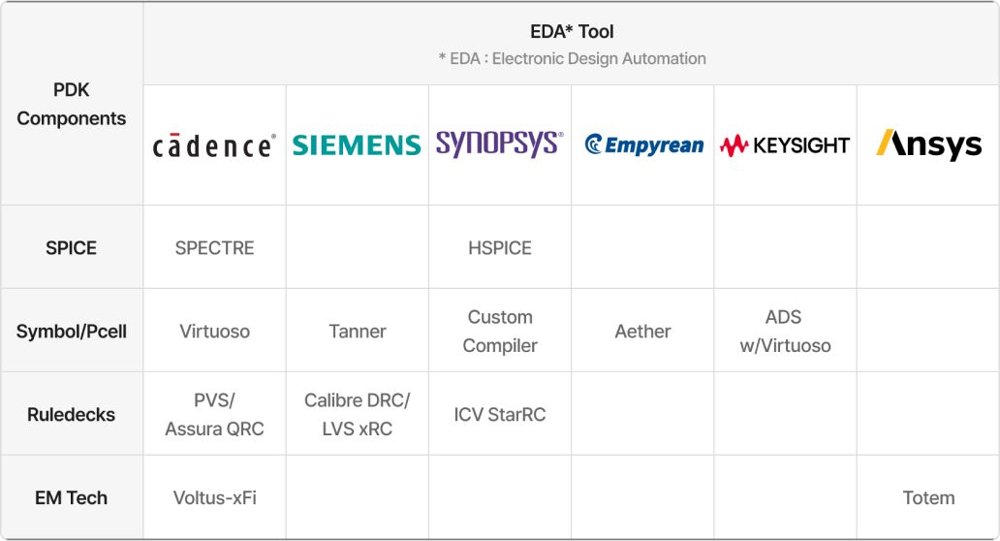 PDK (Process Design Kit)DB HiTek
Market insights
Last 30 days: Quantum Technologies was the busiest vertical: 52 of 174 events (30%).
Money raised per month