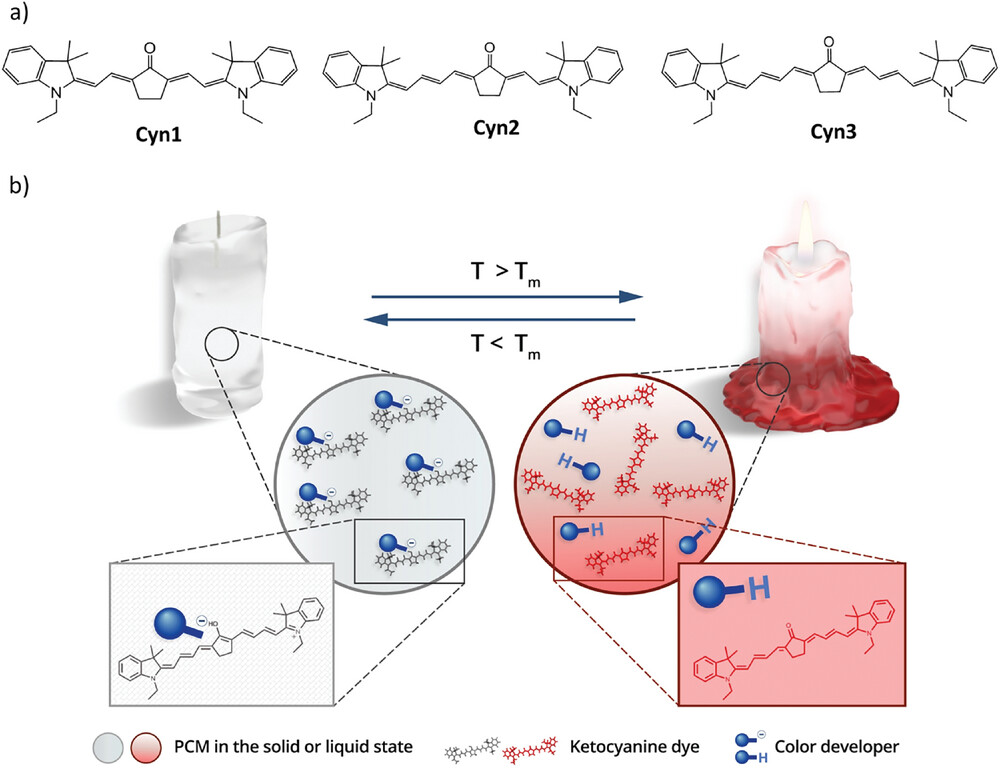
Scientists at ICN2 have developed an innovative material based on a solution of fluorescent dyes (ketocyanines) and phase-change materials (PCM). This combination enables a reversible and controllable colour change in response to temperature-induced solid-liquid transitions. These findings pave the way for the development of a wide range of new technologies.
Thermochromic materials are substances that can change colour, either reversibly or irreversibly, in response to variations in temperature. These modifications can be due to changes in their chemical structure or in the way they interact with light. This property makes them extremely useful in a variety of applications, such as smart windows that regulate the amount of light entering the room, or smart inks that help preventing counterfeiting of banknotes and other products.
Researchers from the ICN2 Nanostructured Functional Materials Group have recently developed a new type of thermochromic material based on a group of fluorescent dyes known as ketocyanines, synthesised by the group of Prof. Mar Puyol (UAB) and collaborators. It also incorporates phase-change materials (PCM), which are capable of absorbing and emitting heat when switching between solid/liquid states. This combination allows for more varied and adjustable colour changes in response to temperature. The study, led by Dr Claudio Roscini and CSIC Researcher Prof. Daniel Ruiz-Molina, has been published in the journal Advanced Optical Materials.
“Unlike conventional thermochromic materials, which only allow colour changes in certain regions of the light spectrum (such as ultraviolet and visible light) and usually become colourless when heated, ketocyanine-based thermochromic mixtures allow a much wider range of colour changes and become coloured when the mixture is heated,” say Noel Muñoz and Dr Alex Julià, who contributed to the experimental development. By modifying certain factors, such as the proportions and types of their components (e.g., colour developer, PCM), the researchers were able to make these dyes absorb light in the near-infrared range. This means that, unlike conventional materials, inks made from these new materials can change from colourless to a specific colour when heated.
Another major advantage is that they can be incorporated into cellulose paper or capsules to form leakage-free solid materials, more relevant for practical applications. In addition, they have shown the ability to change colour when exposed to substances such as ammonia or certain acid vapours, further increasing their versatility for various applications (gas/pH sensors).
The list of potential applications is long. In addition to the already mentioned uses, such as smart windows and invisible inks, areas in which the Nanostructured Functional Materials Group is well known, thanks to the successful spin-offs Futurechromes and Distinkt, other potential applications could involve food packaging. In this context, thermochromic materials could be used to monitor real-time temperature or pH to improve preservation.
Reference
Ketocyanine-Based Materials for Near Infrared-to-Visible Thermochromism
Alex Julià López, Noel Muñoz Pérez, Ruslan Magerramov, Mar Puyol, Ferran Crugeira, Sergey Miltsov, Daniel Ruiz-Molina, Claudio Roscini
https://advanced.onlinelibrary.wiley.com/doi/10.1002/adom.202401411
Catalan Institute of Nanoscience and Nanotechnology (ICN2)
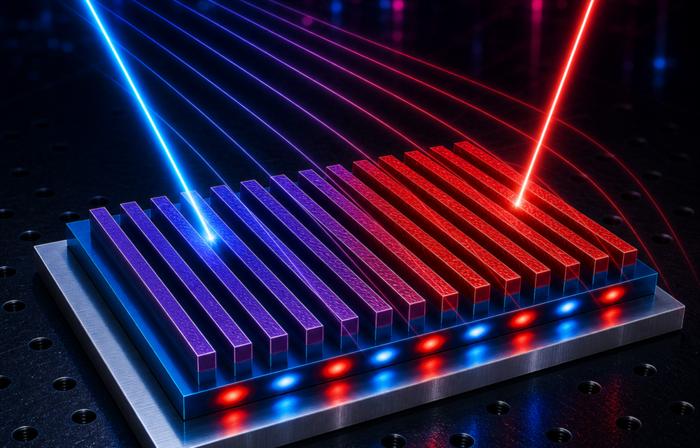
certain wavelength and direction will also emit heat in the same ways. This fundamental relationship, known as reciprocity, limits our ability to independently control heat absorption and heat emission. But if absorption and emission could be separated, engineers could design devices that absorb heat from one direction while emitting it in another. By ‘steering’ thermal energy, they could create more efficient thermal management, energy conversion, infrared sensing, and thermal communicati...
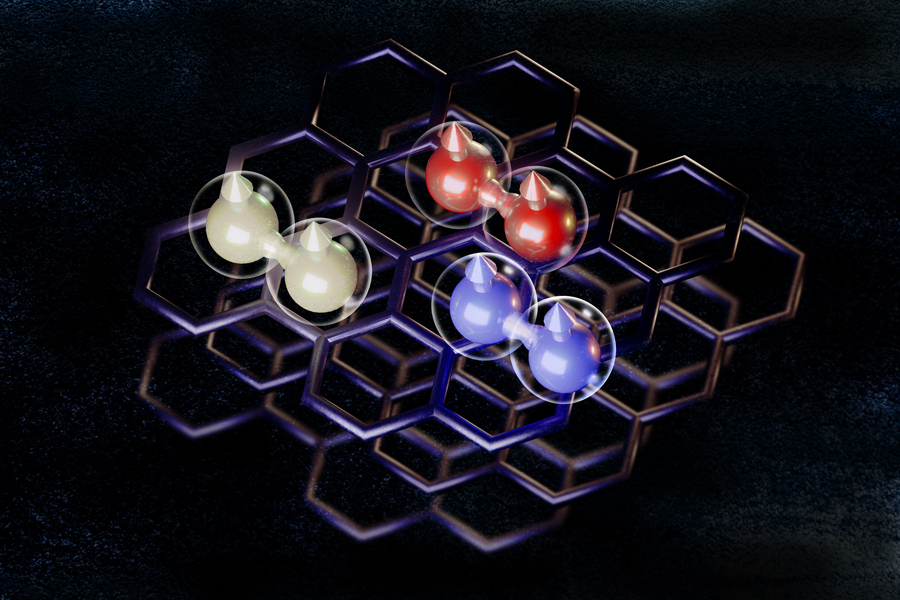
MIT researchers have found that rhombohedral graphene — a naturally occurring staircase-like stack of four or five atomically thin carbon layers found in ordinary graphite — can host multiple distinct superconducting states simultaneously, a rarity among known superconductors. Publishing in Nature, the team reports that three of these states not only survive exposure to magnetic fields up to around 9 tesla (roughly 180,000 times Earth's magnetic field), which would normally destroy supercondu...
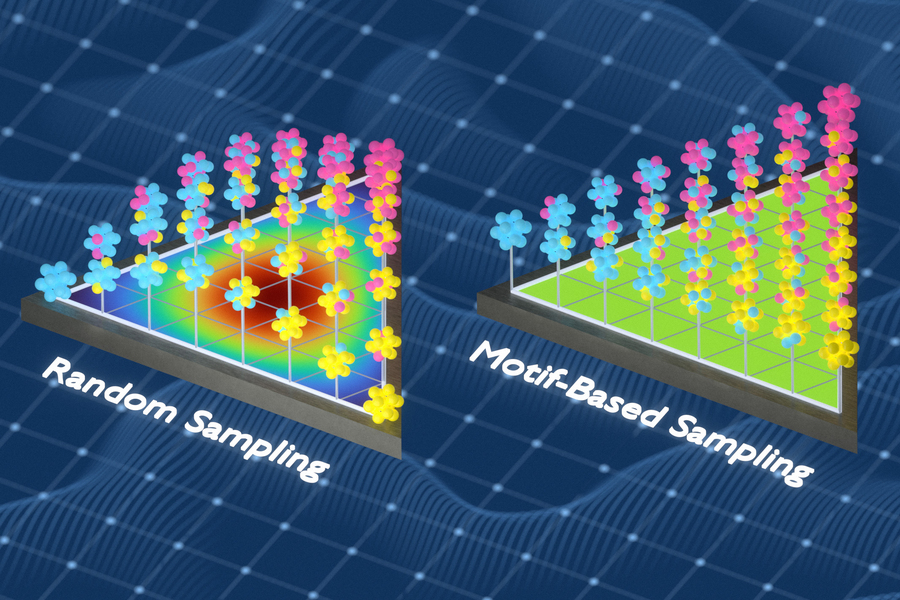
MIT researchers have developed a new approach that dramatically improves the modeling of chemically disordered metal alloys, a long-standing challenge in materials science. Traditional simulation techniques struggle with the complex atomic arrangements in real-world alloys. The team addressed this by creating smarter training datasets for machine-learning models that better capture the diverse local chemical environments in disordered materials. Using information theory to generate more repre...
