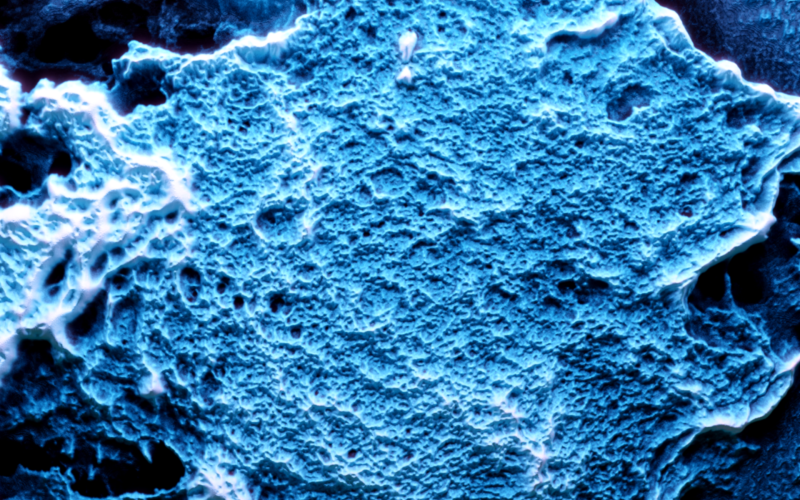
Neutron scattering techniques were used as part of a study of a novel nanoreactor material that grows crystalline hydrogen clathrates, or HCs, capable of storing hydrogen. The researchers, from ORNL and the University of Alicante, or UA, in Spain were inspired by nature, where methane hydrates grow in the pores and voids within natural sediments.
The nanoreactor material consists of a chemically optimized, porous activated carbon that can confine hydrogen at the nanoscale with thermal stability as high as -27.7 degrees Fahrenheit. The team used pure liquid water to promote HC formation. They found that nearly 100% of the water converted into HCs in just minutes — at a 30% lower pressure than required in conventional HC production.
“The ability to store hydrogen at lower pressures and higher temperatures is a step toward potentially using these crystalline hydrates for hydrogen storage in stationary and mobile applications,” said UA’s Joaquin Silvestre-Albero.
Reference
Rapid and efficient hydrogen clathrate hydrate formation in confined nanospace
Judit Farrando-Perez, Rafael Balderas-Xicohtencatl, Yongqiang Cheng, Luke Daemen, Carlos Cuadrado-Collados, Manuel Martinez-Escandell, Anibal J. Ramirez-Cuesta & Joaquin Silvestre-Albero
https://www.nature.com/articles/s41467-022-33674-2
Oak Ridge National Laboratory
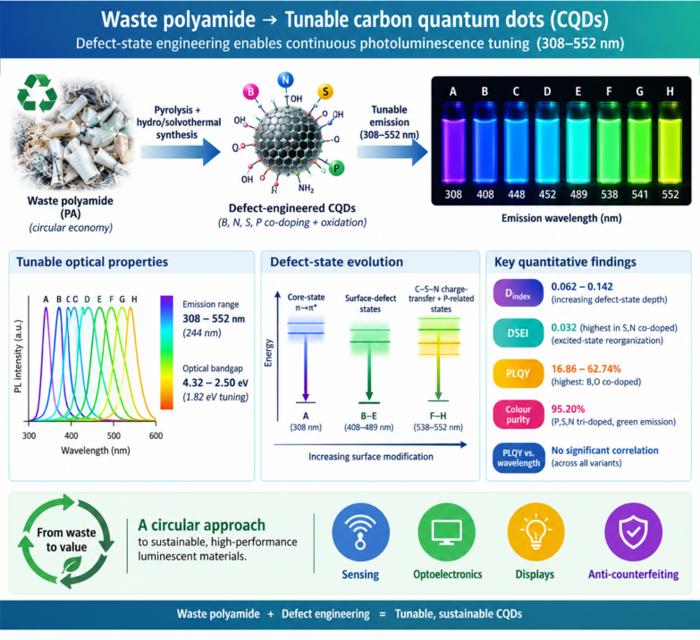
Waste polyamide-derived CQDs show continuous photoluminescence tuning from 308 to 552 nm through sequential defect-state engineering, with optical transition energies decreasing from 4.32 to 2.50 eV. @Christian Ebere Enyoh from Saitama University Carbon quantum dots (CQDs) are fluorescent carbon nanomaterials with potential applications in sensing, optoelectronics, displays, anti-counterfeiting, and environmental technologies. Their optical properties can be adjusted by modifying the carbon...
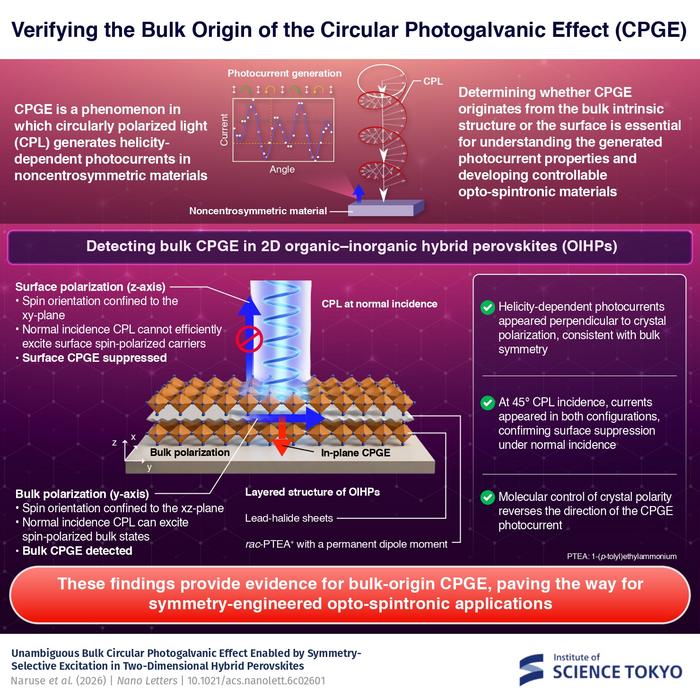
The researchers used circularly polarized light at normal incidence and found that helicity-dependent photocurrents appeared perpendicular to the crystal’s polarization but vanished when measured parallel to it, supporting a bulk origin of CPGE. @Institute of Science Tokyo The circular photogalvanic effect (CPGE), a phenomenon that generates helicity-dependent photocurrents in noncentrosymmetric materials, can originate purely from a crystal's internal structure without contribution from the...
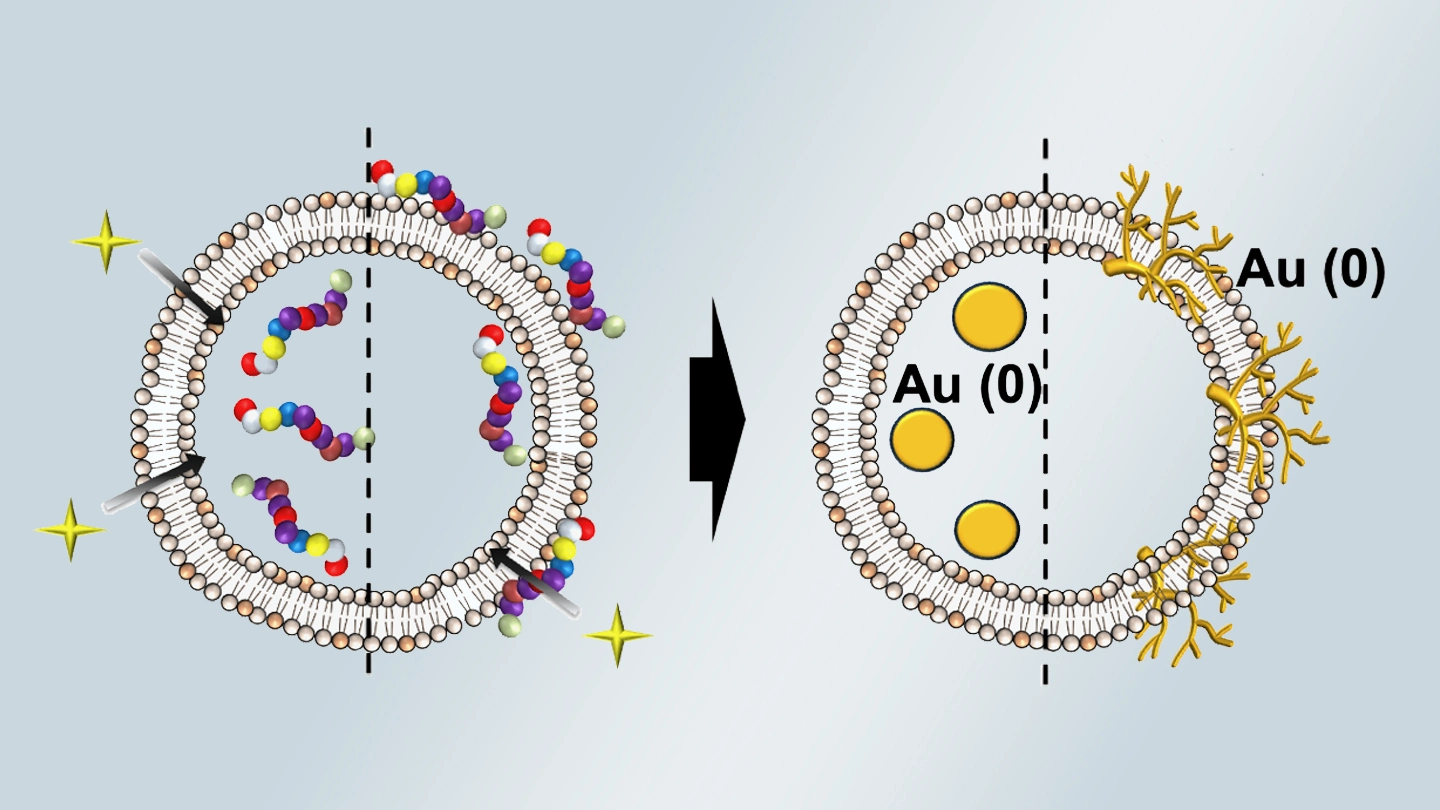
Summary of gold nanoparticle growth programming in liposome based on localization of biomineralization peptide The position of biomineralization peptides within liposomes can influence how gold nanoparticles grow, reports a research team from Institute of Science Tokyo. Peptides localized at the membrane interface promote branched structures, while those confined to the liposome interior favor spherical nanoparticles. The findings offer a new strategy for controlling nanoscale reaction...
